25 August 2015

Developing Infrastructure in Northeast a Priority, Says PM Modi

Developing Infrastructure in Northeast a Priority, Says PM Modi

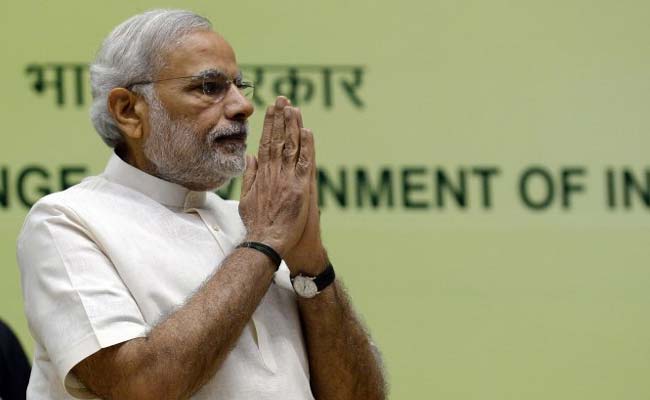
New Delhi:  Prime Minister Narendra Modi on Monday said that developing infrastructure in the north-eastern region is being given top priority by the government.

"India will develop only if the northeast develops," Modi said, while speaking at function at Vigyan Bhavan in Delhi to celebrate the birth centenary of Rani Gaidinliu, the legendary freedom fighter from Nagaland.

"We are putting in maximum efforts to build infrastructure in the north-east," he said.

The prime minister also said that following the resolution of the border dispute with Bangladesh, connectivity with the northeast was set to become easier.

"The northeast has now become closer to the rest of India," he said.

Stating that the north-east was blessed with abundant natural bounty, he said that the region has the potential to become the organic capital of the country.

Recalling Rani Gaidinliu's contribution in India's fight for freedom, he said that it was unfortunate that countless heroes of the freedom struggle all over the country were forgotten.

"It is unfortunate that... several people who fought for freedom are not so well known," Modi said.

Extolling the role of Rani Gaidinliu in the freedom struggle, Modi said: "Can you imagine that she joined the freedom struggle at the age of 12-13? And soon after she was jailed for life."

Born on January 26, 1915, Rani Gaidinliu joined her cousin Haipou Jadonang's movement at the age of 13 to drive out the British from Manipur.

In 1932, she was arrested at the age of 16 and sentenced to life in prison. She was released from Tura jail (now in Maghalaya) after having spent 14 years in various prisons.

She died on February 17, 1993, at Longkao in Manipur.
24 August 2015

Mizoram CM Pins Hope On PM Narendra Modi To Retain Special Category Status

Kolkata, Aug 24 : Mizoram Chief Minister Lal Thanhawla has expressed hope that the Narendra Modi government will retain the 'special states category status' as well as financial grant on '90:10 formula' to eight north-eastern states.

The eight north-eastern states have submitted a joint memorandum to Prime Minister Modi seeking his intervention in the matter, Lal Thanhawla said on the sidelines of a programme here last evening.

"During our last meeting, eight chief ministers of the north-east had sent a joint memorandum to the Prime Minister and he is looking into it. We have asked for a joint appointment with the Prime Minister," Thanhawla said.

The Mizoram Chief Minister was in the city to deliver the inaugural 'Carey Lecture' organised by the Bible Society of India to mark the 254th birth anniversary of the Reverend William Carey.

"Even though they (Centre) have not made any commitment or given any indication but something is in the air that they may restore the special states category status to the eight north-eastern states and also restore the financial grant on 90:10 formula for the north-eastern states instead of 50:50 proposal," Lal Thanhawla said.

"The finance minister ( Arun Jaitley) had made some remarks favouring this and we are waiting with great expectation," he added.

According to the Mizoram Chief Minister the Centre should handle the matter "sympathetically" as the removal of the "special category status" from the eight north-eastern states would not help them but would leave them in lurch.

"In the process (removal of special states category status), they (the states) will be losing variety of developmental projects and infrastructure grants and all that. So they (the Centre) have to look into it and consider it sympathetically," Lal Thanhawla stressed.

The 14th Finance Commission had recommended to raise the transfer of taxes to states from 32 per cent to 42 per cent, and withdrawal of special states category status.

In 1969, National Development Council had first accorded the special category state status to Jammu and Kashmir, Assam and Nagaland. Eight more states -- Arunachal Pradesh, Himachal Pradesh, Manipur, Meghalaya, Mizoram, Sikkim, Tripura and Uttarakhand - were added to the list in 2010.

Until 2014-15, the special category status meant these 11 states received a variety of benefits and sops.

The major contention of the north-east states is that due to geographical reasons they suffer from economic-infrastructural deficiency which makes it difficult for them to earmark even their share of funds to meet the expenses of central schemes.

Talking about his brother and minister Lal Thanzara's resignation as the state Information and Communication Technology Minister, Lal Thanhawla said, "He (Thanzara) is holding highest moral values. Even though he is my brother I am all in praise for him."

Comparing the developments leading to Thanzara's resignation with the Lalit Modi issue implicating foreign minister Sushma Swaraj, Rajasthan Chief Minister Vasundhara Raje and Madhya Pradesh CM Shivraj Singh Chouhan in the Vyapam scam, Thanhawla said, "Because of (issues related to) Sushma Swaraj, Raje, Shivraj Singh Chouhan, Parliament could not function throughout the (monsoon) session and the Prime Minister has not spoken a single word about this.

"But for this minister (Thanzara) there is mere allegation. To enable those who made the allegations in case they called for an enquiry against him and to give them a free hand he resigned... This kind of high moral responsibility was never seen before in Indian politics," he said.

Thanzara resigned last week from both the state Assembly and the Council of Ministers in the wake of reports of him holding 4,76,000 shares in a construction firm which bagged contracts worth crores in the state.

Opposition Mizo National Front leaders accused Thanzara, who held shares in the company, of ensuring it was given undue favours when applying for contracts by the state public works department.

Northeast India Flavours Now A Click Away

By Raul Dias

At a producer’s food processing unit in Meghalaya. PHOTO: Raul Dias
At a producer’s food processing unit in Meghalaya.
Indigenous temperate fruit jams of The North East Store. PHOTO: Raul Dias
Indigenous temperate fruit jams of The North East Store.
King Chili (Ghost Chili) hot sauce of The North East Store. PHOTO: Raul Dias
King Chili (Ghost Chili) hot sauce of The North East Store.

A recent spurt in e-commerce websites offering tough-to-procure ingredients and food items from India’s eight north-eastern States is good news for homesick north-easterners and foodies craving a taste of the exotic

Do you know what axone, ngari and anishi are? Or u-morok, perhaps? If you, like most of us, are lost in a quagmire of semantic ambiguity and haven’t got the foggiest idea, don’t worry. The chances of you having ever encountered the aforementioned words are woefully low.
But for Paiwang Yanthungo, axone (fermented soya beans), ngari (fermented fish), anishi (dried taro leaves) and u-morok (king chilli) are more than just the mere sum of their alphabet parts. Their very mention throws up fond memories and results in a salivating mouth for the 24-year-old Bengaluru-based MBA student, who calls Nagaland home. And, until a few months ago, Yanthungo had to rely on either friends or relatives visiting him from Nagaland or on his annual trips back home to Kohima to replenish his constantly diminishing stockpile of the same. Not anymore.
Thanks to a sudden spurt in e-commerce ventures offering tough-to-procure ingredients and food items right from Arunachal Pradesh to Tripura and in between, homesick northeasterners scattered all over India are able to jazz up boring office canteen dals and instant noodles with their favourite pickles and condiments that reflect the culinary diversity of the country’s eight northeastern States.
One such online set up is Mumbai-based Gitika’s PakGhor on www.yummade.com started by former marketing whiz Gitika Saikia, originally from Assam. “I decided to be a part of this e-commerce venture because initially my customers had to come home to collect the items. Everything is online now and purchasing is much more convenient, so why not food? Plus, it has helped me increase my customer base,” she says. Stocking a limited range of artisanal pickles, including the fiery hot bhoot jholokia (Assamese king chilli) and the rather exotic-sounding bamboo shoots and tenga jalphai (Indian olive) pickles, Gitika prefers to concentrate only on taste and quality and not quantity.
Offering a mindboggling 1,600 food and handicraft products in its portfolio, sourced from more than 100 suppliers and artisans, Bengaluru-based Giskaa.com claims to be India’s largest online store for northeast products, delivering orders all across India and also overseas to places such as Malaysia, Tanzania, Abu Dhabi and even Costa Rica. Its rather strange name is an acronym formed by taking the first letter of the names of the capitals for each of the eight northeastern States: G – Guwahati/Gangtok, I – Imphal/Itanagar, S – Shillong, K – Kohima, A – Agartala and A – Aizawl.
“I have lived outside of Manipur, my home State, for the last 23 years. While living in Bengaluru, traditional Manipuri food was something that I missed every day. The northeast population living in the major Indian cities is huge, estimated to consist of close to a million people. Most of them will share the same sentiment,” says Meghanath Singh, Giskaa’s CEO, explaining why he began the venture. “I was constantly yearning to contribute something to my home State and the northeast region combined. I also had a strong passion to start a company of my own, so I took the plunge and quit a comfortable and relatively well-paying IT job in July 2014 to start Giskaa,” he says.
Mr. Singh along with his partners Surchand Wahengbam and Ratheesh Elayat also hopes to make Giskaa a platform for artisans from the northeast to professionally showcase their products. He wants to promote them to a large mainstream Indian audience. “The people and culture of northeast India are often misunderstood and misinterpreted. Most of it is due to lack of awareness and knowledge of the region. A platform like ours would definitely go a long way in bridging this gap and bring the northeast closer to the mainstream,” he says.
Based out of Shillong, Meghalaya and once again founded by three friends, Catherine Dohling, Trideep Rabha and Dhawal Singh, The www.northeaststore.com may operate on a much smaller scale than Giskaa, but its game plan and focus is just as intense. “We source our products straight from the makers and producers as well as from NGOs, government groups and self-help groups who directly support local farmers and artisans. We follow an inventory-based model as opposed to a marketplace, where we hold stocks of products that we source,” says Dohling, who is quick to add that running a business like theirs is not free of setbacks. “Product discovery is quite a challenge as there are many unique items being made in small, remote villages, which very few people are even aware of. Also, there is lack of e-commerce specific infrastructure within the region. For example, quality packaging material needs to be sourced all the way from Delhi.”
But hurdles aside, a quick glance at Gitika’s PakGhor, Giskaa and The NorthEast Store’s Facebook pages reveals a bunch of very satisfied customers. Take Mumbai-based Kingshuk Bhattacharya, for instance. He writes: “It was really awesome to get to know about this initiative [Giskaa]. I am from Tripura and [living] out of the State for 30 years now. It was a welcome sight to see that I can now get my share of ngari, fermented soya and yongchak (a type of Manipuri bean) sitting in Mumbai!”
And it’s not just homesick northeasterners who are patronising these online stores; even nostalgic expats are joining the bandwagon. “One story that comes to mind is that of Andrew Hoffland from New Delhi. He used to work in Nagaland as a teacher 20 years ago. Since he left, he did not have access to products from there and when he discovered us, he was very glad to be able to buy food and products from Nagaland. It felt good to hear that he was delighted to taste these items again,” says a contented Dohling.
But perhaps the best way to summarise this interesting new trend is to take a leaf out of Giskaa’s tagline that says it all in four simple words —Bring Home The Northeast.

Arunachal Pradesh to sign MoUs for boosting bamboo sector

Itanagar, Aug 24 : Arunachal Pradesh will soon ink Memorandum of Understandings (MoUs) with Numaligarh Refinery Limited (NRL) and Hindustan Paper Corporation to help potential bamboo growers in the state.

Arunachal Pradesh Bamboo Resource Development Agency (APBRDA) Vice-chairman Yora Tagung informed that the agency on behalf of the state government would sign an MoU with NRL soon for exporting three lakh tonnes of bamboo from the state.

"The MoU will immensely help both farmers as well as unemployed youths of the state," he said.

He informed that another MoU would also be signed between the state government and the Hindustan Paper Corporation for exporting one lakh tonne of bamboo for paper manufacturing.

"This is just a beginning. We are looking for more companies with whom we can sign MoUs for the benefit of bamboo growers and unemployed youths and enrich the state's coffer," Yora said.

If properly tapped , bamboo sector could be a money spinner for the state with a varieties of species abundantly available, Yora said adding that the Board was planning to set up small scale bamboo industries in every district where toothpicks, incense sticks, besides other usable items would be produced.

The APBRDA is contemplating to establish a bamboo shoot market for which a land of 70,000 square meters has already been allotted.

"We are also planning to set up a Bamboo Technology Park and State Bamboo Museum in the same plot," he said.

The steps taken by the Board would immensely benefit the people by spreading awareness regarding the actual benefit of bamboo plant, he said and added that the proposed MoUs would be a boon for the bamboo growers of the state.

It is pertinent to mention here that since last couple of years, the APBRDA has been supplying bamboo saplings to the bamboo growers of all districts of the state.

Besides, several skill development and awareness programmes were also conducted.

"Though we have many bamboo plantations in every district, merely three small industries have been established so far which have failed to cater to the bamboo growers," Yora added.
20 August 2015

Tripura, Mizoram Cut Off Due To Landslides

By B B Goswami

Silchar, Aug 21: Tripura, Mizoram, parts of Meghalaya and Manipur and the Barak Valley areas of Assam was cut off from the rest of the region early on Wednesday due to landslides in a number of places in Meghalaya and Assam's Dima Hasao district.

Sources said torrential rainfall for the last three days has triggered the landslides. Mud, boulders, trees and debris came rolling down the Barail Hill on at least three places on the Haflong-Silchar road. The road went under the debris in three places between Bandarkhal and Miyankro on NH-306. This has stopped movement of traffic on this 110-km stretch of road.

Traffic was also closed on NH-6 connecting Badarpur in Assam with Jowai in Meghalaya due to landslides in Tuensang, Kuliang and Ratacheera areas of East Jaintia district, 90 km from here. However, there was no report of any loss of life, sources said.

The authorities are engaged in clearing the debris. However, continuous downpour was affecting the clearing work. Hundreds of vehicles were stranded on both Haflong-Silchar and Badarpur-Jawai national highways.

Rail connectivity with this region has remained cut off as passenger trains on the newly commissioned Lumding-Silchar broad gauge track is yet to be flagged off.

Mizoram Govt Hikes Taxes On Tobacco Products by 10%

Aizawl, Aug 20 : The Mizoram government today approved a proposal of the state taxation department to increase the rate of tax on tobacco products from 20 per cent to 30 per cent, an official statement said.

The hike was meant to work as a deterrent for smokers and users of other tobacco products, it said.

A meeting of the state cabinet, chaired by Chief Minister Lal Thanhawla decided to regularise a number of teachers working in the Higher Secondary Schools, the statement said adding the number of teachers to be regularised was yet to be determined.

The cabinet also approved the draft Mizoram Right to Public Service Rules, 2015 to be laid in the next session of the state legislature.

All-Woman Bank in Arunachal

Tuki inaugurates branch, website

By Ranju Dodum

Nabam Tuki at the inauguration of the bank branch at Naharlagun. Telegraph picture
Itanagar, Aug 20 : The first "all-woman" bank branch was inaugurated in Arunachal Pradesh today, giving women cause to cheer.

Inaugurating the all-woman branch of the Arunachal Pradesh State Cooperative Apex Bank at Naharlagun, chief minister Nabam Tuki said the move was another stepping stone towards empowerment of women of the state.

He also inaugurated the bank's website and opened a savings account for his mother at the branch, which will be manned completely by women and also offer locker facilities to women.

According to the 2011 Census, Arunachal Pradesh has a female-male ratio of 938:1000, which is below the national average of 940. In 2001, the ratio was 893:1000.

Speaking to the bank's staff, Tuki said women self-help groups all over the state should be mobilised with the support of National Bank for Agriculture and Rural Development (Nabard) to encourage them.

He also lauded the bank for introducing the micro ATM, which he said would act as a "game changer" allowing "even illiterate customers to avail its facilities".

Responding to a memorandum submitted by the bank's employees, Tuki admitted that there was a need to build a permanent head office for the bank. He said funds would be made available for the purpose in the next state budget.

The Arunachal Pradesh State Cooperative Apex Bank is the only financial institution run by the state government. The bank was revived by the state after it ran into financial trouble in 2007.

All You Need To Know About The Inner Line Permit Issue in Manipur

What exactly is the Inner Line Permit, and why is the issue so sensitive?

Manipur ILP
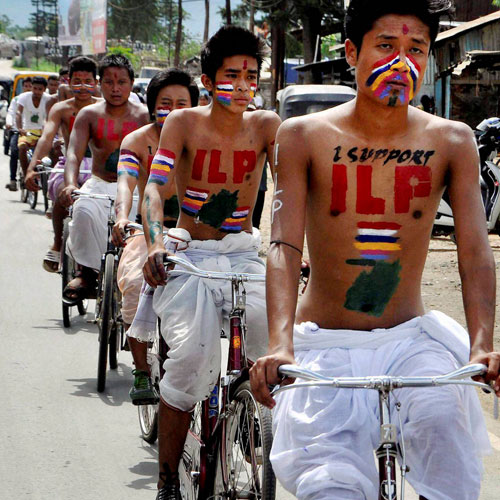
People take out a cycle rally in Imphal East district on Tuesday demanding for Inner Line Permit System in Manipur.

On Tuesday, fresh clashes erupted between two groups over the Inner Line Permit issue in Manipur.

For the past several months, the state has been wrangling with mass protests for implementing the Inner Line Permit.

While a 13-member all-party committee was formed in 2014 to look into the demand of various social organisations for introduction of the Inner Line Permit (ILP), not much progress has taken place. The Joint Committee on Inner Line Permit System (JCILPS) has been spearheading the agitation, and many people have gone on an indefinite fast, defying repeatedly imposed curfews.

Inner Line Permit (ILP) is an official travel document issued by the Government of India to allow travel of an Indian citizen into a protected area for a limited period. It is obligatory for Indian citizens from outside certain states, to obtain such a permit.

ILP is a British era document. This provision was made by Britishers under an Act called as the Bengal Frontier Provision Act, 1873. But it is still used in independent India to protect tribal cultures of the North East.

At present, the ILP is in force in Arunachal Pradesh, Mizoram and Nagaland. In Manipur, large scale protests have called for its implementation for years.

Under the ILP system, a certificate can be issued to outsiders only for travel in the areas covered by ILP. A non-resident also cannot buy property in these areas. Long term residence however, is allowed under certain kinds of ILP. Such provisions though are not valid for Central government employees and security personnel.

In 2012, the Manipur state assembly passed a resolution urging the Government of India, to implement the ILP system in Manipur.

The Manipur Assembly introduced the Manipur Regulation of Visitors, Tenants and Migrant Workers Bill this year, but it was withdrawn on July 15 because the JCILPS felt it protected immigrants more than native Manipuris.

There is no ILP in Manipur because Manipur was never under British rule. In 1949, the King of Manipur signed a document merging the region with the Indian Union. Before 1949, Manipur was a sovereign state with an elected government.

The argument of JCILPS is that since Manipur can no longer protect its indigenous culture and distinctiveness after the 1949 merger, the ILP system must be put in place.

The free entry of 'outsiders' both from within and outside the Indian state is a central cause for the demand for ILP. Some believe that absence of a permit system can make indigenous communities in Manipur a 'minority', both culturally and demographically.

ILP proponents assert that after independence and subsequent accession of Manipur to India, the influx of foreigners and other Indians into Manipur has increased exponentially. Illegal immigration from Bangladesh, Burma and Nepal has also gone up. This has led to increased competition for employment opportunities among other things. Local youth have to compete with outsiders for jobs.

Moreover, outsiders are often ready to work for lower wages.

ILP advocates also say that Manipur had not acceded to the Indian Union when the Constitution was drafted, and hence it had no say in the framing of the Constitution. Many advocates thus support constitutional amendment to make the ILP system possible.

Proponents also argue that since Arunachal Pradesh, Mizoram and Nagaland, which have similar indigenous cultures and problems post independence, have implemented ILP, Manipur should also be included in the system.

Furthermore, most political parties in Manipur and outside, support the implementation of ILP. The BJP has very strongly demanded its implementation for the past few months, after being opposed to it for a long time. Regional parties in Manipur mostly support the ILP, and although the Congress did not take a strong stand on the issue in its 2012 election manifesto, it is officially opposed to the ILP system. Long time Congress ally the Nationalist Congress Party (NCP) is also opposed to ILP.

However, CM Okram Ibobi Singh, a member of the Congress party, has supported the ILP and asked the BJP-led Modi government to implement it. Thus, even within political parties there seem to be differences on the ILP. Meanwhile, agitations and curfews continue, life in the region comes to a standstill and lives are lost in the pursuit of the ILP issue.