14 March 2010

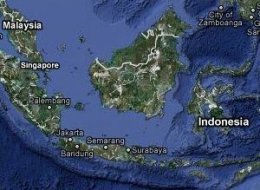
Indonesia Earthquake 2010: Strong Quake Shakes Eastern Islands

Indonesia Earthquake

A 7.0 Indonesia earthquake struck early Sunday morning, not long after a separate Indonesia earthquake on Saturday.

Djakarta, Mar 14 : A strong earthquake rocked eastern Indonesia on Sunday morning, registering with a 7.0 magnitude, according to reports.

The quake struck just before 8 a.m. local time. The Indonesian Meteorology and Geophysics Agency (BMG) said it did not trigger a tsunami, per BNO News.

The USGS measured the same quake as 6.4 magnitude and says it happened off the coast of Sumatra Island.

There were no initial reports of injuries or damage.

A separate 5.9 earthquake had hit Indonesia just hours earlier on Saturday.

First Indian Woman to Ski on South Pole Warmly Received at Darjeeling

reena Siliguri, Mar 14 : Reena Kaushal Dharmshaktu, who became the first Indian woman to ski at the South Pole, arrived at her hometown in Darjeeling.

Dharmshaktu, the 38-year-old adventure enthusiast and a resident of Delhi, was one of the eight-member Commonwealth Women’s Antarctic Expedition 2009-10 that skied for over 900 kilometres along the icy surface of Antarctica.

Talking to reporters here, Dharmshaktu, who returned to India on January 15, said that the motive behind the expedition was to promote women in this field.

“Well, during the expedition, eight different people from eight different Commonwealth countries went skiing together from the coast of Antarctica to the South Pole. We were helping out each other. Nothing is impossible for women; if they are determined, they can do anything,” said Dharmsaktu.

Dharmshaktu described her journey as full of challenges but equally exciting at the same time.

“The journey was good. It was challenging but it was beautiful at the same time. We were having a lot of tough time but we were also just enjoying being in Antarctica. We had to face a lot of challenges; the biggest challenge was the wind and cold,” she said.

The team was on the South Pole for 38 days braving blizzards, jet speed winds besides temperature of minus 40 degree Celsius, to achieve the great feat.

Besides Dharmshaktu, the other members of the team were from seven countries - Brunei, Cyprus, Ghana, Jamaica, New Zealand, Singapore and Great Britain

Northeast Spring Festival Celebrated in Nagaland

northeast spring festival Dimapur, Mar 14 : Over 380 artistes from different parts of the country participated in a five-day spring festival in Nagaland recently. The even brought alive the different folk forms.

The North East Spring festival enabled artistes to present different folk forms of north-eastern States at the North East Zone Cultural Centre (NEZCC) complex at Dimapur city here.

Among the various artistes from different states was 'folk fusion king' Rewben Mashangva who mesmerized the audience with an original song.he festival also witnessed performances from the best choirs of the North East- the Mizo Choir from Mizoram and the Naga Choir from Patkai Chorale, Nagaland.

The event's organization was intended to provide a common platform to folk artistes to showcase their art and enable them to interact with each other and come together.

"It is nice to see people of northeast at one place, doing different things, doing different items. And yes, it will bring closeness among the northeast people." said Meren, a music lover.

Present on this occasion were a large number of visitors and artistes and local traders.

"Yes, very good perspective and very good performance. I'm getting good customers and all from all northeast specially Dimapur. If more good artists come in next two-three days, I will get more money." said Monit Das, a trader.

With peace slowly returning to the state, such events have started attracting more people.

Remote Indian State Set For Development

Arunachal Pradesh hillsA new drive has started to bring development to the remote north-eastern Indian state of Arunachal Pradesh. In a letter from the region, the BBC's former India correspondent Mark Tully says there are fears that it will undermine the traditional tribal culture of the area and alienate the population.

Arunachal Pradesh is a remote and picturesque state (Photos: Subhamoy Bhattacharjee)

Driving from the east of Arunachal Pradesh to its oldest town, Pasighat, I was made all too aware of the state's underdevelopment.

Much of the time was spent bumping along stony beds of dried up rivers which would be filled during the monsoon.

When I suggested to the driver that the river bed didn't seem to be a road, he said: "Oh yes, it is. It's National Highway 52."

The situation became even more alarming when we came to the Dibang river, which did have water in it and much of that water was flowing very fast.

I was amazed to see that the ferry carrying two cars across the river was being propelled by six men with punts.

The unwieldy vessel consisted of two traditional wooden boats latched together like a catamaran requiring almost constant baling to keep afloat.

It seemed inevitable that the punters would lose control and the ferry be borne downstream.

But no. The crew hurriedly exchanged their poles for oars, paddled for all they were worth and managed to edge the ferry into the far bank.

They then towed it up to the landing point which was just two planks.

When it came to our turn to cross I noticed with trepidation that three cars were loaded - but we still got across safely.

Isolated state

Arunachal Pradesh has no trains although the railways try to convince the people of the state that they do have one.

It is a train called the Arunachal Express but it is not an express, and it does not touch Arunachal.

It runs along the north bank of the Brahmaputra stopping at some stations which are quite near the Arunachal border.

But the state's isolation has preserved the tribal way of life.

While I was in Pasighat there was a Kebang or gathering to sort out a land dispute.

map

It was held in a clearing in the middle of the thick jungle which still covers most of the state.

The adjudication consisted of a series of speeches on behalf of the two sides in the dispute.

Some merely wanted to say they did not know who was in the right. One tribal elder said he could not smell the truth.

At one point the most vocal speaker on one side challenged his leading opponent to a "peki", or a trial by ordeal.

This apparently could involve clutching burning coal, putting hands into boiling water, or even into boiling oil.

But happily things did not reach that pass.

No decision was taken and the aggrieved party went off to enjoy a feast washed down by rice beer.

It was clear that a Kebang was not always a very effective way of settling disputes.

But it was probably better than getting involved with India's notoriously corrupt police or the courts where lawyers would see to it that the case never ended so that their fees did not end either.

One undoubted benefit of the inner-line system and the protection of Arunachal from outsiders is that land has not been appropriated.

In central India vast numbers of tribal people have been dispossessed of their lands for development schemes such as power stations and mines.

They have drifted into the towns and cities where they have pulled cycle-rickshaws or earned puny and precarious incomes from similarly arduous jobs.

The Arunachal villages I saw were spacious, with traditional houses set well apart from each other, giving the owners' cows, chickens, pigs and dogs plenty of space to wander about.

The villagers have the jungle to themselves to pursue their favourite pastime of hunting.

They are hospitable, welcoming people who are not given to complaining.

Road-building

But now development is scheduled for Arunachal.

The central government has decided it can no longer afford to ignore the vast hydro-electric capacity of the rivers flowing through and down the state's mountains.

yaks in APMuch of the state is totally undeveloped

Plans for several dams have been drawn up. They will all involve moving people off their land and they will bring in outside labourers who might well try to settle in Arunachal.

There are plans to build roads too that will require land and outside labour.

There is talk of building an airport in a jungle which is part of a corridor elephants move along.

Tourism has been identified as the industry the state should develop - but tourism means letting outsiders in.

So those who want to see a particularly beautiful part of the world before its jungles are cut down and its tribal villages turned into crowded clusters of concrete boxes, should get their passes quickly.

Assamese Look Forward to Peaceful Days

INDIA-UNREST-BLASTS Guwahati, Mar 14 : Recent developments relating to the surrender and arrest of the United Liberation Front of Asom (ULFA)'s, central committee members have the promise of peaceful days to Assam.

The only senior leader outside the net is ULFA commander-in-chief Paresh Baruah.

Most people in Assam want him to join the peace process as well. After 12 years of his detention, ULFA vice-Chairman Pradip Gogoi was released on bail from Guwahati Central Jail.

His approach was positive and he told journalists outside prison that in principle the outfit was in favor of resolving the 30-year-old conflict through peaceful political dialogue.

And, in that regard he sought the cooperation of both the Central and State governments. He also sought the cooperation of all sections of the society in Assam for carrying forward the process of political dialogue with the government.

"The Federal Government has created a favorable atmosphere and we will count on the public opinion," said Pradeep Gogoi, ULFA Vice Chairman.

Six top ULFA leaders are currently in the Guwahati Central Jail - the outfit's chairman Arabinda Rajkhowa, Dy Commander-in-chief Raju Baruah, self-styled foreign secretary Sasha Choudhury, finance secretary Chitrabon Hazarika, cultural secretary Pranati Deka, and the ULFA political ideologue Bhimkanta Buragohain.

The special TADA Court in Guwahati granted bail to Daimary and Gogoi - a move seen as an attempt by the government to go soft on the jailed rebel leaders to bring them for peace talks.

However, Assam chief minister, who recently met the Union Home Minister P. Chidambaram in New Delhi, clarified that 'Sovereignty' and 'integration' would never be the part of peace talks.

"He (Home Minister P Chidambaram) asked somebody, some officials, what are the topics of the talks, I said first let them submit their demands, except of course we made it very clear that there is no question of sovereignty. This is the basic and accordingly we will proceed," said Assam Chief Minister Tarun Gogoi.

The common sentiment in Assam is that ULFA Commander-in-Chief Paresh Barua should come for talks with the Centre. Political dialogue can only help restore peace in the region. As the state has already suffered huge lose so there should not be anymore time wasted and it is high time commander-in-chief should come for talks or people already in jail or the two leaders released must initiate peace process and it is important for the people of Assam," Ranjan Baruah a local.

"Paresh Barua should come for talks because he is a senior leader. He should come for talks for a permanent solution and it can only happen and there will be peace talks," said Susanka Kashyap, another local.

The current developments have given hope to people of Assam who are well aware of the fact that 'Peace' will ultimately bring prosperity to the state.

Tripura Debates Maneka’s Plea Against Animal Sacrifice

Udaipur (Tripura), Mar 14 : Following a request from animal rights activist Maneka Gandhi to stop animal sacrifice in the famous Tripureswari temple, one of the 51 'shakti peethas', the South Tripura district administration has decided to gather opinion from various quarters.

I have received a letter from Maneka Gandhi last week requesting the deputy collector, who is the principal 'sebait' of Mata Tripureswari, to stop animal sacrifice. Now the opinion of the government, royal family priests and common people would be gathered before taking a final decision," District Magistrate Swapan Saha told reporters today.

Once a princely state, Tripura merged with India in 1949 following signing of a merger of agreement and one of the conditions was that the state government would worship Mata Tripureswari in traditional system. The temple was built by Maharaja Dhanya Manikya in 1501 A.D.

When contacted, Pradyot Kishor Devburman, the decendent of the Tripura's Manikya King said, "I am personally against animal sacrifice, but there is no need of any kind of advice from Maneka Gandhi. There can be an internal debate within the state whether this 'parampara' should be stopped".

According to mythology, Lord Vishnu had cut off the body of Mata Sati into 51 pieces by the Sudarshana Chakra and the pieces fell at various places throughout the country. These places are known as 'shakti peethas'. It is said the 'right foot' of Mata Sati fell at Matabari.
animal sacrifice in tripura

Consultation on Arunachal Education Bill Begins

education Itanagar, Mar 14 : Arunachal Pradesh Education Minister Bosiram Siram convened a two-day consultation meeting to seek suggestions from legislators, student bodies and civil societies on the proposed Arunachal Pradesh Education Bill 2010.

The proposed bill is likely to be placed in the forthcoming Assembly session beginning from March 18 for consideration and enactment.

Mr Siram, while highlighting the aims and objectives of the Bill yesterday, introduced it for consultation and suggestions from the legislators and academicians, official sources said here today.

He said the Bill was a principal legislation on the state education policy in context to civilization of the society and country for a spotless education system in the state through right type of education policy leading to better organization, development, discipline, academic pursuit and control of elementary, secondary and teachers education and quality drive.

''This will be followed by subordinate legislations in subsequent sessions incorporating various other aspects of education, including transfer and posting policy,'' he stated.

The Minister said the Bill was considered necessary to visualize tri-polar education process 'teacher, taught and curriculum' as well as to provide for a planned development of educational institutions, inculcation of healthy educational practices, maintenance and improvement in the standard of education and better organization, discipline and control over educational institutions with a view to foster harmonious development of mental and physical facilities of students and cultivating a scientific and secular outlook through education.

The department has been facing many difficulties because of much loopholes arising due to lack of a clear cut policy on education, he said. Streamlining the entire education system has become the need of the hour as it is a permanent investment for all-round development of the state, the Education Minister added.

After Muddy Road to Tuensang, a Beacon of Hope

muddy road By Sevanand Gaddala

Tuensang (Nagaland), Mar 14
: There is no better symbol of Tuensang’s disconnect with the rest of Nagaland than the road between it and Mokokchung, the closest major town.

The road to this remote and backward town in eastern Nagaland snakes along sharp ridges of hills, is muddy and dusty, prone to landslides in the monsoon and is literally a pain in the neck to travel on.

Tuensang is in close proximity to the international border with Myanmar and has for long been plagued by the illegal drug trade. It was also a bastion of insurgency, but since a 1997 ceasefire it has enjoyed relative stability.

The people of Tuensang feel marginalized by the rest of Nagaland and since it is home to the minor tribes of Chang, Yimchunger, Sangtam, Phom, and Khaimanungan, there is a low rate of employment and education and a high rate of drug abuse and AIDS cases.

It is in such a bleak context that the couple Rev. Dr Chingmak Kejok and his wife Putholi founded an NGO called Eleutheros Christian Society (ECS). Since its founding in 1993, ECS has done some incredible work with drug addicts, AIDS patients, women, education and basic rights.

Rev. Chingmak got his spark when he lost family members to the drug menace just after he finished his studies in theology from Union Biblical Seminary, Pune. Though the problem of drug abuse was his initial area of concern, his vision was further fuelled to take on women’s empowerment and primary education.

Observing the dire economic situation of women, he hit upon the idea of micro-finance and soon formed Self Help Groups (SHG) where now the women collectively have their own loan corpus of more than Rs.1 crore (Rs 10 million).

When he noticed there was a staggering rate of dropouts among the schoolchildren in the Chang villages, he started implementing the concept of the Sochum. The idea for the Sochum is based on the ancient Naga practice of a Morung, which serves as a dormitory where young men are imparted life skills and civic responsibilities besides education.

The 42-year-old soft-spoken Rev. Chingmak maintains a clear vision and his life has a constant forward momentum. He wears his authority and position lightly and is easily accessible. His conversations are peppered with humorous jabs and anecdotes and he has a zen-like attitude in the face of the many inconveniences like bad phone connections and intermittent internet connectivity. He recounts stories of his earlier days when he had to travel to the bordering state of Assam just to receive and make important phone calls.

He is respected for his integrity, especially his financial transparency. When asked about his fundraising methods, he said, “If you are honest and open with money, it will somehow follow you. You don’t have to go after it, it will come after you.”

Putholi seems more practical and her penchant for detail grounds her husband’s vision well. They make a perfect and complementary team. Rev. Chingmak and his wife have made numerous sacrifices and once early on had to sell their wedding gifts just to survive.

The days of initial struggle have borne fruit with due recognition from the Nagaland government when it bestowed the Certificate of Award of the Governor’s Medal on the couple in 2003 and former president A.P.J. Abdul Kalam visited ECS in recognition of its work.

Yes, it feels like a whole other country walking in the streets of Tuensang nestled in the hills. But there is a more vocal voice being raised from this part of Nagaland and it is no less in part due to trailblazers like Rev. Chingmak and Putholi.

Perhaps, with sons and daughters like them, the people of Tuensang are slowly gaining awareness of their rights and will have a better shot at the future.

*Sevanand Gaddala can be contacted at sevanand@gmail.com