11 February 2015

A Stunning Play With A Simple Message: We Are Indians Too

By Manoj R Nair

Nahaakgee Nunngsirabi - Local Foreigner, a play by Molina (Sushant Singh Production) performs at the HT Kala Ghoda Arts Festival in Mumbai. (Kunal Patil/HT photo)

Mumbai: Sanatombi, a girl from Imphal, Manipur, is in Delhi, having received a scholarship from the culture ministry to learn Kathak. After her first day at the dance school, she is back at the house where she lives as a paying guest. Her mother, a veteran Manipuri dancer, calls from Imphal to ask about the class.

“I don’t know whether it was a good decision to come here,” Sanatombi says.

“The first question everyone asks me is: Kahaan se aayi ho? When I say I am from Imphal in Manipur, they ask ‘Chinese ho? (Are you Chinese?) You do not look Indian.’ They told me that I should not learn Kathak; that there was no future for me in Kathak.”

The next morning, as she prepares to leave for the dance class, she looks in the mirror, at her eyes and nose. She pinches her nose with a clip to make it sharper, till she almost faints from the pain. Her mother calls. Sanatombi tells her that she is in pain.

“So you pulled your nose to look Indian?” the mother asks. “It’s not just the nose,” Sanatombi replies. “The eyes are small too.”

After a particularly traumatic experience in a market, Sanatombi wants to return to Imphal.

When she is asked to perform a Manipuri dance at a function, she uses the opportunity to give her compatriots a little lesson about her home state, including the fact that Chitrangada, the bride of Mahabharata’s Arjun, was from Manipur.

Sanatombi’s experience, lived through by many Indians from the country’s north-east, is shared by Molina Sushant Singh, the Mumbai-based Kathak dancer who played the protagonist in Nahaakgee Nungsirabi (Local Foreigner), a play performed on Tuesday as part of the Zindagi theatre section of the Hindustan Times Kala Ghoda Arts Festival.

“We are Indian but we are still struggling to be accepted. The identity crisis is so much, it hurts you psychologically,” said Singh. “How do you feel if you are not accepted in your home? It is a constant struggle to be Indian.”

The play received a standing ovation from the audience. “I liked the simple way in which the play delivered the message that people from the north-east are Indian and they are badly treated in other parts of the country,” said Rajarshi Banerjee, a theatre director who attended the show.
09 February 2015

Computers And Connectivity in Mizoram

Over 50% of the schools surveyed did not have an Internet connection and even there were facilities available, teachers were not adequately trained in using them optimally

A study done by Digital Empowerment Foundation in Aizawl district of Mizoram to assess the situation on the ground on connectivity and related infrastructure in education found that over 50% of the schools surveyed did not have an Internet connection and even where computers and related equipment were available, teachers were not adequately trained in using them optimally.

The study was done on behalf of the Massachusetts Institute of Technology and the Sir Dorabaji Tata Trust, who are collaborating to develop an educational programme in Rajasthan, Chhattisgarh and Mizoram, among the least developed states in India, for high schools and teacher training colleges by using information and communication technologies.


Centre Should Take Responsibility For Developing Northeast: Mizoram CM

Aizawl, Feb 9 : The central government needs to take responsibility for developing northeast India as it involves huge investment which the seven states in the region cannot afford, Chief Minister of Mizoram Lal Thanhawla said here.

"Institutional finance is a grave concern in the entire northeast region and development of infrastructure is costly. The centre needs to develop the region," the Mizoram chief minister said at an event organised by the Confederation of Indian Industries.

He added that the tourist flow into the northeast is one of the lowest in the country as the region lacks good infrastructure, on the other hand due to lack of tourists, the area is not getting enough funds.

"This is resulting into a vicious cycle from which we need to come out and the centre now needs to actuate the act east policy," he said. Thanhawla complained that "enough was not made for the region" under the policy. "The states with the given economic condition cannot build infrastructure to speed up development...and central funds are needed," he said.

Explaining the high level of cost of construction in his state, he said, "To construct a football field in a plain area like in Rajashtan, one has to just clear the area and then level it. But to build a volleyball court in Mizoram, at least Rs.1 crore is needed." He said only 11 percent of the total hydro power potential of the region has been leveraged so far and that there was a huge investment potential in such projects.

"More than 50,000 MW of power can be generated in the region. It is time for the central government to seriously 'act east', as the region has so many international borders," he said.

The government of Mizoram is presently constructing a road-link to India's international border with Myanmar, which is expected to boost trade and commerce in the state

What Happens When Top Bureaucrats Visit Their First Posting Locations

By Saubhadra Chatterji and Moushumi Das Gupta

Musahari/Ukhrul/ Kushinagar
: As the car climbs up a hilly road amid the rocky landscape of Manipur, Union land resources secretary Vandana Jena remembers her days here in 1981. “Civic infrastructure, roads were almost non-existent. It was a four hours back-breaking journey to Ukhrul from Imphal. No work in the evening as diesel-generated power went off after 5 pm. There was no water supply either,” she said. Back then Jena was Ukhrul’s sub divisional officer.

Sitting in his first office in Musahari — the birthplace of Naxal movement in Bihar — parliamentary affairs secretary Afzal Amanullah could easily remember his stint as a young assistant magistrate 34 years ago. The rot in the system, frustrating corruption and lack of civic amenities had haunted people then. “Now, little has changed,” quips Amanullah.

http://www.hindustantimes.com/Images/popup/2015/2/09_02_15-metro10a.jpg
It was a different ‘ghar wapsi’ — or return to the roots — for top-notch bureaucrats last month. As planned by Prime Minister Narendra Modi, all secretary-level officers working with the central government went back to their first place of posting to review its progress.

The tours (HT accompanied three bureaucrats in as many states) threw up mixed revelations: There was palpable progress in road and tele-connectivity, agriculture and income of villagers. But in many places social infrastructures like school, health-care or toilets still remain in the dark ages.

Eighty-odd secretaries would be giving detail reports to the Prime Minister’s Office on how their first areas of posting fared in development over time.

Information and broadcasting secretary Bimal Julka was happy to see a weaver colony which he had set up in 1981 in Madhya Pradesh’s Ashok Nagar thriving and helping locals generate substantial income. “There were only ramshackle huts. Now almost everyone has pucca house. There is an all-weather road to Guna with a railway over bridge.”

Coal secretary Anil Swarup also has a tale of success to share while visiting  Tamkuhiraj tehsil in UP’s Kushinagar district: “It’s unbelievable to see so many girls cycling to schools. Back in the 80’s, when I was posted in Padrauna, there were just a handful of girls attending schools.” Swarup joined the elite Indian Administrative Service with first posting at UP’s Kushinagar as joint magistrate.

http://www.hindustantimes.com/Images/popup/2015/2/09_02_15-metro10b.jpg
But these policy-makers also find that despite hundreds of government schemes running in paper, there are little or shoddy implementation in most of them.

Amanullah is the only Bihar cadre secretary-level officer now working at the centre. In Narauli, he visits a cluster of Indira Awas Yojna — the scheme for housing for poor — only to find that the entire colony has not a single toilet. Nearby lied Prahladpur, a village where a central grant of `32 lakh went back unspent due to non-utilisation.

Julka too, hardly found toilets as he toured an entire division: “Hygiene and cleanliness was far from satisfactory even in the government offices. School buildings are also in bad shape. There is an acute shortage of doctors and medical staff in local government hospitals and health centres.”

“During our field visit, when we had to stay the night at some village home, we had to go out in the open to attend to nature’s call,” says Jena. She, however, spots many village homes now with a toilet. Similarly, Swarup visited Bandhu Chapra, once notorious for anti-social elements, and finds dramatic changes with pucca roads, a majority of the children going to school, houses under Indira Awas Yojana. “There are tubewells at regular intervals,” said Swarup.

These reports, albeit local stories are likely to give reference points to the PMO while it shapes newer strategies. But in most of the cases, thrust areas of different governments like hygiene and cleanliness, e-governance, employment, etc. still lies in the dim shadow of underdevelopment.

National Games: A Tiny State Taking Giant Strides in football

By P. K. Ajith Kumar

Mizoram football team. Photo: S. Ramesh Kurup

Watching Mizoram has been one of the greatest delights of this National Games. The little men in red are attractive, quick and so wily that nobody has been able to stop them. They are just one victory away from walking away with the gold here. What a ‘double’ that would be!

They are also the reigning Santosh Trophy champions. Mizoram surprised everyone when it triumphed at the National football championship at Siliguri a year ago. It was its maiden Santosh Trophy triumph.
“That was the happiest day in the history of Mizoram sports,” said Victor Lalbiakmawia, a former player who is now the team’s assistant coach.
“More than 15,000 people had turned up at Aizawl to receive the Santosh-Trophy winning team.”
That victory was the result of imagination and hard work by the football authorities in Mizoram. “The Mizoram Football Association has invested a lot in grassroots programmes,” said Victor. “We now have excellent academies which keep producing quality players.”
This National Games team alone is enough to give us an idea about the depth in Mizoram football. Only two players, David Lalrinmuana and William Lalnunfela, were part of the Santosh Trophy team.
“We have many players to choose from, in different age-groups,” said Victor.
“The Mizoram Premier League, which began in 2012, has also been a big boost to the sport. Football is a passion for the entire State of Mizoram.”
Mizoram has already produced stars such as Jeje Lalpekhlua, Shylo Malswamtluanga, Lalrindika Ralte, Robert Lalthlamuana and Lalramluaha Hmar. For a tiny State, with a population of just over one million, Mizoram is indeed making some giant strides in Indian football.
06 February 2015

Mizoram Has highest incidence of cancer

Aizawl, Feb 6 : Mizoram has the highest cancer incidence in the country, State Nodal Officer for Non-Communicable Diseases (NCD) Dr Eric Zomawia said as the State observed World Cancer Day yesterday.

Zomawia said that Mizoram has a very high incidence of stomach, esophagus, lung and cervix cancer.

“At least 3,137 people died due to cancer in the State during the past five years while 5,888 people suffered from cancer during the period,” he said.

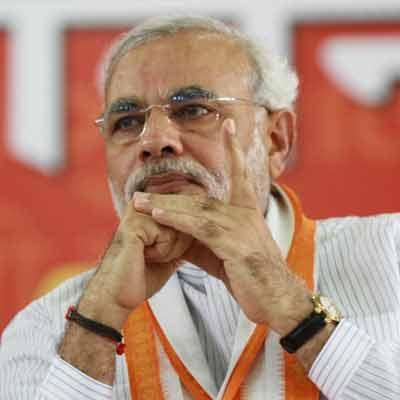
Mizoram Congress Committee slams Narendra Modi, BJP for calling people of north-east 'immigrants'

Aizawl, Feb 6 : Mizoram Pradesh Congress Committee (MPCC) today slammed Prime Minister Narendra Modi for allegedly making false statement about visiting the state, and criticised BJP for calling people from the north east as 'immigrants' in its vision document.

In a strong-worded statement, the PCC alleged that Modi, in his yesterday's campaign speech in Delhi had said that he had visited Mizoram, which he had never done before or after becoming prime minister. "Prime Minister Narendra Modi's campaign speech in Delhi on the evening of 4th February, 2015 came as a great shock to the people of Mizoram when he talked about the North East Region of the country claiming he had visited Mizoram," the statement said. Mizoram Pradesh Congress Committee (MPCC) today slammed Prime Minister Narendra Modi for allegedly making false statement about visiting the state, and criticised BJP for calling people from the north east as 'immigrants' in its vision document. In a strong-worded statement, the PCC alleged that Modi, in his yesterday's campaign speech in Delhi had said that he had visited Mizoram, which he had never done before or after becoming prime minister.

"Prime Minister Narendra Modi's campaign speech in Delhi on the evening of 4th February, 2015 came as a great shock to the people of Mizoram when he talked about the North East Region of the country claiming he had visited Mizoram," the statement said.

Modi might have visited Assam, Manipur, Meghalaya and Tripura after he became Prime Minister but he has never visited Mizoram before or after he became Prime Minister, it said.

It was a 'glaring mistake' on the part of Modi and "an affront to the people of Mizoram who have never seen the present prime minister in person." It also strongly criticised BJP for calling people from the north east living in the national capital as 'immigrants'.

"In its manifesto for the Delhi elections, the BJP said it would protect 'immigrants from the NE Region', a totally unacceptable phrase as these eight states are an integral part of India and its people Indian citizens from birth," the statement said, adding that migrants from the region may be found in the national capital region, but never immigrants.

"These mistakes only show how ignorant the BJP leadership is about the India's Northeast Region which now comprises of eight states - Assam, Arunachal Pradesh, Manipur, Meghalaya, Mizoram, Nagaland, Sikkim and Tripura," it said.

"If they had been as familiar of the NER as Congress leaders are, these gaffes would never have been committed," the statement added.

Northeast Gets its First Solar Power Plant

By: Sujit Chakraborty

Monarchak (Tripura):
North Eastern Electric Power Corporation (NEEPCO) has commissioned a five-MW solar power plant at Monarchak in Tripura, which will be the biggest and the first of its kind in Northeast  India.

"We started generation of power from the solar power plant from Wednesday. The full (5-MW) commercial generation would start within a month after completing some technicalities," NEEPCO general manager SR Biswas said.

The solar power plant was commissioned at a cost of Rs.40 crore. The entire power from the plant would be transmitted to the Tripura power grid.

Biswas said NEEPCO will set up a 50-MW solar power plant in Madhya Pradesh and a two-MW plant in Lanka in Nagaon district of Assam. "As per the government policy, NEEPCO has initiated the process to set up more and more solar, non-conventional and renewable power plants in various parts of the country," he said.
 
Meanwhile, after a huge delay, the ONGC on Sunday night started supplying gas to NEEPCO's 101-MW capacity power plant in Monarchak, 70 km south of Tripura capital Agartala and just eight km from the Bangladesh border. NEEPCO, a mini-ratna company under the Union Power Ministry, has set up the Rs.9.5 billion (nearly $150 million) gas-based power plant in Monarchak.

Biswas said if the supply of gas from ONGC remains uninterrupted, the power project would start generation of electricity from March and the full commercial generation (101 MW) of power would start from August.

He said non-supply of gas by ONGC resulted in loss of Rs.5 crore a month. The foundation stone of the Monarchak power project was laid during the previous National Democratic Alliance government in March 2002 and the Tripura government allotted the required land to NEEPCO in 2003. By using the latest technology, the generation capacity of three existing power plants in Tripura will be augmented by around 70 MW without increasing fuel consumption.