09 June 2014

A Day’s Journey To Explore The Unexplored

By Oken Jeet Sandham

It’s always adventurous to explore the new areas, locations, mountains, lakes, caves, trees and other historical objects. From time to time, scientists, enthusiastic and curious people used to venture out to areas unseen and unexplored. In Nagaland also, there are many areas which still remain unknown.

Local vendors selling local fruits and vegetables at Mao bazaar
Most of these areas are highly potential for making tourist destinations if they are properly developed with basic infrastructures. Rural tourism can really be developed and that will give economic and social benefits to the rural people. This is also one development that will discourage the exodus of rural people to the urban areas searching for their livelihood.

With this idea in mind, Speaker of Nagaland Legislative Assembly Chotisuh Sazo organized a whole day survey on May 31 with a team that included tour operators, officials and media persons to many sites which are highly potential for the development and promotion of tourism.

After briefing all of us by the Speaker, the team under his stewardship left Kohima at about 8:00 AM for a day’s trip to survey many sites highly prospective for the development of tourist circuits. The route is Kohima-Mao Gate-Makhel-Khezhakeno- Pfutsero- Phesachodou- Thepuzu- Chesezu-Chozuba-Kohima. It is like a one-day tour package.

We reached Mao Gate, Manipur at about 9:00 AM and had early lunch there. Generally, travelers stop and have food, besides buying local fresh fruits and vegetables here. Hundreds of passenger vehicles ply on this NH 39 daily and have stopover at this bazaar. Every tourist passing through this historic bazaar can visit the Mao Village which also preserves 2nd World War wreckages. Foreign goods are also sold here at relatively cheaper rates. Travelers can enjoy shopping here.

Then we left for the Makhel Village. It is about 10-minute drive from Mao Gate. The Village bears the testimony of the Nagas. The Makhel Village holds a central place in Naga tradition in connection with a belief that the Nagas at one point of time settled here and later dispersed to their present areas of habitation. The village of Makhel and the surrounding areas have several historical as well as mythological monuments and relics that are of interest to ethnographers, historians and cultural anthropologists. Monolith written about the significance of the Nagas is still preserved at this village.

Some village elders narrated us the importance the village.

After spending about 40 minutes at the Makhel Village, we proceeded to Chida Lake which lies at the periphery of Khazhakenoma Village under Phek district. The Lake can have boating facilities and variety of fishes which can give attraction to tourists. You can move around the scenic green hilltops which surround the Lake. Form the hilltops; you can see the beautiful Tungjoy Village of Manipur. In fact, the areas are pristine sceneries which will have vast tourist fascination.

We had light refreshment at the hilltop overlooking the Tungjoy Village before proceeding to Khezhakenoma Village.

On the way to Khezhakenoma Village, you will find a wayside Medicinal Plant Conservation Area where herbal nursery of locally available medical plants is maintained. The locally found Naga ginseng and other medicinal herbs are grown in the place. Many of us were thrilled seeing at the way medicinal plants were grown in this place, more so of the Naga ginseng plants. These unique herbal medicinal plants will give a charm blend to the tourists. The tourists can also get treated if they so desired.

While going to Khezhakenoma Village, you will come across Zuketsa junction. There is a monolith erected which had inscription written of a friendship treaty between the Phesachodouma and Khuzha Netho Ketshu. It said a stone got split into two. One erected at this Zuketsa Junction while the other at Phesachodou village with the same inscriptions of the friendship treaty written.

At Khezhakenoma Village, historical objects are still preserved. The Speaker was kind enough narrating the significance of the Village. C Kemvu Koza, Village Council Chairman, also shared of the Village’s history. Visitors will never return without knowing the story of this village.

After spending about an hour at Khezhakenoma Village, we set out for the next destination towards Pfutsero Town. Pfutsero Town is the commercial hub in the Phek district. We inspected the Mini Tourist Lodge maintained by the Pfuteromi Women Welfare Society. The double-bedded room is charged at Rs 700 while twin-bedded at Rs 500. They are bathroom-toilet attached and reasonably cleaner and cheaper. Sazo also personally checked all the rooms, dining and conference halls and the records of visitors.

Pfutsero headquarters has two Tourist Lodges and a few hotels. And accommodations for the tourists should not be the problem. The town also has a Baptist Theological College and also Government College. Churches of various denominations add to the beauty of the town. From the Mini Tourist Lodge you can not only see the complete town but also beautiful pristine peripheries of the magnificent town.

From here, we proceeded to Pfutsero’s Glory Peak. From this Glory Peak, you can see the birth’s eye view of Pfutsero Town. Picnics, workshops, meetings etc. can be organized in this place. This place can also be one of the tourist circuits as they can see the town, far off Chakhesang villages and even Kohima and Manipur.

Speaker was narrating every nook and corner of Pfutsero Town to us and the tour operators while having our 2nd light lunch here. Sometimes, we joked with him that “your head is the dictionary of Chakhesang areas.” Although he is Speaker of the Nagaland Assembly, he acted like a tour guide to all of us. In fact before setting out for the trip, he briefed all of us at his official residence saying that, “Today, I will be your tour guide and not as Speaker of Nagaland Assembly.” We spent about one-and-half hours here.

Then we again proceeded towards Phesachodou village. The Speaker is from this village. His village has cultural significance and that is widely known to outsiders. The villagers can present variety of traditional dances and songs to the visitors at the drop of a hat. It is a cultural hub itself. This could be one of the important tourist destinations.

On the way to Chesezu Village, one can see K-Basa Village below the highway. This village has been declared as “Green Village” with all village house roofs painted green under the initiative of Sazo in 2010 when he was Parliamentary Secretary for Social Welfare.

And before reaching Chesezu Village, we had one stopover at Thepuzu hilltop. It was leveled purposely to construct a new village church there.

From this hilltop, you can see a very steep mountain peak called Curhanyi from where it said the Naga army shot an Indian army chopper that was carrying a GOC. He was grievously injured. In retaliation, the Indian army started herding the village male folks but the GOC ordered not to harass them.

The last and the most important one come here. That is Chesezu Village where one of the historical significances took place during the infamous 2nd World War. The leader of the Indian National Army (INA), Netaji Subhas Chandra Bose, came to this village and lived here. The villagers extended material helps to Netaji and his INA troops during their stay in the village. In memory of him, a Committee constituted started constructing a Memorial Center of him. A huge statue of Netaji carved out of stone in sitting position yet to be given a final touch is also here. Near the statue, there is a spring well from where Netaji used to fetch water for his personal use. All these important places including the spring well are still well preserved. Just one km away from the statue, a guest house with amphitheater in the name of Netaji Memorial Center is about to be completed. This will be one of the important tourist destinations once it is dedicated.

So the survey of the tour mapping is unique in the sense that “one-day complete tour package” can be organized - Kohima to Mao Gate to Makhel to Chida Lake to Medicinal Plant Conservation Area to Khezhakenoma Village to Pfutsero and visit Glory Peak at Pfutsero and from there have a birth’s eye view of the town (Pfutsero). Then proceed to Chesezu Village to have a final look at the INA Chief Netaji Shubas Chandra Bose Memorial Center. On the way to Chesezu, one can still enjoy looking at the green village of K-Basa Village and also visit Thepuzu maintain peak from where one can see a very steep and historic mountain peak called Curhanyi from where the Naga army shot an Indian army chopper that was carrying a GOC who suffered grievous injury.

In fact, ecotourism has become one of the fastest-growing sectors of the tourism industry, growing by 10-15% worldwide. One definition of ecotourism is “the practice of low-impact, educational, ecologically and culturally sensitive travel that benefits local communities and host countries.”

Rural tourism can thrive as we can showcase our rural life, art, culture and heritage at rural locations and in villages, which have core competence in art and craft, handloom, and textiles as also as asset base in the natural environment. The rural tourism will also give economic dividends to local communities so also socially. By developing rural tourism, there will be economic development in the villages and thereby preventing the exodus of rural people to the urban areas.


Source: Asian Tribune
National Green Tribunal to Review Ban on Coal Mining in Meghalaya

By Alok Pandey

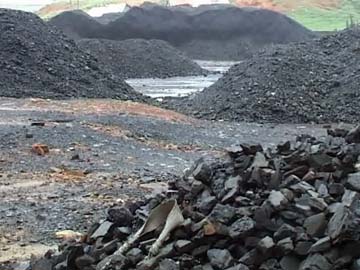
National Green Tribunal to Review Ban on Coal Mining in MeghalayaCoal mining has been going on in Meghalaya since early 19th century

Shillong, Jun 9 :  The National Green Tribunal will hold a meeting in Shillong on Monday to review its order banning coal mining in Meghalaya.

Coal mining has been going on in Meghalaya since early 19th century, but, say estimates by the government, illegal mining has mushroomed across the state in the last two months. Most mines here are of the 'rat hole' variety -- small pits are dug in the ground and people crawl into these pits with next to no safety equipment.

The Tribunal had imposed a ban on mining as most such activities are illegal, dangerous and extremely polluting.

Locals have claimed that the ban will lead to the loss of two lakh jobs and have demanded that the government undertake rehabilitation measures for those who will be affected by the decision. According to latest figures by the Meghalaya government, the state produces nearly 58 lakh metric tonnes coal annually.

Most immigrants, who are employed in the numerous coal mines in the region, are now leaving for home.

Loud protests by coal miners in the region have prompted a rethink by the National Green Tribunal, which will meet on Monday in Shillong to review its order.

In the monsoons, many mines reportedly get flooded, resulting in a large number of casualties.

In 2012, 15 miners drowned in one such incident while in December 2013, five miners lost their lives when the cable attached to the coal bucket they were riding in -- towards the bottom of the mine -- snapped. Because the employees in these mines are immigrants, there are usually no records of deaths or injuries.

As many as 200 miners died in Meghalaya's coal mines in 2012, according to reports by the local media.

The Tribunal ban order also points out that coal mining in Meghalaya has led to immense air, water and soil pollution; the damage caused so far is irreparable

The locals are not convinced by these arguments and have demanded that the Tribunal should provide alternate employment if mining is banned.

In its meeting on Monday, while reviewing the ban, the NGT will have to weigh the environmental hazards and safety issues posed by illegal mining against the loss of employment to lakhs of people.

The North-Eastern Challenge

By Sanjoy Hazarika

In a region like the North-east, where few groups actually constitute a numerical majority, the State has been involved in unending and fatiguing efforts to deal with a cycle of demands and counter-demands

The recent attacks and killings in Assam, Manipur and Meghalaya by armed non-State groups represent a challenge and test for the Narendra Modi government and the need to understand the frustrating complexities of the North-eastern region.
Things are not being made easy after strident demands by the newly elected Bharatiya Janata Party MPs from Assam to rid the State of “Bangladeshis,” a phrase that many from the minority community say is aimed at targeting them, irrespective of nationality, and one that can swiftly turn into a security nightmare not just for governments in Delhi and Dispur, but also for ordinary people caught up in a storm. For a moment, the “Bangladeshi” issue has moved away from the headlines because of other events that have captured public attention.
A Superintendent of Police in Assam’s Karbi Anglong district was shot dead when his tiny unit was engaged in a fight with an armed group wanting a separate state for the Karbi community in the jungles of Assam’s eastern hills — the second major setback that the police in the State have suffered, an Additional Superintendent having fallen earlier to the bullets of an armed faction from the Bodo tribe.
Some 400 kilometres west of Karbi Anglong, blurred images emerge of a woman who was executed gangland style execution after she resisted rape by men from the “Garo National Liberation Army” in Meghalaya. The GNLA was launched five years back by a former police officer, who is now in police custody. But the group is still active, extorting funds, and carrying out strikes against security forces and civilians.
Rise of insurgent factions
The law and order situation in the Garo Hills, the home district of Meghalaya Chief Minister Mukul Sangma, is such that a top official says that his men could not have moved to the village of the murdered woman at night as they got word of a possible attack on police convoys. They got the news when the woman’s family walked into a police station and told them what had happened. This is a poor reflection of police capacity, underscoring the need for better equipment as well as strong political leadership.
These issues underline both the ethnic and social complexity of the North-eastern region, home to over 200 ethnic communities, as well as how political mobilisation and armed violence have changed in these past years. While the principal militant factions have been sitting at the negotiating table with New Delhi or in “designated camps” for years, be it the Nagas, Assamese, Karbis, Bodos and Garos, they are being sharply challenged by smaller, more violent, breakaway factions.
Armed with new weapons which are easily available in the illegal small arms markets in the region, combined with new technology and better connectivity, these groups are demonstrating the seamless manner in which they can move across State borders.
The level of violence is especially stark when contrasted with the extraordinary beauty of the countryside across all States, although the towns and cities, as elsewhere, are turning into ugly urban sprawls. The Bodo-Muslim riots in 2012, which displaced nearly half a million people, and the incident earlier this year when over 30 men, women and children were butchered by armed men in the Bodo areas are examples of such violence. All the victims this time were Muslim and the resonance of public anger — of minority as well as non-Muslim, non-Bodo groups — was visible in the overwhelming victory of a non-Bodo candidate in a Lok Sabha constituency.
Amid this fabric, what is often forgotten is the chain of interconnected events and the contemporary political narrative: thus, in the Bodo Territorial Council areas, the first attacks on Muslim and other groups took place in the Bodo areas in 1993. Earlier, few such incidents were reported. There were tensions over land issues but these had not spiralled into the bloodshed that followed later.
There is another process that the Modi government will be aware of — that of manufactured consent. In a region like the North-east, where few groups actually constitute a numerical majority — one is not speaking on religious but ethnic grounds here — the State has been involved in unending and fatiguing efforts to deal with a cycle of demands, counter-demands, agitations and resolutions. This has dominated the political discourse in the region. Thus, almost every State experiencing conflict is witness to a non-violent process by a group demanding greater powers — such as for a community or group of communities, putting forth an overall set of political demands such as greater autonomy or a separate State. Yet, this runs almost in parallel with violent movements for, ironically, either similar demands or, going a step further, for “independence.”
This began with the Naga movement in the 1950s and spread to the Mizo Hills, Manipur, Assam, Tripura and Meghalaya, although in the latter, armed movements rose against their own State governments in the 1990s.
In almost every movement, “outsiders” have been targeted — whether it is those from another State, of a different linguistic or ethnic group or the so-called “Bangladeshis.” Yet, today, in almost every State, major armed organisations which have thrown challenges to Delhi over the past six decades have abandoned the gun and are either negotiating with the Centre or engaging in ceasefire. The most visible sign of this was the landslide victory of a former leader of the United Liberation Front of Assam from the Bodo areas. He crushed the official Bodo candidate in the Lok Sabha election and took his oath of allegiance to the Constitution in Parliament — the very Constitution against which he had taken up arms earlier.
Yet, agreements and semi-agreements have been the pattern in the region. These have a history of spawning breakaway groups which claim to be “anti-talks,” yet want to be at the table with the big boys; they hit hard at easy targets, showing the difficulties that police and other forces face in moving through difficult terrain. The smaller groups too want a share of the funds flowing into the region and the power that goes with it.
Political will is critical to dealing with this. Small States like Meghalaya have been adversely hit by the disinclination of both government and Opposition leaders in taking a tough line on the “boys” in the Garo Hills. Earlier Chief Ministers had demonstrated political courage, authorising crackdowns that forced Khasi and Garo groups to the negotiating table. It is also not a mere coincidence that the armed groups concentrate on the coal-rich areas of the Garo Hills where extraction is highly profitable and where prominent political figures are said to have business interests.
Thus, a pattern has emerged over the past decades — New Delhi, to use a BJP catchphrase, has always tried to appease the largest group agitating or fighting for a cause or one which is prepared to talk. It has not tried to resolve the core issue or issues which involve a broader and deeper dialogue with other groups, and with non-government and civil society figures, scholars and organisations. Without that kind of work, through mediators and counsellors, no agreement can work or last.
Perhaps Delhi thinks it is just a matter of being politically “realistic” — but such realism has backfired time and again. This was most evident during the standoff between Telangana and Andhra.

And the North-east, with its many divergent and parallel ethnic mobilisation processes, is a far more difficult place. This then is the problem with what one could call “manufactured comfortable consent” — such agreements rarely last,for they are designed for short-term gains such as placating a demand, winning an election, creating a new elite and giving the government some breathing space. Often, the agitators are not as representative as they claim to be.
Focus therefore is of the essence, and not haste.
No to rights abuse
The Centre should not be diverted by recent events and instead concentrate on speeding up the prolonged Naga negotiations (now on for nearly 18 years). The Delhi-Naga talks do not even have an official negotiator as former Nagaland Chief Secretary Raghaw Pandey quit before the election to join the BJP but did not get a nomination. Other negotiations also need to be pursued with vigour and vision.
The Modi government must send a clear and unambiguous message to its members and followers that they cannot take law into their hands over the issue of “Bangladeshis.” This could spread fear, tension, mistrust and worse in Assam. Due process must be followed — otherwise there is acute danger of violence, tragedy and abuse of human rights just because of a person’s religion. Isn’t the Pune murder of the young Muslim techie by Hindu thugs a warning and wake-up call? The media must play a sober role in this because definitions of “Bangladeshis” are often blurred and arbitrary.

We need to abide by the recent judgment in the Meghalaya High Court which, while stating the obvious, defined a Bangladeshi as someone who came to India after the creation of Bangladesh in 1971. Many tend to look at much earlier cut off dates in their search for “illegal migrants.”
New Delhi needs to inform all State governments in the region — whichever the party — that the murder of innocents, of whichever ethnicity, religion or language group, and the abuse of rights by armed groups (or security forces) and local thugs is unacceptable. Such violations need to be met with a cabrated robust response aimed at showing results in a specific time frame.
(Sanjoy Hazarika is director of the Centre for North East Studies and Policy Research at Jamia Millia Islamia, New Delhi. The views expressed are personal.)
06 June 2014

World War-era Hospital in Mizoram Stands Test of Time


Aizawl, June 3: A government hospital in North Vanlaiphai, a village in eastern Mizoram near the Myanmar border, has withstood the test of time, including Japanese air strikes during World War II.

Legend has it that the heritage hospital is also a silent witness to an attempt on the life of Lt Gen. Sir William Slim, a British officer commanding Burma Corps.

As the hospital celebrated its 100th birthday today, the memories of the upheaval it had gone through came flooding back to a few surviving witnesses.

“There was a thunderous sound in the sky and six Japanese jet fighters appeared from nowhere. Heavy objects fell from the sky and exploded,” an 87-year-old villager recollected. The date was March 28, 1944.

Though the entire village suffered from the Japanese aerial attack, the hospital and its adjacent quarters bore the heaviest brunt, according to R.L. Buatsaiha, 66-year-old retired headmaster of a government school in the village, who interviewed witnessed and documented the incident that failed to figure in history books.

Buatsaiha interviewed a number of people, most of whom have now passed away.

“Six bombs were dropped, which meant that each jet fighter dropped a bomb each. The fighter aircraft also swept the village with machine guns,” Buatsaiha says.

“Smoke billowed, darkening the sky. The villagers ran helter-skelter while many prayed to God for help,” he adds.

Miraculously, except for a few persons who suffered injuries and a pig that died, not a single person died in the attack despite the fact that there were five patients on hospital beds at the time of the attack, he said.

The hospital’s quarters were damaged beyond repair. Luckily, the doctor was on a holiday at that time, otherwise, he would surely have died, says Buatsaiha.

Till recently, the ground near the hospital had craters following the bombings. It was later discovered that the hospital bore no Red Cross mark. “But, the craters have now been filled by the owners of the land. The bullet holes in the hospital and the doctor’s quarters are the only remaining testimony to the forgotten attack during World War II,” Buatsaiha says.

Even though no one knew the motive behind the Japanese surprise attacks, it was believed that Lt Gen. Slim was the target. But no one knew if the British army officer was actually in the village at the time. All that the villagers knew was that a British army official was staying at the inspection bungalow near the village.

“Located near the Indo-Myanmar border, North Vanlaiphai was a strategic place for the British army. It had an inspection bungalow and British soldiers occasionally camped in the village. This was enough reason for the advancing Japanese to attack,” he says.

North Vanlaiphai branch of the Young Mizo Association has preserved the craters and bullet marks. Even though the hospital, commissioned in 1913, had completed 100 years last year, the celebration was postponed because of the Assembly elections.

It is one of the few surviving buildings built by the British and it has been declared a heritage building by the Mizoram government.

The grand centenary celebration, organised by the village council of North Vanlaiphai today, was graced by chief minister Lal Thanhawla. He said it was a matter of great pride that the centenary of a British-era hospital was being celebrated and congratulated the people of the village. Health minister Lal Thanzara, who attended the function as chief guest, promised that the hospital would be upgraded with modern technology without infringing on its heritage value.

Zodin Sanga

Nagaland is Rich in Gold, Says Geologist

"There's gold in them thar hills" was a promotional campaign that ran in Georgia in the US for almost a century from the 1830s and this could well apply to the Naga Hills straddling India and Myanmar, which are a promising place to prospect for the yellow metal, according to a geologist who has worked extensively there.

The discovery that can potentially put Nagaland on the gold map has been reported by Naresh Ghose, a retired geology professor of Patna University in the journal Current Science. His conclusion has emerged from an intensive study of rocks called "ophiolites" found in that region.

Ophiolites are slices of what were once the ocean floor but were thrust on to the continental crust more than 65 million years ago by the action of what geologists call plate tectonics, a mechanism that gave rise to the Himalayas.

The hill ranges of Nagaland and Manipur bordering Myanmar are one such place on earth where an ancient oceanic crust had emerged on the land as a result of collision of the Indian plate with the Eurasian plate.

The Naga Hills Ophiolite (NHO), as this region is called, consists of a variety of sedimentary rocks. Though the NHO was discovered in the 1970s its potential as a source of minerals was not realised till the 1980s when Ghose launched the study.

According to Ghose, the inaccessible nature of the terrain and lack of infrastructure are among the major constraints for undertaking a systematic study and exploitation of the NHO. Ghose says his preliminary study has brought to light the occurrence of gold in NHO in the native as well as in alloy form.

Ghose's study dealt with rocks exposed as ophiolite at the northern and eastern margin of India along the suture zone where India and Eurasia collided to form the Himalayan mountain range. About 1,200 thin sections of rocks collected from across the NHO by his students were analyzed using instruments at the Geological Survey of India (GSI) in Bangalore and were found to contain grains of both native gold and gold-silver alloy, the report said.

Gold mineralization in layered sections of Ophiolites "opens a new avenue for searching for primary gold in NHO," Ghose told IANS.

According to the report, gold in pure form and also as gold-silver alloy, is found to occur near Sutsu, a village in Phek district about 60 kilometres from Nagaland capital Kohima. Small, detached lenses or larger bodies of "gabbros" (igneous rocks) are encountered between Tizu River gorge and Lacham Lake in the central part of ophiolite belt. The largest body of ophiolite - three km in length, 2.5 km in width and 300 metres thick - is present east of Moki, the report said.

Ghose said that sediments in the northern and central parts of the ophiolite belt are favourable sites for exploration and prospecting of noble metals. Similarly, a search for placer deposits in the Tizu River and its tributaries flowing across the northern part of the ophiolite belt "is also favoured as an alternative prospect of secondary gold".

According to GSI, India now produces gold from Hutti, Uti and Hirabuddni mines in Karnataka and as by product from sulphide deposits of Khetri in Rajasthan and Mosabani, Singhbhum and Kundrekocha in Jharkhand. The Puga geothermal system is a "hot spring type" epithermal gold deposit in the making in the Ladakh region of Jammu and Kashmir.

Ghose said that the ophiolitic rocks of mantle and oceanic crust parentage at the continental plate margin in northeast India "have vast potential for intensive research and economic growth".

However, the extent of gold reserves in Nagaland cannot be predicted on the basis of his preliminary study. "It calls for a more detailed geophysical and geochemical studies," Ghosh added.

IANS (K.S. Jayaraman can be contacted at killugudi@hotmail.com)

Bringing Taste of Northeast to The Capital

From sana thongba from Manipur to tokhan chicken from Tripura - Rosang restaurant takes pride in bringing flavours from northeast India to the capital.

And guess what? Backed by strong word of mouth, it boasts of loyal customers from countries like Japan and Britain, who invariably visit when in town. So, when the restaurant came up with a Manipuri food festival this month, I made sure to check out what the buzz was all about.

Manipuri couple Mary Lalboi and Muan Tonxing, also the chef of the eating joint, had no experience in the hospitality industry. Their passion for cooking and the desire to open a restaurant serving cuisine from all eight states of northeast - Nagaland, Mizoram, Manipur, Assam, Meghalaya, Arunachal Pradesh, Tripura and Sikkim - brought them here.


In 2003, they successfully opened a joint in Munirka - a hub for northeasterners.

"We shut it down in 2012 as there were parking issues and all. We had opened a branch in Safdarjung Enclave in 2006, but that is more for home delivery. We opened this one in Green Park Extension in January. It became operational from February," Lalboi told IANS.

Their choice of location has helped them get impressive footfalls.

"A majority of our customers are from mainland India and not just from our region. Thanks to word of mouth, people from Japan and Britain also eat at our restaurant. We also get foodies from Goa, Mumbai and Bangalore," said the entrepreneur.

Sourced from different states of the northeast, the ingredients make people from the region feel homely and the others get to treat their taste buds with something different.

"Be it herbs or even ginger, we get them flown from our region to ensure the authenticity and freshness," she said.

The restaurant is an effort made by the couple to promote their culture through food and decor. They are so involved in it that they don't want alcohol to steal the limelight.

"If you eat and drink, the uniqueness of the cuisine will get lost. You won't be able to enjoy the flavours properly and we don't want to be known for selling wine and beer or other drinks," said Lalboi, a graduate in economics with a Bachelor of Education degree from her home state.

Priced at Rs.900 for a meal for two, one can enjoy sana thongba from Manipur, tokhan chicken from Tripura, bilahi masor tenga from Assam or nuoshi from Nagaland sitting in a cosy room on wooden furniture made by Tonxing.

I decided to taste the homely Manipuri dishes.

The thali was a visual treat. The red rice gave me a break from the usual white or brown rice. Placed right in the centre, it was surrounded by iromba - a cold preparation mostly of boiled vegetables and fermented fish. The mildly spiced dish went well with fried dry maroi bora and singju - made of raw vegetables like cabbage and lotus stem.

The chicken curry served in a bowl was also low on spices. With small pieces of onions and a heavy dose of turmeric, it reminded me of chicken dish made back home in Manipur.


The other bowl containing a yellow peas and bamboo shoot dish called mangan ooti looked darker than the usual. When asked, the chef said: "Pomegranate leaves have been added to it for flavour and colour."

The traditional cuisine tasted even better with a red rice beverage. It has a striking resemblance to red tea but doesn't taste anything like it. Made with ground red rice and boiled water, it was so well strained that not a single rice piece floated in my glass. The brown sugar and lemon peel made it even more flavoursome.

On till May 31, those who miss home-cooked food and are away from Manipur to pursue higher education or job opportunities here or even those who are curious about Manipuri cuisine and other states of northeast should visit the Rosang.

IANS

Assam: Top Cop Killed in Encounter with Militants

By Surabhi Malik
Assam: Top Cop Killed in Encounter with Militants

Nityanand Goswami killed in encounter with Karbi People's Liberation Tigers (KPLT).

Guwahati, Jun 6 :  A senior police official from Assam's Karbi Anglong district was killed during an encounter with militants last night.

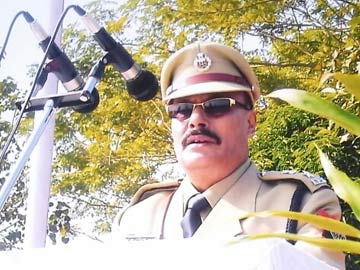
Nityanand Goswami, the Superintendent of Police of Assam's Hamren police district, was leading three police parties in an operation against Karbi People's Liberation Tigers (KPLT) in a remote forest area of the district where they came face to face with a large group of the militants who opened fire on them.

The police team retaliated and in the ensuing encounter, Goswami and his personal security guard were killed. Their bodies were recovered this morning.

The KPLT was formed in 2011 to demand that an Autonomous Karbi State (AKS) be carved out of Assam.

It is a breakaway anti-talks faction of the ethnic insurgent Karbi Longri NC Hills Liberation Front (KLNLF).

Militants Creating Artificial Shortage Of Eggs, say Manipur Traders

By Iboyaima Laithangbam

Imphal, Jun 6 : There is an artificial shortage of eggs and fish transported from Andhra Pradesh to Manipur, resulting in unreasonable price hike. Two organisations, All Manipur Fish and Egg Traders Association and Nupi Keithel Sinpham and Saktam Kunba Lup blame the rebel group, the National Socialist Council of  Nagalim (Isak-Muivah) for this.

Vijayalakshmi Tayenjam, the joint secretary of the Association told reporters that the NSCN (IM) is banning the transportation of fish and eggs to Manipur through Nagaland.

This is despite the forcible collection of various illegal taxes from the traders and vehicles of Manipur by this rebel group. She further said that to fish mongers had ganged up with the rebel group to monopolise the fish trade in Manipur. In fact these two traders have been asking all fish shops in the capital to buy fish from them only.

Mangi who is the president of the Saktam Kunba Lup said that though several persons had been killed and vehicles destroyed along the highway that passes through Nagaland the state and the central governments have not lifted a finger.

She further said that transportation of fish and eggs to Manipur via Nagaland was banned from May 17. She said that the government should solve it within June 10 failing which there will be agitations.

Reports say that as a result of ban on such transportations prices of eggs and fish have been hiked beyond the reach of the common people. As people cannot buy the fish and eggs at the exorbitant prices many of the shops were closed down.