President Obama visiting Burma may seems to be too early in lending
legitimacy to the quasi military government of Burma whose hands are
still soak with blood but it is understandable that strategic raison
d'être overtakes the human rights concern vis a vis China.
But it will be wise for the 2nd Obama Administration to balance his
Asian strategy with the human rights considerations now that the
genocide and ethnic cleansing is still going on Northern and Western
parts of the country where the quasi military government is relentlessly
pursuing its age old policy of killing, raping and displacing the
ethnic nationalities.
We applauded him that his visit is confine to Rangoon and not to
Naypyidaw whose capital was built secretly by the sweat and blood of the people and that President Obama continue to call the country
Burma instead of the chauvinistic name of
Myanmar.
Since his stop is over only half day, after resting at the posh
Chatrium Hotel, he should meet Daw Aung San Suu Kyi and Thein Sein at
the Convocation Hall of the Rangoon University as a sign of encouraging
democracy and education in Burma. We do hope that with so many Asian
experts in the administration the President will comprehend that there
is an un-reconcilable difference between the Myanmar and the Non
-Myanmar.
The psyche and rationale of an average Myanmar view the ethnic
nationality as somewhat the necessary evil of the country where he is
destined to live forever and that it is his unbounded duty to lead him
to civilization. He/she must be showed the real civilization of the
Myanmar people over the Non-Myanmar and finally lead him to Theravada
Buddhism on to
Nirvana. Whereas the ethnic nationalities view that the Myanmar people spearheaded by the
Tatmadaw
is still uncivilized as shown by their actions especially in the
killing of students, women, children and even Buddhist monks and the way
they are behaving for the past half a century or more and should be
brought back to civilization and educate them to be in the international
standard as they are coiled up in their own fantasies.
On the other hand the Burmese intellectual view that the ethnicity is
an incurable disease -both the dominant one and the others – as an
infectious disease which no one is immune to it. Some are able to take a
step back and reflect on their own (taught) prejudices while others
find ethnic sentiments to be too powerful to embrace. Underneath the
beautifully worded chronic affirmation of liberal-sounding principles of
federalism and other policies lurks these powerful 'primordial
feelings'. It is highly debatable whether ethnic consciousness is
'primordial' as some anthropologists and political scientists have
asserted (e.g. Clifford Geertz) or whether it is a result of a conscious
political socialization, however rudimentary and 'primitive' the
process may be.
An average Burmese could not comprehend whether ethnicity
consciousness is an manufactured item or genetic (born) and he knows
only that ethnic flame rages on at the core of Burma's politics. Many a
Myanmar Buddhist harbors an extreme frightening sentiment of Hitler's
Final Solution as a model for protecting racial and ethnic purity of
people or peoples considered indigenous to the land. The end result is
ethnic cleansing still going on in Northern and Western Burma. It will
definitely 'shock and awe' the readers, to copy the ethnic cleansing on
the Rawanda lines but it offer a glimpse of what will happen if the 2nd
Obama administration did not curb it and the classic example is the
treatment of Muslims in Arakan. No doubt the ethnic nationalities will
be looking to Obama, considered to be the leader of human rights and
democracy to put some sense on the Burmese administration and the
generals.
Contemporary history has demonstrate that the classic, if misleading,
debate about the two seemingly opposing priorities or missions -
democracy versus ethnic self-determination - has, over the past 50
years, been a major cause of spectacular failures to forge any type of
genuine solidarity - both in spirit and organizationally in the
country's modern political history. The late Prime Minister U Nu and his
armed resistance movement parted way with their resistance brothers
(and sisters) - the Mons, the Karens, the Shans, etc. - in the early
1970's over this issue, and collapsed thereafter. As far as opposition
groups, the outlook toward this ethnic question evolves, progressive or
regressive - depending on the policy and behavior of Burma's main
political player the generals are not adjusting their views toward
ethnicity or the manner in which they will debate with anyone on it.
On the other hand the ethnic nationalities of Burma are waging a war of survival against the Orwellian type of dictatorship
It is against what they call the three A's -- Annihilation, Absorption, and Assimilation
of the Non Myanmar by the Myanmar. In fact, just entering its seventh
decade, it's the world's longest-running war for autonomy. The Burmese
government is making a token attempt at democracy and able to convince
the West to drop the punitive actions and re-open economic relations and
accepted in the community of civilized nations.
"If they cannot bring the country's ethnic nationalities into
the fold, their chances of selling legitimacy on the back these
elections are slim, to say the least."
No doubt, the regime was able to bring in Daw Aung San Suu Kyi and
the NLD with the rigged constitution and the sham elections and now
Obama’s visit has reinforced its legitimacy.
But the American President should know that the
Mahar Myanmar (superior)
attitude which identifies with the state has played a very important
role in driving the ethnic nationalities to desperation and to
rebellion. It became the character of the state that drove all the
ethnic nationalities to rebellion. Will Obama and Clinton make these
sentiments known to the Burmese administration and generals is still to
be seen?
The conflict of present Burma is neither the legacy of colonial rule
nor is the secession rights entailed in the Union Constitution. But
rather the chauvinistic mindset and Myanmar superior ethno-centrism
possessed by the ethnic Myanmar thinking that majority Myanmar ethnic
groups are superior to the rest of the Non Myanmar and other
nationalities was the main raison d’ être of Burma's internal conflict.
The tyranny of the majority Myanmar and the blatant refusal to accept
the equal status of the rest of the ethnic nationalities as equal
partners of the Union dragged Burma into a conflict zone. One should
understand that the colonial rulers had fully recognized the national
sovereignty, self-determination, and legitimate independence of the
Chin, Kachin, and Shan nations and Karen as a distinct from the majority
Myanmar.
The non-Myanmar leaders collectively attempted to readdress the
Constitutional crises based on federal system as envisioned in the
Panglong Conference,But
U Ne Win staged a military coup with the pretext of saving the Union
from breaking up. However the chief reason behind his action was driven
by the fact that his chauvinistic view of Myanmar being a superior
ethnic groups or big brothers to the rest of other nationalities, and
that very notion motivated.
In the making of modern Burma it should be recollected that U Aung
San returned to consult the leaders of these independent nations that he
had no right whatsoever to represent in the up-coming London talk. In
the conference that was held in February 1947 after he came back from
London, U Aung San had fully acknowledged the national sovereignty of
Chin, Kachin, Shan and Karreni. From the time the Union of Burma became
independent in 1948 until today, regardless of the parliamentary
democracy era under Prime Minister U Nu, the Revolutionary Council later
known as the Burmese Socialist Program Party (BSPP) which later
continue as the State Law and Order Restoration Council (SLORC) under
Saw Maung, and currently the State Peace and Development Council (SPDC)
under Than Shwe, and now the new administration by Thein Sein
administration are all of the same belonging to the Myanmar ethnic
group.
Their underlying philosophy behind their grip on power is driven by
the same ideology. Their view is to hold up Burmese as a superior one
and maintain that the Myanmar should control the Union by exploiting the
rest of the other nationalities. Their move is to be interpreted as a
force to assimilate all the diverse ethnic groups into Myanmarnization.
The late Dr. Choa Tzang eloquently pointed out that:-
“It is important for all the races, especially for the Myanmar to
fully embrace the idea of equality. Many Myanmar seem to think of the
Myanmar as superior, or as Big Brothers, although there is no evidence
of the Myanmar being superior to any race, collectively or
individually.”
So Obama should simply tell these Burmese leaders that until and
unless the Myanmar ethnic groups discard the superior ideology of their
nationalism, no stable Union can be established, and that a more sober
and educated Myanmar should lead and educates the rest of the populace
or face Balkanization.
Every one knows that Thein Sein government’s engaging with Aung San
Suu Kyi is strictly on individual basis and he is in a position to pull
the rug under her feet anytime, if the going get rough or if the hard
liners in the
Tatmadaw got the upper hand. Now that the crucial
point of achieving the much craved legitimacy has been achieved by the
visit of the first American President he is in a position to reject the
Panglong Agreement of
1947 and embark on ethnic cleansing that will enforced the ethnic
nationalities to draw the conclusion that any Myanmar dominated
government is untrustworthy and lack of historical responsibility to
right all the wrongs that have accumulated all these years. President
Obama should know that the ethnic nationalities are ready to be part of
the federal union, if their rights of self-determination, equality and
genuine democracy are achieved and the American teams should emphasize
on this.
In a legal sense, President Obama have known that the Union of Burma
ceased to exist when General Ne Win’s Revolutionary Council, in 1962.
The successive military regimes including the current Thein Sein
government, are only aggressors and colonizers, occupying all the ethnic
nationalities’ areas by force and the ethnics are fighting a justified,
defensive war to uphold their sovereignty and rights of
self-determination Taking cue of the international mood and regional
configuration, most ethnic nationalities have opted to rebuild a new
genuine federal union and Obama should encourage this and stop the
ethnic cleansing in Kachin and Arakan states.
It won’t do the regime any good by just clinging to its fraud ridden and manipulated, the
Nargis Constitution,
as if it is being carved into the stones, which all have to abide
without question. After all, Burma has come across 1948 and 1974
Constitutions and this
Nargis Constitution won’t be the last one
either. The Thein Sein Administration is trying to enforce some
piecemeal handout and force the ethnic nationalities or to forget the
Panglong Agreement,
forsaking their national identities and sovereignties accorded to them
by their forefathers. Obama should hint that the men in Naypyidaw to
come straight to the point, by releasing all ethnic political prisoners,
ceasefire with the Kachin, enforced law and order in Arakan and make a
comprehensive peace call to all armed and unarmed political oppositions.
Daily life is little changed in many of the ethnic states, with
Tatmadaw domination.
Military offensives, especially in the Kachin and Shan States, as well
as communal violence in Arakan State, have caused many citizens to
question the likely shape of the future of Burma.
Obama visit to the Indo-China countries is a concerted effort to counter
China’s growing influence which has become America’s major focus, if
not obsession, of the US re-balancing in the Asia-Pacific. But he must
also know that authoritarian if not totalitarian regimes have dominated
this part of Southeast Asia peninsular not only in the former socialist
countries (Burma, Cambodia. Laos and Vietnam) but also in Thailand and
the use of force is still ingrain in their hearts. America have now
repositioned with the emerging strategic landscape. Next year, Thailand
and U S will celebrate the 180th anniversary of their diplomatic
relations and US Defence Secretary Leon Panetta, is arriving to
revitalize military cooperation with Thailand since the Cold War.
Thailand’s close relations with China especially when the South China
Sea territorial disputes are high on the agenda, her behavior toward
China would always be friendly have ironically increased
Naypyidaw’s strategic value for the US.
Burma’s ability to say no to China over the
Myitsone Dam in
Kachin State late last year demonstrated its desire to distance itself
from China’s dominance and lessen the dependency on Beijing it had built
up over the past three decades. That kind of clear action and policy
has steered the US to move faster to normalize relations with Burma,
which was once branded and condemned as a pariah state by the US and the
West. The Thein Sein government has responded well to US demands in the
past several months. Obama’s visit is a big endorsement of the ongoing
reforms and future plans to integrate with the international community.
However, continued serious human-rights violations and the plight of the
Muslim minority in Arakan State and genocide in Kachin state will cloud
the president’s stopover in Rangoon. President Obama’s will have to be
very careful that strategic concern will not overshadow the human rights
situation and for democracy even though Washington’s invitation to
Naypyidaw
to join the Cobra Gold war games as an observer next year sends a clear
signal of what the US strategists have in mind. Burma’s international
integration in both economic and security areas are priorities that will
increase the overall capacity to lessen reliance on China.
Cambodia host of the 7th East Asia Summit (EAS) and is the current
chairperson. Joining the EAS, Washington has skilfully used ASEAN -led
multilateral security platform to its advantage Credit should go to US
Secretary of State Hilary Clinton, who successfully highlighted the
importance of freedom and safety of sea-lane communications in the South
China Sea in July 2010. Since then, the US has made this the basis of
its support of ASEAN’s ongoing effort to draft a binding regional code
of conduct in the South China Sea, which has put China on the defensive.
Singapore and Vietnam have linked with each other as part of the new US
strategic balancing framework. All in all President’s Obama visit will
be a Win Win situation for everyone provided human rights consideration
in Indo-China countries improves.
End Notes
1. He is Obama and not O Myanmar
2 Zaw,Aung;
What Message will Obama Bring in
Irrawaddy 14-11-2012
3 Perspective of Dr. Maung Zarni in several of his writings
4 Ibid
5 Perspective of Dr. Maung Zarni
6 See the writings of Daniel Pedersen in his Karen Insurgency Chronicle
7 Za Ceu Lian, Salai;
The Crux of the Ethnic Conflict in Asian Tribune 23-4-05
8. Za Ceu Lian, Salai;
The Crux of the Ethnic Conflict in Asian Tribune 23-4-05
9. Sai Wansai UNION OF BURMA: Rejecting Panglong Agreement could reignite extreme type of self-determination 29-8-2011
10. Chongkittavorn; Kavi
Obama visit to Firm up US Policy on Asia Irrawaddy 12-11-2012
11. Chongkittavorn; Kavi
Obama visit to Firm up US Policy on Asia Irrawaddy 12-11-2012
Source:
asiantribune.com


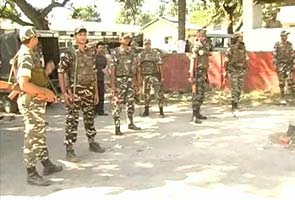 Guwahati, Nov 16 : Two months after Assam witnessed its worst
ethnic violence in a decade, the epicentre of those riots, in which more
than 99 people were killed and five lakhs displaced from their homes,
is simmering again.
Guwahati, Nov 16 : Two months after Assam witnessed its worst
ethnic violence in a decade, the epicentre of those riots, in which more
than 99 people were killed and five lakhs displaced from their homes,
is simmering again.