02 April 2011

Elections Come And Go. But Assam Immigrant Issue Goes On Forever

A quarter century post the Assam Accord, political parties in the state still seek votes on the issue of illegal Bangladeshi immigration, reports Kunal Majumder

The border district of Dhubri, sandwiched between the Brahmaputra and Gangadhar rivers in Assam, has traditionally been a river port. After partition of the subcontinent, this Muslim-majority district turned into a major transit point for illegal trade on the Indo-Bangladesh border. The 44.5-km water border also allows Bangladeshis to cross over in boats on the pretext of trade and quietly merge with the Indian population, first in Assam and then the rest of the country.

Eternal stream Traders come every day from across the porous border, often bypassing the checkpoints. Many have no intention to return (Photos: Shailendra Pandey)

With Assembly elections from 4 April, the issue of illegal Bangladeshi immigrants is on the top of everybody’s minds. Even the banned separatist group United Liberation Front of Asom (ULFA) talks of the ‘threat’, though its leaders get sanctuary in Bangladesh. ULFA foreign secretary Sashadhar Choudhury confirmed to TEHELKA that the presence of foreigners in Assam will be part of the peace talks with the Central government.

On 3 February, Dhubri Police had caught two trucks full of cough syrup. Earlier that day, the police caught two men trying to pass off fake currency amounting to Rs. 49,000 in the market near Pathor Ghat. The prime accused was a 28-year-old farmer Karim Ali, whose farmland is attached to the border fence. “A person called Bokhar Ali came to my farm in Jhowkutti and gave me 98 notes of Rs. 500,” he says in Bangla. Dhubri Police Station officer incharge HC Deha says, “Bokhar Ali promised to pay him Rs. 5,000 if he could use these fake currency.” Karim didn’t know how to spend so much of money, so he took the help of 24-year-old mason Noor Islam. Somebody in the village tipped off the police and they were arrested in Dhubri town. Where did Bokhar Ali come from? After much reluctance, Karim says softly “Oi pare” (the other side).

People like him from ‘the other side’ have been an emotive issue since 1979, when Prafulla Kumar Mahanta and other student leaders of All Assam Students Union and the All Assam Gana Sangram Parishad agitated for the expulsion of illegal immigrants. After the 1985 Assam Accord with then prime minister Rajiv Gandhi, Mahanta won the elections as head of Asom Gana Parishad (AGP) to become the youngest person in India to become the chief minister. The AGP returned to power in 1996 and was also part of the NDA coalition under Atal Bihari Vajpayee. Having been in power, he now claims nothing can be done on the issue of illegal immigrants at the state level. “I did my best. Nothing more can be done at the state level. It is completely up to the Centre,” says Mahanta.

His former ally BJP has a different view. Though chances of it coming to power in this poll are dim, the BJP has promised to detect and deport all illegal Bangladeshi nationals. To pump up the tempo, it put Varun Gandhi in charge of the poll campaign. Immediately after his appointment in October last year, Gandhi organised a big rally in Nagoan with party president Nitin Gadkari wherein he declared that Bangladeshi influx is the main poll plank of the BJP, along with corruption.

ON THE criticism that BJP did nothing on the issue while in power at the Centre, P Chandra Sekhar, BJP organising secretary for the Northeast, has a quick rebuttal. “It is absolutely not true. The main obstacle in detecting and deporting the illegal migrants was the Illegal Migrants (Determination by Tribunal) Act. We challenged the Act in the court, which was later stuck down by the Supreme Court in 2005,” says Shekhar.

The IMDT Act was enacted in 1983 and provided special protection against undue harassment to the ‘minorities’ affected by the Assam agitation. The BJP, along with many indigenous groups, alleges that the Act basically makes it difficult to deport illegal immigrants from Assam. But what is worrying now is that the illegal immigrant issue might fuel the larger anti-minority sentiment. The ghost of the Nellie massacre still lingers. (On 18 February 1983, more than 2,000 alleged Bangladeshis in 14 villages of Nagaon district, including Nellie, were brutally hacked to death.)

In Dhubri, just a few yards from the Circuit House, stands the grey colonial building that houses the Foreigners’ Tribunal Office. The IMDT Act is now withdrawn, around 20,000-25,000 cases of d-voters (doubtful voters) are still pending. In the past decade, many districts of Assam have seen an abnormal rise of immigrant population. In a border district like Dhubri, it is even more difficult to distinguish between an Indian Muslim Bengali and a Bangladeshi Muslim Bengali.

Next to the tribunal office is the busiest riverbank of the town — Pathor Ghat. Each morning, scores of men and women from the 262 riverine islands on the Brahmaputra called chars come to Dhubri town on passenger ferries with fresh vegetables, milk, goats, sheep, ducks and hens. They sell their produce in Dhubri market, make their own purchases and return by the evening ferry. Chars are formed and flooded every few years based on the level of water in the Brahmaputra.

To pump up the tempo, the BJP put Varun Gandhi in charge of the election campaign

There is no specific figure on illegal Bangladeshi immigrants in Assam. Indrajit Gupta, the then Union home minister, stated in Parliament on 6 May 1997 that there were 10 million illegal migrants in India. Some say this figure is vastly exaggerated and it should not be more than a few lakh. While some in politics propound the conspiracy theory that the immigration is due to the neighbouring country’s geopolitical ambitions of a greater Bangladesh, social scientists point out that it mostly due to poverty and a serious crisis of lebensraum (living space). Due to continuous flooding, stable land is hard to come by. “It is a natural phenomenon, which is difficult to control,” says Arup Jyoti Saikia, social science professor of IIT, who is writing a book on the same issue. “But the fact remains it is happening rapidly and changing the demography and culture of Assam.”

A half-hour ride on the ferry from Pathor Ghat takes you to Motichar, 7 km from the Bangladesh border, an island that was formed only 10 years ago. Abdul Battein, 70, speaks like any other rural voter of India. “The MLA comes only when there is fruit in the tree. He doesn’t care about our welfare,” he says. His brother Ali, 50, says the family’s only asset is a tubewell. “The local counsellor Najma Begum is a relative, yet we have not got anything from the government,” says Ali.

During the 2009 Lok Sabha election, they voted for the All India Democratic United Front (AIDUF). “Traditionally we have voted for Congress, but last time we thought Maulana saab is a better man,” says Battein. Maulana Badruddin Ajmal, founding president of the Bengali Muslim- dominated AIDUF became the surprise winner from Dhubri Lok Sabha seat. Battein is quick to add: “Even he didn’t do much for us. Since the first election in 1950s, we have not got a single needle.” So why do they vote at all? Before any of the brothers could reply, one of the daughters commented from inside the house. “Vote na dile, oi pare pathiye debe!” (If we don’t vote, they will send us to the other side.)

THIS ADMISSION unleashes an outburst. “The politicians indirectly threaten us,” says Ali. “We have no options. We have to vote or else they call us Bangladeshis. Whenever we go to Guwahati to get some work, we suddenly become foreigners.” Battein adds: “Our forefathers spent their entire life here. We have grown up on the river. If you call us foreigners, where do we go?”

Yawning gap Where the barbed wire fencing ends, the Brahmaputra river lends itself to easy exploitation (Photos: Shailendra Pandey)

Police intelligence sources told TEHELKA that often Bangladeshis stay in the chars before moving into the town, paying char-dwellers to stay silent.

With the brothers reluctant to respond, Rafikul Islam, 28, is more forthcoming. “Sir, it’s true. They do come,” he says. “Many nights, we have seen cattle being herded across the Brahmaputra.”

Islam adds that it is easy for the illegal immigrants to get a passport or PAN card. Apparently, all you need is a false letterhead with logo of the panchayat and a local address. Battein adds: “Our relatives from Bangladesh get all the papers. But we are the people who get harassed.”

Monirul Hussain, 48, who works on a farm, says, “They generally use the time gap between BSF shift changes ,” says Hussain. “Many times they use women as fronts. If BSF personnel catch the women, they are threatened with rape charges.”

One of the biggest facilitators in recent times have been cell phones. Standing on any of the chars or on the river, you get clear connectivity from both Indian as well as Bangladeshi telecom providers. “Informers near BSF camps use mobile phones to communicate and warn each other,” reveals Hussain.

It is easy for illegal immigrants to get a passport or PAN card. All you need is a forged letterhead

The AIDUF, which has nine seats in the outgoing Assembly, now plans to contest 74 seats. General Secretary Baharul Islam calls the whole immigrant issue a Congress political gimmick and RSS propaganda . “If there are illegal immigrants, please deport them. Ask the BSF jawans at the border, how do Bangladeshis enter the state?” he asks. He goes on to question the very premise of the issue — rise in Muslim population in five districts of Assam. “When there is 75 percent increase in tribal and Christian population, there are no questions asked. Why not talk about the infiltration from Nepal and Burma?” he rationalises.

But the immigration issue looms so large over Assam’s consciousness that the political agenda is unlikely to change anytime soon. An unfortunate consequence is that other pressing people’s issues get short shrift.

Kunal Majumder can be reached at kunal@tehelka.com

Source: Tehelka

Airline Announces 'Child-Free' Flights

Ryanair announces it will offer 'child-free' flights

By Kate Schneider

Ryanair

Budget airline Ryanair has created controversy with its announcement of "child free" flights / supplied

  • Ryanair announces 'child-free flights'
  • Plans to implement the ban in October
  • Announcement a joke or for real?

BUDGET airline Ryanair's announcement that it will ban children on some popular routes has left many wondering if it's all a joke.

The Irish airline has created a stir by declaring that it will introduce "child-free flights" by October this year via a press release on their website today.

“When it comes to children we all love our own but would clearly prefer to avoid other people’s little monsters when travelling,” Ryanair spokesman Stephen McNamara said.

“While half our passengers would like us to divide our cabins up into ‘adult’ and ‘family’ areas it is not operationally possible due to our free seating policy, with optional priority boarding.

“However, with clear demand for ‘child free’ flights Ryanair will introduce child free flights on high frequency routes from the start of our winter schedule in October.”

Ryanair is well-known for its range of controversial fees – just yesterday it announced the introduction of a “compensation levy” – and outrageous ideas such as charging passengers to pee during flights.

However the timing of the announcement has many media outlets speculating that it is an April Fools hoax. There has been no confirmation from the airline yet.

The airline said the move followed a survey of 1000 passenger that revealed that half would pay higher fares to avoid other people’s children.

The survey also found that a third of passengers have had flight ruined by other people’s “noisy” children, with one in five passengers demanding a restriction on the number of kids on flights.

Astounding Museum By Porsche

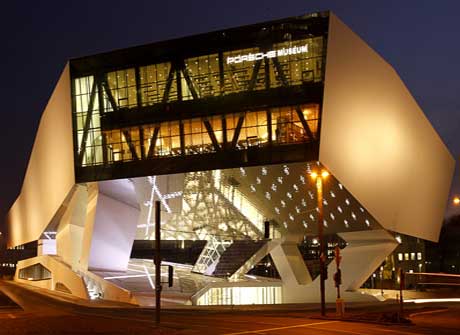
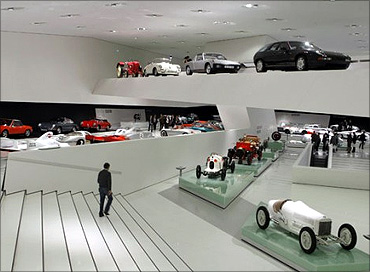
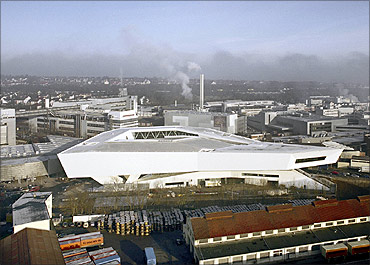
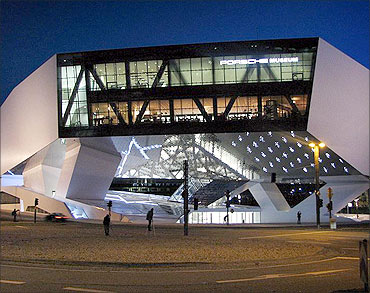
Porsche Museum.

An architectural wonder, the Porsche Museum is a car enthusiast's delight.

It is a treasure trove of some of the most exquisite cars from the Porsche stable. It is located in the Zuffenhausen district of Stuttgart, Germany.

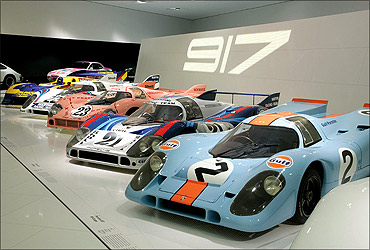
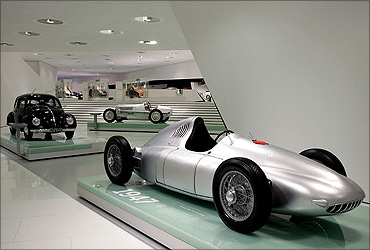
Housed in this futuristic museum, are iconic vehicles such as the 356, 550, 911, and 917. The exhibits include some of the outstanding technical achievements of Professor Ferdinand Porsche from the early 20th century.

Photographs, courtesy: Porsche Museum

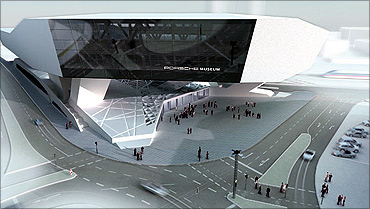
Porsche museum.

The Porsche museum is located just outside the Porsche headquarters.

It tells of the spirit and the passion that motivate work at Porsche, and pays tribute to the company as well as the people behind the product.

Porsche Museum.

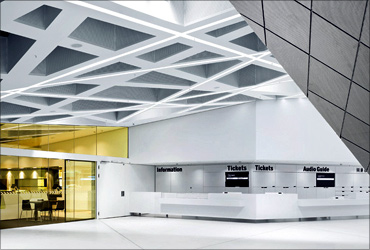
The museum was designed by architects Delugan Meissl. The exhibition spaces were designed by HG Merz.

Porsche Museum.

Porsche built the original museum near its car factory in 1976 . It was a small museum, which could hold around 20 exhibits.

Porsche Museum.

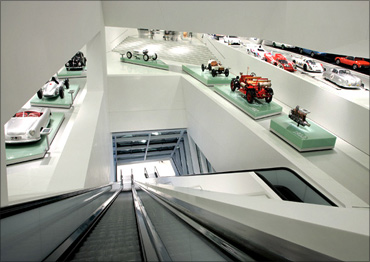
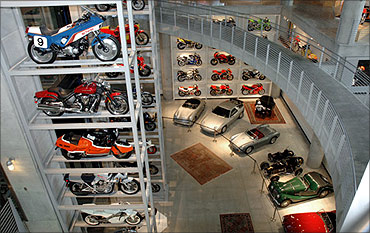
Porsche built the museum as a kind of 'rolling museum" with rotating exhibits from a stock of 300 restored cars.

Porsche Museum.

While the cost to build the museum was initially pegged at euro 60 million, its actual cost hit euro 100 million.

Porsche Museum.

Work on the concept for the museum began in 2003. A storyboard comprising relevant topics, exhibits and their presentation was designed.

Porsche Museum.

The museum, with a contemporary design functions as a home base for the vehicles.

Porsche Museum.

The history of Porsche sports cars began in 1948 with the legendary Type 356 No 1.

The credit for building the conceptual basis of the brand goes to Professor Ferdinand Porsche (1875 1951). His remarkable work was carried forward by his son Ferry (1909 1998).

Porsche Museum.

Ferdinand Porsche laid the foundation for the House of Porsche by establishing an independent engineering office in Stuttgart in 1931.

Porsche Museum.

During the past six decades, Porsche has built many innovative models like the 356, 911, 914, 924, 944, 928, the Boxster and the Cayenne.

Today, Porsche has grown into one of the world's most successful automobile manufacturers.

Porsche Museum.

The display area is spread across 5600 square meters with many rare cars and historical models.

Porsche Museum library.

Porsche has a production capacity of around 100,000 units per year. The Porsche Museum houses a central department offering all the historical and contemporary knowledge about Porsche.

Porsche Museum.

Porsche is bullish on sales in India. It expects to sell 500 units in 2011.

The waiting period for the sports utility vehicle (SUV) Cayenne is around 500 days and for other sports car models it is 100 days.

Porsche Museum.

The global order book position for Cayenne is 74,000 units whereas the production is around 44,000 units.

01 April 2011

Mizoram's Population Rises To 10 Lakh, Growth Rate Declines

kids in mizoram

Aizawl, Apr 1
: Mizoram's population is now 10,91,014, registering an increase of 202441 in the last 10 years, according to the provisional 2011 Census report.

The state’s population, which included 5,52,339 males 5,38,675 females, accounted for 0.09 percent of India’s population, according to the report.

Mizoram has witnessed a decadal growth rate of 22.78 per cent in 2001-2011, compared to 28.82 per cent growth rate during 1991 to 2001. This is a 6.04 per cent decline in growth rate.

Mizoram has 975 females per 1000 males and the density of is 52 people per square kilometer.

As many as 847,592 persons in Mizoram, of which 438,949 are males and 408,643 are females, are literate which constitute 91.58 percent of the state’s population, pushing the state down to number three below Lakshadweep (92.28pc ) and Kerala (93.91pc ).

Serchhip district has compensated the loss for attaining 98.76 per cent literacy to be the highest among the districts in India.

Female literacy rate in Mizoram is 89.40 per cent, against male literacy rate of 93.72 per cent.

Of the state’s population, 165,536 are below the age of six years while 925,478 are seven years and above.

Though gender imbalance in population remains in Mizoram, it has seen improvement in the sex ratio. The sex ratio has grown from 935 in 2001 to 975 in 2011. Sex ratio for the age group 0-6 has also increased from 964 in 2001 to 971 in 2011 and that of seven years and above also grown from 930 in 2001 to 976 in 2011.

You Think You’re Gaining? Read This

World's heaviest 4-year-old is from China

Lu, who is 1.1m tall and weighs 62 kg, put on weight dramatically since his appetite grew when he was 3 months old. His worried parents took him to several hospitals, but the reason for his obesity remains unknown, though it is possibly due to his dietary habit, according to local media.

World's heaviest 4-year-old is from China

Lu Zhihao, 4, kicks a ball at a basketball court in Foshan, Guangdong province. REUTERS

World's heaviest 4-year-old is from China

Lu Zhihao, 4, takes a nap at a kindergarten in Foshan, Guangdong province

World's heaviest 4-year-old is from China

Lu Zhihao, 4, eats a roast chicken wing at a market in Foshan, Guangdong province. REUTERS

World's heaviest 4-year-old is from China

Lu Zhihao, 4, stands up from his mother's lap outside his house in Foshan, Guangdong province. REUTERS

World's heaviest 4-year-old is from China

Lu Zhihao (C), 4, walks with his parents on a street in Foshan, Guangdong province. REUTERS

World's heaviest 4-year-old is from China

Lu Zhihao, 4, shows his empty rice bowl to his teacher during lunch time at a kindergarten in Foshan, Guangdong province. REUTERS

World's heaviest 4-year-old is from China

Lu Zhihao (C), 4, plays with other children at a kindergarten in Foshan, Guangdong province. REUTERS

World's heaviest 4-year-old is from China

Lu Zhihao, 4, takes a shower with the help of his mother at his house in Foshan, Guangdong province. REUTERS

World's heaviest 4-year-old is from China

Lu Zhihao (R), 4, sleeps during a noon break at a kindergarten in Foshan, Guangdong province. REUTERS

Joy Through Nudity

Will model Poonam Pandey lose her clothes if India wins the World Cup? Moral brigade livid

Expressing joy through nudity

The big question after the one on who will win the World Cup at Mumbai on Super Saturday is a surprise. Will model Poonam Pandey `lose' her clothes in India wins? No toss, no third umpire, no technology for an answer.

Poonam Pandey, the 20-year-old model, has promised to run twice in her birthday suite if India wins -- first in the spruced up Wankhede Stadium and then in the dressing room for the men in blue.

Poonam is unfazed by the fact that nudity is an offence in India. She has said that she will seek the permission of the BCCI to do the victory lap and the undressing act in the dressing room.

But you can bet your last skirt or shirt that Poonam will neither get a nod from the BCCI or permission from the police. But she has hundreds of fans on social media networks nudging her nudity act and egging her to go on despite obstacles.

Expressing joy through nudity

But one should admit that Poonam has had the guts to announce her `naked plan' in a place that the moral brigade claims is their `pitch' -- Bal Thackerey's Shiv Sena and his nephew Raj Thackeray's Maharashtra Navnirman Sena.

The moral brigade is of course neither blushing or amused at Poonam's bravado; it is red with rage over her celebration plan. "Showing happiness through nudity is against Indian values. I must congratulate her that she feels happy enough to do so, but there are other ways to show happiness," said Vinod Bansal of Vishwa Hindu Parishad.

"We are totally against such vulgarity and obscenity," said a red-faced Shalini Thackeray of Maharashtra Navnirman Sena. Shiv Sena too has stepped into Poonam's turf saying it will deal the situation 'our way' if the government doesn't step in to stop such gimmicks.

Said Rahul Navrekar of the Sena: "This is against public morality. It is an offence. The government should make sure such acts should stop. If they do not handle it, we will."

Pooman's response: "I don't care if people have a problem. I am one of the most downloaded models online. I don't need to do this for publicity. I am doing what I want to do."

Here is Poonam Pandey for you:

Expressing joy through nudity

Expressing joy through nudity

Expressing joy through nudity

Expressing joy through nudity

Expressing joy through nudity

Expressing joy through nudity

Expressing joy through nudity

Expressing joy through nudity

Larissa Riquelme

Paraguayan model Larissa Riquelme gained worldwide fame during the FIFA World Cup in South Africa in 2010 when she announced that she would strip if Paraguay made it to the semi-final. Though Paraguay did not make it to the last four, Larissa did strip for her fans and called her gesture a "gift to the players and all of Paraguay".

Larissa Riquelme

Larissa at a an advertising photo session, in Sao Paulo, Brazil.

Bangalore Airport is India's Best

India New Airport

Bangalore, Apr 1
: Bangalore International Airport Limited has bagged the prestigious ''Best Airport India'' award at the Skytrax World Airport Awards in Copenhagen, Denmark.

The award is based on a survey completed by over 100 nationalities of world air travellers, covering more than 240 airports worldwide in 2011, a press release said.

At the global level, Bengaluru International Airport earned a special mention for being among the three airports nominated for the best improvement in one year in global rankings.

The award was presented at an event in Denmark yesterday.

"We at Bengaluru International Airport are thrilled and honoured to receive this prestigious award. This award is testimony to the tremendous effort the team has put into maintaining the highest levels of operational excellence at Bengaluru International Airport," said Bangalore International Airport Limited Managing Director G V Sanjay Reddy.

"It is heartening to note that the results are being seen and felt by passengers across the globe who have rated BIAL to win this award," he said.

The Most Populated Area in India? Northeast Delhi

Space crunch in Northeast


Delhi, Apr 1
: This particular district of the Capital has highest population density

If you have always found Delhi's northeast district to be overcrowded, here's the official reason why. The district, with a population of 37,346 per sq km, has been declared the highest population density district in India by Census Report 2011.

The Northeast district includes colonies such as Seelam Pur, Welcome, Wazirabad, Bhajan Pura and Dilshad Garden.

The district with the lowest population density is Dibang Valley in Arunachal Pradesh (just one person per sq km). India's population rose to 1.21 billion over the last 10 years - an increase by 181 million, according to the new census released today, but significantly, the growth is slower for the first time in nine decades. The growth rate in 2011 is 17.64 per cent as against 21.15 per cent in 2001.

India's population, which accounts for 17.5 per cent of the world's, comprises 623.7 million males and 586.5 million females, said a provisional 2011 Census report.

Among the states and Union territories, Uttar Pradesh is the most populated state with 199 million people and Lakshadweep the least populated at 64,429. The combined population of UP and Maharashtra is more than that of the US.

Registrar General of India and Census Commissioner of India, C Chandramauli said: "The 2001-2011 period is the first decade - with the exception of 1911-1921 - which has actually added lesser number of people compared to the previous decades."

The Census indicated a continuing preference for male children over females. The latest child sex ratio is 914 females against 1,000 males -the lowest since Independence. "This is a matter of grave concern," Chandramauli said.

According to the data, literates  aged seven and above constitute 74 per cent of the total population and illiterates form 26 per cent. The literacy rate has gone up from 64.83 per cent in 2001 to 74.04 per cent in 2011, an increase of 9.21 per cent.