23 March 2011

Shortest Celebrity Marriages

Talk about commitment issues--these eight stars split less than a month after they tied the knot, giving a whole new meaning to phrase "quickie divorce." Were their short-lived loves memorable or fleeting? Let us know in the comments.

Drew Barrymore and Jeremy Thomas: 19 days

In March 1994, 19-year-old Drew Barrymore wed bar-owner Jeremy Thomas in his Los Angeles bar. The impromptu nuptials came as such a surprise to Barrymore's then Bad Girls co-stars Andie MacDowell, Mary Stuart Masterson, and Madeleine Stowe that they did not have time to get the newlyweds gifts. The pair split 19 days later.

In March 1994, 19-year-old Drew Barrymore wed bar-owner Jeremy Thomas in his Los Angeles bar. The impromptu nuptials came as such a surprise to Barrymore's then Bad Girls co-stars Andie MacDowell, Mary Stuart Masterson, and Madeleine Stowe that they did not have time to get the newlyweds gifts. The pair split 19 days later.

Ali Landry and Mario Lopez: Two weeks

Mario Lopez and Ali Landry dated for six years before tying the knot in Puerto Vallarta in April 2004. Less than two weeks after the ceremony, the couple split amidst rumors of Lopez's infidelity. The Extra host recently confessed his indiscretion to Sirius radio host Howard Stern. "It was my bachelor party," he said February 2011. "That was a situation where I was not mature and man enough." Landry told Parent Dish in August 2010 that their short-lived marriage was "the worst thing that ever happened to me. I have never been betrayed by somebody like that," she said.

Dennis Rodman and Carmen Electra: 9 days

Odd couple Dennis Rodman and Carmen Electra got married in November 1998 at the Little Chapel of the Flowers in Las Vegas. Nine days later, Rodman filed for annulment, claiming he was of "unsound mind" when the pair wed. They reconciled soon after, only to divorce again six months later. In August 2006, following Electra's second divorce from rocker Dave Navarro, Rodman told Star magazine that he was the reason for the split. "Carmen called me six months ago," he said. "She told me I was the love of her life and she wished we'd stuck together."

Cher and Gregg Allman: 9 days

Three days after finalizing her divorce from Sonny Bono, Cher married rocker Gregg Allman in a quickie Las Vegas ceremony. "One Sunday morning I woke up and she said, 'I got this Lear jet and Nevada ain't too far away. Why don't we get married?'" Allman has said. Merely nine days later, Cher--fed up with Allman's drug and alcohol abuse--filed to dissolve the marriage. The couple reconciled but ultimately divorced again three years later after Cher gave birth to their son, Elijah Blue.

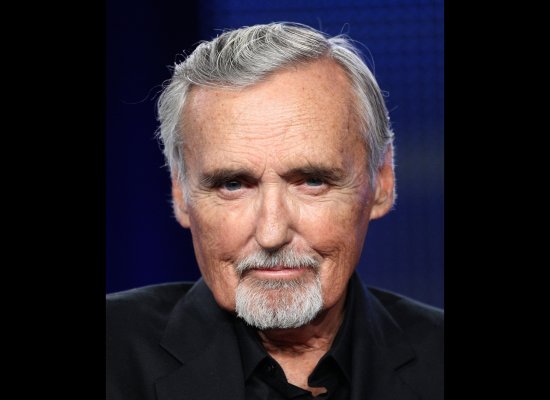
Dennis Hopper and Michelle Phillips: 8 days

Dennis Hopper married his second wife, Mamas and Papas singer Michelle Phillips, in 1970. Their brief union lasted eight days. According to the Daily Mail, Hopper woke up so stoned the morning after their wedding that he didn't recognize his new bride. Phillips has said that she divorced him because of his sexual demands, and told Vanity Fair that she was subjected to "excruciating" treatment while with the actor.

Britney Spears and Jason Alexander: 55 hours

Less than 55 hours after tying the knot with childhood friend Jason Alexander at the Little White Wedding Chapel in Las Vegas, Britney Spears' lawyers filed for an annulment. "It was just crazy, man," Alexander told Access Hollywood following the brief nuptials. "We were just looking at each other and said, 'Let's do something wild, crazy. Let's go get married, just for the hell of it." In December 2010, Alexander told Star magazine that Spears had confided in him that her current boyfriend--Jason Trawick--was abusing her. Spears and her reps adamantly denied the allegation.

Zsa Zsa Gabor and Felipe de Alba: 1 day

In 1982, Zsa Zsa Gabor married her eight husband Felipe de Alba before her divorce from seventh husband Michael O'Hara was finalized. The marriage was annulled one day later.
The pair didn't make it to the altar for the second time because "he bored me," Gabor told The Chronicle Telegram in 1982. "He's a playboy and I'm a hard working actress."

Robin Givens and Syetozar Marinkovic: 1 day

Mike Tyson's ex-wife Robin Givens married her tennis instructor Svetozar Marinkovic in 1997 and separated from him that same day. Marinovic later told reporters that the marriage lasted seven minutes.

Indian Govt Trying To Censor Blogging?

By R Shankar

Is the Indian Government snooping on bloggers? Is a worried and nervous government trying to censor what bloggers write? Will the government snip uncomfortable opinion or comments?

Govt trying to censor blogging?

Coming soon after the infamous Radia tapes where the government eves-dropped on corporate communication in hotel rooms and other private spaces, the issue was raised in the Rajya Sabha by Rajeev Chandrasekhar on Tuesday during the Zero Hour.

Said Chandrasekhar: "Indian bloggers are vibrant stakeholders of democracy, they represent young thoughts and their initiatives play an important role in the Indian political system. Youth rely on the phenomenon called blogging for news, to exchange ideas, thoughts and there should no censorship or control of thought on the Internet".

He urged the Government "to prevent any form of censorship, any form of control over blogs, bloggers and Internet"

A member of Parliamentary Standing Committee on Information Technology, Chandrasekhar pointed out to media reports that said that the Government was proposing to block or shut down blogs as well as bloggers if the opinions posted in them do not suit Government, institutions or individuals.

He said the move is one sided as the Government was planning to publish new rules in the Official Gazette under the Information Technology (Amendment) Act 2009 without inviting public opinion.

The rules, if they come into force, "will infringe upon the Right to Freedom of Expression of the bloggers and users of the internet - as the internet has become an essential part of our daily life," said the MP.

Govt trying to censor blogging?

The new rules are ready to be notified in the Official Gazette and then these rules will come into force, he said.

The rules require intermediaries such as service providers not to host or publish any information, which in the context of the internet, does include bloggers.

Additionally, the rules propose to authorise the intermediaries to remove access to 'infringing' material if they themselves gave actual knowledge or are asked to do so by a mandated authority.

"The execution of these rules in its existing form will be a blow to the vibrant blogging community and bloggers. It could result in a shutting down of the internet, which is the main form of expression for growing Indians, if the information posted is found inconvenient to Government, institutions or individuals. This is certainly against our basic democratic principles," he added.

Chandrasekhar urged the Government to be transparent by inviting public opinion and involve the blogging community before finalising and implementing these rules.

Source: India Syndicate

Small Pox in Jharkhand?

Ranchi, Mar 23 : Jharkhand has rushed doctors to Gumla district to verify local media reports that small pox — a contagious disease believed to have been eradicated from the world — has resurfaced and killed three people there.

Small pox in Jharkhand?

Two-year old Rahima Banu of Bangladesh was the last person infected with naturally occurring Variola major (small pox), in 1975

Three people reportedly died of the contagious disease and five are said to be suffering from it. Based on reports in some vernacular dailies, the health department of Gumla has sent a team of medicos to verify the matter.

Health Secretary A.K. Sarkar told IANS he had heard the news that small pox had resurfaced and the health department was in the process of authenticating reports. But he said he was not in a position to either confirm or deny the report.

The sudden resurfacing of the disease is raising questions about the eradication programme and causing panic in Jharkhand's rural belt.

Small pox was said to have been totally eradicated from the world as per reports published by the World Health Organization (WHO) a decade ago.

According to health department sources, immunisation for small pox was stopped in many countries, such as the US, in 1972. In 1979, WHO recommended that vaccination against small pox be stopped in all countries, the only exception being special groups, such as researchers working with small pox and related viruses.

By 1986, routine vaccination had ceased in all countries.

Source: IANS

Facebook Bans 20,000 Underage Users A Day

Melbourne: Facebook has revealed that about 20,000 children are kicked off the social networking site every day for lying about their age to join the site.

Facebook bans 20,000 underage users a day

The social networking giant admitted it had to do more to stop young people using Facebook, as it revealed about a third of Australia's population uses the site every day, reported the Herald Sun.

The chief privacy adviser of Facebook, Mozelle Thompson, said many Australian children under the age of 13 were trying to access the site by lying about their age.

"It's something that happens on a regular basis," the Courier mail quotedhompson as saying.

Globally, about seven million children who lie about their age are blocked from the site each year.

Source: ANI

A Smart New Phone From HTC

HTC-Incredible-S_1

Smartphone maker HTC Corporation launched its new handset HTC Incredible S in the Indian market.

"HTC Incredible S is the answer for those looking for the perfect combination of performance and style and will help them stand out from the crowd as an icon," HTC India Country Head Ajay Sharma said in a statement.

The handset, priced at Rs 28,900, is equipped with features like 4-inch WVGA Super LCD display, eight megapixel camera with dual flash, maps and HTC Sense.

Take a look at the incredible features here.

Is China Backing Indian Insurgents?

By Lyle Morris

The arrest in January of a Chinese spy who allegedly met insurgents in the northeast of the country suggests a broader effort to destabilize India.

On January 25, 2011, Wang Qing, a Chinese spy disguised as a TV reporter, was arrested and deported after she reportedly visited the headquarters of the National Socialist Council of Nagalim (Isak-Muivah) or NSCN-IM—one of India’s largest and most troublesome insurgent groups. Indian authorities said Qing admitted to being a spy for the People's Security Bureau, a Chinese intelligence agency, and that she had conducted a secretive four-hour-long, closed-door meeting with Thuingaleng Muivah, a key rebel leader of the NSCN-IM who is currently holding reconciliation talks with the Indian government. The rebel group, however, insisted that it was holding talks with the Indian Government in good faith and that it hashad ‘no relations with China.’

While the news attracted little attention, it’s hard to see the incident as inconsequential for Sino-Indian relations, as it suggests potential links between China’s intelligence agencies with insurgent groups in India’s volatile Northeast region. More worrisome for New Delhi, though, is the fact that Qing’s case is only one of several recently that suggest an attempt by Beijing to step up efforts at undermining peace and increasing leverage over India as both countries grapple with sensitive border negotiations.

Such dealings were recently revealed in detail in a 100-page Indian government report, accessed and revealed by Outlook India. The report pertains to the October 2010 arrest by Indian authorities of Anthony Shimray, a key official and major arms procurer of the NSCN-IM, who had been operating out of Bangkok. During his interrogation, the report alleged that the NSCN-IM was offered the chance to purchase surface-to-air missiles (SAMs) by Chinese agents working on behalf of the Chinese intelligence agencies.

The negotiations for the deal reportedly took place in Chengdu in December 2009, with the agents asking $1 million for the missiles as part of a package that included training the rebels in the technical know-how to use them. However, the deal reportedly fell through as the rebel groups couldn’t raise the money. Shimray also admitted that in return for Chinese support, Naga insurgents had been giving away details of Indian army deployments in the China-India border region of Twang in Arunachal Pradesh, including positions of Indian aircraft and missiles.

If substantiated, Shimray’s revelations would mark for Indian officials a clear and troubling increase in covert Chinese intelligence activity in India’s internal affairs. China has maintained that it doesn’t interfere in India’s internal affairs, adhering closely to the Five Principles of Peaceful Coexistence—a series of agreements in 1954 put forward by Chinese Premier Zhou Enlai governing relations with India. But China also remains deeply distrustful of Indian intentions along the sensitive southern tip of the Sino-Indian border, and may perceive India’s complex web of insurgent groups in that area as an opportunity to undermine India’s grip on power there.

China and Naga Rebels

The National Socialist Council of Nagaland (NSCN) was formed in the early 1980s by Isak Chisi Swu, Thuingaleng Muivah, and S.S. Khaplang in a sign of displeasure with the terms of the Shillong Accord, signed by the then Naga National Council (NNC) with the government of India. Differences later surfaced within the organization over the issue of initiating dialogue with the Indian government. As a result, the NSCN split into two factions in 1988—the NSCN-K in honour of its leader, Khaplang, and the NSCN-IM, led by Isak and Muivah.

The NSCN-IM has a reported strength of around 4,500 fighters and is believed to raise funds primarily through drug trafficking from Burma and by selling weapons and other military equipment to other regional insurgent groups. Nagas live in several states besides their own, Nagaland, and have fought a six-decade insurgency for an autonomous ‘Greater Nagaland’ including parts of Manipur, Assam, and Arunachal Pradesh. An estimated 100,000 people have died in violence tied to that conflict. A ceasefire with the government has largely held since 1997, but successive rounds of peace talks have yet to produce lasting results.

Chinese support for Naga rebels isn’t a new phenomenon. Following the 1962 Indo-China conflict, and facilitated by Pakistani intelligence in Dacca, Kughato Sukhai, the self-proclaimed Naga prime minister, wrote to Chinese leaders alleging persecution and oppression by India and called on China to ‘honour and follow their principle of safeguarding and upholding the cause of any suppressed nation of Mongolian stock.’

In November 1966, China covertly trained and procured weapons for a 300-strong contingent of Naga rebels in support of Maoist revolution. The group returned to India in January 1968 and established a huge camp in the Jotsoma jungles. When Indian forces attacked their haven in June that year, they reportedly recovered Chinese weapons and a trail of documents leading back to Chinese support. China apparently curtailed support for Indian insurgents starting in the late 1980s following Prime Minister Rajiv Gandhi’s 1988 visit to China. However, the Indian military has strongly suspected that Chinese intelligence agencies have in fact been continuing to support Indian rebels covertly, although until recently it had little evidence to prove this.

An Intelligence Windfall

Shimray’s arrest proved to be a windfall for Indian intelligence, which had been pursuing him for years. Indian authorities reportedly caught a break in September 2010 when Shimray’s whereabouts were traced to Bangkok. However, under international law, they couldn’t arrest him until he set foot in Indian territory. A tip came that Shimray would need to travel from Thailand to get his visa renewed and visit his interlocutors in Manipur and Nagaland, but would first have to pass through Nepal. On September 27, Shimray took a Royal Nepal Airlines flight to Kathmandu and made his way across the Indian border into Bihar, where Indian authorities arrested him at a rail station.

During his interrogation, Indian intelligence officials were said to have been shocked at the breadth and complexity of apparent ties revealed between Chinese intelligence and NSCN-IM operatives, in many cases utilizing a vast network of front companies and middlemen in Nepal, Bangladesh, Thailand, and North Korea. Shimray revealed that he first visited China in 1994 as part of a joint arms deal with the Indian insurgent group National Democratic Front of Bodoland (NDFB).

The procurement of the arms and ammunition was made from the Chinese civil-defence company NORINCO (Beifang Gongye), and included 1,800 pieces of arms, AK series rifles, M16 automatic assault rifles, machine guns, sniper rifles, and rocket launchers. The money is said to have come from a Naga businessman using Calcutta-based operators. In 1996, another purchase of arms and ammunition was reportedly made that involved a shipment from Beijing to the fishing town of Cox’s Bazar in Bangladesh using a North Korean ship as the transport vehicle. After the shipment was unloaded in small boats on the high seas and transferred in trucks in Bangladesh, it eventually made its way to the NSCM-IM headquarters in India.

One individual in particular—a middleman in Bangkok named Willy Narue—was thought to be a key interlocutor who brokered many of the subsequent arms sales. With Narue’s help, Shimray had reportedly procured arms from the Chinese in late 2007 after it was decided by NSCN-IM leadership in New Delhi to strengthen the weaponry of the organization. Narue facilitated contact between Shimray and an individual by the name of ‘Yuthuna’ in Bangkok, who was a Chinese representative of ‘TCL’—an authorized subsidiary of the Chinese arms company China Xinshidai.

According to its website, Xinshidai ‘deals in import and export of specialized products produced by China’s defence industries and general civilian products. ’The purchase included 600 AK series rifles, 6 Lakh ammunition rounds, 200 sub-machine guns, pistols, rocket launchers, light machine guns,and 200 kilograms of RDX (an explosive compound used in making bombs). Valued at an estimated $1.2 million, the shipment was to be loaded from a port in Beihei, China, and sent through a shipping agent of Bangkok-based Intermarine Shipping with the final destination of Cox’s Bazar, Bangladesh. Correspondence was supposedly facilitated using a single email account whose username and password information was shared among Willy Narue, Naga leadership in New Delhi and Nagaland, and Chinese intelligence operatives.

Even as recently as last September—just weeks before he was arrested—Shimray was said to be procuring arms, and reportedly had held further talks with Willy Narue. One such purchase being negotiated was to be delivered to Arunachal Pradesh. He even asked the suppliers if they could deliver in the ‘upper part of Arunachal from the Chinese side.’ Investigators strongly suspect Shimray’s covert October trip to India may have been tied to the arms deals.

So why the tight relations between China and the NSCN-IM? One factor is said to be the revelation that China had agreed to host a permanent NSCN-IM representative based out of Kunming, Yunnan Province, in 2008. According to Shimray, Muivah had written a letter to senior Chinese intelligence officials to formally appoint Kholose Swu Sumi, a 60-year-old member of the Sema tribe of Nagaland, as the permanent representative of the NSCN-IM in China, which the Chinese accepted. Kholose is said then to have become the key point man for the NSCN-IM in China, meeting regularly with Chinese officials to keep them apprised of peace talk developments in India and relaying information from NSCN-IM operatives about the Indian army along the Sino-Indian border.

Kholose, who was reportedly the owner of a precious stones business, received Shimray and his wife at Kunming airport on a visit and introduced him to several Chinese intelligence officials, including a man by the name of Mr. Chang, the head of intelligence of the region in Dehong Prefecture in Western Yunnan. Shimray also apparently met with Lee Wuen, head of intelligence of Yunnan Province, to relay the message that the NSCN-IM wanted their assistance and cooperation.

There are several possible motivations for China supporting the NSCN-IM beyond just arms sales. For one, Nagaland straddles Arunachal Pradesh, an area over which both China and India claim sovereignty. For decades, the two militaries have been involved in a cat-and-mouse game along this sensitive border area, each trying to stake a claim along the Line of Actual Control (LAC). By infiltrating an area of strategic sensitivity for India, China could be aiming to secure a bargaining chip in border negotiation talks. Moreover, China is increasingly wary of India’s rise and larger geostrategic intentions as a peer competitor. Thus, Naga rebels offer China a convenient counterweight to India’s efforts at consolidating power and governance in northeast India, giving Beijing the ability to frustrate and distract New Delhi as it struggles to rein in the various insurgent groups that have proliferated inside its borders.

This is of particular importance now as the two countries continue to try to resolve their border dispute. Since the early 1990s, Beijing and New Delhi have been locked in seemingly intractable border negotiations that have become something of a litmus test for whether the two aspiring powers can cooperate. If the claims of arms sales to the NSCN-IM in return for intelligence gathering of Indian troops turn out to be true, New Delhi can justifiably argue that Beijing isn’t conducting border negotiations in good faith.

The scope and scale of Chinese ties with the NSCN-IM should give New Delhi pause as it pursues closer relations with Beijing, because they could imply a willingness on the part of Chinese intelligence to covertly undermine peace negotiations between the NSCN-IM and the Indian government while simultaneously acquiring potentially useful information about Indian troop movements along the Sino-Indian border.

Until recently, it appears that China was able to surreptitiously sell arms to insurgents, exchange funds through neutral countries and plead plausible deniability when Indian authorities investigated such dealings. Beijing would simply say the weapons were procured from unscrupulous Chinese weapons manufacturers on the black market with links to rebel groups in Pakistan, Burma, or Bangladesh, thereby disavowing any direct knowledge or involvement. Shimray’s revelations, if proven true, would certainly make any such subterfuge far more difficult.

Lyle Morris is an independent China analyst. His work has appeared in publications including China Brief, YaleGlobal Online and China Economist.

Source : the-diplomat.com

Wildlife Trust of India Vets Scramble During Recent Fire

This post was filed by the International Fund for Animal Welfare program communications officer Michael Booth who received this post only 24 hours ago.

Dr. Panjit Basumatary brings a leopard cub to safety amid forest fire

Dr. Panjit Basumatary brings a leopard cub to safety amid forest fire

The forests are open to damage by many means, one of the worst of which is fire. Settlers and farmers who are clearing land often start big fires that get out of control. Poachers and fishermen are also responsible for many forest fires by neglecting to extinguish their campfires. Occasionally fires are also maliciously set by miscreants.

Autumn marks the advent of a dry and windy season in the north eastern states of India. Dry and windy weather encourages people to set fire and clean up debris left behind from winter. This is the time when forest fires occur and the wind plays a big part in the intensity of a forest fire.

If you visit the north eastern states of India, you’d see these kinds of fires all around. Recently I visited our Kokrajhar field station in the northeast Indian state of Assam.

It was a warm day with morning temperatures around – 28°C. The International Fund for Animal Welfare-Wildlife Trust of India field station of Kokrajhar is located in a lush green surrounding with Sal tree all around. Though the surrounding trees are green mostly throughout the year, it turns grey during the autumn season.

Upon reaching, I took a quick look at the centre and the newly constructed animal enclosures. We even released a pangolin nearby the centre and came back to the office to do some work. Suddenly I heard people screaming, smoke bellowing towards the enclosures. We rushed to the spot and saw a big forest fire just next to the animal enclosures.

The keepers rushed to evacuate the animals from their enclosures racing against the quickly burning fire – fueled by strong winds and dry leaves.

I kept filming the whole action. After an hour of effort the animal keepers along with help of the centre vet, Dr. Panjit Basumatary, controlled the fire by making a barrier that choked out the flames. We were relieved for the animals to see the receding fire.

“This season is a dangerous time for forest fires in and around our field station, as it is covered by trees in all sides,” said Dr. Basumatary. “Evil minded people set fire on the dry leaves in the forest floor just for fun sometimes. Recently we had a similar forest fire near the centre, which we controlled and saved the animals,” he added.

– MB

For more information about the International Fund for Animal Welfare effort to save animals in crisis around the world visit http://www.ifaw.org

Stilwell Road Not To Be Reopened

stillwell roadNew Delhi, Mar 23 : Despite intense pressure, the Indian government has decided not to re-open the historic Stilwell Road, the Ministry of External Affairs has clarified.

The Centre’s opinion was part of the 12th report of the Committee on Government Assurances that was tabled in the Parliament here today.

The Ministry of External Affairs has said, “Since it has been decided not to reopen the Stilwell Road, no action is pending from this Ministry.”

The Ministry’s plea to drop the assurance has since been accepted by the Parliamentary Committee, the Report said.

The assurance flowed from a reply given to Dr Arun Kumar Sarma by Minister of State for External Affairs, E Ahmed in the Lok Sabha.

The Minister had replied that Government of India had not taken up the issue of reopening of the Road for commercial use with China and Myanmar.

Ahmed had said that The Government of India is considering the commissioning of a pre-feasibility study on the matter of reopening of the Stilwell Road.

Earlier, Sushil Kumar Shinde and Madhavrao Scindia in 1999 had asked the External Affairs Minister Jaswant Singh whether Government of Assam had proposed to re-open the Stilwell Road, lying unused since World War II.

The two MPs wanted to know about the regulations proposed to be introduced to check illegal trade and exodus of infiltrators through the route.

Jaswant Singh had replied by stating that information was being collected from Government of Assam.

The replies to the question was treated as an assurance and required to be implemented by the Ministry of External Affairs. The Committee on Assurance last August was requested to drop the assurance.

Reopening of the historic road, named after the American General Joseph Stilwell has been caught up in complications, as both the Indian security agencies and Government of Myanmar are reluctant.

Union Minister of Development of North Eastern Region (DoNER) had already confirmed that the plan was cancelled following Myanmar’s objection to its reopening. Myanmar is apprehensive of the militants which hold sway over the Kachin Province.

Reopening of the 1,726 km Road was backed by business and trade bodies. The WW II connects Assam with Kunming in China’s Yunnan province.

The Stilwell Road on the Indian side is about 61 km long. The major stretch of 1,033 km lies within Myanmar, while the stretch in China is 632 km.