23 March 2011

This Assam Candidate Is In Jail For ‘Funding Terror’

By Samudra Gupta Kashyap 

Mohet Hojai in an earlier press meetMohet Hojai, one of the prime accused in a Rs 1,000-crore scandal in Assam's Dima Hasao hill district and named in an NIA chargesheet, is contesting the elections from jail.

Hojai, a former chief executive member of the Dima Hasao Autonomous Council (DHAC), is currently lodged in the Guwahati Central Jail, after he was arrested in 2009, for allegedly aiding and abetting a militant group and diverting funds to it.

The scandal involves funds meant for development, of which Rs 1 crore was allegedly channelised to the DHD(J) - a militant group better known as Black Widow. The government in 2008 instituted a Commission of Enquiry into alleged collusion between militants, politicians and bureaucrats and the diversion of funds. Hojai was arrested on May 30, 2009.

The scandal had remained in the headlines for several months, with Opposition parties and other pressure groups even pointing at some ministers in the Tarun Gogoi government of having benefited from it.

Hojai, who has filed his nomination as a candidate of the Autonomous State Demand Committee (ASDC), a registered political party in Assam, is contesting from the Haflong (ST) constituency. Interestingly, while the ASDC has entered into an adjustment with the Asom Gana Parishad (AGP) in four other seats, both have fielded candidates for Haflong.

While Hojai was arrested by the Assam Police, a charge-sheet filed by the National Investigation Agency (NIA) referred to Hojai also as a member of the DHD(J). He was arrested under Sections 120(B), 121 and 121(A) of the Indian Penal Code as also under Sections 16, 17, 18 and 20 of the Unlawful Activities (Prevention) Act, the NIA chargesheet said.

“Mohet Hojai and the other accused public servants, along with (some) accused contractors, committed criminal misconduct and defalcated huge sums of money from the funds available with NCHAC (now DHAC), which was channelised through hawala operators in Guwahati and Kolkata to reach arms smugglers who smuggled in arms and ammunition and supplied it to DHD(J) for them to commit acts of terror and violence and to wage war against state with a view to overawe its legitimate authority,” the NIA chargesheet said.

Chomang Kro, president of the ASDC, said there was nothing wrong in Hojai contesting the elections. “He has not been convicted by any court of law, and there is no bar on him from contesting. His nomination papers anyway have been already found valid,” Kro told The Indian Express.

Interview of Sanju Pradhan: The Bright Star From Sikkim

By BABUA BISWAS

With the I-League coming down to its wire and East Bengal who were having a good run few months back reduced to third position with 5 points difference with leaders Salgaocar, one man who would have to shoulder the huge responsibility of taking East Bengal’s at the top would be Sanju Pradhan.

Born in the Himalayan state of Sikkim, he made his way up from kicking a ball made of plastic tied with ropes to being compared with Arjen Robben. In an exclusive interview with Babua Biswas of sportskeeda.com, the youngster touched on a vast range of issue from his childhood to how he was inspired by Bhaichung to his future goals.

Excerpts:

Sanju Pradhan: Another Express From Sikkim

Babua Biswas: Sanju, football is the sport that every youth in North East India plays and follow, out of which not even one percent thinks of making a career out of it. What made you think the other way?

Sanju Pradhan: Like everyone in North East I also never thought of making a career out of football. I just knew that the ball is to be kicked around. Neither I nor my family nor anyone in my village knew that there is a life in football. You can’t imagine how ignorant we were about the professionalism of the game. As a kid we seldom kicked the real football. We use to make balls with plastics and papers and tie it up with a rope and kicked around.

However, I luckily got a scholarship from nowhere to get trained in the Namchi Sports Hostel. Namchi, being a town had access to modern facilities like TV. Here while undergoing training, we use to watch football matches on TV. It was only then I came to know how professional is football in the world and how one can make a career out of it.

Again with modernization, people everywhere are now aware of how big football or on a larger scale sports is in the world. People now are realizing Sports is not just for fun but career can be made out of it. And the changing trends is very much visible in North East India as well as we can see so many sportsperson representing the country. Just look at Manipur, they are the No. state in the National Games.

BB: When did you realize that you play the game well and have the potential to curve a career out of it?

Sanju Pradhan: As I already said, I just knew football is to be kicked inside the two posts. I knew nothing beyond that. So there was no question of assessing how well I use to play. It was only when I came to Namchi Sports Hostel that I realized I had the potential to make a career out of it.

BB: Being from Sikkim, your idol and your inspiration would have obviously been Bhaichung Bhutia. Any other person whom you look up to?

Sanju Pradhan: Yes definitely, Bhaichung is my idol. Other than him, I am a huge fan of Messi, C.Ronaldo and Kaka.

BB: Life in Sikkim is very beautiful as from my experience of visiting it many times. How beautifully did you spend your childhood? ­

Sanju Pradhan: Oh…I think that was the best part of my life. I was very amiable right from my childhood and I use to enjoy in everything. I remember making football with plastic tied with ropes and kicking it on the roads. That was in itself enjoyable for us. We use to go to other village to play a football match just for 10, 20 Rs. I feel pity for kids of these generations as they are missing what we had in our childhood days. I get very emotional when I recall those beautiful days. We had nothing in life but the happiness. I miss my childhood a lot.

BB: Who all are there in your family and how have they been supportive of your football career during your early days?

Sanju Pradhan: I am the youngest in my family with an elder brother and a sister. My Father runs a small shop in our village and my mother is a housewife. As I said, they were very ignorant about football. They never knew whether I play well or not. However, they fulfill all my financial needs whenever I required. But now they also know what football is all about and are very supportive.

BB: You are now a known face within the Indian Football fraternity. But this might have come after enormous effort you have put into. What all hardship have you endured to reach this level?

Sanju Pradhan: After joining the Namchi Sports Hostel and when I realized I can make it big, I trained really hard. We were required to study also but I was weak in the academic front. So I didn’t stress myself with studies and started neglecting, realizing that I can’t concentrate on both. If I do so, I will end up nowhere. Neither will I make it big in football nor in the academic front. So I just concentrated on football and worked very hard.

Then I use to draw inspiration from Bhaichung thinking if he can make it this far from a small village in Sikkim why not I. I am also from village and when I have managed to reach Namchi, I thought I can still go further and worked really hard. I took every coaching instruction seriously and kept in mind and implemented those in my game.

BB: Talking about your club, East Bengal was having a good run in the I-League till recently when they began to stumble. What do you think is going wrong? Can you see Salgaocar slipping up?

Sanju Pradhan: See, football is a game. Winning and losing is part of it. We can’t just keep on winning all the time. Just think for us also. We are playing the AFC Cup also outside India. Moreover, just imagine playing a football match in Kolkata at 1.45PM under the scorching heat of the sun. These entire factors do takes a toll. AIFF also should think for the players. How can they be so irresponsible in making players play under the scorching heat of the sun.
Moreover, I don’t think Salgaocar has gone far ahead of us. We have just a difference of five points which is quite catchable. And the I-League is still very open with around 8-9 matches to still to go. Dempo and Churchill are also in the race. It doesn’t matter to me whether Salgaocar slips or not. But we have to play our game and win matches to win the League.

Posing With the Federation Cup

BB: You have been playing well throughout the season and have become very important for East Bengal. How would you assess your development in this few years after playing the I-League?

Sanju Pradhan: I can say I have matured as a player though I am still learning every day. Playing a match in Sikkim and playing the I-League is a different game all together. The pressure of playing I-League is huge which I realized after playing for East Bengal. The club has a mass fan following and seeing an angry fan after a loose puts extra pressure on you. Moreover Indian football is also becoming tougher day by day.

However I have learnt and am learning more in East Bengal than in Air India. And I would like to take this opportunity to thank Air India Coach Bimal Ghosh who brought me from Sikkim to play for Air India at a time when no one trusted junior and uncapped players. I would like to thank him for having faith in me and providing me a solid platform. I will ever remain indebted to him.

BB: Is there any part of your game you still would like to improve?
Sanju Pradhan: Obviously. I need to improve a lot in every department of my game. However I stress on perfecting my final pass which can result in a goal. My Coach says I make lots of error with my final passes which I am also aware off. I am also trying to improve my shooting and crossing. So, this are some aspect which I am working on at the moment.

BB: Someone from the Press has called you the ‘Indian Arjen Robben’ because of your strong right foot? I know you won’t agree to this comparison but how does it feels to be compared with someone of Robben’s stature?

Sanju Pradhan: It obviously feels good when you are being compared with someone of Robben’s stature. He is a great player and I like him. So its feel good thought I think I can never play like him. But you know comparisons also put extra pressure as people tends to have huge expectations from you and it sometimes becomes an extra baggage.

BB: With Bhaichung floating a club ‘Sikkim United’ for I-League Div-II with the aim of qualifying for the I-League, don’t you feel like playing for them which represent your home state?

Sanju Pradhan: Yes definitely, I would like to play for Sikkim United. But as of now I have a contract with East Bengal. Moreover it will be good for Sikkim and its people to have a club representing the state in the I-League. Just look at the fans of Lajong. It’s so amazing. I hope the same will happen with Sikkim United.

BB: So with the I-League going in for a revamp next season, how are you gearing up for that?

Sanju Pradhan: It’s good that I-League is going in for a revamp. It will be a great boom for the Indian Football. But as of now I don’t have any idea as to what changes it will bring. As a player, I have to prepare myself like every other game irrespective of the changes coming in.

BB: Is there any target that you have set for yourself in the coming years?
Sanju Pradhan: Yes I do always set a target for myself. When I was in the academy I always dreamt of playing for East Bengal which has been fulfilled. Air India provided me the perfect platform. Now my target is to play for the senior national team.

Dream Accomplished: PLaying for East Bengal

BB: When shall we expect to see you amongst the “Men in Blue­”?
Sanju Pradhan: I don’t know. I wonder whether it will ever happen also. But I am working hard and I hope I will get the call one day.

BB: It’s a question that I should not ask you at this point of time when you have just started your career. But still for your fans, how would you like to be remembered after your football career?
Sanju Pradhan: I have lots of dreams and aspirations. I would like to play for the National team and also for some good foreign clubs. Playing in good foreign clubs and contributing to the success of the national team will be good for me. I would just like to emulate what Bhaichung has done for Indian football. I know I can never match his feet. But I will be satisfied even if I can reach close to him. I wish to be remembered as a player who has done something for his nation.

BB: Any message you would like to give it to your fans or readers?
Sanju Pradhan: Yes…I would like to thank Indian Football fans for supporting and backing us all the time. Without fans we are nothing. I wish more football fans turn up from the whole country as it is in North East, Kolkata or Goa. I would also like to thank football journalists who are making every attempt to make the game popular in India and see a new light.

BB: Thanks a lot for speaking to us Sanju. I on behalf of sportskeeda wish you a very good luck.
Sanju Pradhan: Thanks a lot to you too and I also wish sportskeeda a grant success.

source: sportskeeda.com

Indian Govt Appoints New Chief For Naga Ceasefire

Nagaland A decade after ceasefire

Kohima, Mar 23 :
The Centre has appointed a new chairman of the ceasefire monitoring group after the tenure of Lt Gen. Mandhata got over in November last year. The National Socialist Council of Nagalim (I-M)), however, said it was not aware of any such development.

“We are not aware of it,” Samson Jojo, chief principal secretary of the Government of the People’s Republic of Nagalim (GPRN), told The Telegraph.

Nagaland director-general of police K. Kire said Lt Gen. Jacob had replaced Gen. Mandhata. “The new chairman of the ceasefire monitoring group will take charge by April 3,” Kire told this correspondent.

The NSCN (I-M) was completely unaware of the development in New Delhi, saying no such issue was raised in the cabinet meeting of the GPRN held today. The convener of the ceasefire monitoring cell of the NSCN (I-M), Phungthing Shimrang, also attended the meeting.

“He did not raise any such issue in today’s cabinet meeting,” Jojo said.

According to sources, the NSCN expressed strong resentment over the appointment of Gen. Jacob as the new chairman without informing them. Neither Gen. Mandhata nor Shimrang could be contacted for comments.

Kire expressed ignorance regarding the resentment of the NSCN (I-M). “I am not aware of the NSCN’s resentment regarding the appointment,” he said.

Kire said a meeting of the CMG would take place only after the new chairman took over.

The ceasefire monitoring group consists of representatives from the Centre, the state government, the army, the paramilitary forces, police and the NSCN (I-M). It enforces ceasefire ground rules and monitors violation of rules by the security forces and the outfit.

22 March 2011

Two Mizos Among Mizoram University Vice-Chancellor Candidates

mizoram-universityAizawl, Mar 22 : Two Mizors are among the seven candidates shortlisted for the post of vice-chancellor of Mizoram University (MZU) even as there is a mounting pressure from students' organisations to appoint a local to hold the varsity's top post.

Two Mizo professors, Professor Lianzela, presently Dean of School of Economics, Management and Information Sciences of Mizoram University and Prof R Lalthantluanga, Professor of Biochemistry, North Eastern Hills University (NEHU) and also former pro-VC of NEHU, are among the shortlisted candidates who will shortly meet the search committee.

Three candidates will be further shortlisted from which the President will pick one to be the Vice-Chancellor of Mizoram University.

Two biggest students’ organisations of Mizoram--Mizo Students’ Union and Mizo Zirlai Pawl--and influential organisations like Young Mizo Association, Mizoram Upa Pawl (senior citizens’ association) and Mizo Hmeichhe Insuihkhawm Pawl (women organisation) have expressed their desires to have a qualified Mizo professor as the Vice-Chancellor of Mizoram University.

Representatives of the organisations met the search committee, comprising Prof N R Madhava Menon (chairman), Prof Atul Sharma (member) and Prof Sanjay Govind Dhande (member), here on March 14 on this issue.

Mizoram Budget Session Begins

mizoram legislative ASSEMBLYAizawl, Mar 22 : The sixth Mizoram Assembly budget session began today with customary address by Governor Lt Gen (rtd) M M Lakhera.

In his gubernatorial address, Gen Lakhera said the government is dedicated to bring about development and prosperity to its people under the canopy of peace.

On the state government’s flagship project, the governor said, ''The implementation of NLUP (New Land Use Policy) is intended to bring about revolutionary changes towards economic self-sufficiency, growth and poverty alleviation in a few years time,'' he said.

The government has undertaken a number of measures for a more profitable and sustainable system of agriculture, horticulture, animal husbandry and live-stock rearing as well as handloom and micro-industry, he said.

''High priority is being given to quality education, health care, sports and youth welfare, power generation, transportation and communication, housing, water supply as well as food availability in the entire state,'' Mr Lakhera said.

The Central schemes such as MGNREGS, JNNURM, NRHM, IWDP, SJSRY, SGSY, IAY and others were being successfully carried out, affording the rural poor a better chance towards self-sufficiency and economic security, he explained.

''In an effort to make Mizoram a preferred tourist destination, tourism development board has been formed to frame better policy and guidelines for promotion of tourism,'' the governor informed.

He also highlighted that there has been 22.9 per cent growth in collection of taxes during 2010-2011.

Conservation of natural resources and wildlife as well as afforestation is another high priority for the government, the governor said.

Fake Pilots! How Licences Can Be Forged

New Delhi: On January 11, the IndiGo flight from Delhi to Goa landed in a way that is strictly prohibited in all flying manuals.

Fake pilots! How licences can be forged

The rule book says that the two sets of large rear wheels should touch the tarmac first, followed by the small wheels below the cockpit. Otherwise, the stress on the nose wheels can damage the aircraft and endanger the lives of the passengers.

Parminder Kaur Gulati, the 38-year-old captain of the flight, had landed at an angle that indicated the nose wheels had touched the runway first. Alarmed, the Directorate General of Civil Aviation, which regulates the sector, ordered an inquiry into the incident.

Gulati had commanded IndiGo flights for two years now and had cleared a tough DGCA test that helps co-pilots become commanders; how could she have overlooked this basic rule of flying?

Some DGCA functionaries thought it would be a good idea to check how she had performed in the tests.

When they opened the test papers, they realised to their horror that she had flunked the exams. Yet, she had produced a certificate that said she had cleared the tests on November 11, 2009, and therefore obtained the coveted Airlines Transport Pilot Licence.

It was no longer a case of negligence -- it was forgery. This was the first time that DGCA had come upon such a case. The matter was referred to the crime branch of Delhi Police. On March 8, Gulati was arrested.

Four days later, on March 12, 46-year-old Jitender Kishan Verma, an Air India pilot who had joined the state carrier in 1989, was rounded up on similar charges.

The ATPL test has three papers -- aviation meteorology, radio aids & instruments, and air navigation. From 2006, Delhi Police found out, Verma had failed regularly in all the three papers, though he managed to clear aviation meteorology in 2009.

Fake pilots! How licences can be forged

In December 2009, he had got the certificate from Florida in the United States. To make the licence valid in India, he was required to clear the air navigation paper. He took the test in June 2010 but failed.

Then, in September 2010, he gave a certificate that he had cleared the test in April. Nobody had thought of questioning him!

After another four days, on March 16, Air India grounded Arjun Giare. The charge against Giare is that he had used forged documents (mark sheet of class X) to get his commercial pilot's licence nine years ago.

There is also the buzz that Giare had run into trouble with the authorities in the US where he had first gone to obtain a pilot's licence.

It is alleged that the US Federal Aviation Administration had revoked his licence and cancelled his flying hours after he was caught using unfair means in an examination.

A day before Giare was taken off flying, Air India formed a committee of three to look into the fraudulent practices in obtaining licences. Some more pilots who got their licences around the same time as Giare are also under the lens.

There could be more. Delhi Police is on the lookout for two pilots -- one from IndiGo and the other from MDLR -- against whom DGCA has lodged complaints of forgery.

Delhi Police suspects there are touts at work here who can charge anywhere from Rs 10 lakh (Rs 1 million) to Rs 12 lakh (Rs 1.2 million) to forge such certificates.

Meanwhile, DGCA officers have decided to check out the antecedents of all the 4,500 or so commander licences it has issued so far. They expect to come across a large number of irregularities.

Gulati and Verma have not been convicted by a court of law. And India's record in aviation safety is among the best in the world. However, regulations and governance haven't kept pace with the growth in civil aviation.

Air traffic has grown at a fast clip of 20 per cent in the last several years -- 4.5 millions take to the skies every month. Over half a dozen airlines, national and regional, fly 500 aircraft at the moment.

Fake pilots! How licences can be forged

(The number is slated to rise to 1,200 in five years' time.) The sector requires 5,500 pilots -- 2,500 commanders and 3,000 co-pilots.

When the sector first took off some years ago, there was a huge shortage of pilots; most airlines had taken on their rolls expat pilots, though there were murmurs of protest that many of them didn't know English and were thus incapable of communicating with the Air Traffic Controller.

The situation has eased somewhat since then with 40 pilot training schools coming up across India. These courses are in huge demand, given that the starting salary of a pilot can be as high as Rs 6 lakh (Rs 600,000), and it can cost up to Rs 20 lakh (Rs 2 million) for a thirty-month course.

The schools don't have the wherewithal to check the authenticity of the documents produced by the applicants. Many of these schools are under scrutiny.

An official of a government-owned school says that some are ready to fake flying hours because cutting corners helps them make better profit. "Instead of training for 100 hours, they will do only 75 hours. Their sole motive is to make money."

DGCA takes over once these schools have trained the young men and women. A hundred hours of flying qualify the student pilot person to appear for a test conducted by DGCA to get a private pilot's licence.

After another 150 hours of cross-country flying -- between destinations that are at least 150 miles apart -- he becomes eligible to appear for the test conducted by DGCA to get a commercial pilot's licence. This lets him into the cockpit of commercial flights as a co-pilot.

Once he's logged 4,500 hours, he is ready for the ATPL test. If he clears it, he is fit enough to become a commander. This is where the stakes turn really big. A co-pilot earns up to Rs 24 lakh (Rs 2.4 million) a year, while a commander gets around Rs 48 lakh (Rs 4.8 million).

Fake pilots! How licences can be forged

Even if a pilot spends Rs 12 lakh to get a forged certificate, the investment is recovered in six months flat. "That's the big jump in your career," says Delhi Police (crime branch) Deputy Commissioner Ashok Chand. This is precisely what Gulati and Verma did, Chand says.

DGCA's shortsightedness and indifference have created a climate that's conducive to such forgeries. The mark sheet is issued by DGCA's central examination office in New Delhi's RK Puram and ATPL is handed out by the head office near the defunct Safdarjung airport.

The examination office, it so happens, is not part of the DGCA intranet
So there is no way the head office can check the veracity of the certificates submitted by the pilots. DGCA says this has been done to ensure that pilots don't hack into the database and manipulate their marks. This, clearly, hasn't served the purpose.

The two arms of DGCA don't talk to each other -- a loophole that unscrupulous pilots seem to have made good use of.

Every pilot, after he has completed training, gets registered with DGCA which gives him a number through which his flying record and medical condition can be tracked. However, these records aren't updated despite being computerised.

"If you want to see my track record as a pilot, all you need to do is feed in the number if it has been updated properly," says Sumit Srivastava, a co-pilot with a leading airline.

Fake pilots! How licences can be forged

The DGCA exams are supposed to be the toughest anywhere in the world -- in fact, too tough for most to pass.

"I know several examples where qualified people have not been able to clear the test. This was during the time the demand for pilots was at its peak, between 2006 and 2008," says Mohan Ranganathan, a Chennai-based aviation safety analyst who has worked on a few DGCA committees.

He adds that the exam system is archaic and it does not have a syllabus in place.

The realisation has begun to sink into DGCA that the exam system needs to be overhauled. "Had Gulati's results been uploaded on the website, anyone would have checked it and she would not have been able to forge the mark sheet," says a DGCA official. A proposal to put all these results on the DGCA website is being considered.

But is it the DGCA's responsibility alone? Isn't there something the airlines can do? Information technology companies -- and they deal in numbers far in excess of aviation -- have put in place elaborate processes for background verification.

Can't the airlines do something similar? "The airlines should also cooperate with DGCA and make the system more efficient," says Kanu Gohain, a former head of DGCA.

Airlines have to see whether they need to expand with people with forged mark sheets or with high-quality people," adds Ranganathan.

However, the airlines say they do not have the resources to check all the certificates pilots show them. "Any pilot who applies for a job is properly interviewed. We cannot get every certificate submitted by the pilot verified by the departments concerned," says an executive of a full-service carrier who does not want to be identified.

Still others know that the situation has reached alarming proportions. "We have asked DGCA to verify the licences of all the pilots working with us," says a top executive of a Gurgaon-based low-cost carrier.

The rot sure runs deep.

Source: Business Standard

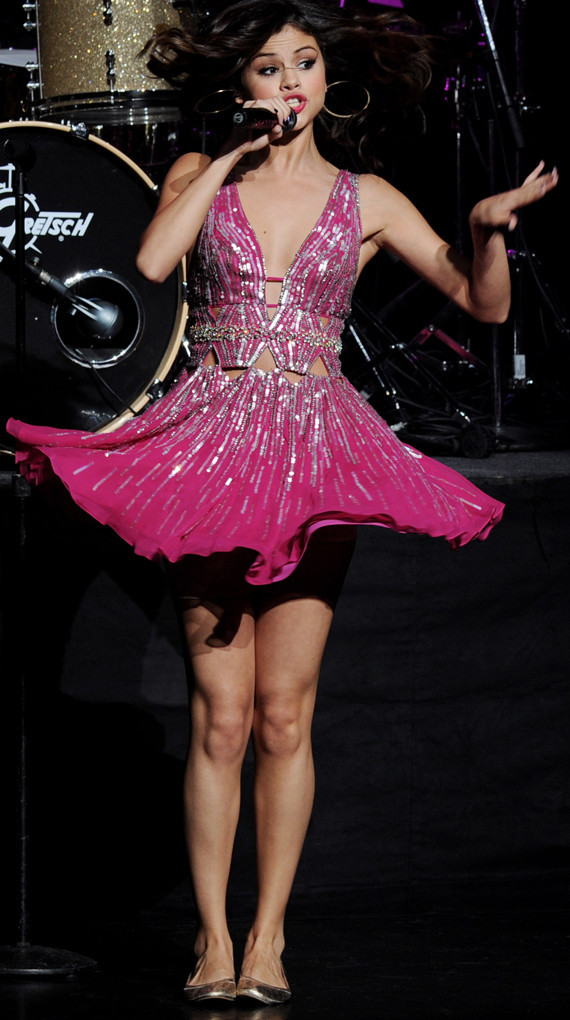
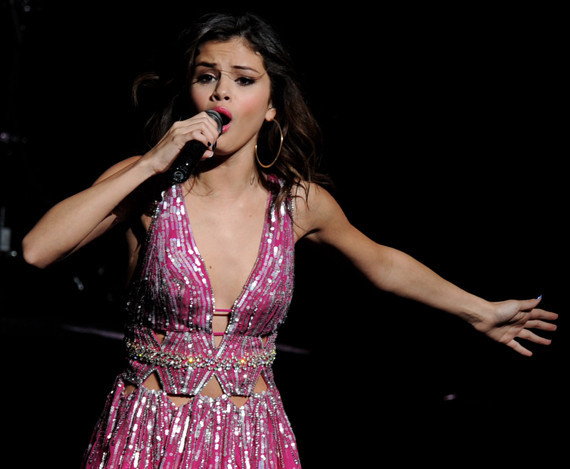
Selena Gomez Wows At 'Concert For Hope'

Selena Gomez looked stunning when she performed Sunday night at the Concert for Hope to raise money for cancer research.

"So excited!!!!! performing Who Says for the first time tonight at the Concert for Hope," she tweeted beforehand.

Selena's man Justin Bieber was not in the audience, as he was in Germany over the weekend to shoot an appearance on the television show "Wetten Dass...?"


Meet Vipasha Verma: Hot Model, Dutiful Wife

By Sanaya Dalal

Vipasha Verma

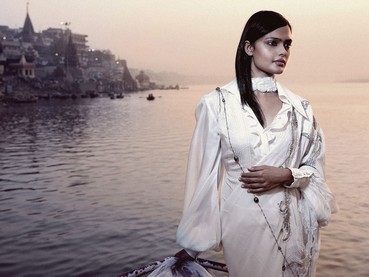
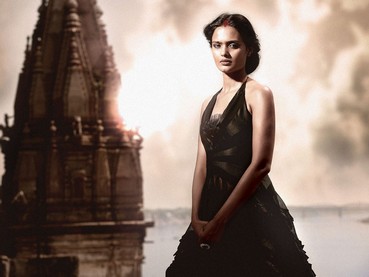
In a tete-a-tete with rediff.com, Vipasha Verma (nee Agarwal) discusses her journey from small-town girl to fashionable femme fatale.

Soft-spoken, demure and stunningly beautiful.

That's our first impression of dusky, doe-eyed Vipasha Verma, 26, one of the best-known names on the modelling circuit and one of Lakme's four 'Faces' -- an iconic title, with predecessors like Rekha, Aishwarya Rai Bachchan and Katrina Kaif having borne the mantle in the past.

Maybe it's that she's a newlywed and basking in domestic bliss, or maybe it's a natural radiance that she exudes, but Vipasha is positively glowing. She lights up a room when she enters, but it seems like she'd rather have fewer eyes on her.

When she starts talking, you realise that you can take the girl out of the small town, but you can't take the small town out of the girl. There is a certain grounding, a certain set of values that shines through as she speaks and you begin to wonder how this pretty young thing metamorphoses into a topless tigress oozing seduction for the cameras, her withering glances enough to have you melt into a warm puddle of wax. It is this duality that sets Vipasha apart from the smart-talking, attitude-copping models of Mumbai.

In an interview with rediff.com, we try to unravel the magic that seems to surround this maiden. Presenting edited excerpts in the following pages.

Image: Vipasha Verma
Photographs: Courtesy: Elite Calendar 2011

Vipasha Verma

Tell us a little about yourself and your family background. How did you get into modelling?

I'm basically from Benares (Varanasi). I'm Marwari and my parents are into business. I went to Delhi to study, where I was spotted by (modelling agency) Elite. I initially joined Elite for a grooming course and they asked me to give modelling a try. And that's how it happened.

So you always wanted to get into modelling, is that why you signed up for the grooming course?

Not at all, I'd never thought of modelling before. I just signed up because, you know, I was a small-town girl, I came to this big city for business studies and I happened to find out about this grooming course. So I thought why not, let's try it.

Then when I signed up, they asked me about modelling and I told my parents about it. So they met the people at the agency.

Image: Vipasha Verma
Photographs: Vishesh Verma for Elite Modelling Agency

Vipasha Verma

How did your parents react to your choice of career?

At the start they were a little apprehensive about what I was doing. They were like, we should know where you're going and the people you're meeting, come back on time, there should be someone to escort you that kind of thing.

After seeing the kind of work I do, however, they're extremely proud of me.

So they don't have any inhibitions about the kind of clothes you have to wear or the assignments you have to do?

Not at all.

How did Lakme happen for you?

When I just started modelling, I met (Lakme-Lever head honcho) Anil Chopra. Back then he thought I was too new and too young to be the face of Lakme, to be carrying the weight of the brand on my shoulders, talking to the media...So yeah, that was my first meeting with him.

Then I did a movie (I See You with Arjun Rampal) and after that he said, 'Okay, now I think you're grown up enough to handle it.' He thought I was ready to be a brand ambassador.

Image: Vipasha Verma
Photographs: Vishesh Verma for Elite Modelling Agency

Vipasha Verma

You were on the ramp this Fashion Week, was it your first time walking as the face of Lakme?

Well, actually I became the face of Lakme in 2007. What happened, though, is that I didn't walk the ramp for the last two seasons because I wasn't well. Somehow, I fell ill only on those days! But yeah, this time I did.

What opinion do you have of the Indian fashion industry, based on your own experiences?

I definitely think it's a very safe industry; I want to let all the girls out there know that it's safe for you. I have never, ever faced any problem.

And the Indian fashion industry is growing by the day, it's going global.

Is it very competitive for models?

There's a lot of competition, but it depends what your priorities are, what you want to do. So it never hit me, you know, that oh my God, there's this new girl or that one, or that there are so many new faces around. That never happened, it never bothered me.

Image: Vipasha Verma
Photographs: Vishesh Verma for Elite Modelling Agency
Vipasha Verma

You're obviously in fantastic shape! Care to share some fitness tips with us?

Drink a lot of water, so you don't get very hungry! Hmmm, what else -- I go to the gym four times in a week. I don't really do much to keep fit.

So you're saying your good looks are the result of good genes?

Yeah, you can say that. My mother's influence, really.

You don't diet at all?

Not at all. In fact I love sweets and I have to have something sweet after dinner every night.

Who would you say is your role model in the world of fashion?

Padma Lakshmi. I really, really admire her, I think she's gorgeous!

Coming from a small town and standing before me today as a well-known, established model -- what has that been like for you? Tell us about your journey.

It's been very smooth, actually. It didn't hit me in the sense that something happened to me, it was a smooth and a very slow process. And I really had a good time getting to where I am.

Image: Vipasha Verma
Photographs: Vishesh Verma for Elite Modelling Agency
Vipasha Verma

Quick take:

The best-looking, most stylish male celebrities according to you: In India, definitely Hrithik Roshan. Even if he wears just a shirt and jeans, he looks fabulous! In Hollywood, I love Johnny Depp -- I think he's the best-looking guy.

The best-looking, most stylish female celebrities according to you: I love Angelina Jolie. And in Bollywood...hmmmm. Katrina Kaif? And Chitrangada (Singh).

Favourite movie: I'm a movie buff. I like to watch all kinds, especially foreign and psychotic, disturbing movies! My recent favourite is The King's Speech and in Bollywood I love an old-time one -- Yeh Vaada Raha.

Favourite music: I like old-time music and my husband has got me into French music and operas. I still don't know the names, but I listen when he's playing it. I really like it.

Favourite book: You know, I was never, ever into reading, I've never read any book! The first book I started reading, which I'm still reading and just about to finish -- I can proudly say it's the fattest book ever(!) -- is A Suitable Boy by Vikram Seth. So yay, I'm on the last ten pages!

Image: Vipasha Verma
Photographs: Vishesh Verma for Elite Modelling Agency

'I love to cook and do things around the house for my husband'

Vipasha Verma

Favourite travel destination: London

Favourite cuisine: Chinese

You never leave home without: My phone

Turn-ons in a man: Good smell

Turn-offs in a man: Bad smell!

Your hobbies: I cook. I love to cook. I also like to sing and I don't know, a lot of other things, but we don't get time for all of them. But yeah, these two things I keep doing.

In your spare time: I run back to my hometown, Benares! That's like a relaxing holiday for me. Otherwise my husband and I just go out for a weekend to Goa or something.

If you were not a model you would be: Into business, definitely. I'm from a business family.

Your passion: I'm a homemaker, I like to be doing stuff at home, doing stuff for my husband.

Your future plans: I don't plan my future, I just take it as it comes. No long-term planning!

Image: Vipasha Verma
Photographs: Vishesh Verma for Elite Modelling Agency