17 March 2011

Small Boobs Are Sexy

Not all 'flat-chested women want big boobs'

New York : Being flat-chested may once have been an embarrassment, but recent trends indicate otherwise.

Ellen Shing, the owner of Lula Lu, a California-based website that caters to AAA- to A-cup sizes, said that while some women do look for padded bras, the majority "don't want to super-size themselves".

"It's a misconception that you want to be bigger if you're smaller," The New York Daily News quoted Shing as saying.

An increasing number of websites and retailers are saying, "The way you are is perfect, and here's how I can help you" and not "Here's how you stuff your bra", said Elisabeth Dale (formerly Squires), author of Boobs: A Guide to Your Girls.

In fact, women with modest busts are proudly flaunting what little they've got with a deep V-neck cut or a halter-top.

Twitter, Facebook and online blogs are witnessing a surge in online users "gushing about the lingerie and clothes that scream, ''Can you handle me?'' not ''Am I enough?'' "

Facebook groups like Flat Chested and Proud of It! and Flat Chested Girls United exist, and their members trade bon mots as profound as "im flat as a tack :)", which garner male support like "You are blessed."

Of course, it doesn't mean that no one is ranting about modest bust lines anymore. Bust magazine, with its feminist streak, has an online support group for those laid low by their tiny breasts.

With its motto "Small is Beautiful," Lula Lu is just one of several retailers and bra makers serving the band of women who make no excuses for their inconspicuous bosoms. Other online brands, like Itty Bitty Bra, require women to have a sense of humour about being "bust-challenged", as the website jokes.

"I'm okay with not having cleavage," said Heidi Brockmyre, a petite size 28A, an acupuncturist, but the new breed of bras for smaller busts just make it "more fun to wear tank tops".

Schoolgirls Abducted For Flesh Trade?

Who was the woman who let the school girls go?

By Shiva Devnath

17girls
Mumbai, Mar 17
: Manhunt for woman abductor who kidnapped girls outside Jogeshwari school and later set them free in Pune; questions are being raised about a child trafficking racket.

Two teenage girls, who were kidnapped outside their Jogeshwari West school on Monday afternoon and whisked away to Pune in a white tempo, managed to flee from the clutches of their abductors the next morning.

Relatives of the kidnapped victims filed a complaint with the Amboli police station
Eyewitnesses told MiD DAY that when three kidnappers headed for drinks leaving the girls in the vehicle in the custody of an accomplice, the woman abductor had a sudden change of heart and she decided to help her hapless victims to escape.
Manhunt

Cops are busy preparing sketches of the woman on the basis of her description provided by the rescued girls. The police have already launched a massive manhunt for her.
RPF inspector Mahendra Rokde confirmed that two girls were found outside Pune railway station on Tuesday morning.
"Their parents were informed immediately and the girls have been sent back to their homes in Mumbai," added Rokde.

The police quoted one of the victims, Std XI students at Faruqi School, as saying, "As soon as we stepped out of our school after writing our tests, a white tempo screeched to a halt in front of us. Suddenly, the vehicle's door opened and two men pulled us inside.

When we tried to raise an alarm, they put handkerchiefs  to our nose and soon we fell unconscious. But when we regained consciousness, we were surprised to see 18-20 other kids in the vehicle.

A few of them were conscious, while others were asleep. There were four kidnappers, two women and as many men, in the vehicles."

Pune angle
The revelation that there were 18 more kids sent the police into a tizzy, forcing them to suspect a huge inter-state traffic gang is at work.

"If the mysterious woman, who let off the girls, could be tracked, the gang would be busted in no time," said a senior police official.

According to the police, Pune could be a transit point from where the girls could be sent to different designations across the country.

The possibility of girls being forced into immoral trade in Pune cannot be ruled out as the city has a plethora of bars.

Sabiya Khan, mother of one of the victims, said, "We have registered a case of kidnapping at Amboli police station."

Inspector Harish Goswami of the police station confirmed that an abduction case had been lodged.

"Our team will go to Pune for further investigations. It is too early to say whether the victims were kidnapped by members of an inter-state trafficking gang," he said.

The Great Indian Dancing Act!

The most loved item dancers of Bollywood!

There comes a moment in every Indian movie when the viewer gets exhausted of “emotion, romance, drama and tragedy”. It is that time of the flick when the Dolby surround panel gets alive, and the screen transforms itself into a dance floor! Angels descend to devilishly danceable drum beats! ‘Jhatka’s and ‘matjka’s rule the screen! ‘Seeti’s fill the hall! Click on, for India’s most-loved item dancers!

Rakhi Sawant

Rakhi Sawant

Rakhi Sawant has the whole of India unquestionably under her spell; a feat we would like to call "Rakhee Bandhan". Here is the godmother of all item dancers on earth!


Namitha

The most loved item dancers of India!

Namitha Kapoor, one of the hottest stars of South India, commands a unique fan following; she even has a temple built in her name.


Mallika Sherawat

The most loved item dancers of India!

A synonym of Oomph, Mallika Sherawat has so much fire in her eyes that she can gut your house with a mere wink! Try this one, only if you are ready to get “fanaa”!!


Mumaith Khan

The most loved item dancers of India!

This Pakistan-born Mumbai gal is one of the top-rated item dancers of India. She came to limelight with 'Munna Bhai MBBS' and has not looked back ever since.


Anushka Shetty

The most loved item dancers of India!

The Mangalorean beauty is currently engaged in a battle with Ileana for the top spot among South Indian actresses. Her item number in Nagarjuna's 'King' was an instant hit.


Kareena Kapoor

The most loved item dancers of India!

To call Kareena an item girl would be like calling Venus a Vamp! But then, we can never undermine Bebo's ability to tease the mercury when she is on an Item cameo. Watch 'Don: The Chase begins!', 'Tashan' or even 'Kambakht Ishq', if you are a doubter.


Hansika Motwani

The most loved item dancers of India!

This bubbly teenager from Mumbai is one of the fastest rising stars in Tollywood. She set the screen on fire with a fab item number the Telugu remake of 'Billa'.


Deepal Shaw

The most loved item dancers of India!

Deepal Shaw represents Gen Y of Bollywood. For Deepal, being bold is just a way of life. Having debuted as a singer with ‘Baby Doll’ (2004), Shaw logged into Bollywood playing a porn star in Mahesh Bhatt’s ‘Kalyug’.


Ragasya

The most loved item dancers of India!

Haifa aka Ragasya shot to fame with a neatly choreographed item cameo in 'Vasool Raja MBBS', the Tamil version of 'Munnabhai MBBS'. She is at present one of the most sought-after item girls down south.


Koena Mitra

The most loved item dancers of India!

A fantastic dancer, Koena got her Bollywood break through Ram Gopal Varma’s ‘Road’. Her ‘Khullam Khulla’ number became a big craze. She followed it up with 'Saki Saki' and 'Jal jal Ke'.


Shefali Zariwala

The most loved item dancers of India!

When Shefali Zariwala gyrated to the tunes of ‘Kaanta Laga’, ‘Kabhie Aar Kabhie Paar’, 'Pyaar Hame Kis Mod Pe Le Aaya’ and ‘Dil Kya Karen’, India danced with her. Well… almost!!!


Urmila Matondkar

The most loved item dancers of India!

Urmila might be on the bitter half of the thirties, but there is no taking away her glory on the floor. The travel from ‘Rangeela Re’ to ‘Mehbooba’ and ‘Tandoori Nights’ had been one helluva trip!!!


Yana Gupta

Top 10 Item dancers of Bollywood!

Here is one Czech model-actress (Jana Synkova), who thinks that Bollywood is the most happening place on the planet.  She made her screen debut with the item cameo, “Babuji” in ‘Dum’. Yana, has, ever since, been a hot fav with the item number buff up north and down south.


Malaika Arora Khan

The most loved item dancers of India!

If grace is what you want in an Item Number, you have to invoke Mrs. Malaika Arora Khan! From 'Chaiyya Chaiyya' to 'Munni Badnaam'; she is the deity of Item numbers! Malaika makes the Item Dance look as if it is a traditional dance form of India!


Katrina Kaif

Katrina

Right when "Munni" was looking like she would steal the show, entered "Sheila" with her sizzling "Jawaani". 'Teez Maar Khan' may have been a senile movie but Sheila will forever remain Jawaan and happening.


Deepika Padukone

deepika Padukone

Though she had done an item number for SRK in'Billu' that was more of a friendly gesture than a blue-blooded item dance. She will doing an out-and-out item number for the title track of Rohan Sippy's 'Dum Maaro Dum'.

Text: India Syndicate

Images: FilmySouth

Supermoon On March 19th May Cause Natural Disasters

By Clint Thomas

On March 19th 2011, the moon will make its closest approach to Earth in almost 20 years, possibly triggering earthquakes, volcanic eruptions and other disasters.

The phenomenon, called lunar perigee or Supermoon, happens when the moon reaches its absolute closest point to Earth. On March 19, the natural satellite will be only 221,567 miles away from our planet.

There were Supermoons in 1955, 1974, 1992 and 2005, and these years had their share of extreme weather conditions, too. Although there are scientific laws that say the moon affects the Earth, it's still ambiguous whether the lunar perigee and natural disasters is coincidence or not.

Two days after online warnings that the Supermoon might trigger disasters, the devastating Japanese tsunami forced everyone to think - could the movement of the moon cause natural calamities?

"Supermoons have a historical association with strong storms, very high tides, extreme tides and also earthquakes," the Daily Mail quoted astrologer Richard Nolle, who first coined the term in 1979, as saying in an interview with ABC radio.

However, scientists dismiss this as utter nonsense.

Dr David Harland, space historian and author, said, "It's possible that the moon may be a kilometre or two closer to Earth than normal at a perigee, but it's an utterly insignificant event."

Professor George Helffrich, a seismologist at the University of Bristol was equally dismissive.

"Complete nonsense. The moon has no significant effect on earthquake triggering. If the moon triggers "big" earthquakes, it would trigger the many of millions of times more "small" earthquakes that happen daily. There is no time dependence of those; hence no moon effect," he said.

According to Dr Roger Musson, of the British Geological Survey (BGS), the devastating earthquake occurred because the Pacific Plate is plunging underneath Japan.

However, while hoping for a non-disastrous ‘moon giant’, point your eyes and camera lenses toward the night sky on 19th. If the sky is clear, you’re gonna get an exceptional celestial treat.

Nasim Akhtor: Creating History As A Woman Mountaineer From Northeast

By Munize Ali

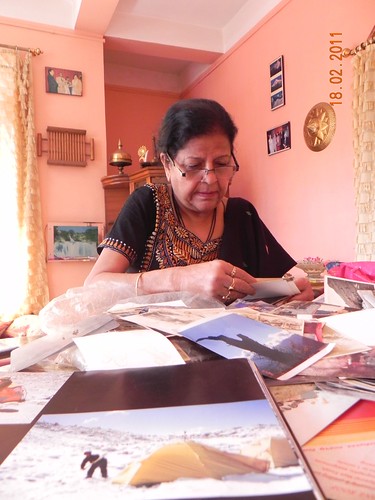
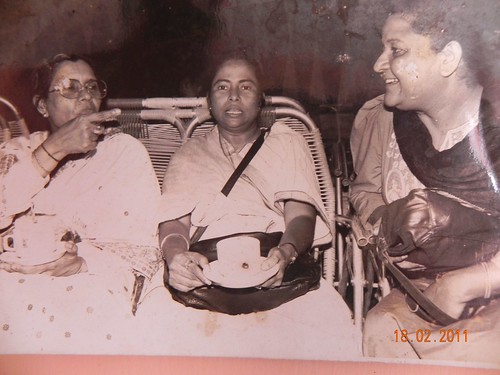
Guwahati: ‘If you want to achieve something in life, all you need is to have a desire, a vision and a dream’, said Nasim Akhtor, a woman of substance. Nasim Akhtor is going to make history forthcoming August 16, 2011 by leading the first ever team from North East to step into Mount Everest. She is a teacher by profession and her passion made her the first ever woman mountaineer from North East India and she still continue to hold this glory at the age of 54.


Nasim Akhtor

On being asked how she nurtured the desire of being a mountaineer. Nasim’s answer hinted her fancy free extrovert nature. ‘I loved adventure since my child hood. I enjoyed climbing trees and was rebuked for such ‘male’ nature in me. I loved nature and was grounded into nature. But never thought this ‘love’ will take the shape of my passion called mountaineering. 50 years ago, no woman could imagine that there can be a dream known as mountaineering’. At a young age, Nasim built her image of a cow boy and could challenge the social snide towards a girl being adventurous. Then how Nasim could desire for stepping into Mount Everest, the ultimate destination of every mountaineer?

Inspiration from mother

‘It was my mother, Mazida Begum who inspired me. Mom would sometime punish me for my uncommon nature and would also encourage me a lot. Today, whatever I am, it’s because of my mother. My mother was the best support for me when I became a mountaineer’.

It was Mr. Rohini Bhuyan who introduced Nasim into the passion called mountaineering. In 1972, Rohini introduced this passion in Assam and was organizing a team for an expedition to Sandakpur, Darjeeling and required some ‘adventurous’ girls to be a part of the team. No wonder, Nasim was selected as one of the team member as she has already became ‘infamous’ by then. There were 20 members in the team and four of them were girls. ‘It was December, 1972 and was my first train journey that took me to Darjeeling. I was hardly 16 years old then, thrilled, excited but knew nothing about Himalaya. All I knew is that I was going to Darjeeling. I met Tenzing Norgay during that expedition and he delivered a lecture to our team. Tenzing said that we will fall in love with Himalaya. I was amused by this concept of falling in love with a rigid rocky substance called Himalaya. How can a human being fall in love with Himalaya? I laughed a lot. But at the end of the expedition when I was returning home I realized I am in love. Love with Himalaya. I felt Himalaya in me and I realized I have to come back ’, remembers Nasim.

Resistance from society

That was the beginning of the tryst with Himalaya that never ended till date. Nasim is a frequent visitor to Himalayas since then. How was it for a woman to be a mountaineer for Nasim belonging to a Muslim family? ‘There was resistance from the society and the concept of mountaineering was not at all popular. It was my mother who told me that if you want to be somebody in life, you have to challenge such things and go ahead. You have to sacrifice something to be an achiever in life. But don’t forget yourself and your confidence’. Nasim never forgot these immortal lines though her mother is no more in this world to encourage her. Her mother was the sole inspiration for Nasim to fall in love with Himalaya.

Breaking stereotypes

Nasim continued trekking in Nepal, Kashmir etc. In 1986, Nasim led the first expedition all women team from North East India and went to Kang Esai Mount of Ladakh which is at a height of 21132 ft. ‘It was the first women expedition and I was there as a leader. It was a team of 8 women and 5-6 men were there as supporter. We went to Srinagar and collected required equipment with the help of Indian Army’, recalls Nasim. When Nasim reached Ladakh, she was confronted with a stereotype. She was asked how she became a team leader being a Muslim girl. Nasim’s answer was straight. ‘Muslim girl can book ticket for cinema; Muslim girl can sit and eat in a restaurant and why a Muslim girl can’t do it? All you need a desire’, was her bold answer to those stereotypes.

Nasim was born in Guwahati on October 1, 1956. In a family of 5 children, she was the youngest one. Her passion for mountaineering won her accolades. In 1993, Nasim became the first member of prestigious Delhi –based Indian Mountaineering Foundation (IMF) from North East India. She was the governing council member of IMF for ten years 1999- 2009.


Nasim with Mamta Benarjee during a meeting in 1993

Nasim’s journey in the Himalayas is a treasure full of memories. She recollects, ‘in 1996, during a trekking, me and my team crossed 19000 ft and suddenly weather became very bad. And storm began. Immediately a Sherpa named Pachang, put me inside a rock and covered me with his body. After the storm I found his back is bleeding due to injuries caused by the storm. I was amazed with their sacrifice. I never forgot him.

Acknowledgement from community

Today Nasim‘s achievements are celebrated by her community who criticized her ‘adventurous’ nature. She is invited to local mosques and other Islamic celebrations as chief guests and offered facilitations. “This is my achievement. This is the change I want to see where women can be aspired to be achievers’, said Nasim.

Currently Nasim is busy in preparation for the forthcoming expedition which she terms as an encouragement for people of North East India. ‘There is huge potential for trekking and mountaineering in North East. People of this region must explore and build this region. It can be taken as a profession too. Youths can open travel agencies and arrange for trekking and mountaineering. That’s the reason I am leading this first team to Everest from this region. There will be 12 members and 8 supporting members. We have members from all states except Tripura. The whole expedition will cost about 3 crore rupees. We are working hard and have full confidence to be successful.’

Today Nasim Akhtor is a woman of substance. With tremendous courage and strong determination, she has become a role model for every aspiring mountaineer from the region.

Anyone interested to sponsor Nasim and her team, contact email: nasim.akhtor@gmail.com and phone: +91-9957722609

source: TwoCircles.net

Making A Point

Irom Deban Singh, an award-winning coach, says studies shouldn't be an excuse to quit the sport


Touché Fencing coach Irom Deban Singh vouches for the game of concentration

At 42, Irom Deban Singh has been relatively early in winning a lifetime achievement award. Few, though, will argue that the recognition was premature for Karnataka's long-serving fencing coach. The State government conferred the award on Singh last August, sending the resident Manipuri community into raptures. “There are nearly 1,000 families in Bangalore,” he says. “All of them were so happy that day; happy that one of them had achieved something here.”

Singh arrived in Bangalore in 1995, appointed by the Sports Authority of India (SAI) in response to the Department of Youth Services and Sports' request to set up and train a fencing team from the State for the fourth National Games, then two years away. At the National fencing championships later that year, Karnataka finished with a bronze, its first medal in the sport. At the National Games, Singh's wards recorded a tally of four golds, four silvers and two bronzes: not bad for a group that had only just taken its first steps. The State's fencers grew to take a firm grip on the National title, finishing overall champion every time, for the subsequent six years.

Singh was appointed National coach for the Asian championships of 2000, an occasion when the Indian team had seven representatives from Karnataka. Although it may be harsh to say that the sport is in decline, things have definitely slowed down since those heady days. “Those were good times,” he muses. “Even five years ago, there were about 70 fencers here. Interest was good. Today, the number is around 35 or 40, and even these are not regular. They say they have ‘tuitions' or ‘special classes'. If you turn up for practice only once a week, you don't win anything.”

The perennial struggle to balance academics and a career in sport should not apply to fencing, Singh feels. “I guarantee you this: a good fencer is also good at his studies. It's a sport that needs concentration. Good fencers invariably have beautiful handwriting.”

The sport was introduced in India, Singh says, by Rajiv Gandhi in 1989, and first taken to Thalassery (Kerala) and Imphal (Manipur) districts under the Sports Authority of India's Special Area Games scheme. “This is because these two States had a tradition of weapon-based martial arts – Kalaripayattu and Thang Ta,” he explains. Singh himself was a practitioner of the latter, and took up the opportunity to train at the SAI, spending five years there. It was on his return from Tashkent after the Asian championships of 1994 that he was posted to Bangalore.

In his 16 years in the city, he has trained over 500 students, with 16 of them representing the country, and 250, the state. “Yashoda, M. Pratibha, Sudha Rani, C. Rukmini,” he rattles names off, “They were all good. Then there was Dilip Kumar, and Shashidhar Singh. Today we have N. Bindu, P. Lakshmikanth, Sumeeth Naidu (all Ekalavya-awardees), T.R. Rohit Gangadhar, Charles, and N. Lakshmi.”

What will happen when this generation of fencers moves on, is a thought that worries him. “Yes, things are looking down. There has to be some reward if you want to attract a fresh bunch to the sport, and there isn't.”

In previous years, Karnataka State Police (KSP) has been kind enough to recruit the State's fencers, taking in 13 of them. “Now, there is nothing much,” sighs Singh. “I had many dreams for fencing,” he says, “but all I want now are students.”

SHREEDUTTA CHIDANANDA

Meghalaya Spends Highest On Development In India

healthShillong, Mar 17 : The ratio of development expenditure of Meghalaya is higher than the other northeastern states on an average, which indicates that the state is giving more priority to this category compared to other states of the region, the CAG report on state finances for the year ended March 31, 2010 has noted.

In social sector expenditure, involving major components, the Meghalaya government's expenditure on health as a percentage of AE (aggregate expenditure) was higher than the northeastern states' average during the years 2005-06 and 2009-10, whereas expenditure on education was lower, the CAG report tabled in the assembly today highlighted.

Fiscal position indicated that the state not only maintained revenue surplus during the last five-year period ending 2009-10, but it also reached its peak.

Fiscal deficit of the state also significantly reduced during 2009-10 compared to previous year and primary deficit of 2008-09, the report read.

Revenue account increased by Rs 1,700 crore over 2005-06 and growth of revenue receipts was 23 per cent over the previous year, the report said.

Expenditure on salaries during 2009-10 was 6.14 per cent higher than the assessment made in FCP.

CGWB To Help Tackle Water Scarcity in Mizoram

CGWBAizawl, Mar 17 : The Central Ground Water Board has prepared an action plan to harvest rain water that run off the hills and preserve ground water resources in Mizoram.

Speaking at a Water Resources Day function here today, CGWB northeastern regional director S C Guha announced that the CGWB has chalked out a plan, involving huge amount of money, to tap rain water and preserve ground water resources from rapid depletion. ''In the first phase, large water reservoirs will be installed at all government buildings in the state capital to harvest rain water,'' Mr Guha said.

Voicing a serious concern over rapid depletion of ground water resources, he emphasised the need to protect the water resources and at the same time tap rain water.

The function was graced by state PHE minister S Hiato, who expressed concern over the increasing water scarcity in Mizoram despite the state receiving heavy rainfall. ''It is very expensive to provide water to the residents in a hilly place like Mizoram. Pumping water from the river has cost us a lot of money, causing financial constraint for rain water harvesting on the other hand,'' the minister said. He encouraged the families to make roof top water harvesting facilities in their houses. The function was organised jointly by CGWB and Central Ground Water Authority under the ministry of water resources.

The water supply system in the capital of Mizoram, originally designed in 1988 for 80,000 people, is now catering to the needs of over 150,000 residents, making it grossly inadequate. Due to inadequate and unreliable water supply people are resorting to rooftop water harvesting the most convenient and economical water supply system. Although Mizoram receives an annual rainfall of 250 centimetre, people living on the hill tops normally suffer from water scarcity as the rain water runs off quickly down the steep mountain slope.

Mizoram government has also been extending its help in constructing water tanks at different places to harvest rain water.

According to sources, around 341 villages have been so far brought under the water supply scheme of the state government and over 305 villages, mostly in rural areas, are yet to get the full benefit of the rural water supply scheme. In addition to this, there are 130 other villages which these schemes have not been able to cover.

In such a situation, the Mizoram government initiated the project of rain water harvesting since 1986 to solve the problem of water scarcity in these villages.

Sources said, 24,185 rain water harvesting tanks have so far been constructed with the assistance of Mizoram government. There are many families who have constructed rain water harvesting facilities at their own expenses.

At present, Aizawl has more than 10,000 rainwater harvesting tanks in individual houses which have been constructed by the residents at their own expense or with state government assistance. In a pollution-free state like Mizoram where major industries are yet to come, rainwater is free from undesirable chemicals and is of potable quality.