11 March 2015

Bru Sentenced To Rigorous Imprisonment For Ransom Kidnappings

https://blogger.googleusercontent.com/img/b/R29vZ2xl/AVvXsEggh6sDSP48XTnm2ZfhCfQ4OH9AQXbDCHaAd6Sz_PStWz4kfxW0x1PVW23pB6pKLIaoatlARWvAoIb0PfOdJOfwG1jcjP74gk6sEG0zmuqZ3pJ4hjD1DWZRqgCKBitHwS0ODH1QnPjarEM/s1600/NLFT.jpgAizawl, Mar 11 : A 38-year-old resident of one of Tripura’s seven relief camps for displaced Brus was on Tuesday sentenced to rigorous imprisonment for life and fined Rs 10,000 for his role in the 2013 ransom kidnappings of five casual workers under the forest department in Mizoram’s Dampa Tiger Reserve.

Additional Sessions Judge Vanlalenmawia had on Monday found Lochiram Reang guilty of taking part in the ransom kidnappings.

Among other evidences, the five kidnapped men testified Reang actively took part in their capture in February 2013, although two of them said they were not sure of having seen him as part of a smaller group of armed men who entered their work camp near the Chikha anti-poaching camp.

Two defence witnesses said Reang used to work in farms near Thaidor village in western Mizoram, but admitted they did not know of his daily activities.

The five men were held captive in the eastern jungles of Bangladesh for 38 days by militants suspected to be cadres of the National Liberation Front of Tripura (NLFT) and the Western Development Liberation Front of Mizoram (WDLFM) who demanded a ransom of Rs 1 crore for their release.

Reang has been the only one to be arrested among the 20-odd member group the victims said kidnapped them. According to the court judgment, police have identified six others by their names and places of residence.

Mizoram Police arrested Reang in the Asapara relief camp on April 16, 2013 and booked him under charges that include kidnapping for ransom, taking part in a collective criminal act and illegally possessing arms.

During the sentence hearing on Tuesday, Special Public Prosecutor R C Thanga asked for the maximum penalty of death for Reang, saying the kidnapped men spent almost 40 days in mental agony without knowing if they were going to live or die.

He also pleaded that, although not mandatory, society’s reactions to the kidnappings, a spate of which has taken place over the past half-decade, should also be taken into consideration (a spate of nine kidnapping incidents over the past half-decade in the region has led to ethnic tension in Mizoram).

R Thangkanglova, who was appointed by the court to represent Reang, however asked for leniency because “witnesses’ statements were contradictory”, that he accused was not part of the rebel group that perpetrated the kidnappings, and that he has four children, the youngest a month-and-a-half-old infant.

The judge however said his hands were tied by the law and there were only two options – life in prison or death.

“You can be hanged. Your crime warrants it because it is the same as wilful murder. The five victims testified you were the most active among their kidnappers. It may have been fun for you then because you were young, but for the victims it was terrible, not knowing if they would live or die,” the judge said, addressing Reang.

He however added Reang has four children (the oldest of them 10 years old) and only a mother and a maternal grand-mother to take care of them, and that it was unlikely his siblings may be able to care for the kids since they are also most probably too poor to do so.

He went on to sentence him to rigorous imprisonment for life and a fine of Rs 10,000 instead of sentencing him to death as the prosecution pleaded.

Talking to reporters after the sentencing, Reang maintained his innocence and reiterated the militants forced him to take part as a porter by threatening him with death while he was working his fields.

HC Directs Centre, Nagaland to Ensure Safety of Prisoners


Dimapur, Mar 11
:The Gauhati High Court has directed the Centre as well as the Nagaland government to ensure adequate security to the prisoners languishing in the jails in Nagaland.
The court issued the directive after hearing a PIL filed by a Guwahati-based activist, Rajib Kalita, on Monday in connection with last week’s lynching of a rape accused in Dimapur.

Kalita had sought an impartial probe into the alleged rape incident. He had requested that the trial of those arrested in connection the lynching of the rape accused be held outside Nagaland.

The court has set a two-week deadline to the Centre and the Nagaland government to respond to the PIL and pointed out that it was the responsibility of Nagaland’s Inspector General of Prisons to provide security to the prisoners.

“The family members of the prisoners are concerned over safety and security inside the jails of Nagaland,” advocate Bhaskar Dev Konwar said.

He also said the Ministry of Home Affairs (MHA) had submitted a preliminary report of the alleged rape, received from the Nagaland government, to the court.

Meanwhile, the police said the hunt for the ring leaders of the violent mob, who had stormed Dimapur jail and took away the rape accused, was still on. “We are going after the ring leaders, who have gone into hiding,” IG, Wabang Jamir, told Express.

So far, 43 people have been arrested in connection with the lynching incident.

Meanwhile, Dimapur, which is Nagaland’s largest town and commercial hub, is limping to normalcy, with curfew being relaxed from 6 am- to 4pm on Tuesday.

Bengali Muslims doing business here said a number of traders had fled the town over the past few days.

The community has a sizeable population in the town.

“Traders, especially those who are staying with their families have started leaving. They are worried about their safety. Their family members and relatives are also insisting that they should go back to their villages,” Hasmat Ali, a trader from Assam’s Barak Valley, told Express.

North East region is our land bridge to South East Asia: MEA

http://www.aninews.in/contentimages/detail/anilwadhwaASEAN.jpgNew Delhi, Mar 11 : The Chief Ministers of North Eastern States have been invited to participate in the inaugural session of the Delhi dialogue with ASEAN states commencing tomorrow as the North East region is India's 'land bridge' to South East Asia, a vital component of the country's 'Act East' policy, disclosed Secretary East of the Ministry of External Affairs, Wadhwa to the media here today.

"The North East region is our land bridge to South East Asia. As in the previous years, as a step to integrate North East India with the ASEAN region, as envisioned in India's Look East/Act East Policy, the Chief Ministers of North Eastern states have been invited to be part of the inaugural session of the Delhi Dialogue VII to share their vision of participating in the ASEAN-India strategic partnership," MEA Secretary (East) Anil Wadhwa told the media here today , ahead of the seventh edition of the Delhi Dialogue 'ASEAN-India: Shaping the post 2015 Agenda'.

Wadhwa further said that the 2015 edition of the Delhi Dialogue has come at a crucial time for strengthening the partnership between India and the ASEAN nations.

"This year's Delhi Dialogue assumes even more salience on two accounts. One, it comes in an year which is a milestone in the history of ASEAN, as it moves towards the ASEAN Economic Community which is the culmination of decades-old economic integration efforts to create a free market for goods, services, investment, capital, and skilled labour. Secondly, it comes at a time when our own foreign policy has entered an era of new vigour and dynamism as our erstwhile 'Look East Policy' transforms into an 'Act East Policy'," he said.

The Delhi Dialogue VII, which will start tomorrow , will see participation of Thailand Deputy Prime Minister and Foreign Minister; Cambodia Minister of Education, Indonesia Vice Minister of Foreign Affairs, Myanmar Deputy Foreign Minister and ASEAN Deputy Secretary General .
10 March 2015

Divorce: Mizoram Tops Divorce & Separation in Northeast India

By CK Nayak

2011 census reveals high divorce, separation cases among NE women

New Delhi, Mar 10 : Meghalaya, Mizoram and Nagaland are three states of the North East which have the dubious distinction of having more divorced or separated women in proportion to men, latest census data showed.

Four of the five states with the highest proportion of divorced or separated women in relation to those ever married (ranging from about 7% to 2%) are from the North East – Mizoram, Meghalaya, Nagaland and Sikkim in that order. Kerala stands in the fifth position.

There are three times as many women as men who are currently single after having been in wedlock, the data showed. This tilt is not just because of the much greater number of women among those widowed.

Over 3.2 million of those separated or divorced are women, compared to1.6 million separated or divorced men. Both among those separated and among the divorcees, there are twice as many women as men.

This is likely to be because it is much easier for men to remarry in a patriarchal society. Interestingly studies have also shown that although Meghalaya is a matrilineal society the rates of abandonment/divorce are very high with women facing the brunt since they and their children are usually not supported by the husband/partner after divorce.

As per the figures Mizoram has the highest number of divorced or separated women with 6. 9 percent compared to 4.8 percent men. Meghalaya with (5.1 % and 2.3 %) Nagaland (2.8 % and 0.9 %), Sikkim (2.3 % and 1.5 %) and Kerala (2.1 % and 1.9 %) stand in that order.

These trends were revealed in recently released census data of 2011, which has given separate data for the population that is divorced and separated for the first time. In earlier censuses, the two categories were combined.

This trend reveals the figures not just at the all-India level, but across most states as well. There are, however, some states where the proportion of separated and divorced men is close to or even slightly more than that of women.

In number terms, the population of those separated, 3.5 million, is more than double the population of divorced persons, just over 1.4 million. Of the 46.6 million women who were once married but were living out of wedlock at the time of the census, the bulk (about 93%) were widowed.

But divorced and separated women make up just about 7% while divorced and separated men make up about 12% of ever-married men who are not married anymore. This is largely because there are fewer men who survive their wives, given the greater longevity of women, a global phenomenon.

The states with the lowest proportion in this category  ranging from 0.2% to 0.5% are Bihar, Haryana, Uttar Pradesh, Rajasthan and Uttarakhand in that order. The gender ratio in Meghalaya ranks average along with many other states but there has been a definite increase in the ratio, since the 2001 census, which means the number of females in the state is increasing.

Earlier, reports had said that Meghalaya has the average age of just 23, the highest in the whole country. The NE states have low averages, it said adding the national average is 27.8 which is also quite good compared to world figures.

Meghalaya is closely followed by Arunachal Pradesh( 24.4) Nagaland (24.9) and Mizoram (26.2) in the region.

Approximately 30 lakh population reside in the naturally gifted land, which makes the state of Meghalaya one of the states in India with lowest population.

But in spite of the low density and population of Meghalaya,the state has a rapid population growth rate, and has the third fastest growing population in India, according to the Meghalaya census 2011. The NFHS survey, 2012 had revealed that Meghalaya has the highest fertility ratio and lowest condom use in the country.

India Begins To Play Official Role in Myanmar Peace Process: Zoramthanga

narendra-modi
AdTech Ad
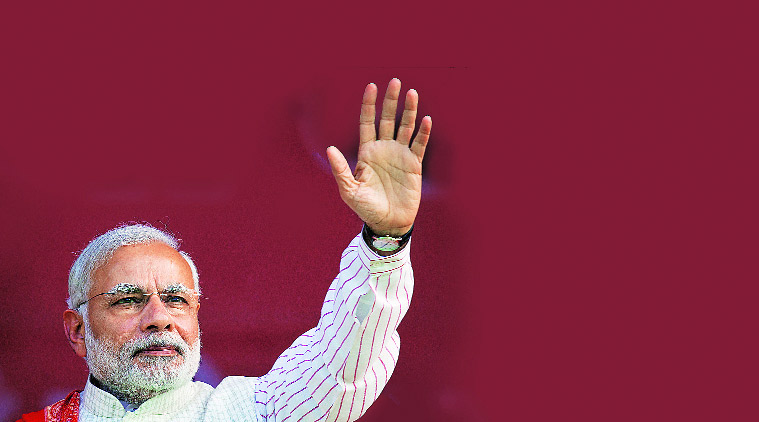
The upcoming visit would be Narendra Modi's second visit to Myanmar in seven months.

By Adam Halliday

Aizawl, Mar 10 : As New Delhi begins to play an official role in peace talks between Naypyitaw and Myanmar’s ethnic rebel armies, the neighbouring country is gearing up to host Prime Minister Narendra Modi in May (which would be Modi’s second visit there in seven months), said peace envoy and former Mizoram CM Zoramthanga on Monday.
The former rebel leader and current supremo of the Mizo National Front, which waged a two decade insurgency for an independent country for ethnic Zos, also said New Delhi has agreed to facilitate visits by Myanmar’s rebel leaders to India to study the processes that led to the Mizo Accord of 1986, often hailed as one of the most successful peace deals between a government and an armed insurgency.

“I found that both sides really wanted to have peace but were unable to find a way towards it. In my view they are like an aged bachelor and spinster who really want to marry but just do not know how to set the ball rolling,” he had said earlier, stressing the two sides appeared not to know how to achieve lasting peace in spite of years of negotiations and often failed ceasefires.
Zoramthanga has travelled to Thailand and Myanmar twice this year to meet both Minister Aung Min (who is in charge of Myanmar’s efforts to establish peace with some 16 ethnic armies) and N’ban La (chairman of the United Nationalities Federation Council or UNFC, a grouping of ethnic armies who have fought for autonomy, and earlier independence, since the late 1940s) and other senior leaders from both camps.

The man often called “Vajpayee’s right hand man in the North-East” for his roles in trying to broker peace between NE rebels and New Delhi said he was first contacted by Kachin leaders about four years ago to act as an envoy between Myanmar’s ethnic armies and central government.
His involvement picked up pace when the BJP swept to power last year (the MNF is an NDA constituent) and Ajit Doval, who was instrumental in the Mizo Accord, was appointed National Security Adviser to PM Modi.

Although his first visit to Thailand and Myanmar in mid-January was with the knowledge of the PMO but not it’s official sanction, as he put it (New Delhi had been wary of taking part in Myanmar’s internal affairs), the second trip late last month was more official.

Aung Min, the Myanmar Minister, had written to NSA Ajit Doval on February 26 asking the Indian government to take an active role in helping Myanmar reach a peace deal with the ethnic armies.
The PMO soon afterward assigned a senior official (Zoramthanga has declined to name the official, who he said wishes to remain anonymous) to travel with Zoramthanga and two colleagues to Thailand to meet with rebel leaders holed up there, and later with Myanmar government leaders.

Zoramthanga said the team reached Bangkok on February 27 and in the following days met three UNFC leaders who arrived there from Chiang Mai, the council’s headquarters, and another who was stationed in Bangkok to discuss the way forward.

He said the Indian team then flew to Yangon on March 2, and soon afterwards met Aung Min and other senior leaders in Naypyitaw.

Zoramthanga told The Indian Express the two most important things the two sides agreed on was to host PM Modi in Myanmar as part of this peace process, and for India to facilitate the visits of ethnic army leaders to India to study the processes that led to the Mizo Accord.

“India knows that if there is finally peace in Myanmar, there will be an end to all the different insurgencies in the North-East because most of the rebel’s safe havens would be dismantled. So India needs this peace process to succeed almost as much as Myanmar does,” Zoramthanga said.

My Mizo Restaurant Is Where Hip-Hop Meets Smoked Pork in Delhi


By David Lalrammawia

When I came to Delhi, I was one of those kids wearing my pants low. I’m Mizo—from Mizoram, North Eastern India, which isn’t really mainstream India, so I was exposed to a lot of different things than the people in Delhi were. Back then, no one understood what the fuck I was wearing, even in school. Pants came in standard sizes, so I asked my mom to widen the waist—and she did!

I think it is important to have representation, a presence in society. I opened Mizo Diner because I wanted that kind of representation.

At the time, there wasn’t a single Mizo restaurant in Delhi. None. Other North Eastern states have restaurants, but even at Dilli Haat, a government-run market with food stalls from all over India, there is not a single Mizo restaurant.


I came to Delhi in 2001, from Shillong. I got into graffiti and started doing commercial work, but I decided I couldn’t sustain it. Graffiti is something I love, and I didn’t only want to do it commercially. I wanted to figure out how to make money regularly, and I did not want to work in an office.

"A lot of people in Delhi, and the rest of India, don’t even know what the North East is."

My original idea was to open a cafe in Mizoram. I went and did my homework, but I realized that there’s no culture of people sitting and having coffee there. So I came back to Delhi and my friends, girlfriend, and I said, “Why don’t we open a restaurant here?”

Then we found this space. It was a restaurant, but it was really bad. It was one of those North-Indian/Chinese restaurants, which are everywhere in Delhi. Initially, the four of us were going to run it, but that was too much, so I took it over. It’s been a year now. Management is tough, though. I call up my mom sometimes and say, “I don’t know what I’m going to do! How did you handle us?”

In addition to doing graffiti, I used to be a part of this all-Indian hip-hop crew called Slum Dogs. The b-boys used to hang out at the restaurant in the beginning, and suddenly Mizo Diner became the spot where we all met. Everything started falling into place. Then GQ India wrote about us, calling us “Delhi’s secret hip-hop hangout.” But I don’t want to keep it just a restaurant-restaurant. We’ve had film screenings and music in the past, and maybe we’ll do stand-up comedy soon.

The interesting part is the people who come to Mizo Diner. We’re catering to so many audiences without really aiming—we just put our food out there. Delhiites also come: the pork-eaters. A lot of them like the food but it isn’t something that they’ve tried before.

In the North East, we eat a lot of pork—a lot of pork. Mizo food is often boiled, fermented, or smoked, so on the menu we have smoked pork, and fermented pork with chili and chutney. We also eat beef, but since you can’t really get or sell beef in Delhi, we serve buff (buffalo meat). Since we don’t have a noodle culture, it’s mostly rice and meat, with some boiled vegetables. We have something called changkha bawl: fresh bitter gourd boiled in shrimp paste.

We also mix in Burmese flavors because our cook is Mizo but he’s from Myanmar. There is a big community there. One of our house favorites is tauh—Burmese cabbage salad with peanuts. Of course we use ginger, onion, and a bit of spice, but Mizo food is generally not spicy. We don’t have spices or masala, but we do use herbs.

A lot of people in Delhi, and the rest of India, don’t even know what the North East is, but this area—Humayunpur in Safdarjung Enclave—is a bit North East-centric, with call center workers and students living here because the rent is affordable. People don’t expect to have a restaurant in an area like this.

Besides Mizo Diner, there’s Majnu-ka-tilla (MT), a Tibetan colony in North Delhi. It’s all Tibetans and basic Tibetan food. It is amazing to go there, for us especially, because we kind of look alike. The momos, or dumplings, are really good—the noodles, too. We also have Wangchuk’s Ladakhi Kitchen in Gurgaon. It serves authentic Ladkhaki food. You can even bring your own booze, at least for now.

We don’t have alcohol at Mizo Diner because we’re in a village area. It’s not officially dry, but you can’t get an alcohol license. You need to pay off the authorities, off the record. Everything is under the table.

But the energy in Delhi is negative in a lot of ways. People are deceptive and they fucking lie to you. You have to haggle, but you deal with it. It’s what you make of it.

"People are so fucking horny in Delhi. They can’t get a grip on their sexuality."

We deal with racism, too. Sometimes we go out to Hauz Khas village, and bars and clubs won’t let us in because of what we look like. The word “chinky” is now outlawed—there’s jail time and a fine. It is a bit much, but we used to hear it a lot, like “look at that chinky guy” when we’d walk down the street.

Delhi is rougher than other Indian cities. In Mumbai, you see girls wearing skirts and people don’t stare. Here, everyone is like, “What is she wearing?” To put it bluntly, people are so fucking horny in Delhi. They can’t get a grip on their sexuality.

In Mizoram, though, we have a tribal community; everyone knows everyone, even today. From way back, our thinking was different. We don’t have a caste system. Everyone is more equal. And now we’re all Christians (87 percent), so we have gospel music. My father grew up listening to rock and roll. Now there’s even rap.

The Guardian wrote about Mizo Diner in January as one of four of “Delhi’s new breed of independent restaurants, bars, and clubs.” I don’t really think that what we’re doing is too much of a change, but it is definitely kind of new.

When more and more North Easterners, or Mizos, come to the rest of India and stake their claim in whatever they’re good at, I think people will become more aware of who we are.

As told to Sasha Gora

Identity and Crisis: Nagaland Lynching Reflects Northeast's Fissures

By Abhishek Saha

Activists of All Assam Minorities Students Union shout slogans during a torch protest against the lynching of a man accused of rape. (AP Photo)

A few days before the lynching of rape accused Syed Farid Khan in Dimapur, my mother, who lives in Guwahati, called up to share something that had disturbed her.

That day, my mother said, the vegetable vendor at the bazar had a tiff with some customers. The men, she said, slapped the vendor and warned him, "You miyas (a pejorative used for both Bangladeshis and Bengali-speaking Muslims) better learn to behave in our land."

When my mother accosted the men and asked if they knew for sure the vendor was a Bangladeshi, they dismissed her query and claimed it was obvious - their reason being he was a Muslim and spoke Bengali.

Initial reactions to Khan's lynching were no different: several political groups, the media and even a top police officer of Dimapur claimed the lynched man was a Bangladeshi without verifying facts. By Saturday afternoon, however, the air was cleared and it was confirmed Khan belonged to a family of soldiers, leave alone being a foreigner. He was a Bengali-speaking Muslim whose family had lived in Assam for generations.

This kneejerk reaction reflects the vulnerability of identities in the Northeast, where communities have been involved in ethnic and communal clashes born out of perceived socio-cultural threats.
"The initial reaction shows how simplistic and narrow the understanding of identity is here. A person's religion and his language is enough to make assumptions about his nationality, without caring to analyse any further," says Thangkhanlal Ngaihte, a former Manipuri journalist.

"There is fear regarding the people perceived to be 'Bangladeshis', the fear of losing out on resources and opportunities. And a lot of it is politically motivated."

The history of the migration of Bengali-speaking people, both Hindus and Muslims, into the Northeast is an old one, ranging from the Treaty of Yandaboo in 1826. Socio-political debates continue on the issue, even as analysts argue it is more a "political bogey" than a serious large-scale threat to India.

Growing up in Assam in the 1990s, I was often called a 'Bangal', a derogatory reference to Bengali speakers and a remnant of the anti-Bengali sentiment stoked during the Assam Movement. I have also witnessed chauvinistic crowds rough up working class men from Bihar and Uttar Pradesh on the streets of Guwahati.

Parallel to that, I saw the identity movements of the Bodo, Karbi and Rabha tribes grow and often turn violent. The Bodoland movement, over the years, has claimed thousands of Assamese and Bengali lives, both Muslims and Hindus, while separatist movements have raged in Manipur and Nagaland.

The Northeast, in addition to its original, highly heterogeneous ethnic composition, has experienced a series of migrations - Ahoms from South Asia who came in 1228 and ended up ruling for six centuries, Bengali Hindus and Muslims from erstwhile undivided Bengal, Bengali Muslims from Bangladesh in several phases, Nepalis and Marwaris.

Because of these migrations, indigenous communities always voiced their fears of losing their identity along with their land to "outsiders". And this fear of the "other", laid bare to the manipulation of sectarian and identity politics, has led to the worst of consequences.

"Though many identity movements in the Northeast started historically as resistance against different dominant hegemonies, over time, most of these have degenerated into exclusivist notions of identity, where all sense of solidarity between different oppressed groups have given away to a sense of mutual suspicion," says Kaustubh Deka, an assistant professor of political science at the University of Delhi.

"The overall overarching backdrop is the crumbling resources that all are fighting for. Phobia for the outsider is born out of that insecurity. A community always evolves through contestations and uncertainties, forcefully trying to change this course leads to violent outcomes," Deka adds.

Khan's lynching isn't merely a case study of how awful vigilante justice can be, or for that matter of reverse racism by the tribes of the Northeast. It is, to say the least, an indication of the highly complex demographic processes that are underway in the region.

Taiwan Keen To Help Mizoram in Agriculture

Aizawl, Mar 10 : Taiwan is keen to help Mizoram in developing its agriculture and in value-addition of bamboo and capacity-building of human resource in the northeastern state, Taiwan's ambassador to India Chung-Kwang Tien has said.

"We are ready to help Mizoram in agriculture, value-addition of bamboo and capacity-building of human resource," Tien told reporters here on Sunday.

He said there were similarities in terrain and typography of Taiwan and Mizoram, bordering Myanmar.

"Agriculture and bamboo are two important sectors of possible co-operation that can be worked out," the envoy said, adding that he discussed with Mizoram Chief Minister Lal Thanhawla about the possible cooperation between Mizoram and Taiwan.

Tien, accompanied by two officials of the Taipei Economic and Cultural Centre in India, came here on March 6 to witness the Mizos' biggest festival -- Chapchar Kut.

The visiting ambassador held discussion with Lal Thanhawla about sharing of experience between Mizoram's and Taiwan's experts on agriculture, value-addition of bamboo and capacity-building of human resource.

Tien said two agricultural experts, one specializing in grapes, would visit Mizoram later this month to study the agricultural and horticultural pattern in the state and suggest possible areas of intervention that could lead to concrete actions.

He said entrepreneurs engaged in value-addition of bamboo and its products could visit his country to see the kind of industry expertise that Taiwan has in bamboo products.

The envoy invited students to apply for scholarships in Taiwan at various levels of education.

The Mizoram University could explore the possibility of running a Mandarin language centre, he said.