From bootleggers to Church, vigilantes to youths, and government
to opposition, the battle lines are still drawn a week before
prohibition ends and liquor sales begin in the state. The longest lines,
however, are for permits to buy alcohol, finds Adam Halliday.
A middle-aged widow who has for years sold bootlegged rum at roughly
twice the original price sat at a friend’s grocery shop in an Aizawl
neighbourhood and contemplated if she should start a new line of
business.
With total prohibition ending and liquor outlets set to open March 2
across Mizoram, she reckoned, bootlegged alcohol would be profitable no
more, certainly not enough to feed her family, including a son and
daughter and an infant grandson.
Every Sunday for the past two months, she has been running a small
food stall on the pavement near her home. Two weeks ago, she also
started hawking second-hand clothes near it.
She still bootlegs, of course, and every hour or so young men on
motorcycles drive up to the main road near her basement dwelling to
quickly pick up a bottle or two — McDowell’s No.1 rum from Meghalaya for
Rs 500, that from Assam for Rs 400 (original price around Rs 150) — and
stash it in their bags before zooming off.
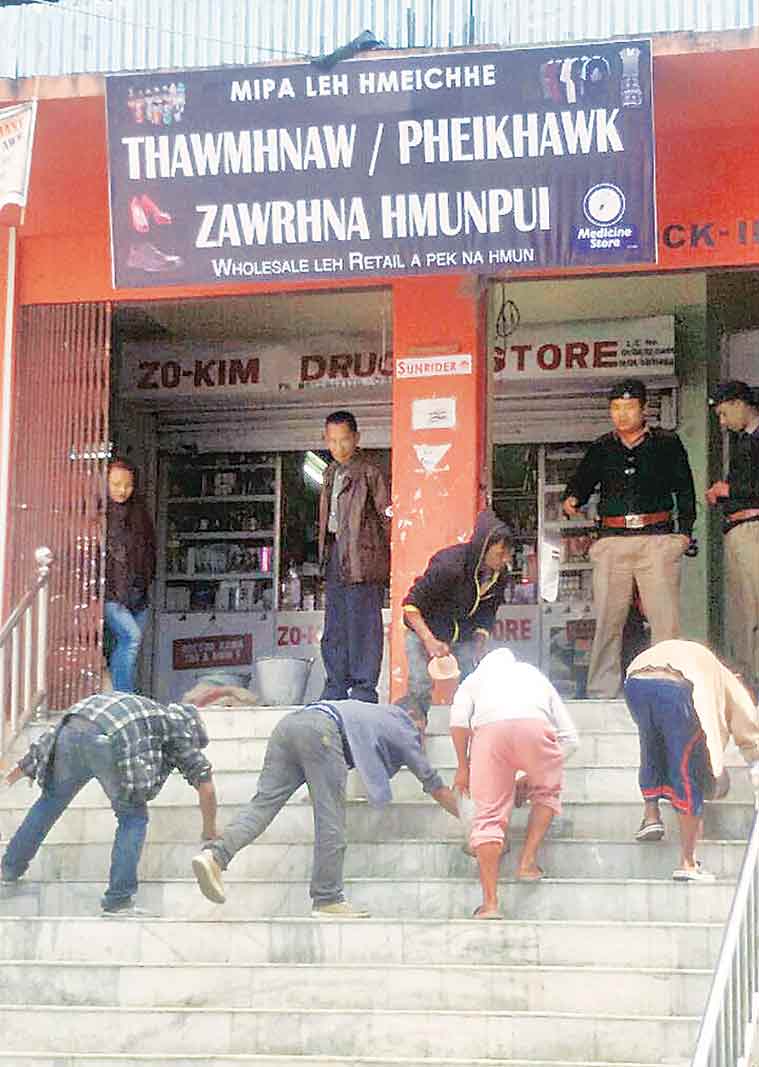 Those convicted under new law doing community service as punishment.
One night, as a group of four young men emerged from the steps
leading down to the dwelling, a man sitting at a nearby shop grinned,
“You guys willing to be frisked?”. The four smiled sheepishly, as one of
them put a finger to his lips and said “Shhh!”.
The end of two decades of prohibition may be something to say cheers
about for many in Mizoram, but not for the hundreds of bootleggers who
eked out a living from it, including many women.
Equally vocal about
their “dread” are thousands of parents, devoted Christians and community
leaders, who fear the open availability of alcohol will do more harm
than good.
Biaka Fanai, 18, is one of those not yet eligible to drink (the legal
drinking age has been set at 21), but he foresees what’s in store for
his peers. “For those who drink, it’s good because it’ll mean they will
get booze cheaper. But it’s definitely going to make people my age drink
heavily,” he warns.
Fanai explains why. “See, a lot of people my age are too proud to
drink indigenous fermented rice beer, and anyway you need to drive down
to the outskirts for that, and we usually don’t have vehicles of our
own. A bottle of rum or whiskey is available for Rs 500 or more at some
bootlegger’s place inside the city. But people my age are almost always
broke. So if five guys want to share a bottle, they have to pool in
about Rs 100 each. Once the outlets open, then the price will come to Rs
150 or Rs 200. So that’s just Rs 30 per head.”
What about the age limit? “Like that’s going to actually work,” he scoffs.
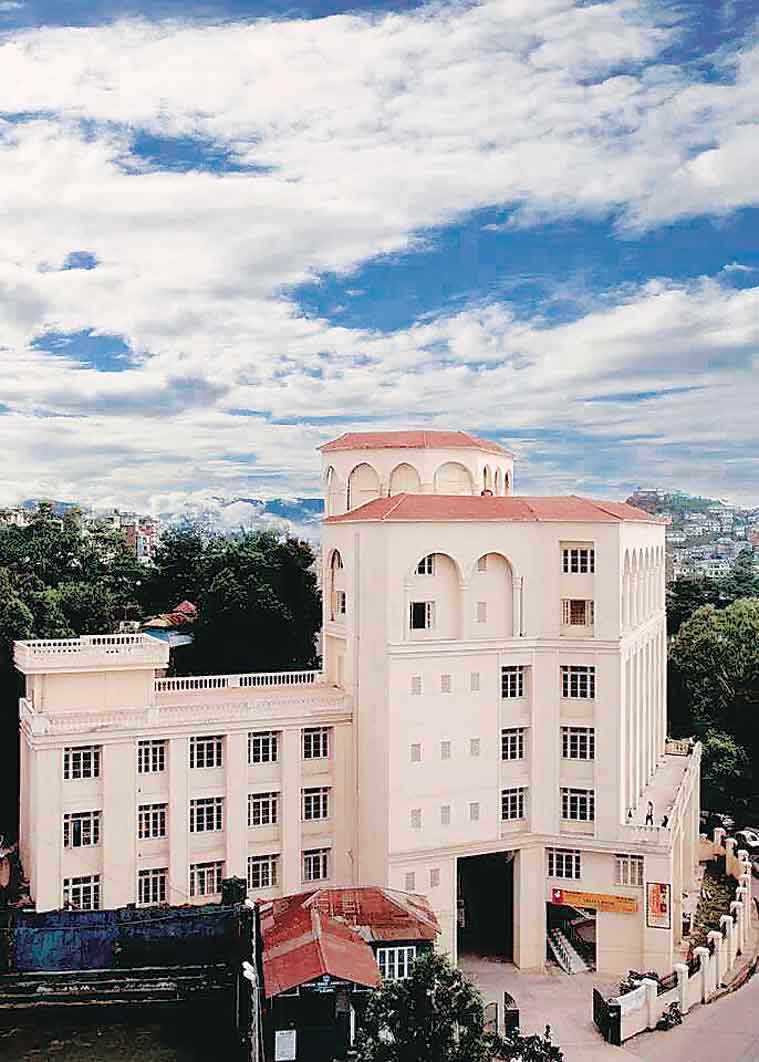 Upmarket Aijal Club that is the only one allowed to open a members-only
bar. No permits have been issued yet to bars, only wine-shops.
Upmarket Aijal Club that is the only one allowed to open a members-only
bar. No permits have been issued yet to bars, only wine-shops.
It was just before the 2013 state elections that Chief Minister Lal
Thanhawla spun the bottle. In a television talk show, he was asked
bluntly by the interviewer if his government, if voted back to power,
would lift prohibition. “We will review it keeping in mind what it has
done for society,” he replied.
In the months that followed, more and more government leaders began
talking about introducing a new law. Alcohol dominated conversations and
debates through much of Mizoram.
The government argued that studies had shown that prohibition had
failed completely and the number of people getting admitted in hospital
due to alcohol-related causes had increased because of large-scale
consumption of spurious liquor.
Come June 23, 2014, the Act was brought to the Assembly floor for a
debate. On July 10, people across the state stayed glued to their
television sets to watch live proceedings of one of the lengthiest
debates on a single issue in recent memory, lasting almost seven hours.
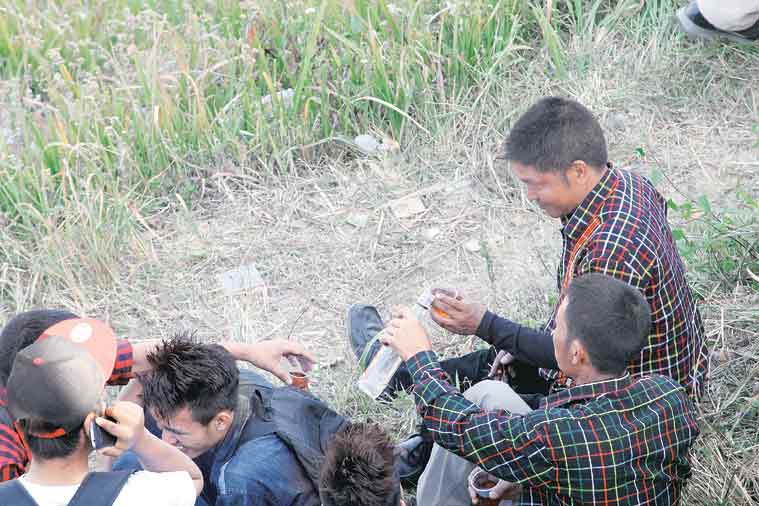 Revellers at Chapchar Kut (the traditional Mizo festival that falls in March) sneaking a few pegs near the venue in Aizawl.
Finally, when a few minutes after 5 pm, the misleadingly titled
Mizoram Liquor (Prohibition and Control) Bill was passed, one policeman
on duty near the Assembly building shook hands with friends and said, “I
don’t drink much, I hardly drink at all. But finally we will be able to
get some good stuff when we do feel like it. It’s good.”
Soon the rules accompanying the new law were revealed. It would rely
heavily on permits, including for buying alcohol, and also involve fines
and jail terms for a number of offences. Liquor card holders would be
allowed no more than six bottles of strong liquor and 10 each of beer
and wine every month.
The punishment for breaking the law, varying from five days in jail
to five years, would be longest for offences such as drink driving,
causing ‘nuisance’ and drinking in public places — although magistrates
have been provided amnesty powers to commute both fines and offences to
community work.
Most importantly, the new law would empower citizens to arrest
offenders provided they were handed over to police or excise and
narcotics officials.
On January 15, the new law came into force, oddly more than one and a
half months before liquor was slated to be legally available in the
state and before any permit had been issued.
Since then, an estimated 40,000 people have applied for permits to have alcohol in the state.
The applicants admit the process is cumbersome, but add that they are
just happy to finally be allowed to drink legally. They are required to
submit a bank challan of Rs 520 each with their application forms, and
once they have braved the bank queues for it, submit the same after
lining up once more. The long wait for the liquor cards starts after
that, with their distribution yet to start. Even withdrawal of the form
invites a fee of Rs 20.
Doing the math, that’s roughly Rs 2 crore or more in government
coffers already, just from the issue of permits, not a bad start given
the government hopes to rake in Rs 30 crore every year from the
restricted sale of alcohol. That amount would roughly equal the Excise
Department’s entire earnings in fines from those who broke the law in
the two decades of prohibition.
In addition, bonded warehouses that will bring in alcohol from
outside and store it before it is sent to outlets have to pay Rs 1 lakh
each per year to the government. There will be two such warehouses to
begin with, and the contracts have gone to the family business of
Cabinet minister Zodintluanga and the firm of former Congress minister S
Hiato’s son.
The Cabinet minister incidentally had been the first one to support the new law during the Assembly debate.
The other major source of revenue for the government would be the
licence fee collected from vendors, of Rs 50,000 each per annum. Only
state PSUs (none of which has made profits in the recent past) and the
ex-servicemen’s association are being allowed to run outlets, apart from
the upmarket Aijal Club that has got permission to run a bar
exclusively for members.
Every brand has to pay a fee to be allowed to be sold in the state.
At least five liquor companies have already been approved to carry on
operations.
For example, Pernod Ricard will pay the government Rs 10,000 per
annum to sell its Seagram’s Royal Stag brand in Mizoram (where it is one
of the most bootlegged whiskey brands), while it will have to pay an
additional Rs 15,000 per year for the mono-carton each bottle comes in.
The Excise Commissionerate in Aizawl’s Tuikual locality is abuzz these
days. On the top floor, a team of officials is busy applying the
department’s official seal on thousands of freshly-printed,
fake-leather-bound liquor cards. These are about the size of passports,
containing pages where the date and number of bottles purchased are to
be marked.
An official hurries down to the office of a senior colleague and asks where more seals can be found.
The senior official, who is showing guests some sample bottles by
wine and whiskey makers who have applied for a licence to sell in
Mizoram, looks up as he replies, “First floor. There’s a box there.”The
junior official taps his heels in a salute and exits.
“We ordered 11 new seals just last week. They don’t last that long.
There are just too many cards to mark with them,” the senior official,
who doesn’t want to be named, quips as he flashes the business card of a
manager at Pernod Ricard and flips it over to show the embedded signs
of the various alcohol brands they manufacture and sell — a colourful
ensemble on a small piece of paper.
“You will be like Bethlehem although you are a small department. You
will be the source of much of the state’s finances,” Excise Minister R
Lalzirliana told a gathering of excise officials in December, drawing on
the Old Testament in reply to an officer batting for the workforce,
currently at four-fifths the sanctioned strength, to be enhanced.
The government has steadfastly denied it covets liquor revenues,
however, and the Excise Minister and other leaders have said on many
other occasions that the government cares more for people suffering
severe health problems because of consumption of spurious alcohol.
However, the Church and community-based organisations such as the
Young Mizo Association are not convinced. The modern-day avatar of the
traditional bachelor’s dormitory, the Young Mizo Association controlled
pre-colonial Mizo society by enforcing a code of honour, and continues
to have members in virtually every household.
Says Vanlalruata, general secretary of the Young Mizo Association,
“It is our stand that total prohibition should stay, and we have and
will continue to petition the government for it.”
Reverend Chuauthuama, one of the most vocal critics of the lifting of
prohibition, fears the effect of drink. “It’s something I have written
about many times, that as a society we are troubled by drink. Even in
historical writings we find that drunkenness led to violence and fights,
destroyed families and relationships and led to all kinds of social
evils. It will be no different now.”
Even the ruling Congress didn’t have it too easy. The Cabinet
tellingly backtracked once on discussing the new law before it was
finally introduced in the House. With the party enjoying total majority
in the Assembly, it was smooth sailing then on.
The opposition parties continue to object, and the Mizo National
Front has called a bandh on February 25. Apart from the rise in prices
of various government services, the protest is against lifting of
prohibition. “Total prohibition is in the best interest of the state’s
people,” says Leader of the Opposition Vanlalzawma.
Before the new Act was introduced, the Presbyterian Church’s top
authority, the Mizoram Synod, had put up posters with slogans such as
“It is more desirable to be poor without liquor revenue than to be rich
with it” and “Wine makes fools of us, alcohol leads to violence”.
More than 50 per cent of Mizoram’s population, including Minister Lalzirliana, are members of the Presbyterian Church.
The Young Mizo Association issued statements advising the government
to work towards strengthening prohibition, adding that it “wishes the
battle against alcohol and drugs continues”.
In Mizoram, the struggle against liquor has been at the forefront of
many an agitation. Volunteers from the Young Mizo Association and
neighbourhood watch bodies calling themselves Joint Action Committees,
and Village Defence Parties in villages, earlier carried out “checks”
and destroyed bootlegs. In the latter half of the last decade, such
vigilante action even claimed a few lives.
Police and excise officials continue to routinely arrest people for
any of several listed offences and promptly produce them in court.
This past Wednesday, seven young men stood in the courtroom within
the Aizawl District Court premises with their hands behind their backs
as green-bereted excise officers sat chatting on wooden benches just
outside.
As the judge read out each of the men’s names, they came forward and
murmured replies to the questions asked of them. As one young man in a
T-shirt, shorts and one missing sandal stepped up, an excise official
stared at him and asked, “Where did you leave your sandal?”
The other men snickered as the man scratched his head and grinned
sheepishly. The magistrate too chuckled under his breath as one of the
other accused men mumbled, “I don’t think he remembers.”
“Do you have money to pay the fine?” the judge asked.
The young man shook his head ambivalently.
“Well, you’ll have to sweep then,” the judge said, and wrote down the sentence.
He then called out the names of two other men who were presumably arrested together.
“What about you? You have money to pay the fine?” the judge asked.
“Yes sir,” said one confidently.
The judge gestured to the excise official and wrote down the sentence as the men were led out.
Outside, a group of young women giggled as the duo emerged and one of
them paid two Rs 1,000 notes to one of the seated excise officials.
As they all left, an official called after them, “Remember, you’re
paying the government for drinking.” It provoked another round of
laughs.
Inside, the judge finished sentencing the men.
Once all four of the men who were let off with a fine had left, the
officer who had collected the money turned to three young men sitting in
a corner.
“What happened to you? No money?”
The young men smiled embarrassedly.
“Well then, get ready to sweep. We have lots of places for you to sweep,” he said. The other officers laughed again.
As of today, in Aizawl district alone, 66 people have been arrested
for drinking without permits, of whom 47 have been sentenced to three
days each of community work, 14 let off with fines, and four others, who
failed to turn up for community service, sent to a month in jail.
One morning last month, as office-goers made their way to work, three
men in masks and caps earnestly went around cleaning up the milling
campus of the Aizawl Civil Hospital, much to the delight of the
administration.
One senior administrator looked at the men and asked the excise
official overseeing their sentences, “I thought there were five. Where
did two go?”
“They’re at the market. Cleaning up there,” the officer replied.
The administrator seemed pained the workforce had been split, but
said it was still a blessing since there was always a shortage of
sanitation staff at the hospital.
The men continued working, silently.


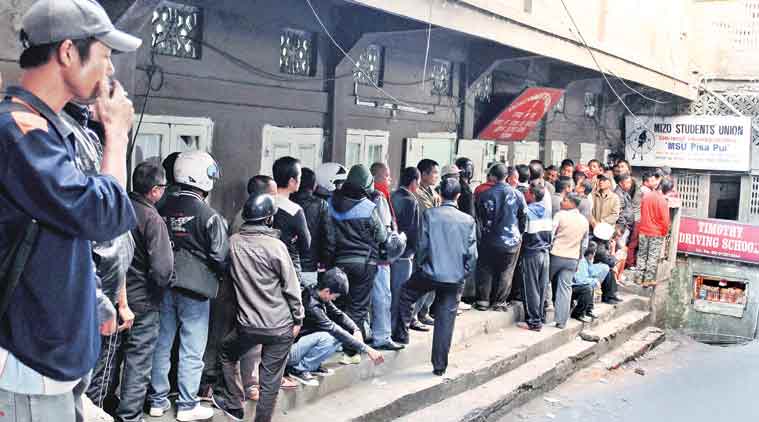 People queue up for application forms to get liquor cards at excise office in Aizawl.