30 June 2014

18 Candidates From Northeast India 17 Clear Civil Services Examination

New Delhi, Jun 30 : 30-year-old Shimray Asaiwo Bellrose, a Tangkhul Naga who hails from Lunghar village in Manipur, is proud to have cleared the civil services examination, 2013, conducted by the Union Public Service Commission.

She has secured the 1106th position in the final list of the successful candidates.

Bellrose has been staying in New Delhi since 2011 after completing her Msc in Botany from Manipur University.

"As a civil servant if I am posted in my state I'll try to bring a good governance. As a civil servant whatever the policy or scheme given by the government for people should deliver it transparently and I would also want to work on environment issue," said Bellrose.

Bellrose is among the 18 candidates from the Northeast who have cleared the civil services examination.

Of the successful candidates, at least six are from Assam, four from Manipur, while two are from Meghalaya. Three candidates are from Mizoram and one each from Arunachal Pradesh, Tripura and Nagaland.

Asaiwo believes that continuous disturbance by militant outfits in the northeast prevent the talented youngsters from achieving their potential.

"In Manipur there are many young talented, educated students but they face lots of problem like frequent bandh, strike created by militants so as a result they cannot reach the level what they are expecting," Bellrose added.

Bellerose's family in Manipur feels proud of her success in the civil services. They believe that it has been possible only because of her hard work and determination.

"She has lots of patience. She can sit and study, read for the whole day so that contribute a lot to her success and she is very dedicated person," said Vareichan, Bellrose's elder sister.

Many talented people from the northeast are already working at various positions in foreign services, civil administration, police forces across the country.

The newcomers are enthusiastic to take up the task and contribute towards the development of the country.

Hindi All Around, Meghalaya Minister Asks For Headsets

New Delhi, Jun 30 : The conference had participants from other non-Hindi speaking states such as Manipur and Andhra Pradesh.

The NDA government’s insistence on promoting Hindi in official work drew a sharp reaction from a Meghalaya minister at a national conference organised by the Centre here on Thursday. Meghalaya’s Minister for Urban Affairs, Municipal Administration and Labour M Ampareen Lyngdoh’s suggestion that the Centre should factor in the “needs” of non-Hindi speaking states was met with applause from a section of the participants.

Lyngdoh flagged the issue at a day-long conference organised by the Union Labour Ministry and attended by ministers and officials from 20 states. While a few participants spoke in English, a majority of them, including Union Labour Minister Narendra Singh Tomar as well as ministers from Bihar, Chhattisgarh, Haryana, Uttarakhand and Madhya Pradesh, spoke in Hindi.

When it was her turn to speak, Lyngdoh said, “My Hindi is not very good but I am trying to learn the language… I would request the government to make some arrangements for those of us who do not speak Hindi.”

Talking to The Indian Express later, she said, “It is okay for people to speak in Hindi but we should converse in a language that is understood by all. The conference was a good platform to exchange ideas but we could not understand much of it and felt very odd. We could not even understand what the Union Minister said.” Saying that there should be an arrangement for headsets and interpreters at such events — on the lines of Parliament proceedings — she added, “English is the official language of Meghalaya but all of us still try to learn Hindi. We don’t want any language to be forced on us…”

The conference also had participants from other non-Hindi speaking states such as Manipur and Andhra Pradesh.

Officials insisted that the use of Hindi was not deliberate and ministers simply chose to speak in their preferred language. But given the PM’s focus on developing the country through “cooperative federalism”, officials said they are gearing up for similar interventions in upcoming deliberations with state governments.

Court Frowns at Delhi Police Over Custody of Manipur Man

New Delhi, Jun 30 : Delhi Police has faced the ire of a local court for ignoring its order regarding handing over to Manipur Police a man from the northeastern state who was arrested in a cheating case here.

The court took strong exception to goof up by Delhi Police by not complying with its order of June 26 asking it to respond to the bail plea of the accused and going ahead with the previous day's order directing it to hand over the man to Manipur Police for his production before a court in Imphal on June 27.

Ningthoujam Somendro Singh was arrested on June 24 here by the Special Cell of Delhi Police and Manipur Police had come to the national capital for his transit remand.

Singh was produced before a court here on June 25 where his plea for transit bail was dismissed by the judge who had ordered that accused be kept in the custody of special cell till June 26 and be produced before the court in Imphal on June 27.

On June 26, Singh, through his advocate Tarun Rana, moved another plea seeking transit bail before the sessions court which had issued notice to investigating officer (IO) of Manipur Police and the special cell directing them to appear in person before it on June 27.

However, on June 27, the court was informed by the special cell that Singh had already been taken to Manipur by the IO to produce him before the court there.

The matter was listed for hearing before the court today where special cell intimated the judge that Singh has been produced before the court in Imphal.

Special judge G P Singh, however, directed that copies of orders of June 26 and June 27 and today be sent to Commissioner of Police for further action regarding explanation for non compliance of the June 26 order passed by the court.
28 June 2014

Media is the most dangerous weapon. Don't trust it


27 June 2014

LTC scam: CBI questions Mizo National Front MP

LTC scam: CBI questions Mizo National Front MP  CBI has completed examination of all six former and sitting Rajya Sabha members against whom cases have been registered for allegedly claiming travel reimbursement using fake bills.

New Delhi, Jun 27 : As part of its probe in LTC scam, the CBI has examined Rajya Sabha member Lalhming Liana of Mizo National Front for allegedly submitting inflated bills to claim air travel reimbursement.

With this, the agency has completed the examination of all six former and sitting Rajya Sabha members against whom cases have been registered for allegedly claiming travel reimbursement using fake bills, sources said.

The agency will now co-relate their statements with the documentary evidence collected by it and, if needed, they may be called again for questioning and confronting with the evidence, the sources said.

The sources said the agency will also go through the records of the travel agencies which had booked the tickets for them and record the statements of the travel agents. The sources said MPs had booked their tickets under an Air India promotional scheme where full fare economy class ticket passengers were entitled to having one ticket for their companion on nominal rates but allegedly submitted e-tickets of full fare for claiming reimbursement.

According to CBI, the MPs allegedly claimed full payment on companion air tickets from Rajya Sabha Secretariat using fake e-tickets.

CBI sources said cases have been registered against three sitting MPs- D Bandopadhyay of Trinamool Congress (TMC) and Brajesh Pathak of BSP besides Liana for allegedly submitting fake bills.

Former Rajya Sabha members J P N Singh (BJP), Mahmood A Madani (Rashtriya Lok Dal) and Renu Pradhan (Biju Janata Dal) too have been named as accused in the case.

Malaria Outbreak in Mizoram

Aizawl, Jun 27 : Mizoram government sent doctors and supporting staff to south western Mizoram area in Lawngtlai district adjoining Bangladesh where malaria outbreak in an epidemic form has been reported.

C. Zarzoliana, Joint Director (malaria) of the state health services department said that villages as Parva I and II, Devasora and Damdep have been affected by the disease last week.

In Damdep village, 11 per cent of the villagers were having malaria while it was seven per cent in other villages and there was high incident of PF cases, Zaorzoliana said.

A medical team from Aizawl, accompanied by doctors from Lawngtlai Chief Medical Officer's office were sent to the villages where a large number of people were diagnosed and treated immediately after the outbreak of the disease, he said.

The villages were extremely remote where many of the affected people could not avail medical treatment due to poverty.

Mountain Echoes

By BUDHADITYA BHATTACHARYA

FROM AFAR A Naga folk group in a still from the film
Special Arrangement FROM AFAR A Naga folk group in a still from the film

“Songs of the Blue Hills” looks at the contest between tradition and modernity in the music of the Nagas.

“All songs, be it of harvest, love, war and festivals, were sung in the community dormitory for the youth,” says Guru Zachunu Keyho, who has collected nearly 600 Chakhesang folk songs. He is remembering the days before the coming of schools and churches in Nagaland, when cultural wisdom was transmitted to the youth through folk songs and dances, at the morung or dormitory. For Keyho, those days are over. “Today’s youth don’t have any interest in these things. Thus, with every generation, we are losing our songs and tradition.”
Tradition is a word that recurs frequently in “Songs of the Blue Hills”, a new documentary by film critic and filmmaker Utpal Borpujari, which journeys through the music of Nagaland. Through interviews with musicians, music teachers and ethnomusicologists, the film looks at what ‘tradition’ entails, who lays claim to it, and how endangered it is.
Although popularly perceived as a single tribe, the Nagas comprise more than 40-odd tribes and sub-tribes, spread across North East India and in Northwestern Mynamar. Like ethnic communities the world over, folk music and dances are at the heart of Naga culture. Also, Nagaland is perhaps the only State which has a Music Task Force, which functions under the aegis of the State Government to promote music in the State.
“What is very interesting is that since the Nagas do not have written history – or the written word – traditionally, it is their folk music that helps orally pass on their history from one generation to another,” says Borpujari, who has previously made the documentary “Mayong: Myth and Reality”. “The idea was to maybe make a 40-minute-odd-long film. But as my team and I started researching and contacting people, I realised that it was not going to be as easy as it sounded. Every day we found new groups, new singers, and more and more interesting music.”
While the culture Keyho describes passed with the coming of the missionaries, whose influence coloured the music of the Nagas, lately there has been a revival of folk music with several young groups taking to it. Some of them are the Tetseo sisters, who belong to the Chakhesang tribe and sing Li; Purple Fusion, whose members belong to the Ao, Lotha and Sangtam tribes, and who borrow from the repertoire of each other’s tribes; and Moa Subong and Arenla Subong, who blend their traditional Ao sounds with rock influences.
While their efforts have not been received enthusiastically by some folk practitioners, who worry that fusion could destroy the “real Naga tradition and culture”, they are convinced that fusion is also a way of keeping tradition alive. The older and younger generation may disagree about the means of preserving tradition, but they are both acutely aware of its importance, and the need to sustain it.
In fusion, according to musicologist Abraham Lotha, “Certain element of dilution is there but I would see it in a positive light in terms of the artistes trying to be creative in their musical talents, and in creating such kind of fusion music there is a market for it too. So it does help spread Naga music beyond the borders of the Naga areas.”
The film, which has been screened at film festivals in Warsaw, New York, Gothenburg and Kochi among others, had to be confined within the borders of Nagaland owing to budget constraints, but Borpujari hopes to take “this journey further into Naga singers in other parts of Northeastern India, someday in the future.”

Moto 360: The Watch

By Brian Barrett
Ugh Fine, I'm Buying a Moto 360
I do not need a smartwatch (no one does). I do not think smartwatches are anywhere near fully functional yet, or if they'll ever be. But after seeing the Moto 360 yesterday, I know one truth that supersedes those others: I am going to buy one as soon as they let me.
For as long as the first smartwatch rumors began bubbling, I've been a skeptic. There are too many usability issues, too few benefits. Spending a few hundred dollars on a watch with an operating system feels like spending a few thousand on a bicycle that farts; sure, it's a feature normal bicycles don't have, but it doesn't necessarily improve the experience.
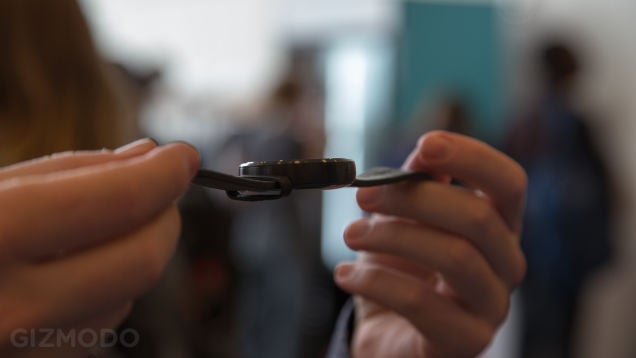
Then the Moto 360 happened. Have you seen it? Of course you have, it's at the top of this post. But just in case, here are a few more glamour shots we took yesterday.
Ugh Fine, I'm Buying a Moto 360
This
Ugh Fine, I'm Buying a Moto 360
is
Ugh Fine, I'm Buying a Moto 360
so
Ugh Fine, I'm Buying a Moto 360
nice.
Yes, we'd seen the 360 before. But not up close, not with its screen in action, not on the wrists of people who aren't paid to say nice things about it. The Moto 360 in real life is every bit as elegant and attractive as the hype machine promised. And by god, against all better judgment, I want one.
If you're thinking I'm an idiot, don't worry, I'm way ahead of you. Here are just a few of the reasons I shouldn't buy the Moto 360:
  • I don't know if it works.
  • I don't know how much it costs.
  • It does this, which is hilarious and annoying.
  • I don't currently wear a watch, and there's no real indication that there is a part of me that wants to on a daily basis.
  • It's the first generation of a new product category, which never ever ever works out.
  • It's still kinda big!
  • Crass consumerism, right? The worst.
  • I still think smartwatches are dumb.
And yet!
We spend so much time hand-wringing about function, don't we? How many apps, how much battery life. The Moto 360 is the best reminder I've had in ages that gadgets aren't just a utility; they have value beyond the next firmware update. The Moto 360 is a smartwatch, sure. It can send me notifications, which is... fine? That's fine. It knows the weather, and when my flight is taking off. But more than any of that it's also just a beautiful watch. One that I'd like to wear regardless of what operating system it runs, or whether it has one at all.
Yes, I'll get annoyed when the battery dies around lunchtime. And okay, sure, I'll be kicking myself when it inevitably lands in my junk drawer. That's fine, I accept that. But I'm going to buy the Moto 360, because it figured out what other smartwatches haven't yet: That a wearable's first job is to be something you'd actually want to wear.