21 August 2012

The Loneliness of Karnataka DGP: Lalrokhuma Pachau


By Johnson T A


Bangalore, Aug 21 : For 57-year-old Lalrokhuma Pachau, the flight of hundreds of people belonging to the Northeast from Bangalore has been a particularly painful experience. As Karnataka’s acting police chief, the 1977-batch Indian Police Service officer from Mizoram is sad that even his presence and assurances were not able to stop 28,000 people of his region from leaving Karnataka’s capital in fear between August 15 and 18.

“I feel really bad for what is happening,” he said with pain etched on his face at the sidelines of a press conference last week where he tried once again to send out the message that the Karnataka police under his leadership was doing all it could to ensure the safety of people from the Northeast, who were fleeing from fears that they would be targeted by Muslims after Ramzan.

“I have been sending letters and talking to the DGPs of Northeast states telling them that all the people of the Northeast who are here for various reasons will be protected. Anybody spreading messages against them, posing threats to them or indulging in verbal or physical threats will be arrested,” Pachau who has been the acting police chief of Karnataka since June 1, said.

A soft-spoken, reticent man compared to another Mizoram police officer who served as Bangalore’s police chief, H T Sangliana, Pachau is little known outside of police circles. Sangliana’s high-profile, publicity-driven tenure, in comparison, had seen him all the way to a Parliament seat.

Pachau in fact returned to Karnataka only early this year when the opportunity to become the state DGP opened up following the retirement of his seniors Abdul Rehman Infant and Shankar Bidari. In October 2007, he had taken an inter-cadre transfer to go to home state Mizoram to become the DGP there.

A legal battle being fought by Bidari over his removal as DGP — currently in the Supreme Court — has meant that Pachau has only held concurrent charge as the Karnataka police chief along with a regular position as head of the Criminal Investigation Department in the state. Bidari had been removed over alleged human rights violation during a special operation in the 1990s against sandalwood smuggler Veerappan.

According to officers within the Karnataka police, Pachau, who will have three years of tenure if made the full-fledged DGP and IGP, has been hindered in his functioning due to the temporary nature of his appointment. This lack of full authority has played a role in the police chief not being able to come out with authority in the media and other forums to assure safety of people of the Northeast in the current crisis, a senior IPS officer said.

“With full authority, work efficiency can increase by 25 per cent. In the present condition, Pachau is hesitant to come forward fully because he may worry over the government applying the brakes on his moves. Until he is declared the police chief, it is natural that he will have apprehensions,” a senior police officer said.

Over the last week, many people have suggested that Pachau should have been more voluble in addressing the fears of the Northeast people. The acting police chief however has always acted within the chain of command at his disposal.

Known to be a clean, upright, non-controversial officer, Pachau is also known in the police ranks as someone whose mettle has never really been tested in Karnataka.

“He is a very nice gentleman. He holds no bias. He adheres strictly to chains of command. He is perceived as being soft however. He would not like to get into complex problems and he likes to see things go smoothly,” said an officer who served under Pachau in a posting a few years ago.

Another reason for Pachau not engaging with complex problems may be a lack of grip over the local language, culture and politics, with local caste affiliations playing a major role in all realms. “When you are not from the state, you cannot be perceived as being too harsh and strict and that works for and against people like Pachau,” the officer said.

However, the chances of Pachau being made a permanent DGP soon have increased since fleeing of people from the Northeast. Last week, the Karnataka government affected long-pending mass transfers of police officers. Appointment of a full-time DGP is expected to follow.

“It is a strange coincidence that since Pachau became the acting police chief, we have seen issues involving people from the Northeast being among his chief challenges. First there was the Richard Loitam case (involving the death of a Manipuri boy after a fight at his college hostel) and now there is this flight of people,” a senior police officer said.

Northeast Exodus: Social Networks Not Doing Enough, Says Govt

By Sudhi Ranjan Sen


North-East scare: Social networks not doing enough, says governmentNew Delhi: The government has identified over 250 websites and blogs that participated in the online campaign of hatred against Indians from the North-East.

About 125 websites have already been blocked. Rest will be forced offline in the next few hours.

The Department of Telecom has said that objectionable content is still available online and has suggested that social networking sites have not responded to requests to urgently delete inflammatory posts. (Read Department of Telecom's statement here)

The Government of India is likely to take the legal route and use Mutual legal Assistance Treaty (MLAT) and Letter - Rogatories to seek information from west and gulf countries where some servers used to circulate inflammatory and hate pictures are based.

India has said nearly 40 per cent of the doctored and incendiary online images originated in Pakistan and were uploaded across the border, and that evidence of this will be shared with Islamabad, most likely when External Affairs Minister SM Krishna visits Islamabad for bilateral talks early next month, according to news agency IANS. The Department of Telecom said that social networking sites have been requested to provide registration details for those who uploaded communally-charged photos and messages, but in many cases, the government says, "proxy servers and Virtual Private Network (VPN) services which hides the user identity... appear to have been used for uploading the content."


Morphed photos that were hosted and circulated online misrepresented victims of earthquakes as Muslims killed in ethnic riots in Myanmar and Assam. Online posts and text messages in cities like Bangalore and Hyderabad warned of a reprisal. Thousands of people from states like Assam, Manipur and Mizoram boarded special trains to spend a few days at home; many said they will return to the cities where they live and work in the next few weeks.

The material that has been posted online has given new expression to the fractious relationship between the government and international social networks, many of who have were taken to court in December on charges that include hosting content intended to create communal hatred. In its note today, the Department of Telecom complained, "An intermediary social networking site has responded that the up-loaders of the inflammatory and hateful content are outside the jurisdiction of the country, thereby implying that they are not obliged to take any constructive step to deal with it." The note says that The Department of Electronics & Information Technology held a meeting with executives from international social networking sites, but without the desired effect. "A lot more and quicker action is expected from them (social networks) to address such a sensitive issue," the government has warned.

Howrah Station Turns Into Mini Northeast

By Debashis Konar

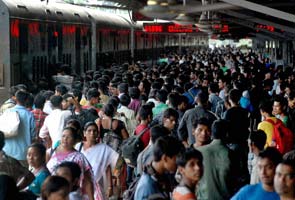
Kolkata, Aug 21 : Thousands of northeastern people got off cramped up trains coming from Bengaluru, Chennai and Pune at Howrah station on Monday and started preparing for the next journey back home. More than the weariness of the journey, fear and uncertainty were evident on their faces. While some squatted on the railway platform, some thronged the ticket counters to enquire about the availability of tickets. The station resembled a mini northeast.

Meren, a BPO employee in Bengaluru, had spent two days near the toilet of an overcrowded train. On Monday, he was busy settling a deal with a tout right in front of the Howrah GRP to get a reservation on Kamrup Express. He paid Rs 2700 for three tickets and finally managed to get a seat. His friend Mark, an IT student originally from Nagaland, was trying to find out if Kolkata was a safe city. The 20-year-old said, "This was the worst experience of my life. I am considering the option of studying in Kolkata. I do not want to be driven out of a city again."

Besides those hailing from northeast, people from Bengal were also forced to leave. Sudip Rai, from Kalchini in Jalpaiguri, worked as a security guard in Pune. He said, "In Pune, over 300 people from New Alipurduar work in different hotels. We decided to return home as tension was mounting up in Pune. We prefer to die in our village." "But there is no work at home. So we need to go out to work. Nahole khabo ki? (else what will we eat?)," asked Sudip.

His colleague Sanjay said, "We could not bring money with us. We just left our rooms as panic gripped Pune." Though neither Sudip nor Sanjay saw anybody being beaten up, but rumours sparked the panic.

Zank Panmei, a first-year student from Thangal Bazaar in Imphal, however, saw one of the youths from the northeast being beaten up. "I am too scared to stay in Pune now. I hope things will improve within a week. I wish to return by early September."

Some students from Bengaluru also narrated their personal experience of being attacked. A student of Al Ameen College who did not want to be named said stones were hurled at him and his friends. "It is difficult to continue staying there with such fear," the youth added.

Binay Milli of Golaghat, Assam has been working in Chennai for the past four years. This is the first time he has faced such a situation. "Several rumours have unnerved us. So, I decided to go home till things are normal. At least 400 men travelled with me to Howrah fearing trouble in Chennai."

The moment special trains for Guwahati were announced, there was a rush to grab a seat. Mary, a 20-year-old from Senapati district of Manipur, who returned from Bengaluru said she had to sit on the floor of train to reach Howrah. Though scared, Mary said she might have to return to Bengaluru since she works in the retail sector.

They are heading for home for safety, where uncertainty looms large. It was a mini North East in Howrah station on Monday. More than weariness of the train journey, paleness in their faces were prominent due to the fear psychosis and rumour that drove them out from Bengaluru, Chennai, Hyderabad and Pune admixed with an indecisive future. However, they are optimistic to return back to study or work.

With trains coming from Bengaluru, Chennai, Pune, thousands of NE people were at Howrah station waiting to reach home quickly. Meren a BPO worker in Bengaluru was busy settling a deal with a tout right in front of the Howrah GRP on Monday noon to get a reservation to Dimapur on Karmrup Express. He paid Rs 2700 for three tickets. He finally managed to get a seat. For the last two days he came in a cramped compartment on a Bengaluru special train. He had to sit on the floor near the stinking toilet. But reaching the toilet was tough as it was overcrowded. His friend Mark an IT student, also from Nagaland was busy finding out if Kolkata was a safe city.

Mark said this was the worst experience in his 20-year life. "I am considering if I can study in Kolkata. I do not want to be driven out of a city."

Not only people from NE were forced to leave, people from Bengal were also forced out. Sudip Rai of Kalchini, Jalpaiguri said, "In Pune over 300 people from New Alipurduar work in different hotels. We decided to return home as tension was high in Pune. We prefer to die in our village."

"But we need to go out to work. There is no work at home." Rai asked, "Khabo ki?" His colleague Sanjay Rai, a security guard said, "We failed to bring money. We left shutting our rooms, as panic gripped Pune." Both of them however did not know any one who was attacked in Pune, but said rumours were spread through mobile. They felt lucky as food was delivered free to Howrah bound passengers at three different stations. Even, Kesav Rai of Siliguri had a trying time to return who had gone to meet her sister at Bengaluru.

First year student Zank Panmei who hails from Thangal Bazaar in Imphal is one who saw a youth from NE being attacked. "I am too afraid to stay in Pune now. Hope things will improve within a week. I hope to return by early September."

As special trains for Guwahati were announced there were huge rush to get a seat. Mary, a 20-year girl from Senapati district of Manipur who returned from Bengaluru with four others said that they had to sit all the way from Benagaluru on the floor. "We did not have forty winks on Saturday or Sunday night." She was scared while travelling in the train, as there are several rumours, though police were in the train. "I think we all have to return to Bengaluru, as we work in retail. Though working people are targeted."

Several students from Bengaluru narrated how they were attacked or threatened. A student of Al Ameen College who do not want to be named said how stones were hurled at them. There were regular threats after the Assam violence. "It is difficult to continue with such panic."

Binay Milli of Golaghat, Assam is working in Chennai for four years. "There are several rumours for which we are unnerved as it is a huge mental pressure. So, I decided to go home till normalcy resumes. At least 400 men travelled with me to Howrah fearing trouble in Chennai."

Assam — The Making Of A Riot

By Sreenivasan Jain

In the Bodo village of Malgaon in Kokrajhar, Monish Musahari has just returned from a relief camp, to scenes of ruin. He shows us the remnants of his fair price shop: Charred canisters of kerosene, bottles of hair oil. “They were a mob of 4,000-5,000. I didn’t recognise most of them.” He points, with bewilderment, across lush paddy fields. “Some of them came from there – Solmari”. And how was it before, with the Muslims of Solmari? “It was good. Very good.”

At Solmari, there is a strange stillness. Most of the village has emptied out fearing Bodo retaliation. At our presence, a small crowd gathers. They say they had no role in attacking their neighbour. “We don’t know who it was.” To the question of how it was before with the Bodos, the same answer: “It was good. We used to visit each other’s villages often.”

Who is responsible for turning neighbour against neighbour? Bodo vs Muslim? Violence of this scale suggests that beneath the surface of coexistence, tensions seethed. All it took was someone to light the spark. Culpability rests, in varying degrees, with the three main actors of Bodoland.

First, those who run the administrative unit known as Bodoland Autonomous Council —four districts, Chirang, Baksa, Kokrajhar and Udalgiri – carved out of a strip of western Assam. Formed in 2003, it is headed by Hagrama Mohilary, former boss of the militant Bodo Liberation Tigers who fought a violent agitation for a separate Bodo state in the mid-nineties. They gave up the gun in 2003 but nagging doubts have persisted over their commitment to reflect the interests of all of Bodoland’s communities — Muslims, Santhal tribals, Bengali speaking Hindus – not just of Bodos.

When we met the blunt-speaking and shaven-headed Hagrama at his party office in Kokrajhar town, there was little trace of political statesmanship. Instead, he articulated the Bodo paranoia of a ‘takeover’ of their land by illegal Muslim migrants. He cites a figure of two lakh ‘illegals’. Where is the proof? No one – the chief minister, the police, or the border agencies — denies illegal migration, but suggest that it is more a trickle than a deluge. This is borne out by the 2001 and 2011 census figures, which find a population growth in the 4 Bodoland districts no higher than other parts of Assam.When I point this out to him, Hagrama directs me to the revenue department, which comes under the council. In a shockingly partisan exercise, they have been tasked to survey the extent of land encroachment by Muslim settlers, and have come up with a figure of 76,563 acres of land encroached by 38,209 families. These are the illegal migrants, Hagrama says.

I point out that this is a hugely controversial claim. Encroachment is no proof of nationality. Hagrama casually shifts the goalpost. He says it’s no longer about nationality, only about land ownership. “Whether they are Indian or Bangladeshi Muslims, it doesn’t matter. We won’t let them return from relief camps unless they have the land pattas (documents).” These veiled threats have fuelled suspicion that the leadership of the Bodo Council may have had a hand in the violence to achieve its goal of ousting Muslims from their homes and villages.Four ex-cadre of Hagrama’s former outfit, the Bodo Liberation Tigers, have been arrested for the shooting and killing of three Muslims in Raniguli village in Kokrajhar. More directly, the people of Bangalipara relief camp for Muslims in Dhubri allege that Pradeep Brahma, MLA from Kokrajhar West of Hagrama’s party, led the mobs, shooting from his Bolero vehicle. (Hagrama has denied this allegation). These cases are now before the CBI, which has been tasked with investigating the organised/conspiracy dimension to the riots.

Culpability also vests with state and central governments, both coincidentally headed by the Congress. For starters, the Congress is an ally of Hagrama’s party. Surely there is scope for leverage to rein in the divisive statements and actions of Bodoland’s ruling regime. More fundamentally, both the Centre and state need to get serious about repairing the abysmal law and order machinery meant to tackle illegal immigration. The task of monitoring “foreigners” vests with the border branch of the Assam police, a force of 3,500, headed by a DIG rank officer. Cases detected of doubtful nationality are put up to the Foreigners Tribunal, one in each district. The tribunal in Kokrajhar is a bamboo shed attached to the irrigation department.

On the day we visited, retired Justice PK Brahmo was sitting outside, fanning himself because of a power cut, completing the air of official apathy. In the six years since its inception, they have only found 22 foreigners. The judge says that the moment a notice is served against a suspected foreigner, the person simply relocates, and the case stagnates. The number of pending cases before all the Foreigners Tribunals is a whopping 3 lakh. No wonder that since 1986, only 2,400 deportations have taken place from Assam. Political will to enforce the rule of law will give credence to Congress denials of secretly benefiting from the migrant vote. And give Bodo leaders little room for vigilante politics.

Finally, there is enough reason to suspect dangerous political opportunism by Bodoland’s Muslim leadership. The creation of the Bodo Council has been paralleled by the rise of the All Bodo Muslims Students Union (ABMSU) and the AIDUF, formed by controversial businessman-turned-politician Badruddin Ajmal.Both are competing — with increasing stridency — to be the sole protector of Bodoland’s Muslims. Police statistics show that the ABMSU held 13 bandhs from January right up to the current crisis. The IG Police, Kokrajhar, told us that Bodos were the frequent targets of these bandhs, creating a climate of extreme friction. The accusation against Ajmal, the MP from Dhubri, bordering Kokrajhar, runs deeper. While his own voters insist the violence is not religious, but a fight over land, Ajmal has had no reservations in clearly positioning the Assam riots as communal in nature, organising countrywide protests with Muslim organisations. This may suit his pan-Indian political ambitions, but it worsens animosities in his home turf.

Unless all three actors demonstrate greater responsibility, the tinderbox of Bodoland is bound to erupt again. And as already evident, the flames can rapidly spread outwards, from Assam to Bangalore to Bombay.

Sreenivasan Jain is Managing Editor, NDTV. He anchors the ground reportage show, Truth vs Hype, on NDTV 24x7.
20 August 2012

ICI Central Choir: From Northeast to Bangalore, With Music Of Peace

ICI Central Choir at St Andrews Church, Bangalore (Pic Courtesy : Steve Naulak)

Bangalore, Aug 20
: They came to Bangalore undeterred by the fact that their own ilk was leaving the city in droves. For they knew that their music had a message of harmony, love and peace and be a balm for the troubled times.

The first performance of the Independent Church of India's central choir outside the northeast may not have been perfectly timed, keeping the recent incidents in mind, but the choir decided to go ahead shrugging off security concerns.

"We are not afraid of staying in Bangalore though many of our brothers and sisters have left the city scared for their lives," said Rev Jothanghrim Joute, youth coordinator for the choir.

"Though we look like foreigners because of our Mongoloid features, we are very march a part of India. We bring the message of love and pray for peace and harmony to prevail in Bangalore and different parts of the country marred by communal tensions," he said.

The choir comprises members mostly Mizo Hmar tribals from Churachandpur district in Manipur. Hundreds attended the show by the Manipuri choir at Richmond Town's Methodist Church, which was highlighted by an extraordinary performance on Sunday evening.

While the group of 25, accompanied by their conductor, sang church songs and hymns praising the Lord, their performance was infused with vibrant rock, jazz and blues influences that had the audience in thrall.

The choir, which has 12 albums to their credit, sang a set list of 20 songs, consisting of hits like Hallelujah, The Lord's Prayer, Longing for heaven and The Glory of the Lord, in English, and local North Eastern languages like Hmar and Dulian (Lushai).

"Amidst the prevailing tensions, the choir arrived at the right time to rejoice life. We all are children of God and we celebrate our oneness with the music," said Pastor Jonathan Bangera.

Mawi: Ten Years Of Spikes, Studs And Panthers...

Fashion favourite Mawi is celebrating its first decade with a collection of its greatest jewellery hits, writes Rebecca Gonsalves

By Rebecca Gonsalves


"I never thought I'd be a jewellery designer," says Mawi (pronounced Moy) Keivom of her eponymous brand which celebrates 10 years this season.

Having specialised in womenswear at Auckland Institute of Technology, Keivom came to the UK 16 years ago with aspirations of completing a Masters at Central Saint Martins specialising in textiles. "It was the last thing on my mind. My mum sent me to learn to knit, to sew. I was always sewing, from a young age I was cutting up my mum's clothes and customising stuff."

This emphasis on craft has had a clear impact on Keivom's designs, as has her upbringing. Born in Manipur in the north east of India, Keivom's father's role as a diplomat led to a nomadic childhood. "I lived all over the world, and it's shaped my aesthetic. The tribal cultures [of Manipur] are very different, people wear sarongs, they wear coral and feathers in their hair. If someone didn't tell you, you might think you were in Peru or Mexico, or people would think you were an American Indian. All the statement pieces are probably secretly inspired by tribal jewellery."

When Keivom was turned down by Central Saint Martins, she was advised to work on her portfolio and try again. "I thought, 'I'm just going to make some bags'. So I sent my seven samples to [London boutique] The Cross – it was when it had just opened, everyone shopped there, it made such a buzz and for a long time they were "the" stockist. That was the beginning."

Working with her then-boyfriend, now husband and business partner, Keivom introduced jewellery for the following season. "I made charm jewellery because I was always collecting vintage pieces and customising them. I found this 1950s bracelet with ginormous pearls on a chunky chain and added tusks, coins, skulls. Over the last 10 years charms have become commonplace – you can find them in the pound store – but it was an aesthetic no one was exploiting at the time and it was fresh."

The success of these small runs led to an invite to show at London Fashion Week, which in turn led to 100s of orders. Armed with a £750 business loan and friends and family members' support, the designer had to explain that each piece would be slightly different. "Thankfully it was that whole era of doing your own thing, customisation and one-off pieces." It may have been a coincidence, but Keivom appears blessed with an ability of predicting trends. "I just get this feeling to follow my instincts, and usually I'm right," she says. "Somehow it all comes together, I guess it's a g od-given thing."

As the business expanded Keivom chose to focus on jewellery and over the last decade Mawi's aesthetic has become more polished while keeping Keivom's design signature. Kathryn Tan of Harvey Nichols, which has stocked the brand for eight years, believes this handwriting is important to Mawi's appeal. "The brand is a pleasure to work with," says the jewellery buyer, "providing a timeless yet directional range."

Spikes are a recurring theme, as are panthers, skulls and tribal details. "I'm into punk in terms of music," she says. "And that whole era inspires me. I've always been rebellious – I went to a Catholic school and wanted to do everything that was against the rules. I like that whole aesthetic, not conforming and breaking boundaries."

"I'm very much about tradition as well, it's about mixing it up with this rebellious edge." A great example was last year's collaboration with Disney, creating Minnie Mawi, a costume jewellery line inspired by the famous mouse. "It was a huge challenge and I really wanted to do it well. Obviously there were some restrictions with the characters, because they're so iconic and loved by millions of people." Keivom can relate to carefully controling a brand's image; a hit with celebrities, a strict A-list only policy is employed when lending pieces.

Next month the brand will debut a handbag range, while a retrospective collection of the jewellery hits of recent years has just been launched. Keivom's studio may be a 300-year-old barn in east London, but her aspirations are big. "As much as you want to keep it a cottage industry, sometimes you've got to move faster than you want to. But it's exciting."

Source: independent.couk

Mizoram’s Wild Flower

The amazing story of the four-year-old who went missing in a jungle and returned 38 years later

SAYING IT WITH FLOWERS With almost her entire life spent in the wild, Chhaidy likes putting flowers to her mouth as a means of communication
Pics by Ruhani Kaur

On a gloomy evening in Theiva village, the melody of collective singing escapes the windows of a church. But the song is accompanied by loud unrhythmic drumbeats. A middle-aged woman, dressed in a cardigan and wraparound skirt, is seated in the front row of the church, banging a drum. After a few minutes, when those assembled find it impossible to continue singing their hymns, she is asked to stop. She mutters something under her breath, and keeps quiet for the rest of the service.

The prayers end. The worshippers now read out passages from the Bible. The woman chooses to maintain her silence. She just sits there, aloof, with closed eyes and clasped hands. This continues till the end of the service, when the bespectacled woman leading the sermon finally says ‘Amen’. The clasped hands drop, and her eyes open in excitement at the prospect of saying what she now must. Everyone speaks in unison, but Ng Chhaidy’s voice rises above the gathering’s. “Amen,” she shouts. At last, a word she knows.


Chhaidy was born in Theiva, a little-known village of around 150 homes in Saiha, the southern-most district of Mizoram that borders Myanmar. It is the home of Maras, a sub tribe among Mizos who were once feared headhunters.

At the age of four, Chhaidy disappeared in a nearby forest, along with a cousin of the same age, Beirakhu. Beirakhu was found five days later, beside a stream. He was in a disturbed state, but alive. Chhaidy could never be traced. But last month, at age 42, she was rediscovered.

Locals say Chhaidy was taken away by a spirit in the forest. A day after the children went missing, there was heavy rainfall, which many thought a couple of four-year-olds would never survive. When Beirakhu was found, no one could understand what he spoke. Many suspected he was possessed by a spirit, and incapable of human speech. A day later, the boy recovered and spoke of a woman who found them, a woman who lived in the forest and gave them shelter and food at her house. But when the villagers took the boy to the spot, there was no sign of any woman or house.

Ng Chhaidy, however, was still missing. News of her first sighting emerged nine days after Beirakhu was found. Two Nepali woodcutters of a nearby village claimed to have seen a young girl with shoulder-length hair walking next to a tiger. The duo, however, were so shocked by the sight, they left the village. When news spread, Chhaidy’s father, Ng Khaila, visited the spot but couldn’t find her. “I kept hearing such stories for a while, that a young girl was spotted in some part of the forest,” says the 62-year-old Khaila, “But when I would go there, she would never be around.”

After a few years, news of such sightings in Saiha stopped. The villagers did not know it then, but these sightings were now being reported in the forests of Myanmar. On one occasion, as residents of Aru village in Myanmar told Khaila, two woodcutters caught sight of a ‘wild-looking’ woman, naked, long-haired and with long fingernails. When they tried to catch her, she attacked them with her nails and teeth. She had to be caged in a wooden box, in which the woodcutters took her around to nearby villages in Myanmar, asking if she belonged to any of them. But no one knew her, and before long, she escaped into the wild again.
Some years later, she started reappearing in those villages. “Perhaps she stopped being afraid of humans,” Khaila wonders, “Perhaps she wanted to return.”

Most villagers were afraid that border troops would not take too kindly to their housing a stranger, most likely an Indian national. But when she did find a home, she would run away after a few weeks. By then, the woman had started wearing clothes. Four years ago, she was spotted in Aru’s cemetery. She was starving and ill, and covered with her own faeces. A villager took pity on her state, and provided her with shelter.

Over the next few years, Khaila met a number of villagers from Aru who were travelling through Theiva. Almost all of them remarked on how he bore a sharp resemblance to the ‘jungle girl’ they had adopted. “After a point, I could not resist my curiosity anymore. I had to see if it really was my Chhaidy. I consulted Ngola [my wife] and other villagers, and decided to try my luck,” Khaila says.

He borrowed money from local NGOs, and after selling a few aluminium sheets that he had kept in reserve while building his house, raised enough money to travel to Aru to verify the claims. Along with six other villagers, he walked on foot for three days to the other side of the border. By the end of the third night, they reached Aru. “She did not seem to recognise me at first. But I had that strange feeling that this was my long-lost daughter. When I was alone in the kitchen, I suddenly felt two strong arms around me. It
was her. She was hugging me and calling me ‘Ippa’ (father in the Mara dialect),” remembers Khaila. The woman also bore two moles—on her left cheek and right thigh—that Khaila remembered his daughter had.
By the time she appeared in Aru, she already had a few possessions. Among them were two navy-blue shirts worn with buttons near the right shoulder. According to Theiva locals, these shirts appear Chinese. No community within close reach in either Myanmar or Mizoram wears such clothes, they say. This gives rise to the theory that in her many years of wandering around the forest, she might have walked right up to the Chinese border.

When Chhaidy went missing, she spoke fluent Mara. When she returned, she had a vocabulary of only two recognisable words: ‘banana’ and ‘open’. As people in Aru discovered, she refers to urine as ‘banana’ and faeces as ‘open’. She would utter them whenever she needed to use the lavatory. On trying to communicate further with her, they learnt the meanings of three other words she’d often use, none of which means the same in any known dialect or language. She refers to water as ‘nam’, anything that flies as ‘jackey’, and soup as ‘appozee’. Over the four years she lived in Aru, she picked up another two words: ‘Inna’ (mother in the Mara dialect) apart from ‘Ippa’.

Surprisingly, for someone believed to have lived in a forest away from human habitation and bereft of any social skills, Chhaidy is not shy of human interaction, although her expressions of fondness are childlike. Almost three weeks after her return, when N Solomon Beihlotha, a local from Saiha, puts his arms around her in affection, she winds her arms around his head in a tight headlock. Beihlotha is a strong young man, around five feet nine inches in height, and Chhaidy is not more than four feet ten inches, but he has to ask others to rescue him. While two locals try to pull him away, she rains punches on his stomach, and lets out a deep, bellowing laughter. The locals smile and say that Chhaidy has taken a liking to his company and is expressing her delight.

When Chhaidy sits on sofas and benches, she often squats on them. She tries to communicate with hand gestures and mutterings, even when no one understands her.

She has also picked up a number of social gestures in Aru, although they appear to lack refinement. When a local she had befriended in Aru was crying at her departure, Chhaidy surprised everyone by consoling her. This, she did by roughly rubbing her hand against the friend’s face. When she is happy, she claps. But this is accomplished by striking her palms forcefully against each other, close to her face.

Despite her general good nature, she is also given to sudden mood swings. During a ceremony held at Theiva to celebrate her return, she got upset with an organiser when he tried taking off a part of the shawl that covered her face. She expressed her disapproval by jerking her head close to the man’s hand and trying to snap her jaws at it.

Chhaidy’s is a case of what has come to be termed ‘feral children’. The phrase is used to describe children who have lived isolated from human contact since they were very young, typically as forest dwellers (if not held in captivity by people who chance upon them, as has happened in some cases). Usually, such children are found to be mentally impaired.

One of the best known cases of a feral child was that of The Wild Boy of Aveyron, who was captured in a French forest back in 1797. He was around 10 years old, but could neither walk upright nor speak. A physician tried to rehabilitate him, but without much success. Then there is the case of the Ukrainian girl Oxana Malaya, who came to be known as ‘The Dog Girl’. She was found in 1991 living with several wild dogs in a shed. She was only eight, and had lived for over five years with canines. She walked on all fours, survived on raw meat and barked like a dog. She is currently believed to be living at a home for the mentally handicapped.

In a more recent case, in July 2005, an almost seven-year-old girl in the US named Danielle Crockett (now Danielle Lierow) was rescued from her house. She had been confined in a tiny roach-infested room for years. She weighed only around 20 kg, could not speak, and was so neglected that doctors examining her termed her condition ‘environmental autism’. She now lives with foster parents, and despite undergoing rehabilitation, is still withdrawn and uncommunicative.

Chhaidy, on the other hand, has received no medical or psychological attention. She spends her days moving from home to home, playing with anyone, young or old, who seems interested. In Aru, where no mobile connectivity exists, locals would use their handsets to play music. Chhaidy has now come to understand that a phone can also be used to speak with people. She often borrows handsets from neighbours to speak into, holding lengthy conversations that make no sense. Sometimes, she has someone at the other end willing to humour her. Sometimes, she has no one.

She may be 42, but in many ways, she has only just begun to experience childhood and adolescence. She keeps her new possessions by a window. A bottle of metallic green nail polish, a plastic comb, tubes of moisturisers and fairness cream, and a maroon lipstick—all gifted by women in the village. When she wakes up every morning, she scrubs her face with cream, paints her nails—regardless of any grime underneath—and combs her long hair, which she has taken to tying with a hair band. It is only the lipstick that requires the assistance of others.

When she is in a happy mood, she turns especially sociable. Her new possessions play an active role in this too. She goes over to the houses of neighbours with her comb, for example, asking the women there to comb her hair. In return, she paints their nails.

She has also taken to performing a number of household jobs. She fetches water from a spring nearby and helps her mother cook. Apart from her vocabulary of five words (and the terms ‘Ippa’ and ‘Inna’), she has picked up a few other words as well. One recent morning, in response to a young Mara girl’s ‘Hallelujah’ whispered into her ear, Chhaidy sought out the girls’ ear to say a soft ‘Amen’. She also responds to ‘Parri’, her new nickname. In the Mara dialect, it means ‘wild flower’.

Much has changed in Theiva in the 38 years that Chhaidy was missing. The village did not have a paved road to link it with the rest of Saiha then. Mizoram was still a part of Assam. And often during heavy rainfall, the Kolodyne River, which flows to the west of the district, would swell and cut Saiha off from the rest of the state. Now, there is a bridge.

When the current road came up five years after Chhaidy went missing, the village elders decided to move the village a few kilometres away, closer to the road. A few weeks ago, on a sunny Wednesday evening, a few villagers took Chhaidy to the old village cemetery, hoping she might remember her childhood. She had gone missing from the forest close to this cemetery, after all. Today, save for the graves and stone mounds erected by villagers as memorials, there is no indication that any hamlet ever existed here. Overrun by trees and large plants, and ridden with snakes and leeches, the former village has been reclaimed by the forest. Thickets of vegetation have to be cleared with a machete—done expertly by the team leader—for the troupe to make their way around the place. Everyone else just trails the man with the machete. Chhaidy, however, seems confident of herself. She breaks into runs, her legs hurdling over the largest of plants with striking strength and dexterity.

Over two hours are spent at the spot, but Chhaidy doesn’t show signs of any recollection. On the return journey, she decides to have fun. Ordinary leaves are made into whistles, sounds that echo deep in the forest, and berries employed as bullets to shoot at others. It is as though the jungle is one big playfield for her. It suddenly starts pouring, and, along with everyone else, Chhaidy rushes home. By the time they return to the spot, the rain has stopped and a warm amber sun is sinking into a nearby hill. Chhaidy runs towards it, waving her hands in glee.

From a distance, all one sees is the silhouette of an overjoyed woman. And all one hears are gentle grunts in a language no one understands.

‘We Do Not Want To Become Refugees In Our Own Country’

By Robert L Sungte
 
On Friday Parliament spoke in one voice to calm panic-stricken North-Easterners living in mainland cities.

Bangalore : As families watched the proceedings on television, many had tears running down their cheeks – a manifestation of the emotional angst of living in fear and possibly being tagged a ‘refugee’ in one’s own country.

Homemaker Partei said she could not control her tears when Sushma Swaraj, Leader of the Opposition in the Lok Sabha, made an emotional appeal to her countrymen to stand united and protect people from the North-East.

“I was really moved and felt safe for a moment when Sushmaji said: ‘We should tell the people of North-East that you are our brothers and sisters and we will protect you. You should not go anywhere, this is your country’,” she said, feeling relieved that her feelings resonated in Parliament, no less.

Thousands like Partei who have decided to stay back and hope that Bangalore and other cities will see better days, even as many of their friends leave them behind in the rush to return to their native states. These families, professionals and students hope the government’s assurance on security is real. They hope there is no animosity or bad blood floating around. And they hope that their fellow citizens will stand by them during these tense times.

Bangalore has been one of the favourite destinations of thousands of North-Easterners, for education, work or simply to live. Many factors have contributed to this social phenomenon.

But Bangalore might be losing its decades-old precious facet - its welcoming attitude towards migrants.

“We have embraced the City as our own because of the unmatched friendly attitude of the local people not found anywhere in India and because of the climate. But, these sudden rumours that we will be targeted after Ramzan (August 20) has shocked us,” said Vanlallien, a pastor who has overseen his community’s welfare in Bangalore for over two years.

Many feel innocent people were targeted because of “lack of communication and awareness about people of the North-East states.” The North-East region is divided into eight states and is home to hundreds of ethnic tribes. But it appears that their diversity is not appreciated elsewhere - and their distinct looks led them to be branded as all being part of one clan.

“Why should people of Manipur, Meghalaya, Tripura, Mizoram, Arunachal Pradesh and Sikkim be attacked for violence in Assam?” Randolf, a student leader asked, referring to the Bodo-Muslim clashes in largest state of his region. “We never hurt anyone or any community in our state.”

Similar views were echoed by leaders of several North-East communities.

Meets cancelled


Apprehensions of what could happen next remains a big concern specially for the student community. Almost all the students’ organisations have either postponed or cancelled their annual freshers meets and socials, usually held in August around Independence Day.

“We called off our annual Freshers’ Meet scheduled for August 18. However, we have appealed to our members not to panic,”  said William P,  information secretary of a students’ association.

However, on Friday indigenous Assamese Muslims clarified in Guwahati that they were not targeted by Bodo tribals. People are hoping normalcy will return soon.
Sadou Asom Gariya – Moria Desi Jatiya Parisad(SAGMJ), an influential body of about 25 lakh Assamese Muslims, held All India United Democratic Front (AIUDF) chief Badruddin Ajmal responsible for North-East students and workers leaving Maharastra, Karnataka, Andhra Pradesh, Tamil Nadu and Kerala.

SAGMJP president Sahiruddin Ali Ahmed said, “Ajmal said the clash in Kokrajhar and Chirang was between Muslims and Bodo tribals. All Muslims are not involved in the clash. Ajmal is trying to consolidate his political position by indulging in communal politics.” The All Assam Students’ Union leaders who were present with Sahiruddin Ali Ahmed said the Bodos “are fighting with Bengali-speaking Bangladeshi immigrants.” Meanwhile, some incidents of ethnic and communal violence compounded the fear among North-Easterners in Bangalore. “If some people had the courage to attack us during broad daylight, one can imagine our feelings,” said Zari, a homemaker referring to the incidents.

Fundamental right


However, those resisting fleeing back to the North-East are doing so to make a point - they don’t want to let divisive forces feel like they’ve won. And they don’t want to feel victimised - given that it is a fundamental right to move freely and reside anywhere in India.

 “Running away would bring smiles to fundamental forces. We appeal to all Bangaloreans to stand with us in this time of difficulty. Besides, we don’t want to be refugees in our own country,” said Pranita, a sales girl.

Source: DH News Service