08 August 2012

Ring Leaders From Manipur


By Meenakshi Rao

London, Aug 8 : Two Manipuris — both diminutive dynamos from the neglected North-East — are now at the centre-stage of India’s medal campaign in the boxing arena after poster boy Vijender Singh crashed out in a late night encounter against Uzbekistan’s Abbos Atoev.

While MC Mary Kom, the fair lady of this Olympics’ maiden sport, is in a set piece fight against home star Nicola Adams, Laishram Devendro Singh faces quite a few impossibilities against established Irish strongman Paddy Barnes who, incidentally, has a sense of humour as striking as his punches.

The veteran in Mary has an uphill task which will centre around first her mind and only then her much-known pain-inducing blows and agility in the ring. For one, she will be battling the woman who defeated her just the other day outside of the Olympics, almost blocking her first and last entry into the Big Games.

“I will not be thinking of that victory too much,” Adams said and it will be cool if Mary does the same with that defeat. The good part is that along the way, Mary has picked up the gumption to take on anything that comes in her way of getting the gold. She is also known to not get defeated by the same opponent twice. But then, boxing is all about the spur of the moment and it will not help Mary that her opponent will be riding on crowd support, which has been loud and cantankerous in supporting its home players.

Devendro (49kg), on the other hand, may have an advantage on this front at least, as the Brits in the stands might prefer to root for anyone other than an Irishman. But, the Indian still has a mission impossible at hand. He is a rookie teenager known more for his all-out attacks while his opponent is a man of many wars won and displayed.

“When we selected Devendro, there was a huge issue with critics who wondered why we would opt for a rookie. But this rookie is good at what he does. You cannot ignore the fact that in his last bout, he comprehensively downed a Beijing silver medallist in the Mongolian. He has the ability to surprise even though Barnes would have done his homework on him,” AIBA general secretary pointed out.

“He has no carryover problems. He has won his last two bouts on a high attack mode. It will be tough, not impossible,” coach GS Sandhu insisted.

Meanwhile, Barnes, the only boxer to have tweeted victory from inside the ring, has been on the right side of confidence. The 25-year-old told his 8,000 Twitter followers: “Job done from the Olympic ring. Paddy Barnes, bringing you closer to the action.” That’s for fun but the dead serious next is the one for Devendro to beware.


“I’m feeling strong. I’m ready to take on anyone,” Barnes has warned, and the fact that he has this ability to dictate the tempo is something that India’s onslaught man will have to wink at.

Hope, thus, lies in Devendro’s unpredictability. He is the rapid fire man of boxing - a delightfully unorthodox pugilist who brings in the torrential rain of punches. Not one for too much of the book, he dazzles you with his dancing feet and relentless blows with no concern for either the bigness of his opponent or the hugeness of the stage. All that can daze anyone, even Beijing bronze medallist Barnes with all his experience at hand.
07 August 2012

Educating Indians: There’s Something About Mary Kom

By Venky Vembu

Educating Indians: There’s something about Mary Kom

In India, it appears, it takes an occasional Olympic hero – like the pint-sized pugilist Mary Kom – to impart a similar lesson in the geography of places that exist outside of our normal range of vision. Getty Images


Mark Twain said, only half in jest, that Americans learnt geography through the wars their country waged.
In India, it appears, it takes an occasional Olympic hero – like the pint-sized pugilist Mary Kom – to impart a similar lesson in the geography of places that exist outside of our normal range of vision.

On Twitter on Monday, @tonytongbram used the upsurge in national interest in the sporting fortunes of Mary to conduct a pop quiz – and elevate the cartographic awareness of many Indians. On a map of India’s northeastern region, he asked Mary Kom’s many fans to try and identify Manipur, the State from which she hails.

Many of those who responded said they didn’t earlier know where Manipur was, but now they did. That, he said, was his “humble goal”.

The northeastern States are endearingly referred to as the “seven sisters”, but the familial collective also masks a failing in many of us “on the mainland”: an inability to tell all the ‘sisters’ apart on a map – and a deeper incuriosity about the region. Amitabh Bachchan may not be guilty of any of these, but he too erred momentarily, while saluting Mary Kom, in referring to her as being from Assam. And although he quickly rectified his error of geography, he illustrated a common-enough mental lapse.

If it takes a Mary Kom to advance the frontiers of our understanding, it’s a consummation devoutly to be desired.AP
Manipur is, of course, a State that, like much of the northeastern region, has fallen off the map of our collective consciousness – to the point where even the periodic economic blockades (which compels Mary Kom to cook on woodstoves) and Irom Sharmila’s hunger strike of 11-plus years don’t make it to media headlines.

So, if it takes a Mary Kom to advance the frontiers of our understanding, it’s a consummation devoutly to be desired.

But Mary Kom isn’t just teaching us to mark places on a map. Typical of someone who punches above her weight, she also subconsciously holds up a mirror to another duplicitous side of our mental make-up. The effusive readiness with which many Indians have embraced Mary Kom contrasts sharply – and hypocritically – with the racist stupidity and ethnic stereotyping that is inflicted on many of those from the northeastern States in the big cities in “the mainland”.

Mary herself knows what it is to be mocked in Delhi’s mean streets. In a recent expansive profile of Mary Kom in Intelligent Life, Rahul Bhattacharya writes:

“When (Mary Kom) walks the streets of Delhi with her fellow north-eastern athletes, they are sometimes mistaken for Nepali domestic help. ‘I tell them we are not Nepali, we are Manipuri, so don’t speak like that, this is very bad manners.’ At other times they are taunted with the gibberish dispensed to those with oriental features: ‘Something ching ching ching ching they start speaking, I don’t know what. Even they don’t know what! We are feeling bad. We are Indian.Ya, the face is different. But heart is Indian.’

On occasion, the latent racism goes too far, as some recent tragic instances involving students from northeastern States – Richard Loitam (in Bangalore),Ramchanphy Hongray (in New Delhi), and Dana Sangma (in Gurgaon) – illustrate.

But even when it is not lethal, expressions of racism, whether directed at one of our own or of foreign extraction, shame us all.

For instance, during Saina Nehwal’s matches with Chinese players at the Olympics, The Hindu’s China correspondent Ananth Krishnan observed a stream of racist public outpourings from Indians directed at the Chinese (A couple of cringe-worthy samples: here and here.)

Such racist name-calling was again shamefully in evidence during a recent visit to China by an Indian youth delegation made up of youth representatives from various political parties. Media accounts of their indecorous conduct (here and here) recall that the male members of the youth delegation “made lewd remarks of the dressing style of some Chinese girls and called them ‘chinkis’.” Subsequently, they picked on girls from northeastern India who were part of their own delegation as well.

As Ananth Krishnan observed, “For people who love to play victim abroad, we unashamedly tolerate racism to Asians and Africans.”

Perhaps someone needs to put the fear of Mary Kom into those who would resort to such racist name-calling. As this blogger observed: “Next time you use insulting slang for people of North East, remember… Mary Kom, the Olympian boxer, is from Manipur. She’ll whack you :)

From filling the gaps in our geographic and cultural understanding of the northeast to ‘fixing’ the moral compass of some of our deviants… it appears that there’s nothing that a right-hook from Mary can’t fix.

If You're Not On Facebook You're A Psychopath?

Is not joining Facebook a sign you're a psychopath? Some employers and psychologists say staying away from social media is 'suspicious'


Facebook has become such a pervasive force in modern society that increasing numbers of employers, and even some psychologists, believe people who aren't on social networking sites are 'suspicious.'
The German magazine Der Taggspiegel went so far as to point out that accused theater shooter James Holmes and Norwegian mass murder Anders Behring Breivik have common ground in their lack of Facebook profiles.

On a more tangible level, Forbes.com reports that human resources departments across the country are becoming more wary of young job candidates who don't use the site.
Facebook


Normal: Facebook has become so pervasive in this culture that not having a profile is considered 'abnormal'
The common concern among bosses is that a lack of Facebook could mean the applicant's account could be so full of red flags that it had to be deleted.

Slate.com tech reporter Farhad Manjoo wrote in an advice column that young people shouldn't date anyone who isn't on Facebook.

'If you’re of a certain age and you meet someone who you are about to go to bed with, and that person doesn’t have a Facebook page, you may be getting a false name. It could be some kind of red flag,' he says.

Manjoo points out that these judgements don't apply to older people who were already productive adults before social media became widespread.

The tech news site Slashdot summed up Der Taggspiegel's story about social networking as 'not having a Facebook account could be the first sign that you are a mass murderer.'
James Holmes
Loner: James Holmes, the accused Colorado theater shooter, does not appear to have friends and did not have a Facebook page
It points out that Holmes, who is accused of killing 12 people and an unborn child and wounding 58 others at a movie theater in Aurora, Colorado, and Breivik, who murdered  77 people with a car bomb and mass shooting, did not use Facebook and had small online footprints.

Breivik used MySpace and Holmes was reportedly on the hookup site Adult Friend Finder.

Psychologist Christopher Moeller told the magazine that using Facebook has become a sign of having a healthy social network.

Psychologists have noted that Holmes, along with several noted mass murderers, have lacked any real friends.

And this is what the argument boils down to: It's the suspicion that not being on Facebook, which has become so normal among young adults, is a sign that you're abnormal and dysfunctional, or even dangerous, ways.

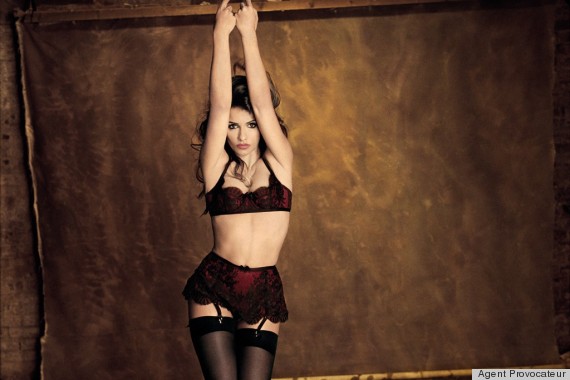
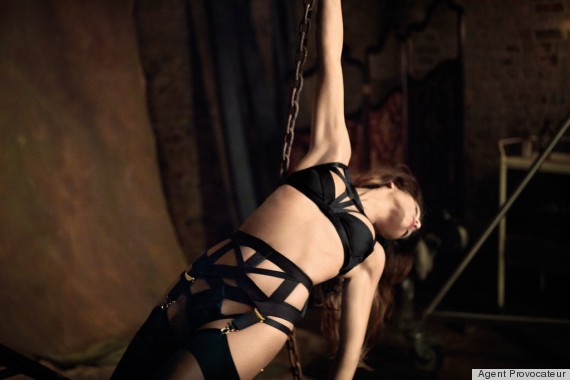
Monica Cruz, Penelope Cruz's Sister, Is The New Face Of Agent Provocateur

When looking at the new Agent Provocateur campaign, we had to do a double take -- Is that Penelope Cruz? It took a second glance to see that the model wasn't Penelope but her equally gorgeous younger sister Mónica Cruz.

It looks like the incredibly attractive gene runs in the family because Mónica has the same sultry appeal that her older sis has become known for in Hollywood. Even though 38-year-old Penelope is three years older than Mónica, their resemblance is uncanny -- the two practically look like twins. Mónica, a dancer, is the face of the brand's fall-winter 2012 advertising campaign inspired by Victorian London and titled "Wilhelmina: Show Your True Self."

This isn't Mónica's first venture into the fashion industry though. In 2007, she partnered with Penelope for a line for Spanish retailer Mango, giving us our first glimpse into the incredibly unfair family resemblance. In her ads for Agent Provocateur, Mónica proves that she can definitely hold a campaign on her own, confidently modeling sexy, bondage-inspired lingerie sets.

The brand's creative director Sarah Shotton seems to sum up her performance perfectly: "She’s a professional dancer, a very sexy woman. I’ve never seen a woman move like that.” It's ok, Sarah, we're in jealous awe, too.

Check out the campaign photos and let us know what you think.

monica cruz
monica cruz
monica cruz
See Penelope Cruz's style evolution. Can't you see the family resemblance?

Assam Women Top Drinkers in India

By Kounteya Sinha

Around one in 10 adult women in Assam reported drinking alcohol followed by Jharkhand (8.2%), Chhattisgarh (7.4%) and Odisha (4.5%), says a survey.

New Delhi, Aug 7 : To associate Uttar Pradesh (UP) with guns and alcohol is commonplace.

But in a startling finding, the prevalence of alcohol consumption has been found to be among the lowest in the country's most populous state.

India's latest Annual Health Survey (AHS) — the world's largest demographic exercise with a sample size of 20.1 million people from 4.1 million households, which has for the first time conducted a district-wise "personal habits" — says only 6.8% adults (above 15 years) in UP consume alcohol.

In comparison, the prevalence is almost three times in Chhattisgarh (19.7%).

UP's consumption is second lowest among the nine states surveyed (Bihar, Jharkhand, Uttar Pradesh, Uttarakhand, Madhya Pradesh, Chhattisgarh, Odisha, Rajasthan and Assam), with Rajasthan recording the lowest prevalence at 3.4%.

The survey, conducted by the Registrar General of India (RGI) across 284 districts in these states that account for about 48% of the total population, 59% of all births, 70% of all infant deaths, 75% of under five deaths and 62% of maternal deaths in the country, also found that men from Chhattisgarh love their drink, recording the highest percentage prevalence at 31.6%, followed by Jharkhand (24.6%) and Assam (23.8%).

When it comes to women, however, no one could beat the Assamese.

Around one in 10 adult women in Assam reported drinking alcohol followed by Jharkhand (8.2%), Chhattisgarh (7.4%) and Odisha (4.5%).

Mizoram Students Protest Teachers Shortage

Aizawl, Aug 7 : Despite Mizoram having 7508 teachers in excess according the Comptroller Auditor General of India report, there is shortage of teachers not only in remote areas but even in Serchhip town, the capital of Chief Minister Lal Thanhawla's traditional constituency.

Hundreds of students of Government Higher Secondary School Serchhip bunked classes and took to the streets today to protest against absence of mathematics and history teachers, which the government has turned a blind eye to despite repeated appeals.

"We don't want RMSA teachers," "Give us history and mathematics teachers," "Stop cheating on us," were the slogans that the students shouted during the protest rally. Sources said ever since science subject was introduced in the school, a single mathematics has been teaching the subject, against the norms of two teachers of each subject.

This resulted in failure to complete the course. Despite the students' objection, a history subjected was deputed from RMSA mission.

The teacher was shortly detached by the RMSA authority. The students, spearheaded by Serchhip headquarters of Mizo Zirlai Pawl, the state's apex students' body, vowed to agitate until their demands for teachers are fulfilled by the government.

Meanwhile, Mamit headquarters of MZP decided to close all educational institutions and education department offices in the district capital from August 7 as the government has not paid heed to its repeated pleas for posting of adequate teachers in the district.

'Jhum' Practice Affecting Ecology of Mizoram

Aizawl, Aug 7 : Global warming is the biggest challenge of the present world for its environmental impact. In this age of global climate change, resource use and management practices that depend on the use of fire that emit carbon are coming under increased pressure.

This is particularly the case with shifting cultivation which is also known as ‘Jhum’ in Mizoram.

Baharul Islam Laskar of the Department of Economics of Government Aizawl West College who has made an analysis on the impact of global warming on shifting cultivation said the practice is devastating.

He added to say the shifting cultivation has a far-reaching consequence in supplementing global warming and degrading the environment, besides ecology of the region.

Baharul Islam Laskar, whose findings have been compiled in the abstracts of the ‘Global Ecosystems, Biodiversity and Environmental Sustainability in the 21st Century’ published by the department of ecology and environmental science, Assam University, said it is commonly believed that ‘jhum’ was a sustainable system in the past when gap periods were long.

But, with increasing population pressure ‘jhum’ cycles have declined and become unsustainable. The earlier 15 to 20 year cycle of cultivation has come down to 2 to 3 years presently.

It has resulted in large scale deforestation, soil and nutrient loss and invasion by weeds and other species. The biodiversity of the areas has been adversely affected.

Baharul Islam Laskar points out shifting cultivation is the traditional way of cultivation in north eastern states. The system is based on ‘slash and burn’ method of cultivation and is characterized by rotation of field rather than crops.

The current practice of shifting cultivation in Mizoram is an extravagant and unscientific method of land use. Around 63 per cent of the total cropped area in Mizoram, according to his study, is under this traditional method of cultivation.

Baharul Islam Laskar whose study is based on secondary data and information has made an analysis of the various ill effects of ‘jhum’ cultivation on the ecology and socio-economic life of the tribal people of region.

In view of the devastating effect of ‘jhum’ cultivation, he has suggested other alternatives of livelihood to the local population, besides adoption of suitable measures so that the shifting cultivation can be made sustainable for generations to come.

The best way is to wean away and motivate the farmers in Mizoram to do away with the practice of ‘jhum’ and take up the scientific and modern method of cultivation. A strategy has to be worked out by the Centre in coordination with the State in this respect.

NLUP Ups Mizoram Milk Produce By 800 lpd

Aizawl, Aug 7 : Highlighting the positive side of NLUP cows, Chief Minister Lal Thanhawla has claimed that the imported milch cows have increased the state milk product by at least 800 litres per day.

"A survey has found that 80 per cent of the 186 NLUP beneficiaries who opted for dairy farming have witnessed success.

Their sales of milk to the MULCO have increased by 800 litres per day," Lal Thanhawla said today, while inaugurating NLUP Implementing Board (NIB) conference hall here today. He chaired the 11th meeting of NLUP implementing board that followed the inaugural function.

The meeting reviewed the implementation of various trades under phase I and II of NLUP.

Lal Thanhawla expressed triumph over the successful and smooth implementation of his government's flagship project during the last three years, and expressed hopes that it will ultimately transform the economy of the state within a short time.

Vowing that the NLUP should not stop half-way, he urged the department officials to take renewed efforts.

Official sources said 45139 families had been covered in the first phase and another 45000 families have been selected for the phase II. Rs 234.82 crore, Rs 234 crore and Rs 370 crore have been allocated for the project for 2010-2011, 2011-2012 and 2012-2013 respectively.

These exclude Rs 40 crore from RKVY. It was also reported that 143 beneficiaries under phase I had failed to utilise the fund they have received.