07 March 2012

When Does Northeast India Shine?

By Khushali P. Madhwani When does Northeast India shine?
A stark image of lush greenery, with a woman clad in a mekhla chaddar is typical of the Northeast India. Such are pictures of many enthusiastic photographers of the country, who are taking part in the Northeast Through My Eyes photo contest till March 20.

After a visit to one of the seven sister-states of India, these individuals are submitting a single image to be a part of this online photo contest. “This is a paradise unexplored. The pictures have to speak volumes of this region. Many entries we have received till now do just that,” says Jim Ankan Deka, the director of Eastern Fair Music Foundation.

One of the many fascinating images that Jim made a mention of was a black and white image of a native woman with her nose piercing. “There are not many tribes in the country where you find this tradition still existing. Things like the head gears are worn on an every day basis in these regions and here is where the beauty lies,” says Jim.

Many individuals who submitted photographs were in these regions on holiday. Aarti Gadeock, head of administration and marketing, says, “The moment I captured was amazing and pure. It was at a Buddhist monastery in Darjeeling. Since I chant Buddhism prayers, I felt a connection with this place.” Aarti’s husband edited the image to make it black and white and only the monk’s maroon robe is colour.

Most photographers admit that they did not plan the picture but that it happened by chance. Ritesh Kumar Maity, a lawyer says, “Our bus broke down at Gurudongmar Lake in Sikkim. It was three degrees celsius. Since I am from Kolkata, such a temperature was unreal for me. In this natural setting, I captured the raw scenic beauty. But the most thrilling experience was when an army truck was passing by; they gave us a ride till our hotel.”

The images are an epitome of the purity of this place. Bijit K. Dutta, an industrialist, says, “I wanted to capture the essence of Manjuli. Manjuli is the largest river island in the world. In my image, I got the beauty of the paddy field and hard working nature of the natives.” Just by looking at a photograph, a destination goes on your bucket list.

This often happens with Northeast India. Rob Horsefield, an occasional freelance travel photographer, part time traveller and full time NE India lover says, “I wanted to give the world an opportunity to see a culture that is, especially to Western eyes, both unusual and interesting.”

Third Term For Congress in Manipur

By Sobhapati Samom


Imphal, Mar 7 : The ruling Indian National Congress (INC) in Manipur scored a hattrick after the party got an absolute majority in the Assembly election winning 42 seats including 14 in the five hills districts in the House of 60.

Surprisingly, the Trinamool Congress did well winning seven seats, while the Manipur State Congress Party (MSCP) that could not win a single seat in the last polls, also performed well, bagging five seats.

But the Communist Party of India (CPI) and Manipur People’s Party, major constituents of the opposition Progressive Democratic Alliance (PDA) comprising 11 non-Congress parties, could not fare well this time. In the last polls, CPI and MPP had four and five seats respectively.

Chief Minister O Ibobi Singh retained his native Thoubal seat defeating BJP candidate Oinam Indira by 15,453 votes. His wife O Landhoni retained the Khangabok seat defeating L Jatra Singh of MPP by 9,871 votes.

Senior ministers of the Ibobi ministry Th Debendra, Phungzathang Tonsing, Y Irabot and N Biren retained their Jiribam, Churachandpur, Wangkhei and Heingang seats respectively. Other notable winners included Th Lokeshwar, Manga Vaiphei, Dr N Bijoy, Victor Keishing and K Gobindas Konthoujam.

Manipur Pradesh Congress Committee president Gaikhangam retained the Nungba seat defeating his nearest NPF rival G Gaingam by 2,330 votes.

The biggest upset was defeat of opposition firebrand O Joy Singh of Manipur People’s Party (MPP). Joy lost his pet Langthabal seat to Karam Shyam of Lok Janashakti Party (LJP) by 1,032 votes, while his party president Dr Nimai Chand Luwang lost to K Meghchandra of Congress by a margin of 2956 votes.

Three ruling Congress ministers Jayentakumar, DD Thaisii and Md Allaudin lost to their respective rivals - L Ibomcha of Nationalist Congress Party (NCP) in Keishamthong, Dr Alexander Pao of Naga People’s Front (NPF) in Karong and Karam Thamarjit of Manipur State Congress Party (MSCP) in Keirao.

In Nambol and Kshetrigao constituencies, the Congress victory came at the expense of heavyweights. While N Loken beat former union sports minister Thounaojam Chaoba Singh of Manipur People’s Party (MPP) to take Nambol, Md Amin Shah upset Nationalist Congress Party legislator Th Nandakishor Singh by 2,882 votes to take Kshetrigao.

The Trinamool Congress fared well winning seven seats. The party’s lone legislator in the previous Assembly, K Sarat Singh retained the Konthoujam seat by defeating his nearest Congress rival S Ranjan Singh.
06 March 2012

Watch Live Stream of Manipur Election Vote Counting 2012

For the first time in the Manipur’s Assembly history, the counting at 18 counting halls will be webcasted live on the internet at the website of Chief Electoral Officer www.ceomanipur.nic.in.

On the right hand side click on the Returning officers and district...

Results and trends can be accessed live by going to the Counting of Vote link given in the website. Live Streaming of Churachandpur Vote couting here:

Counting of Votes in Manipur

Voters show their identity cards as they to cast votes at a polling station during sixth phase of Uttar Pradesh assembly elections in Agra.

New Delhi, Mar 6

Counting of votes in the Assembly elections in the five states of Uttar Pradesh, Uttarakhand, Punjab, Manipur and Goa, considered "mini general elections", will be taken up on Tuesday.

The counting will begin at 0800 hours and first results are expected in an hour or two and all the results by evening.
The results will decide the fate of candidates in a total of 690 assembly seats --- 403 in UP, 117 seats in Punjab, 70 in Uttarakhand, 60 in Manipur and 40 in Goa. The elections, which have taken place in the middle of the last Lok Sabha election in 2009 and the next in 2014 are being considered some sort of "semi final" for the UPA and NDA.
While the Congress facing one controversy after another is looking forward to salvage its image, the opposition combine treats it as an occasion to pitch for a larger claim in 2014.
Looking for some buffer amid pulls and pressures of a troubling ally Mamata Banerjee, Congress faces an uphill task in reviving its fortunes in Uttar Pradesh.
BJP's task is also daunting as it has to return to power in Uttarakhand, where corruption allegations against it appear to have tilted the balance in favour of Congress. NDA also has a tough task in retaining Punjab.
Rahul Gandhi had led the campaign in the Mayawati-ruled Uttar Pradesh from the front where Congress is contesting 357 seats in alliance with Ajit Singh's RLD in the 403-member Assembly.
The party had won only 22 seats in the 2007 assembly elections in the state but made a spectacular show in last Lok Sabha elections where it won 22 Parliamentary seats coming as a shock to Samajwadi Party, BSP and BJP.
The ruling BSP in UP has contested all 403 seats, SP 402, BJP 398 and RLD 46. Exit polls have predicted a hung assembly in the state with the SP showed as cornering the major chunk of seats.
In the last assembly election, the BSP had won 206 seats and got a majority on its own surprising political pundits. SP had got 97 seats, BJP 50 and RLD, which contested in alliance with BJP won 10 seats. Independents and others had got 17 seats.
The Congress, led by former chief minister Captain Amarinder Singh is quite hopeful of wresting power from the BJP-Shiromani Akali Dal combine in Punjab amid indications that BJP's hold on urban areas had substantially gone down.
Congress is contesting all 117 seats here, while SAD 94 and BJP 23. In the last election SAD had won 50 seats, Congress 42, BJP 19 and independents 06.
BJP, which ruled Uttarakhand through a simple majority by winning 36 of 70 seats in last elections, faces a tough challenge this time.
It had to change its chief minister Ramesh Pokhariyal "Nishank" ahead of elections and replace him with BC Khanduri, who did not get sufficient time to salvage the dent.
BJP, Congress and BSP are contesting all the 70 seats here. Congress had won 20 seats in last elections and BSP 08. Uttarakhand Kranti Dal, which had won three seats in the last assembly election is contesting on 52 seats. Three seats had gone to independents in the last election.
Similarly in Manipur, Congress had got a simple majority in last assembly election winning 31 of the total 60 seats while Manipur People's Party had won five, NCP and CPI four each, National People's Party and Lalu Prasad's RJD three each. Independents had bagged a whopping 10 seats.
Congress chief minister Ibobi Singh, perhaps, faces the toughest election for his party this time but Congress is hopeful of a win in absence of a united Opposition. Exit polls suggest Congress is retaining the state.
Goa in which Congress has its government headed by Digambar Kamat is a state where post poll formulations matter as much as the poll itself.
Congress looks poised for a pitched battle with BJP. Both the Congress and the BJP have entered into alliances ---Congress with the NCP and BJP with the MGP.
Illegal mining an issue but locally it did not become a poll issue as the syndrome allegedly afflicts both parties.
Congress had won 16 seats, BJP 14, NCP 03, and MGP, SGF and UGDP and independents 02 each. This time also it is expected to be a photo finish between the two alliances.
05 March 2012

Mizoram Plans Tough Anti-tobacco Laws

Aizawl, Mar 5 : The Mizoram government has decided to enact tough laws to curb the use of tobacco products and drug abuse blamed for cancer and heart ailments, an official said here Sunday.”Chief Minister Lal Thanhawla held a meeting here last week with ministers and officials and decided to enforce inflexible laws to check drug abuse and tobacco related menaces,” a health department official told reporters.

“It was decided that the Narcotic Drugs and Psychotropic Substances act and the Assam Drug Control Act (adopted by Mizoram) would be enforced with state specific amendments to suit the prevailing problem,” the official stated.

The proposed laws would be tough and with sufficient penalty and imprisonment for the guilty, he said

According to a study by social group Mizoram Population Base Cancer Registry, cancer claims lives of 550-600 people on an average annually in Mizoram, whose total population is a little over one million.

As per the state government records, the mountainous northeastern state, bordering Myanmar and Bangladesh, had topped the country eight years ago in tobacco consumption.

“Smoking has already been banned in the premises of government offices, educational institutions, health centres and crowded places across Mizoram,” an official release quoted the chief minister as saying in the meeting.

Social activist and chief minister’s wife, Lal Riliani said that more than 50 percent of cancer cases among Mizos were caused by tobacco.

Why Indians Love Bangkok: Cheap… LEDs!

By G Pramod Kumar


Indians wheeling massive LEDs are a common sight at the Suvarnabhoomi airport in Bangkok

For lots of single men who fill the cheap flights from Indian ports to Bangkok, the anticipation of the city is as ticklish as that of the man in a Tata sky ad. It’s as much a sin city as it is a fun city.

A standard package of loud Indian men who often convert their departure halls at the Suvarnabhoomi international airport in Bangkok into mofussil bus stands have these: beaches; snakes, crocodiles and elephants; shopping complexes and markets; and Pattaya and massage parlours. Of course, massage could also mean sex off the shelf.

Over the years since the key Indian cities started connecting with Bangkok, if you listened in closely you could hear whispered words of received pleasure or expressions of accomplishment.

But of late, I am seeing a new trend, a new element of pleasure among the Indian pack’s budget itineraries.
Sexy LEDs. Yes, super flat, super light and high definition LED TVs.
Every itinerary of the package-tours that bring scores of men, and some families, now includes a popular TV shop to pick up an LED TV. The most common destination is the electronic district, Pantip Plaza. Racks of LED TVs of various sizes and makes disappear in no time. And most of them go to India.

Take a look at the Suvarnabhoomi airport in the evening, when a number of flights leave for Indian cities.
You will often run into an outsize LED TV on a trolly, sometimes as big as 64 inches with an Indian pushing it. Then you see LED TVs everywhere, with Indians behind the trolley. Of course you see an occasional Sri Lankan, Bangladeshi or a Bhutanese, but even to an untrained eye, they are like statistical outliers. It is almost entirely Indians who are gorging on LEDs.

At about 7 p.m. one can see them crowding outside the customs counter for certifying their products for VAT refund. The only exception will be a Russian or a Bollywood B-grader or a Punjabi aunt taking out her Prada bag. Most of the others are Indians and their big LEDs.

I asked the shopkeeper in Pantip Plaza who his customers were.

He said mostly Indians.

And how many TVs does he sell in a day?

Close to 50.

This is just one shop. There are so many such shops around the city. So much so, that the shop at Pantip now employs Burmese Nepali salesmen who can speak both Hindi and English. One cannot miss this exception in all Thai (except the tailoring shops) sales squad in the capital.

The scene at the TV shops and the Suvarnabhoomi airport indicate organised trade rather than household-purchases. The pan-chewing traders mostly come from Kolkata, from where flights to Bangkok are both cheap and plentiful. And they usually carry more than one TV. Many of them are couriers for a per flight fee a few times every week. Of course, couriers from other cities also do it. Family vacationists and heavily bangled honeymooners also shop for LEDs.

But why such a craze for LEDs among the Indians? The Chinese or the Russians, who come in equally higher numbers, don’t do it. Is it the HD broadcast, the aesthetics or something else?

The massive price difference.

A super flat LED TV is at least 40 per cent cheaper in Bangkok than in India. In India, it is still a luxury, but at Bangkok prices, it falls within the middle class budget. For up to 32 inch TVs, there is no customs duty because in Indian rupees, the prices convert to around Rs. 20, 000.

The prices cross the duty limit at 40 inches and above. If you buy the bigger tv, the premium is higher because big sizes of the current generation are substantially more expensive and hard to get in India, particularly in smaller cities. If one doesn’t mind new generation plasma, which is as thin and as good looking as the LEDs, the prices are lower. That explains why one sees a lot of massive 64 inch TVs being carried to India.

Another reason is weight. An average 40 inch LED weighs less than 15 kg, it is flat and very easy to handle. The airports in India are now so used to them that they don’t let them move around in the carousel, but keep them aside for the convenience of the carriers.

I have grown up watching refrigerators, air conditioners and stereos being wheeled out of Indian airports after slow clearance processes when they were sheer luxuries in India. You may still see them in Dhaka and Colombo.

Importing household electronics has become so old fashioned in India that except for some niche products smuggled in with the connivance of customs officials, we had almost stopped seeing them.

Now there is this surge in the import of LEDs. These are the LEDs that are available in the grey markets of India at at least 10-15 less than in regular shops.

What is perplexing is why a consumerist, industrial India is permitting this? Is it too small in terms of foreign exchange or trade loss? Or it is because customs gain some hard-to-come cash? Or is it a big racket that the customs choose to ignore?

Innocuous, but big customs rackets involving high end electronics, expensive liquor or similar contraband get busted on and off. Doesn’t something smell a little fishy?

Mexico City's Annual Sex Expo

Sex Expo 2012

Mexico City's Annual Sex Expo is the largest of its kind in Latin America and one of the largest in the world. When the first edition drew 80,000 visitors in 2004, it prompted howls of outrage from the Catholic Church and conservative groups. But today, the scandal has died down. The expo’s success has to do with "the end of the silence surrounding sexual issues, which is a healthy process seen in Mexico in recent years," says sexologist Eusebio Rubio, president since 2005 of the World Association for Sexual Health. During the expo, women and men can audition for porn flicks. The finalists will produce a film in just eight hours, to be shown on the expo’s web site. According to unofficial estimates, the porn industry in Mexico takes in around one billion dollars a year, despite a thriving pirate video industry, reports banderasnews.com.

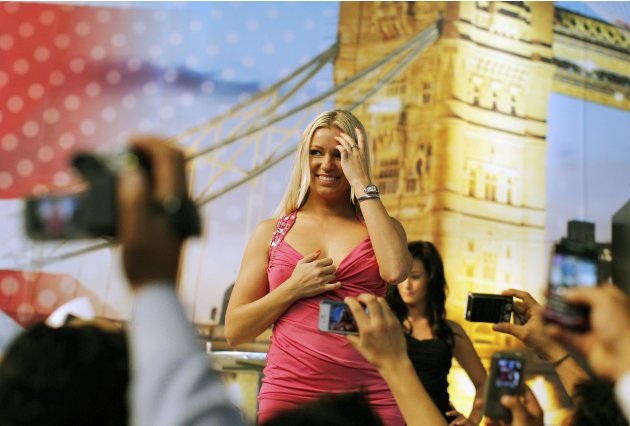
A spectator poses for a picture with a promoter during the inauguration of the 2012 Sex and Entertainment Expo in Mexico City on February 29, 2012. Thousands of visitors are expected to attend the five-day event which will bring together all sorts of sex shows and stands selling toys, videos and magazines from Mexico, the United States and Europe.
Sex Expo 2012
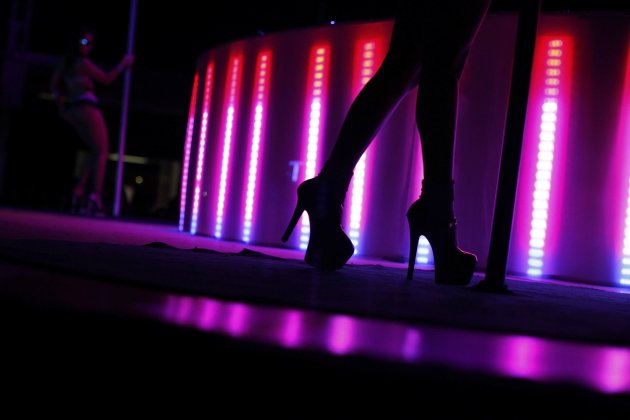
An exotic dancer performs during the Sex and Entertainment 2012 adult exhibition at the Palacio de los Deportes in Mexico City
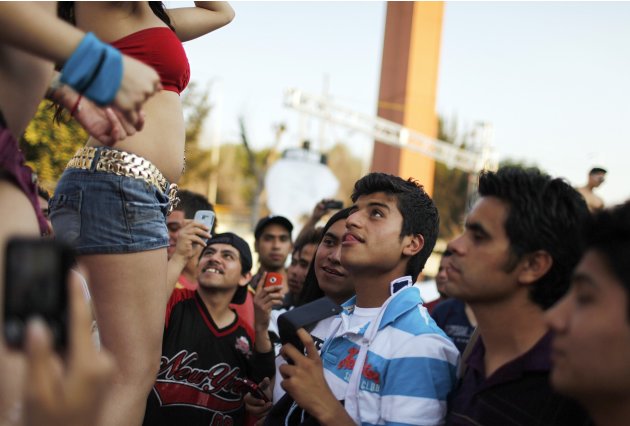
Visitors look at dancers perform at the Sex and Entertainment 2012 adult exhibition at the Palacio de los Deportes in Mexico City
Dancers in body paint pose for pictures during a news conference to promote the
Exotic dancers perform during the Sex and Entertainment 2012 adult exhibition at the Palacio de los Deportes in Mexico City


The Porn Identity

By Lakshmi Govindrajan Javeri

Sunny Leone
Sunny Leone
Here’s a look at the Indian psyche and its constant battle with its porn identity — its love for erotica, voyeurism, brazen sexuality and pleasures of the flesh.
Watching porn in the Assembly cost three ministers their jobs but brought to the fore the often-hushed topic of pornography. A pornstar made it to Bigg Boss and her presence brought the topic to dinner tables.

In a nation that constantly debates over the moral implications of sex education, there exists an industry that feeds the imagination and desires of millions of Indian men and not as many women.

The Internet may have made it considerably redundant, but for millions of Indian men, the homegrown pornography industry is their only chance at sexual freedom.

The Bombay High Court last year ruled that viewing of pornography in a private space does not tantamount to an offence and chose not to stand on moral judgement in the matter; a path-breaking ruling that acknowledged private pornography viewing as a matter of personal choice. We look at the Indian psyche and its constant battle with its porn identity.

Down Under
For decades the states of Tamil Nadu and Kerala held the mantle of being artistically liberal very seriously. With censors being less rigid, softcore pornography was accepted and short of going full frontal, even mainstream films had heavyset voluptuous women pushing the limits of titillation.

Ironically, while south movies indulged in a lot more erotica, the people of the states appeared far more conservative than their Western counterparts. Bollywood on the contrary, believed to be the flagship of a liberal city like Mumbai, was far more restrictive in its skin show.

Malyalam actor-film-maker Madhupal feels part of the reason for Malyalam cinema of the ‘70-‘80s having bold scenes was people’s curiosity.

“People like seeing others in compromising situations. It’s voyeuristic. You had the likes of Silk Smitha and Shakeela having a massive fan-following then. Today, with the Internet inundated with all sorts of pornography, people don’t need to go to a movie to watch something they can so easily download.”
While Tamil and Malyalam films were known for being social commentaries, Bollywood cinema, as perceived by many in the South, has always been about Mumbai.

“The women in Bollywood all looked similar, dressed alike and no matter what their situation, the films reeked of a certain Bombay way of life or style. Women of Kerala have always been strong, powerful and independent. The cinema reflected the situations these women found themselves in. The movies of the ’70s and the ’80s showed sexual tension between a woman and some man in her life, be it her neighbour or a relative. It is not like the society was orthodox. While people may not have spoken so much about pornography, they didn’t quite object to the suggestive visuals either,” says V. Sunil, executive creative director of Wieden+Kennedy.

Back in the ’80s, names like Silk Smitha and her various textile titillators like Nylon Nalini, Polyester Padmini, Cotton Kamini were synonymous with brazen exposure while portraying characters of the woman in throes of passion or the exploited nymphet. Short of showing genitals, softcore scenes leaving little to the imagination made these girls household whispers.

While portraying Silk in her latest film The Dirty Picture, Vidya Balan said, “In real life, Silk was ahead of her time. She took pride in what she did and was never ashamed of what she was doing.”

Morning shows
For a good part of three decades, pornography in India meant those 'morning shows'. Movies like Her Nights, Reshma Ki Jawani and Pyar Ki Ek Raat had posters of women in various stages of pleasure staring right back at you.

Says a documentary filmmaker on condition of anonymity, “You know. films of Kanti Shah were a cult. Kanti Shah ke Angoor, Shaadi Basanti Ki Honeymoon Gabbar Ka etc., made him this cult figure. He even had his wife as the leading lady of some of his films. He was the closest we got to seeing some ‘action’ on the big screen. I remember his most famous line: Naam hain mera Bulla, rakhta hoon main khulla.” Crass? Yes. Had an audience? Undoubtedly.

Interestingly, many of these movies that made it to the 'morning shows' category were considered 'bit films' for inserting bits of other films.

“Sometimes in the middle of a seemingly raunchy film, out of nowhere would a passionate sex scene from an international film appear. In some instances they were even hardcore. Then soon after, the original film would continue,” says film-maker Vikram Bhatt, while talking about a dying trend today.

The Internet has considerably killed that tradition but metros still have a few theatres committed to the cause of satisfaction. Sunil, last year paid a tribute to this industry by hosting an exhibition of his personal collection of handpainted posters of adult films.

“I wanted to start the conversation and bring the topic of pornography out of the shadows. The morning shows culture was dying and I felt it was good to document what it was in its full glory. One poster even had an image of Brooke Shields from Blue Lagoon but the film was regional. Such was the distinctiveness of these films and posters. You cannot ignore a culture that ushered many a boy to manhood.”

Status quo
Today, India is standing at the threshold of accepting pornography as fait accompli. Pornstar Sunny Leone’s entry into Bigg Boss created quite a flutter.

Her reaction to her profession has been rather nonchalant: “I’ve been doing adult porn for 10 years. In this duration I’ve met a whole lot of people: Those who like me, those who dislike me for what I am and what I do, or those who hate or appreciate my choice of profession.”

Delhi-born Anjali Kara is a known face in Bangkok and London as a pornstar of Indian origin. “I don’t have sex with these men. It’s only acting. I’m not a prostitute,” she clarifies in an interview.

Lifestyles are strained for time and the Internet has brought the world (of porn) to cellphones as well.
Homemade clips make quick bucks and viewers have access to women of all cultures. The art of indigenous visual erotica may be dying but there are upholders in the form of Savita Bhabhi and the likes that she’s inspired.

While the government may have banned the official Savita Bhabhi website, she continues to thrive in India on another domain. It is interesting how our courts are doing their objective best to ensure personal freedom is not infringed upon. The Bombay High Court turned down a public interest litigation (PIL) seeking a blanket ban on websites with sexual content on the internet.

It said, “If such an exercise is done, then an aggrieved party, depending on the sensibilities of persons whose views may differ on what is morally degrading or prurient, will be sitting in judgement even before a competent court decides the issue”.

The courts may be willing to give pornography in personal space a chance, but how willing is society?

Says Sunil, “We started the Kama Sutra. Sex and orgies adorn Khajuraho. We love our apsaras like Rambha to be well-endowed. But cinema is held at gunpoint. Those ministers who got busted in the Assembly are a testimony of our society today. Hypocritical to say the least. Today there is almost no money left in the pornography industry in India. But we’re now more willing to talk about porn.”

In a nation of contradictions, this resurgence of public interest in private space is not surprising. Are we, as a society, itching closer to liberal thought? Or is it a case of premature exaggeration? Only time will tell.