05 March 2012

Why Indians Love Bangkok: Cheap… LEDs!

By G Pramod Kumar


Indians wheeling massive LEDs are a common sight at the Suvarnabhoomi airport in Bangkok

For lots of single men who fill the cheap flights from Indian ports to Bangkok, the anticipation of the city is as ticklish as that of the man in a Tata sky ad. It’s as much a sin city as it is a fun city.

A standard package of loud Indian men who often convert their departure halls at the Suvarnabhoomi international airport in Bangkok into mofussil bus stands have these: beaches; snakes, crocodiles and elephants; shopping complexes and markets; and Pattaya and massage parlours. Of course, massage could also mean sex off the shelf.

Over the years since the key Indian cities started connecting with Bangkok, if you listened in closely you could hear whispered words of received pleasure or expressions of accomplishment.

But of late, I am seeing a new trend, a new element of pleasure among the Indian pack’s budget itineraries.
Sexy LEDs. Yes, super flat, super light and high definition LED TVs.
Every itinerary of the package-tours that bring scores of men, and some families, now includes a popular TV shop to pick up an LED TV. The most common destination is the electronic district, Pantip Plaza. Racks of LED TVs of various sizes and makes disappear in no time. And most of them go to India.

Take a look at the Suvarnabhoomi airport in the evening, when a number of flights leave for Indian cities.
You will often run into an outsize LED TV on a trolly, sometimes as big as 64 inches with an Indian pushing it. Then you see LED TVs everywhere, with Indians behind the trolley. Of course you see an occasional Sri Lankan, Bangladeshi or a Bhutanese, but even to an untrained eye, they are like statistical outliers. It is almost entirely Indians who are gorging on LEDs.

At about 7 p.m. one can see them crowding outside the customs counter for certifying their products for VAT refund. The only exception will be a Russian or a Bollywood B-grader or a Punjabi aunt taking out her Prada bag. Most of the others are Indians and their big LEDs.

I asked the shopkeeper in Pantip Plaza who his customers were.

He said mostly Indians.

And how many TVs does he sell in a day?

Close to 50.

This is just one shop. There are so many such shops around the city. So much so, that the shop at Pantip now employs Burmese Nepali salesmen who can speak both Hindi and English. One cannot miss this exception in all Thai (except the tailoring shops) sales squad in the capital.

The scene at the TV shops and the Suvarnabhoomi airport indicate organised trade rather than household-purchases. The pan-chewing traders mostly come from Kolkata, from where flights to Bangkok are both cheap and plentiful. And they usually carry more than one TV. Many of them are couriers for a per flight fee a few times every week. Of course, couriers from other cities also do it. Family vacationists and heavily bangled honeymooners also shop for LEDs.

But why such a craze for LEDs among the Indians? The Chinese or the Russians, who come in equally higher numbers, don’t do it. Is it the HD broadcast, the aesthetics or something else?

The massive price difference.

A super flat LED TV is at least 40 per cent cheaper in Bangkok than in India. In India, it is still a luxury, but at Bangkok prices, it falls within the middle class budget. For up to 32 inch TVs, there is no customs duty because in Indian rupees, the prices convert to around Rs. 20, 000.

The prices cross the duty limit at 40 inches and above. If you buy the bigger tv, the premium is higher because big sizes of the current generation are substantially more expensive and hard to get in India, particularly in smaller cities. If one doesn’t mind new generation plasma, which is as thin and as good looking as the LEDs, the prices are lower. That explains why one sees a lot of massive 64 inch TVs being carried to India.

Another reason is weight. An average 40 inch LED weighs less than 15 kg, it is flat and very easy to handle. The airports in India are now so used to them that they don’t let them move around in the carousel, but keep them aside for the convenience of the carriers.

I have grown up watching refrigerators, air conditioners and stereos being wheeled out of Indian airports after slow clearance processes when they were sheer luxuries in India. You may still see them in Dhaka and Colombo.

Importing household electronics has become so old fashioned in India that except for some niche products smuggled in with the connivance of customs officials, we had almost stopped seeing them.

Now there is this surge in the import of LEDs. These are the LEDs that are available in the grey markets of India at at least 10-15 less than in regular shops.

What is perplexing is why a consumerist, industrial India is permitting this? Is it too small in terms of foreign exchange or trade loss? Or it is because customs gain some hard-to-come cash? Or is it a big racket that the customs choose to ignore?

Innocuous, but big customs rackets involving high end electronics, expensive liquor or similar contraband get busted on and off. Doesn’t something smell a little fishy?


Mexico City's Annual Sex Expo

Sex Expo 2012

Mexico City's Annual Sex Expo is the largest of its kind in Latin America and one of the largest in the world. When the first edition drew 80,000 visitors in 2004, it prompted howls of outrage from the Catholic Church and conservative groups. But today, the scandal has died down. The expo’s success has to do with "the end of the silence surrounding sexual issues, which is a healthy process seen in Mexico in recent years," says sexologist Eusebio Rubio, president since 2005 of the World Association for Sexual Health. During the expo, women and men can audition for porn flicks. The finalists will produce a film in just eight hours, to be shown on the expo’s web site. According to unofficial estimates, the porn industry in Mexico takes in around one billion dollars a year, despite a thriving pirate video industry, reports banderasnews.com.

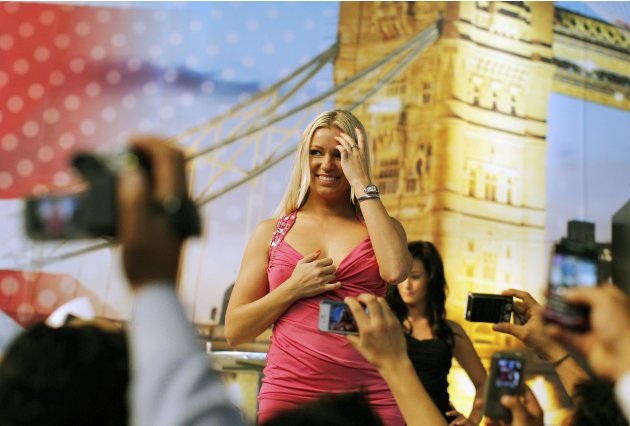
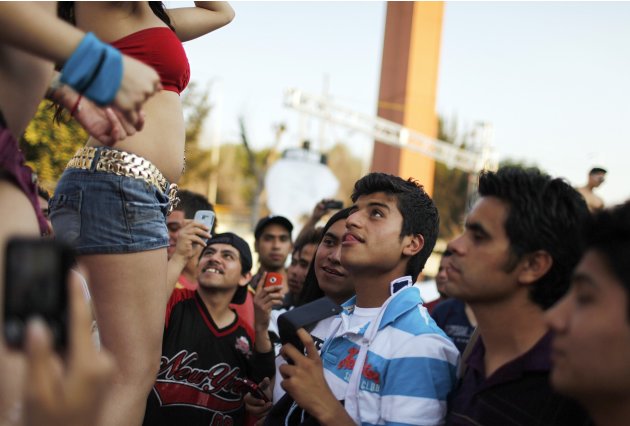
A spectator poses for a picture with a promoter during the inauguration of the 2012 Sex and Entertainment Expo in Mexico City on February 29, 2012. Thousands of visitors are expected to attend the five-day event which will bring together all sorts of sex shows and stands selling toys, videos and magazines from Mexico, the United States and Europe.
Sex Expo 2012
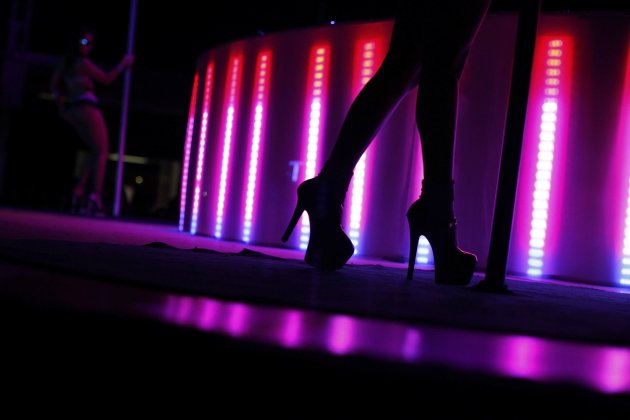
An exotic dancer performs during the Sex and Entertainment 2012 adult exhibition at the Palacio de los Deportes in Mexico City
Visitors look at dancers perform at the Sex and Entertainment 2012 adult exhibition at the Palacio de los Deportes in Mexico City
Dancers in body paint pose for pictures during a news conference to promote the
Exotic dancers perform during the Sex and Entertainment 2012 adult exhibition at the Palacio de los Deportes in Mexico City


The Porn Identity

By Lakshmi Govindrajan Javeri

Sunny Leone
Sunny Leone
Here’s a look at the Indian psyche and its constant battle with its porn identity — its love for erotica, voyeurism, brazen sexuality and pleasures of the flesh.
Watching porn in the Assembly cost three ministers their jobs but brought to the fore the often-hushed topic of pornography. A pornstar made it to Bigg Boss and her presence brought the topic to dinner tables.

In a nation that constantly debates over the moral implications of sex education, there exists an industry that feeds the imagination and desires of millions of Indian men and not as many women.

The Internet may have made it considerably redundant, but for millions of Indian men, the homegrown pornography industry is their only chance at sexual freedom.

The Bombay High Court last year ruled that viewing of pornography in a private space does not tantamount to an offence and chose not to stand on moral judgement in the matter; a path-breaking ruling that acknowledged private pornography viewing as a matter of personal choice. We look at the Indian psyche and its constant battle with its porn identity.

Down Under
For decades the states of Tamil Nadu and Kerala held the mantle of being artistically liberal very seriously. With censors being less rigid, softcore pornography was accepted and short of going full frontal, even mainstream films had heavyset voluptuous women pushing the limits of titillation.

Ironically, while south movies indulged in a lot more erotica, the people of the states appeared far more conservative than their Western counterparts. Bollywood on the contrary, believed to be the flagship of a liberal city like Mumbai, was far more restrictive in its skin show.

Malyalam actor-film-maker Madhupal feels part of the reason for Malyalam cinema of the ‘70-‘80s having bold scenes was people’s curiosity.

“People like seeing others in compromising situations. It’s voyeuristic. You had the likes of Silk Smitha and Shakeela having a massive fan-following then. Today, with the Internet inundated with all sorts of pornography, people don’t need to go to a movie to watch something they can so easily download.”
While Tamil and Malyalam films were known for being social commentaries, Bollywood cinema, as perceived by many in the South, has always been about Mumbai.

“The women in Bollywood all looked similar, dressed alike and no matter what their situation, the films reeked of a certain Bombay way of life or style. Women of Kerala have always been strong, powerful and independent. The cinema reflected the situations these women found themselves in. The movies of the ’70s and the ’80s showed sexual tension between a woman and some man in her life, be it her neighbour or a relative. It is not like the society was orthodox. While people may not have spoken so much about pornography, they didn’t quite object to the suggestive visuals either,” says V. Sunil, executive creative director of Wieden+Kennedy.

Back in the ’80s, names like Silk Smitha and her various textile titillators like Nylon Nalini, Polyester Padmini, Cotton Kamini were synonymous with brazen exposure while portraying characters of the woman in throes of passion or the exploited nymphet. Short of showing genitals, softcore scenes leaving little to the imagination made these girls household whispers.

While portraying Silk in her latest film The Dirty Picture, Vidya Balan said, “In real life, Silk was ahead of her time. She took pride in what she did and was never ashamed of what she was doing.”

Morning shows
For a good part of three decades, pornography in India meant those 'morning shows'. Movies like Her Nights, Reshma Ki Jawani and Pyar Ki Ek Raat had posters of women in various stages of pleasure staring right back at you.

Says a documentary filmmaker on condition of anonymity, “You know. films of Kanti Shah were a cult. Kanti Shah ke Angoor, Shaadi Basanti Ki Honeymoon Gabbar Ka etc., made him this cult figure. He even had his wife as the leading lady of some of his films. He was the closest we got to seeing some ‘action’ on the big screen. I remember his most famous line: Naam hain mera Bulla, rakhta hoon main khulla.” Crass? Yes. Had an audience? Undoubtedly.

Interestingly, many of these movies that made it to the 'morning shows' category were considered 'bit films' for inserting bits of other films.

“Sometimes in the middle of a seemingly raunchy film, out of nowhere would a passionate sex scene from an international film appear. In some instances they were even hardcore. Then soon after, the original film would continue,” says film-maker Vikram Bhatt, while talking about a dying trend today.

The Internet has considerably killed that tradition but metros still have a few theatres committed to the cause of satisfaction. Sunil, last year paid a tribute to this industry by hosting an exhibition of his personal collection of handpainted posters of adult films.

“I wanted to start the conversation and bring the topic of pornography out of the shadows. The morning shows culture was dying and I felt it was good to document what it was in its full glory. One poster even had an image of Brooke Shields from Blue Lagoon but the film was regional. Such was the distinctiveness of these films and posters. You cannot ignore a culture that ushered many a boy to manhood.”

Status quo
Today, India is standing at the threshold of accepting pornography as fait accompli. Pornstar Sunny Leone’s entry into Bigg Boss created quite a flutter.

Her reaction to her profession has been rather nonchalant: “I’ve been doing adult porn for 10 years. In this duration I’ve met a whole lot of people: Those who like me, those who dislike me for what I am and what I do, or those who hate or appreciate my choice of profession.”

Delhi-born Anjali Kara is a known face in Bangkok and London as a pornstar of Indian origin. “I don’t have sex with these men. It’s only acting. I’m not a prostitute,” she clarifies in an interview.

Lifestyles are strained for time and the Internet has brought the world (of porn) to cellphones as well.
Homemade clips make quick bucks and viewers have access to women of all cultures. The art of indigenous visual erotica may be dying but there are upholders in the form of Savita Bhabhi and the likes that she’s inspired.

While the government may have banned the official Savita Bhabhi website, she continues to thrive in India on another domain. It is interesting how our courts are doing their objective best to ensure personal freedom is not infringed upon. The Bombay High Court turned down a public interest litigation (PIL) seeking a blanket ban on websites with sexual content on the internet.

It said, “If such an exercise is done, then an aggrieved party, depending on the sensibilities of persons whose views may differ on what is morally degrading or prurient, will be sitting in judgement even before a competent court decides the issue”.

The courts may be willing to give pornography in personal space a chance, but how willing is society?

Says Sunil, “We started the Kama Sutra. Sex and orgies adorn Khajuraho. We love our apsaras like Rambha to be well-endowed. But cinema is held at gunpoint. Those ministers who got busted in the Assembly are a testimony of our society today. Hypocritical to say the least. Today there is almost no money left in the pornography industry in India. But we’re now more willing to talk about porn.”

In a nation of contradictions, this resurgence of public interest in private space is not surprising. Are we, as a society, itching closer to liberal thought? Or is it a case of premature exaggeration? Only time will tell.

Assam CM Tarun Gogoi As Next Vice President


gog_0.jpg.crop_display.jpgNew Delhi, Mar 5 : With polls for India's Presidency and Vice-Presidency due in a few months, Congress has reportedly started discussing the possibility of fielding three-time Assam Chief Minister Mr. Tarun Gogoi for the post of the Vice-President with the party's UPA allies.

Confirming the name of Tarun Gogoi did come up in the discussion with the Congress’ leadership, sources within the UPA revealed there is a strong possibility of Gogoi being fielded as a common UPA candidate, Deccan Chronicle has learnt.

When asked about the nominee for Presidency sources said: "They (Congress) haven’t come with any name or proposal so far. Perhaps they would do it after the results of the Uttar Pradesh elections."

If Gogoi gets elected to Vice-presidency, he would be the first person from the north-east to occupy the coveted post.

The incumbent Vice-President, Dr. Hamid Ansari’s term would be coming to an end on August 10. The Assam strongman, who has been associated with the Congress for decades, has been a member of the Lok Sabha a record six times.

He has also served in the union cabinet under former Prime Minister Mr. Narasimha Rao. Between 1991-93 he was minister of state for food with independent charge. And between 1993-95 he was heading the Food processing industry with independent charge.

He became Chief Minister of Assam for the first time in 2001. He also led the party to victory in 2006 and 2011.

In the last assembly polls he was credited with having secured an absolute majority for his party after a gap of 20 years. Congress had emerged triumphant in 78 seats for the126-member assembly.

Mr. Gogoi has also served in various capacities in the party hierarchy both in the state and also in the Centre.

Minor Disturbances During Manipur Repoll

By Iboyaima Laithangbam
A securityman stands guard during repolling at Lambung village in Chandel district of Imphal on Sunday. Photo: PTI
A securityman stands guard during repolling at Lambung village in Chandel district of Imphal on Sunday.
Repoll in four stations to be held on Monday

Minor disturbances were reported during re-election in the five hill districts of Manipur on Sunday, which saw 80 per cent turnout.
Joint Chief Electoral Officer N. Parveen told journalists that polling officials could not reach four stations in Tamenglong district. Repoll in these stations would be held on Monday.
Besides, there were two incidents of firing in Senapati district. In the first incident, Naga People's Front candidate K. Raina wanted to enter some areas near polling stations and villagers objected to this. His guards opened fire in the air.
In the second incident, shots were fired from the hilltops at Saikul. The paramilitary personnel on election duty also opened fire. Voting was suspended during the incident.

Women stage protest

Meanwhile, women launched a sit-in on Sunday protesting the bomb attack on the house of MLA R.K. Anand, Congress candidate, on Saturday night.
On Saturday morning, the house of another Congress candidate, Elangbam Chand, was attacked. Police arrested two extremists and seized explosives while they were trying to bomb the house of MLA Bijoy Koijam, a Congress candidate.

11 non-Congress parties join hands in Manipur

Eleven non-Congress parties have formed a coalition in Manipur in an effort at forming a government after the Assembly election results are declared on Tuesday.
After several rounds of talks, the People's Democratic Alliance (PDA) was formed on Saturday night.
PDA spokesperson and State CPI secretary Moirangthem Nara was confident that these parties would form the next Ministry, guided by a common minimum programme to be chalked out by a nine-member core committee.
On December 3 last year, five parties formed the People's Democratic Front.
But Pradesh Congress Committee president G. Gaikhangam said it was wishful thinking of these parties to form a government, since his party, having contested all 60 seats, would come to power for the third consecutive term. He pointed out that all parties of the PDA had pledged to protect Manipur's territorial integrity, but now they joined hands with the Naga People's Front (NPF), a Nagaland-based party, which wants to merge the “Naga areas” in Manipur with Nagaland.
However, PDA leaders snap back that there is nothing wrong in their joining hands with the NPF, arguing that the allies will not allow the NPF to go ahead with this agenda. They counter that it was the Congress that signed the merger agreement with the United Naga Integration Council on August 4, 1972.
Some PDA leaders admit in private that there will be problems in the sharing of the Cabinet slots. However, they are confident of overcoming them.
It is also possible that some allies will join hands with the Congress in the event of its emerging as the single largest party.
Nationalist Congress Party president Radhabinod Koijam, one of the architects of the PDA, says his party could readily back the Congress or the NPF for forming a stable government.

Bomb attacks

Meanwhile, the number of bomb attacks on the Congress candidates has increased, though they have been given protection by India Reserve Battalion guards.
On Saturday midnight, a bomb exploded at the well-guarded house of R.K. Anand, Congress candidate from Naoriya Pakhanglakpa. On Friday, the house of Elangbam Chand, candidate for Yaiskul, came under attack.
Police fear more such attacks. The extremists, targeting the Congress members say no party should form a post-poll alliance with the Congress.

03 March 2012

Congress Set To Retain Manipur

New Delhi: Manipur looks set to return the Congress to power yet again, according to the post-election survey by the Centre for the Study of Developing Societies (CSDS) in association with The Week and CNN-IBN. The ruling party may win 24-32 seats in the 60-member Assembly. The anti-Congress alliance, the People's Democratic Front, is expected to fare poorly with 5-11 seats. The surprise in the state could be the debutant All India Trinamool Congress (AITC) garnering around 7-13 seats. Independents and smaller parties like CPI, the Manipur State Congress Party (MSCP) and Naga People's Front are expected to win between 10 to 18 seats.
In Manipur a divided opposition seems to be the incumbent Congress party's best hope for retaining power for a third consecutive term. This is the main finding of the Post Election survey conducted by the Centre for the Study of Developing Societies (CSDS) among 1200 respondents across 20 randomly selected Assembly constituencies of Manipur in the second and third week of February 2012. In a State where no party has ever managed to cross the majority mark in the 60-member Assembly, the Congress led by two terms Chief Minister Okram Ibobi Singh is projected to emerge on top once again with 30 percent of the votes.
While Congress party is down 4 percent compared to last time, its main opponent - the People's Demoractic Front (PDF), the grand anti-Congress alliance of five parties led by Manipur People's Party (MPP) - is expected to secure only 13 percent of the votes. Although the PDF did not exist in 2007, but if we were to add up the vote share secured by all the PDF constituents (MPP, Rashtriya Janata Dal, Nationalist Congress Party, Janata Dal United and Communist Party of India Marxist) five years ago, then the PDF is down by a huge 18 percent this time. Mamata Banerjee's All India Trinamool Congress (AITC), a new entrant on the election scene of Manipur is set to make an impressive debut with a projected vote share of 14 percent. Other parties, which include the Communist Party of India (CPI), Naga People's Front (NPF), Manipur State Congress Party (MSCP), Bharatiya Janata Party (BJP), and Independents, are likely to corner 43 percent of the votes, a gain of 8 percent since last time.
Elections 2012: Congress set to retain Manipur
If we analyse the regional pattern of voting, then the nature of contest varies from region to region. In the rural parts of the Valley which has the highest number of seats (33), the Congress leads a badly divided opposition. However, in the urban areas of the Valley it is AITC which is likely to be ahead. In the Hills area dominated by the Nagas, the Congress is ahead but is facing a tough fight from both the NPF and the MSCP. In the Hills area dominated by the Kuki tribes, the main fight appears to be between the PDF constituents and the Congress, with the former in the lead.
While the PDF constituents seem to doing well in the Hills, what is interesting is that nearly half the voters who were interviewed during the survey had not heard of the PDF alliance. Awareness levels about PDF were particularly low in the Hills. While very few who had heard about the alliance thought that the PDF would stay intact after elections, the opinion in Hills dominated by Kuki tribes on PDF's survival was more optimistic.
An analysis of how different communities and tribes of Manipur are voting reveals that Meiteis, the dominant community of Manipur and the community to which Chief Minister Ibobi Singh belongs, mostly voted for the Congress (28 percent) followed by the Trinamool Congress (18 percent). The main fight for the Naga votes seems to be between the Congress, NPF and MSCP with the Congress cornering the largest share of 36 percent. Among Kukis however the Congress is trailing the PDF by 17 percentage points.
Chief Minister Ibobi Singh who is aiming for a hattrick this time is the most preferred choice for chief minister among most Manipuris and leads other CM hopefuls by a wide margin. 25 percent of the voters said they want him to be Manipur's next chief minister. His popularity is the highest in the Hills dominated by Kukis (43 percent) and lowest in the Hills dominated by Nagas (7 percent).
When asked to compare the performances of Ibobi Singh-led Congress government's first and second terms, most respondents (33 percent) said the second term had been better. The assessment of the second term was best in the rural areas of the Valley (41 percent) and worst in Hills dominated by Nagas (14 percent).
Despite, his second term being rated better than his first term, Ibobi Singh's government is rated very poorly by voters on almost all issues of governance. For instance, 80 percent of the respondents said the supply of electricity had deteriorated and 67 percent said the supply of drinking water had worsened. Only on the issue of development of Manipur was Ibobi Singh's government rated positively.
However what is interesting is that despite low satisfaction levels with the Congress government, more people (33 percent) said they wanted the government to continue in office than go (27 percent). The only region where the mood was opposite was the Naga dominated Hills where only 20 percent said that the Congress government should be given another chance and 44 percent were against bringing the government back.
The CSDS survey also reveals that in Manipur people seem to have voted more for individual candidates and not so much for the parties to which they belong. When asked what mattered more to them while voting, party or candidate, nearly two-thirds of the people said they went by the candidate and only one-fifth said party.
The Congress seems to be getting the advantage of being the ruling party at the Centre. 75 percent of the respondents agreed with the statement that 'It is good to have the same party ruling in Manipur as the one ruling at the Centre in Delhi'. In fact this is much higher compared to those who agreed with the statement that 'Regional parties are better than national parties for solving Manipur's problems'.
On the crucial issue of Manipur's territorial integrity, a huge 70 percent of all respondents said that Manipur should remain undivided and stay the way it is, and only 9 percent were of the opinion that Naga dominated areas should be merged with Nagaland. However if we break it down in terms of regions, then the opinion in the Naga dominated Hills on the issue was very different with 92 percent of respondents there either opting for merger or for giving greater autonomy for Naga areas within Manipur.
While there is no regional unanimity on the question of Manipur's territorial integrity, there seems to be a broader consensus on the issue of the Armed Forces Special Powers Act, which has been used almost uninterruptedly in the state since 1980. Nearly two-thirds of voters are of the opinion that it should not continue and this sentiment was found to be consistent across regions. Moreover, over three-fourths are of the opinion that Iron Sharmila's 11-year long fast against AFSPA is justified.
Vote share (%) (2012 Estimates)

Seat projection
Party/Alliance
2012 (Projected)
Congress
24-32
PDF
5-11
AITC
7-13
Others
10-18
(Others include CPI, MSCP, NPF, NPP)
Vote-share - Congress leads yet again, Trinamool makes an impressive debut
Party
2007(Actual)
2012 (Estimate)
Change
Congress
34
30
-4
PDF
31
13
-18
AITC
-
14
+14
Others
35
43
+8
PDF includes MPP, NCP, RJD, JDU and CPM; PDF did not contest as an alliance in 2007, so the vote share secured by all its constituents last time has been added up in the 2007 column. AITC did not contest in 2007.
Congress gaining from a divided opposition in two key regions, Trinamool makes an impressive debut.
The regional picture
Valley Rural (33)
Congress leads badly divided opposition
Valley Urban (7)
Trinamool leads Congress
Hills Naga (11)
Congress ahead, main contest with NPF and MSCP
Hills Kuki (9)
PDF leads Congress; Trinamool also doing well
Figure in bracket is number of seats in the classified region

Nearly half the voters have not heard of PDF, the grand alliance against the Congress 
Those who…
All
Hills Naga
Hills Kuki
Have heard of PDF
52
42
31
Think PDF will stay intact after the elections  (among those who have heard)
12
7
42
All figures are in percent, rest had not heard or felt that the PDF constituents will go their separate ways or had no opinion

Nearly two-thirds go by the Candidate and not the Party  
People who voted for…
%
Party
21
Candidate
64
Rest had no opinion
 
Who did the Meiteis vote for: Mostly Congress, followed by Trinamool
Meiteis voted for…
%
Congress
28
AITC
18
PDF
14
Rest voted for others

Who did the Nagas vote for: Mostly Congress, followed by NPF and MSCP
Nagas voted for…
%
Congress
36
NPF
20
MSCP
19
Rest voted for others

Freida Pinto Starring in the upcoming film "Tess of the Durbevilles"


Freida Pinto is starring in the upcoming film “Tess of the Durbevilles,” but says the racy flick may not even make it into the highly censored theaters in her native India.

“Even if it doesn’t, the people who want to see it will find a way to get an uncensored copy,” she told Esquire UK.


More Rice Quota For Mizoram

Aizawl, Mar 3 : Union minister of State for consumer affairs, Food and Public Distribution K V Thomas today assured to fulfill the Mizoram's request for additional quota of rice at lower cost.

"We have been allocating to Mizoram an additional 8000 tons of rice per month, at the request of the state government, at economic cost at the rate of Rs 21-22 per kilogram.

Now the state government's request is that we supply the rice at APL rate of Rs 11-12 instead of the economic cost which we will take as positive decision as possible," he told reporters here today before he left for New Delhi after a one night stay.

As the minimal rice production of Mizoram was far from meeting the state's requirement, the Central government has been supply two lakh tons of rice to Mizoram per year, against the actual entitlement of 91,644 tons of rice as per universal allocation of 35 kg per family per month.

In response to the state government's request, the Union Minister also agreed to allocate 3000 tons of rice at OMSS price for APL families and 5000 tons of rice at BPL prices for BPL families.

Regarding the state's request for allocation of rice for additional beneficiaries under the Annapurna Scheme, Mr Thomas said that since the said scheme was under the ministry of rural development, the request was being considered in consultation with the ministry.

The Union minister also announced that the Central government has sanctioned Rs 9.6 crore for construction of 17 godowns in Mizoram with a total capacity of 9,500 metric tons of rice. He also said that the public distribution system in Mizoram would be computerised soon.