21 December 2011

Manipur Plans Law To End Bandh Culture

manipur bandh culture

Imphal, Dec 21 : A House committee headed by the law and legislative affairs minister Th. Debendra has proposed passing of a legislation to prevent the culture of bandhs, road and economic blockades in Manipur.

Debendra tabled the report of the committee on the first day of the winter session of the Assembly, which began today at the new assembly hall inaugurated by Prime Minister Manmohan Singh on December 3 at Chingmeirong.

In the report, the committee proposed the Manipur Bandh, Blockade and Economic Blockade (Prevention) Bill 2011.

The House committee was constituted during a discussion on a private member’s bill moved by the Opposition, four members of the Manipur Peoples Party on July 23 last year.

The bill made sponsors of bandhs and blockades punishable with one to three years jail term with a fine ranging from Rs 15,000 to Rs 1 lakh.

The bill proposed to make one of the sessions courts as the special trial court for speedy trial of the offender.

“Bandhs, road blockades and economic blockades called and held by a group of persons in the recent past have affected normal life, public and individual property and state economy in various ways resulting even to loss of life,” the report said.

It said the Supreme Court held calling of a bandh as “illegal and unconstitutional”.

“Members of all organisations, including political parties, are liable to be prosecuted for criminal offences and they are also liable for all the damage caused out of such bandhs, blockades and economic blockades,” the report said.

The House committee was constituted even as the United Naga Council (UNC) was imposing an economic blockade along the Imphal-Dimapur and Imphal-Jiribam highways after the Okram Ibobi Singh government prevented NSCN (I-M) leader Th. Muivah from entering Manipur in May last year.

The Sadar Hills District Demand Committee and UNC separately called a 120-day economic blockade on the same supply routes recently. Manipur is yet to recover from the impact of the longest economic blockade in the state.

The report was placed in the House today when a statewide bandh was called by a joint action committee of Irilbung locality in Imphal East against the killing of a government chowkidar and his son by cadres of the Kangleipak Communist Party (Mobile Task Force, Kesho Meitei group) for a ransom of Rs 20 lakh from a senior engineer of the public health engineering department.

The Kangleipak Communist Party (Military Council) has called a 36-hour statewide bandh beginning 5am tomorrow against the killing of the chowkidar and his son.

Chief minister Ibobi Singh today tabled the Manipur Lokayukta Bill, 2011, at the House.

20 December 2011

Mizoram Assembly Panel Orders Probe Into Rajiv Stadium Works

Rajiv Gandhi Sports Stadium in AizawlAizawl, Dec 20 : Doubtful over an expenditure of Rs 100 lakh in the ongoing construction of Rajiv Gandhi Sports Stadium at Mualpui here, the Mizoram assembly subject committee IV has ordered a probe into it.

In its report to the recent winter session of the state Assembly, the subject committee chaired by Congress legislator K Lianzuala said that the Mizoram state sports council (MSSC) in its annual report claimed to have spent Rs 100 from the 2009-2010 state plan on the construction of the full-fledged stadium.

The committee wanted the investigation be completed within the three months.

While the MSSC officials told the subject committee that Rs 100 lakhs was spent for procurement of land for parking lot, the state PWD officials said the fund for acquiring land for the purpose had already been included in the estimated cost of the entire project.

The PWD was also not aware of the said expenditure of Rs 100 lakhs by the MSSC. On the contrary, the PWD informed the subject committee that Rs 400 lakh had been spent on construction of the parking lot, which included procurement of land.

The Assembly committee has also found that there was no coordination among the works department, MSSC and state sports & youth services department on the project.

The Rajiv Gandhi Sports Stadium, the first full fledged sports complex in Mizoram, is expected to be completed next year.

The sports complex will comprise of a football ground and an eight lane athletic track of international standards. It is being constructed at a cost of 150 crore rupees.

The project began in 2009. The 12th Finance Commission had granted Rs 25 crore for the construction of the stadium in the hilly state of Mizoram.

Meghalaya Hospitals Told To Fit Safety Tools

meghalaya hospitalShillong, Dec 20 : Following the AMRI hospital disaster in Kolkata, Meghalaya government today directed the state hospitals to install facilities for the safety of patients and personnel in the event of an emergency.

Terming AMRI incident where 93 persons, mostly patients, were died of asphyxiation earlier this month as an eye-opener, Additional Deputy Commissioner D M Wahlang said, "It is important that we have every safety plan in place in any case of an emergency."

This was more important for the North East as the entire region lies in seismic zone 5, areas with the highest risks of earthquakes, Wahlang said "having fire safety and emergency response team in place are of prime importance."

He had a meeting with representatives from at least 10 private hospitals at his office during the day to discuss how to improve safety measures.

The hospital authorities have consented to have fire alarms and smoke detectors installed at each room of every floors, he said.

"We will write to each hospital to have special teams from the fire department and the electrical department of the PWD to inspect their infrastructure," Wahlang said.

Woodland Hospital managing director W Kharshiing said, "The government should come up with guidelines for hospitals, especially those who are in the pipeline, to stick to strict safety measures."

Other suggestions by hospitals included training of staff on safety in an emergency situation, regular drill, having bright indicators on the floor to guide patients to the exit and forming an expert panel to set guidelines.

Schedule Tribe Status For 6 Manipur Tribes

manipur-tribesNew Delhi, Dec 20 : A few weeks before Manipur begins preparation for Assembly elections, the Centre today passed the Constitution (Scheduled Tribes) Order (Amendment) Bill, 2011 granting Scheduled Tribes (mostly Hills) status to six communities.

The bill grants ST status to Inpui, Rongmei, Liangmai, Zeme, Thangal and Mate communities of Manipur.

With the addition of these six tribes, the Schedule Tribes list of Manipur now has 39 communities.

The amendment will meet a long-standing demand for considering grant of Scheduled Tribes status to these communities.

The bill also renamed a Scheduled Tribe in West Siang district of Arunachal Pradesh from Galong to Galo.

The tribe may have long offloaded the suffix “ng” but Parliament made it official today.

The residents of the district already know it is improper to say Galong.

Indeed, Along, the district headquarters, is now known as Alo, the “ng” deemed a distortion.

“Galong is a distorted version of the original world Galo. A change is, therefore, required in the list of ST in Arunachal Pradesh,” the bill stated.

The state government has long been recommending that Galong be substituted with Galo.

The bill to amend the Constitution (Scheduled Tribes) Order, 1950 was passed within a few minutes as Opposition members shouted slogans against a move by a Siberian court to ban the Bhagwad Gita.

India Have Adapted Well To New Style

By Novy Kapadia

20SUNIL.jpg.crop_display.jpg

Where does Indian football go from here? As expected India were comfortable winners of the Saff Championships.

Sunil Chhetri excelled scoring in every match, finishing with a record seven goals in five matches. The Savio Madeira-coached team played patient possession football to tire opponents.

So India ended 2011 with a different style of play from the Bob Houghton era (Asian Cup in January), when the long ball and quick breaks from defence were frequently used.

India played in the Saff event, with just a week’s practice. In contrast, Nepal and Maldives had trained for two months and made exposure trips abroad. This reveals that at the South Asian level, Indian football is a notch above their rivals.

Considering this overall domination, many suggested that in future Saff Championships, India should only field their U-23 team, with some senior players. However such a move would be welcome only if it is ensured that the senior national team will play 12 to 15 internationals annually. Otherwise the Saff tournament is valuable exposure for the senior squad.

This tournament also exposed some weak links in the team. Right back Samir Naik has slowed down and was dropped after one match.

His replacement Nirmal Chettri improved with each outing.
Midfielders Climax Lawrence, Steven Dias and central defender Mahesh Gawli were inconsistent and at times tentative. Arnab Mondal, Lalkamal Bhowmick (Prayag United) and Gurwinder Singh (East Bengal) are replacements worth considering.

Amongst the established players, others to excel were left back Syed Rahim Nabi, left midfielder Clifford Miranda and goalkeeper Karanjit Singh with his timely saves and remarkable presence of mind in crises situations.

Nabi’s speed, commitment and frequent overlapping were impressive. Chhetri has now scored 36 goals in 62 matches for India and should overtake Baichung Bhutia’s record tally of 43 goals.

The diminutive striker, who is still keen to play club football abroad, could become the first Indian to score 50 international goals.

Both Nabi and Chhetri have been shortlisted for the title of Indian Player of the Year, to be announced by the All India Football Federation next week.

Among the younger players Jeje Lalpekhlua’s shielding of the ball, sharp turns and work-rate were also very impressive and he has developed a telepathic understanding with Chettri.

In his first year with the senior national team he has scored eight goals in 15 matches, an impressive strike-rate. He is the most improved player in the national team and could be the next superstar of Indian football.

Other players promoted from the U-23 team to the senior team, midfielders Jewel Raja Sheikh and Lalrindka Ralte played with maturity whenever they came on as substitutes.

So the AIFF can be happy that the Youth Development Plan launched a couple of years ago is working, as Jeje, Ralte and Jewel Raja are all products of this system.

19 December 2011

Mizoram Newspapers To Be Tried For Defamation

The Aizawl PostNew Delhi, Dec 19 : A Delhi court has set aside a magisterial court's order refusing to summon two Mizoram newspapers to stand trial in a defamation case, saying even non-human entities, recognized by law as juristic persons, can be tried for the offence.

While setting aside the magisterial court order, which had turned down a woman's plea to try them for allegedly carrying defamatory articles against her husband resulting in his illness and subsequent death, Additional Sessions Judge Rajeev Bansal directed magisterial court to summon Mizo journals 'The Aizawl Post’ and ‘Zozam Weekly’ to try them.

"Even a company/juristic person (non-human entity given the status of person by law) can be prosecuted, as the punishment prescribed for the offence, is not only imprisonment, but also fine," the court said, summoning the two Mizo journals.

"A perusal of the Impugned Order (of the magisterial court) shows that the trial court refused to summon respondents No 1 & 6 (the two newspapers), only on the ground that they are juristic persons. The view taken by the trial court cannot be countenanced in law," said the sessions judge, setting aside the magisterial court order.

The court was hearing the plea of Aizawl native Lalthlamuani, a resident of South Delhi, who had, in her complaint, accused the two newspapers of publishing defamatory articles against her husband Lalchhanhima Sailo, which allegedly tarnished his reputation, causing illness and his death.

The trial court, however, in December 2009 refused to proceed with the complaint saying both the newspapers cannot be summoned as they are not legal entity in the eyes of law.

The ASJ set aside the trial court order and has directed it to proceed with the matter keeping in mind that juristic person can also be summoned for having committed offence of defamation.

DEAR LEADER DEAD

North Korean leader Kim Jong Il, 69, has died

By JEAN H. LEE
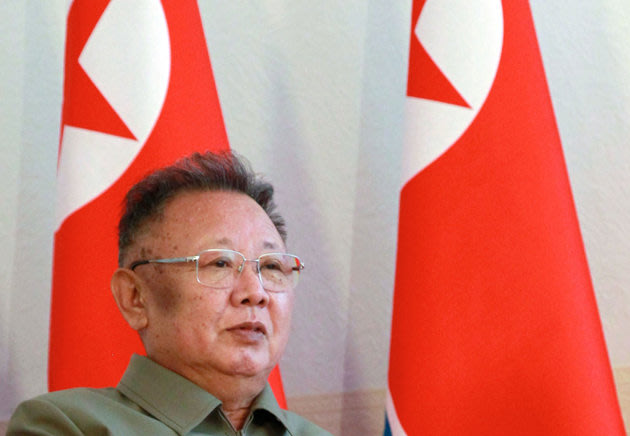
    SEOUL, South Korea — Kim Jong Il, North Korea's mercurial and enigmatic leader whose iron rule and nuclear ambitions dominated world security fears for more than a decade, has died. He was 69.

    Kim's death 17 years after he inherited power from his father was announced Monday by the state television from the North Korean capital, Pyongyang. The country's "Dear Leader" — reputed to have had a taste for cigars, cognac and gourmet cuisine — was believed to have had diabetes and heart disease.

    North Korea has been grooming Kim's third son to take over power from his father in the impoverished nation that celebrates the ruling family with an intense cult of personality.

    South Korea put its military on "high alert" and President Lee Myung-bak convened a national security council meeting after the news of Kim's death.

    In a "special broadcast" Monday, state media said Kim died of a heart ailment on a train due to a "great mental and physical strain" on Saturday during a "high intensity field inspection."

    Kim is believed to have suffered a stroke in 2008 but he had appeared relatively vigorous in photos and video from recent trips to China and Russia and in numerous trips around the country carefully documented by state media.

    Kim Jong Il inherited power after his father, revered North Korean founder Kim Il Sung, died in 1994. He had been groomed for 20 years to lead the communist nation founded by his guerrilla fighter-turned-politician father and built according to the principle of "juche," or self-reliance.

    In September 2010, Kim Jong Il unveiled his third son, the twenty-something Kim Jong Un, as his successor, putting him in high-ranking posts.

    Even with a successor, there had been some fear among North Korean observers of a behind-the-scenes power struggle or nuclear instability upon the elder Kim's death.

    Few firm facts are available when it comes to North Korea, one of the most isolated countries in the world, and not much is clear about the man known as the "Dear Leader."

    North Korean legend has it that Kim was born on Mount Paekdu, one of Korea's most cherished sites, in 1942, a birth heralded in the heavens by a pair of rainbows and a brilliant new star.

    Soviet records, however, indicate he was born in Siberia, in 1941.

    Kim Il Sung, who for years fought for independence from Korea's colonial ruler, Japan, from a base in Russia, emerged as a communist leader after returning to Korea in 1945 after Japan was defeated in World War II.

    With the peninsula divided between the Soviet-administered north and the U.S.-administered south, Kim rose to power as North Korea's first leader in 1948 while Syngman Rhee became South Korea's first president.

    The North invaded the South in 1950, sparking a war that would last three years, kill millions of civilians and leave the peninsula divided by a Demilitarized Zone that today remains one of the world's most heavily fortified.

    In the North, Kim Il Sung meshed Stalinist ideology with a cult of personality that encompassed him and his son. Their portraits hang in every building in North Korea and on the lapels of every dutiful North Korean.

    Kim Jong Il, a graduate of Pyongyang's Kim Il Sung University, was 33 when his father anointed him his eventual successor.

    Even before he took over as leader, there were signs the younger Kim would maintain — and perhaps exceed — his father's hard-line stance.

    South Korea has accused Kim of masterminding a 1983 bombing that killed 17 South Korean officials visiting Burma, now known as Myanmar. In 1987, the bombing of a Korean Air Flight killed all 115 people on board; a North Korean agent who confessed to planting the device said Kim ordered the downing of the plane himself.

    Kim Jong Il took over after his father died in 1994, eventually taking the posts of chairman of the National Defense Commission, commander of the Korean People's Army and head of the ruling Worker's Party while his father remained as North Korea's "eternal president."

    He faithfully carried out his father's policy of "military first," devoting much of the country's scarce resources to its troops — even as his people suffered from a prolonged famine — and built the world's fifth-largest military.

    Kim also sought to build up the country's nuclear arms arsenal, which culminated in North Korea's first nuclear test explosion, an underground blast conducted in October 2006. Another test came in 2009.

    Alarmed, regional leaders negotiated a disarmament-for-aid pact that the North signed in 2007 and began implementing later that year.

    However, the process continues to be stalled, even as diplomats work to restart negotiations.

    North Korea, long hampered by sanctions and unable to feed its own people, is desperate for aid. Flooding in the 1990s that destroyed the largely mountainous country's arable land left millions hungry.

    Following the famine, the number of North Koreans fleeing the country through China rose dramatically, with many telling tales of hunger, political persecution and rights abuses that officials in Pyongyang emphatically denied.

    Kim often blamed the U.S. for his country's troubles and his regime routinely derides Washington-allied South Korea as a "puppet" of the Western superpower.

    U.S. President George W. Bush, taking office in 2002, denounced North Korea as a member of an "axis of evil" that also included Iran and Iraq. He later described Kim as a "tyrant" who starved his people so he could build nuclear weapons.

    "Look, Kim Jong Il is a dangerous person. He's a man who starves his people. He's got huge concentration camps. And ... there is concern about his capacity to deliver a nuclear weapon," Bush said in 2005.

    Kim was an enigmatic leader. But defectors from North Korea describe him as an eloquent and tireless orator, primarily to the military units that form the base of his support.

    The world's best glimpse of the man was in 2000, when the liberal South Korean government's conciliatory "sunshine" policy toward the North culminated in the first-ever summit between the two Koreas and followed with unprecedented inter-Korean cooperation.

    A second summit was held in 2007 with South Korea's Roh Moo-hyun.

    But the thaw in relations drew to a halt in early 2008 when conservative President Lee Myung-bak took office in Seoul pledging to come down hard on communist North Korea.

    Disputing accounts that Kim was "peculiar," former U.S. Secretary of State Madeleine Albright characterized Kim as intelligent and well-informed, saying the two had wide-ranging discussions during her visits to Pyongyang when Bill Clinton was U.S. president.

    "I found him very much on top of his brief," she said.

    Kim cut a distinctive, if oft ridiculed, figure. Short and pudgy at 5-foot-3, he wore platform shoes and sported a permed bouffant. His trademark attire of jumpsuits and sunglasses was mocked in such films as "Team America: World Police," a movie populated by puppets that was released in 2004.

    Kim was said to have cultivated wide interests, including professional basketball, cars and foreign films. He reportedly produced several North Korean films as well, mostly historical epics with an ideological tinge.

    A South Korean film director claimed Kim even kidnapped him and his movie star wife in the late 1970s, spiriting them back to North Korea to make movies for him for a decade before they managed to escape from their North Korean agents during a trip to Austria.

    Kim rarely traveled abroad and then only by train because of an alleged fear of flying, once heading all the way by luxury rail car to Moscow, indulging in his taste for fine food along the way.

    One account of Kim's lavish lifestyle came from Konstantin Pulikovsky, a former Russian presidential envoy who wrote the book "The Orient Express" about Kim's train trip through Russia in July and August 2001.

    Pulikovsky, who accompanied the North Korean leader, said Kim's 16-car private train was stocked with crates of French wine. Live lobsters were delivered in advance to stations.

    A Japanese cook later claimed he was Kim's personal sushi chef for a decade, writing that Kim had a wine cellar stocked with 10,000 bottles, and that, in addition to sushi, Kim ate shark's fin soup — a rare delicacy — weekly.

    "His banquets often started at midnight and lasted until morning. The longest lasted for four days," the chef, who goes by the pseudonym Kenji Fujimoto, was quoted as saying.

    Kim is believed to have curbed his indulgent ways in recent years and looked slimmer in more recent video footage aired by North Korea's state-run broadcaster.

    Kim's marital status wasn't clear but he is believed to have married once and had at least three other companions. He had at least three sons with two women, as well as a daughter by a third.

    His eldest son, Kim Jong Nam, 38, is believed to have fallen out of favor with his father after he was caught trying to enter Japan on a fake passport in 2001 saying he wanted to visit Disney's Tokyo resort.

    His two other sons by another woman, Kim Jong Chul and Kim Jong Un, are in their 20s. Their mother reportedly died several years ago.

    Suicide Emerges As Biggest Killer in Mizoram For 2012

    107429860Aizawl, Dec 19 : Suicide has outdone drug overdose and alcoholism as the biggest killer of youths in Mizoram with 69 people, majority of them youth, having committed suicide from January 1 to December 15 this year.

    New Life Charity Society (NeLICS), an Aizawl-based NGO, has so far registered 69 incidents of suicide during this year, 62 cases of which involved young people aged between 15 and 45.

    A nine-year-old boy was the youngest among them while there were six people over sixty year of age among those who ended their own lives, a 71-year-old being the oldest.

    The NGO for mental health also recorded that this year has witnessed an increase in suicide among the fairer sex, with 18 women committing suicide.

    Hanging was the commonest mode of people taking the extreme step.

    Two cousins ending their lives together by hanging from the same iron hook on November 30 and a couple hanging self a few months ago apart were rare incidents witnessed in Mizoram during this year, NeLICS sources said.

    Aizawl saw the highest incidents of suicide with 34 cases taking place in Aizawl. The remaining 35 cases of suicide took place in the rest of the state.

    NeLICS has interviewed 472 people with suicidal tendency, in which it found that marital problems, poverty, drug and alcohol addiction, debt, love affairs and mental depression were the major factors behind the tendency.