07 October 2011

Won’t Withdraw Manipur Blockade if No Separate District, Says Sadar Hills Panel

By Bijay Sankar Bora

OLYMPUS DIGITAL CAMERA

Guwahati, Oct 7
: Even while an unrelenting economic blockade has crippled life in Manipur, the agitating Sadar Hills District Demand Committee (SHDDC) has told Union Home Minister P Chidambaram that it would not withdraw the blockade unless its demand for a separate district is met.

In a memorandum to Chidambaram, the SHDDC has alleged that the state government of Manipur had failed to respond to the instructions of the Home Minister for an early settlement to the Sadar Hills issue.

Chidambaram had stated that the issue should be solved by the state government and that the Manipur Government had constituted a district re-organisation commission to look into the issue.

However, the SHDDC has stated that Manipur Chief Minister Okram Ibobi Singh has constituted a Committee on Re-organisation of Administrative and Police District Boundaries (CRA&PDB) in total disregard to the demand of the people of the Sadar Hills.

It said that the Manipur administrative boundaries had never been an issue or under question during the past 39 years, but a committee on the re-organisation of district boundaries was constituted as soon as demand for a separate Sadar Hills district was raised.

Meanwhile, various organisations of Manipur have submitted their representations to the CRA&PDB which will be brought up during the third round of the committee’s public hearing to be held tomorrow.

According to an official source, the organisations which have submitted their representations include Tonjei Marin District Demand Committee, Naga Peoples Organisation, United Committee Manipur, Committee on Protection of Tribal Areas, Manipur and Saikul Area Naga Peoples Organisation.

The CRA&PDB headed by the state Chief Secretary was constituted following a Cabinet decision in order to bring an amicable solution to the various demands for separate districts in the state, including the demands for separate Sadar Hills district, Tonjei Marin district and Jiribam district.

Meanwhile, the Bharatiya Janata Party (BJP) has accused the Centre and the Manipur Government of failing to check the spiralling prices of essential commodities precipitated by the economic blockade and demanded an explanation in this regard. 

Source: Tribune News Service

06 October 2011

Laptop Reveals Maoists Trained in Burma

By JOSEPH ALLCHIN

Laptop reveals Maoists trained in Burma thumbnail

Maoist leader Kishenji speaks to the media in Bholagara village, northeastern India (Reuters)

Maoist rebels in northeastern India were trained at camps across the border in Burma, according to police in New Delhi who claim the details were discovered on a laptop belonging to an arrested member of the group.

Two men from the group, commonly known as the Naxalites, were detained by police on Saturday last week on suspicion of smuggling arms. According to the Times of India, the men, identified only as Dilip and Arun, were carrying a laptop that contained files on joint training operations with the outlawed People’s Liberation Army (PLA), an ethnic separatist group from Manipur.

Naxalite rebels have been described by Indian Prime Minister Manmohan Singh as the country’s “greatest security threat”. They are active in a belt that runs from the Nepalese border south through nine Indian states.

“Crucial details related to Naxal operations and some maps of Myanmar [Burma] showing the place where a joint training camp is to be held in a few weeks were recovered from their laptop,” a policeman told the Times of India.

The group is composed largely of disaffected tribal villagers who inhabit states such as Chhatisgarh and Jharkhand. In response New Delhi created the Salwa Judum militia, which is blamed for brutal reprisals and forced relocation of communities to stem the support network of the rebels.

The PLA was recently accused of receiving Chinese help, with Beijing ostensibly supporting its fight for an independent state in a bid to assume control over the northeast Indian states it claims as its own. The PLA is also linked with the National Socialist Council of Nagaland (NSCN).

The timing of the news about training camps in Burma, and China’s role in the insurgency, may not be a coincidence: President Thein Sein is set to make his first visit to the world’s largest democracy since being elected to office, and India has been stringently pressuring the Burmese to do more to combat groups who shelter along the remote shared border between the two countries.

The supposed common ambition of both governments to eliminate these groups resulted in an allegation from the United Liberation Front of Assam (ULFA) that the Indians had been supplying artillery to the Burmese to help fight the rebel outfits. Able to hit targets from over 40 kilometers away, these weapons give the Burmese a significant advantage over their foe.

But the commitment of the Burmese to rooting out Indian separatist insurgents has been questioned by some, including journalist and author Bertil Lintner. He described an alleged recent assault on the ULFA as a “phantom operation”.

Indian requests for Burmese action, including those made by Foreign Minister S M Krishna on a visit to Naypyidaw in June, have persisted for years, but with little tangible effect.

The Naxal struggle was born in May 1967 and named after the village of Naxalbariin northern West Bengal state. The insurrection began when police opened fire on protesting landless farmers, sparking outrage.

Their struggle is synonymous with the failure of the Indian government to combat the ravishes of poverty in rural areas. States such as Bihar are renowned for feudal caste ridden politics in which tribal or Adivasi communities bear the brunt, with the World Bank noting that over 56 percent of tribal children are clinically underweight. It has also stated that “inequalities in nutritional status widened” during the 1990s, a period of rapid economic liberalisation.

Nationwide, the World Bank notes that the “prevalence of underweight among children in India is amongst the highest in the world, and nearly double that of Sub-Saharan Africa.”

Tribal lands in states such as Chhatisgarh are also rich in minerals. The state produces some 15 percent of India’s steel, with companies such as South Korea’s POSCO involved in mining that has displaced tribal communities.

India has recently set a target of doubling trade with Burma to $US3 billion over the next five years and is keen to compete with China for influence over Naypyidaw. Given its proximity to both Burma and China, suppressing insurgency in India’s volatile northeast is an essential component of this goal.

Source: dvb.no

Delhi Immobilized By Manipur Blockade

By Sudha Ramachandran

economic blockade manipurIndia's northeastern state of Manipur is under siege. A blockade of two vital highways for over two months now by rival ethnic groups pressing territorial claims has resulted in a serious shortage of essential commodities, causing immense hardship to the Manipuri people.

On August 1, the Kukis began their blockade of National Highway (NH) 39 and NH 53, to press their demand for a Kuki district in the Sadar Hills region of Manipur's Senapati district. An ethnic group that is scattered across India's northeast, the Kukis are a majority in the Sadar Hills.

Nagas, who form the majority in the Senapati district, are opposed to a Kuki district being carved out of Senapati. They claim the Sadar Hills region as part of a Greater Nagaland or Nagalim, their traditional homeland. Nagas have been waging an

armed struggle to integrate into Nagaland the Naga-dominated areas of neighboring Manipur, Assam, Arunachal Pradesh as well as Myanmar under one administrative unit.

Anxious over a division of the Senapati district proposed by Manipur's Meitei-dominated government, the United Naga Council, the main organization of the Nagas in Manipur, responded by blockading the two highways from August 21.

The Kuki-Naga conflict over the Sadar Hills region goes back at least two decades. They have engaged in bitter fighting, resulting in the deaths of thousands of people.

The two blockaded highways are Manipur's only road links with the rest of India. The third highway, NH 150, connects Manipur through Mizoram with the rest of India is in a decrepit condition and unfit for trucks and other heavy vehicles.

Manipur is not new to economic blockades. Militant outfits, civil society organizations and political groups blockade roads routinely. The state has been wracked by insurgency for almost four decades and counter-insurgency operations have fueled the violence.

In April last year, Naga student bodies and nationalist civil society organizations blocked NH 39 to protest against the Manipur government's decision to hold elections to the Manipur Hill Areas Autonomous District Councils. Smelling opportunity in the mounting crisis, Naga leader Thuingaleng Muivah announced in May that he was going to visit his birthplace in Manipur's Ukhrul district.

Fearing that Muivah's entry into Manipur would provide a spurt to the Naga campaign for incorporating parts of Manipur into the proposed Nagalim, the Manipur government denied him permission to visit the state, prompting Muivah's National Socialist Council of Nagalim (Isak-Muivah) (NSCN-IM) to join the blockade. The 2010 blockade, which lasted for 67 days dealt a severe blow to Manipur's already fragile economy and brought administration to a grinding halt. The ongoing blockade is the longest experienced by Manipur.

Violence by militants and security forces, strikes and bandhs (closures) have made daily life hell for Manipuris.

The controversial Armed Forces Special Powers Act (AFSPA), which confers extraordinary powers on the armed forces, has been in effect in all of Manipur since 1980. Scores of innocent civilians have been killed or arrested under this draconian legislation. There are frequent mass protests calling for the repeal of the AFSPA. In 2009, bandhs over the cold-blooded killing of 27-year-old Chongkham Sanjit, a former militant, stretched over several months halting education and economic activity.

According to Open magazine, between 2004 and 2007, Manipur experienced 110 bandhs and 234 economic blockades, the total loss of which was around US$ 268 million - 40% of Manipur's budget for 2006-07. Over the past 15 years, NH 39 has been blockaded an average of six times per year and each of the blockades have lasted around five days.

The losses due to the ongoing economic blockades have been pegged at around $51 million so far. The impact of blocking roads would not have been as crushing if road infrastructure in the northeast was better. Not only is Manipur geographically distant from Delhi but also its people like others in the northeast have felt alienated, neglected and discriminated against by "mainland India".

Protests elsewhere in India capture media attention and usually evoke a response from the federal government. Not so the protests in Manipur. Activist Irom Sharmila has been on a hunger strike for 11 years but Delhi has remained unmoved by her protest against the AFSPA. A nasal drip administered to her by the Indian armed forces in a prison hospital keeps her alive.

The inaction of governments in Delhi and Manipur to break the blockades has evoked an angry response among Manipuris. They want the government to use force to end the standoffs. An editorial titled "Govt's profound absence" in the Imphal Free Press called on the government to "crack the whip and break the blockade".

"Let the agitation carry on democratically and let an amicable settlement be reached too in the course of time, but it is time for the government to say in definitive terms that certain styles of public protest which indiscriminately hurt the people, men, women and children, cannot be allowed under any circumstance. A symbolic strike of the nature for a day or two is pardonable, but one that extends over two months is something which should not be allowed under any circumstance by any government with spine," it says.

"India doesn't hesitate to use force to quell peaceful protest by Manipuris," a Manipuri student in Bangalore told Asia Times Online. "Why is it reluctant to use the security forces to force an end to the two-month-long blockade," he asked, pointing out that "an entire state was being held hostage to bullying by Naga and Kuki groups".

India's reluctance to use force to break the blockade is widely attributed in Manipur to Delhi's "excessive sensitivity to Naga sentiments".

The federal government is engaged in talks with the NSCN-IM aimed at ending the decades-long Naga insurgency. "It fears that the 11-year-long ceasefire with the NSCN-IM will collapse if it deploys the army or paramilitary forces to break the blockades imposed by the Naga groups," the Manipuri student pointed out. "We are paying the price for ensuring the survival of Delhi's fragile ceasefire with the NSCN-IM," he said.

The federal government is trying to reduce the impact of the blockade by providing security to truck convoys carrying supplies into Manipur. Meanwhile calls for removal of Chief Minister's Ibobi Singh's government in Manipur are growing.

Manipur will remain vulnerable to economic blockades so long as it is fed by supplies brought in through just two highways. Delhi will need to accelerate its road building in the northeast, particularly in Manipur, which is vulnerable to Naga pressure.

But more importantly, India needs to show more flexibility and imagination in its approach to conflict resolution in the northeast. Hitherto it has focused on territorial solutions, which include carving out of states and districts to meet the demands of the region's multitude of ethnic and tribal groups. However, territorial solutions do not provide lasting solutions as they create unhappy minorities within the new territorial arrangements, triggering new conflicts and endless wars.

India would need to be more imaginative in its conflict resolution and consider non-territorial solutions so that clashing claims such as those between the Kukis and Nagas in Manipur do not provoke blockades that hold an entire state hostage.

"Imaginative and creative solutions are available," observes political commentator B G Varghese. "Some already exist; others can be enabled by constitutional amendment."

Delhi needs to draw on these creative solutions rather than persist with an approach that has kept the region restive.

Sudha Ramachandran is an independent journalist/researcher based in Bangalore. She can be reached at sudha98@hotmail.com

Mizoram Secretariat Staff Protest Suspension Of Staff Buses

Mizoram SecretariatAizawl, Oct 6 : Aggrieved by the state government's decision to call off daily bus service to the New Secretariat Complex, the secretariat staff decided to walk on foot to their workplace for three days from October 5 in protest.

All the staff will walk in group from Khatla Assam Rifles gate while another group will walk from Tuikual bridge at 2100 hrs to cover the three-kilometre distance. They will leave office at 1600 hrs on foot again. They will shout slogans while walking and stage a demonstration at the secretariat premises.

''If there is no positive move from the government till the third day, October 7, the executive committee of Mizoram Civil Secretariat Employees Welfare Association will decide the next course of action,'' association general secretary K L Nikhuma said in a statement today.

When the civil secretariat was shifted to the New Secretariat Complex at Khatla, about three kilometres from the city, in 2008, the Chief Minister arranged private buses and transport department buses for more than 1000 staff and their clients. The commuters paid bus fares at same rates of city buses.

''The government's decision to suspend the bus services on grounds of financial constraints has come as a shock as it will cause a big problem to the staff and the office clients,'' the statement said.

The staff welfare association demanded the government to purchase staff buses for the secretariat, which it said would not be costlier than purchase and maintenance of a minister's official vehicle.

''Many directorates have their own buses. The civil secretariat needs at least four buses. This demand had never been made when the secretariat was located at Treasury Square, in the heart of the town,'' the communiqué said.

'Killer' Curry Competition Hospitalises Two

Diners suffered vomiting and cramps whilst participating in a 'world's hottest chilli' eating competition in Edinburgh

By David Batty

The RHS Taste Of Autumn Show Opens To The Public

'Dorset Naga' chillies, are used in the 'killer' curry that hospitalised two in Edinburgh. Photograph: Oli Scarff/Getty Images

Two contestants in a 'world's hottest chilli' eating competition at an Edinburgh Indian restaurant had to be taken to hospital after suffering violent reactions to the spicy dish.

The Scottish Ambulance Service criticised the Kismot curry house, St Leonards Street, after 10 diners suffered vomiting and some passed out after eating the 'killer' curry during the charity event.

Two people were taken to the Edinburgh Royal Infirmary after British Red Cross workers on hand at the contest on Saturday were overwhelmed by the adverse reactions to the "Kismot Killer".

Abdul Ali, one of brothers who runs the family restaurant, said he would have to tone down the dish for future contests to avoid another call out for the emergency services.

The restaurant's website states that contestants must sign a legal disclaimer before taking part in the competition, which raised £1,500 for the Children's Hospice Association of Scotland (Chas). It also advises diners to put a toilet roll in the freezer when they get home.

Ali said the contestants suffered severe stomach pains after eating the Kismot Killer in the final round.

He said: "Unfortunately they were in pain and didn't want to move. They vomited a couple of times. About three or four vomited in the toilets and some went outisde for fresh air.

"We're definitely going to cool it down next year."

The dish contains the potent Dorset naga and the Jolokia, or ghost naga, both reputed to be among the hottest varieties chillis in the world, Ali added.

Competition winner Beverly Jones, 53, from Newington, Edinburgh, said she suffered agonising stomach cramps after completing the three-round challenge.

"You had to eat the whole bowl and I finished the lot. I wouldn't recommend it. Five minutes later I was in the toilet. It was not a nice experience. I was sick. Every participant was sick. I'm not going to defend my title next year."

A British Red Cross spokeswoman confirmed that two first aiders at the competition made a judgement that an ambulance was required for the two most severely ill contestants. They included Curie Kim, a 21-year-old South Korean student who came second in the competition.

A spokesman for the Scottish Ambulance Service said: "Two patients were taken to Edinburgh Royal Infirmary after becoming very unwell at Kismot restaurant.

"We would urge the organisers to review the way in which this event is managed in future in order to avoid another situation where emergency ambulances are required to treat their customers."

The disclaimer on the restaurant's website states: "Kismot Restaurant will take no responsibilities for the bodily functions after you eat the curry.

"If you die whilst eating the or as a direct result of eating the curry, members if the table with [sic] share the cost of your Kismot Killer.

"If you become ill due to the Kismot Killer of if you find that you are experiencing any problems with your lover(s) then under no circumstances are you entitled to blame Kismot Restaurant or any members of its staff.

"The Kismot Killer is free if you completely finish eating it by yourself.

"For your own well being we highly recommend that you immediately put your toilet roll in the freezer when you get home."

The dish has previously caused diners to suffer nose bleeds and one elderly man had to go to hospital.

Ali said only three diners have previously managed to finish the killer curry out of at least 100 who have tried the dish.

Steve Jobs: Inventor, Innovator, Visionary, Entrepreneur, World Changer

Steve Jobs, the co-founder of Apple, has died, according to the company. He was 56.

The hard-driving executive pioneered the concept of the personal computer and of navigating them by clicking onscreen images with a mouse. In more recent years, he introduced the iPod portable music player, the iPhone and the iPad tablet -- all of which changed how we consume content in the digital age.

Jobs had battled cancer for years, took a medical leave from Apple in January and stepped down as CEO in August because he could "no longer meet (his) duties and expectations."

The Internet Pays Tribute To Steve Jobs

Here are some tributes to Steve Jobs that have showed up following Apple’s announcement that he had died.

boing-boing

wired

google-steve-jobs

bill-gates

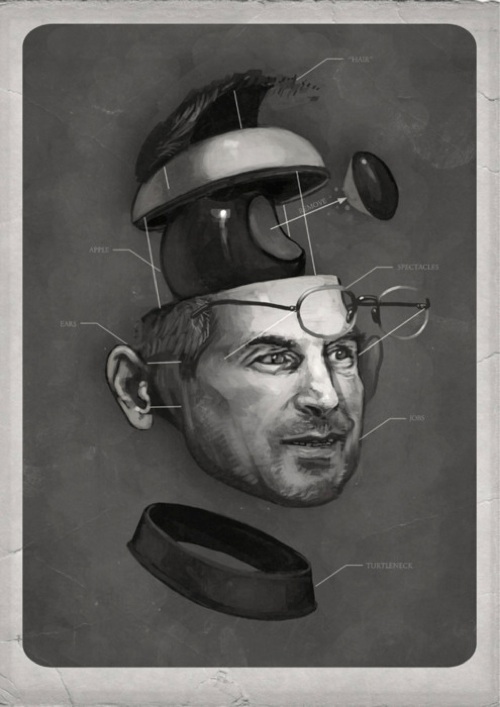
apple-steve

by Jonathan Mak Long via J. Adam Moore

steve-jobs

by Mike Mitchel

someecards

05 October 2011

A Conversation With: Anna Hazare

By LYDIA POLGREEN AND HARI KUMAR

Anna HazareAdeel Halim for The New York TimesAnna Hazare

When we arrived in Anna Hazare’s village, the famous Ralegan Siddhi in rural Maharashtra, late last week, an aide had a curt message for us. Anna-ji, he said icily, was recovering from a long journey the previous day and would not be receiving any visitors.

Apparently Mr. Hazare hadn’t received the memo. We found him sitting beneath a vast peepal tree in the courtyard of the village’s Padmavati Temple, a sprawling compound which serves as both office and residence for Mr. Hazare. He was dressed in his usual outfit of white khadi kurta pajama topped by a jaunty topi, listening to the complaints of some local auto workers. If he was tired he didn’t show it. Once the meeting wrapped up he beckoned us into the small, pink-walled room where he sleeps on an iron cot.

In the weeks since he ended his 12-day fast, he has largely been resting in Ralegan Siddhi. Sitting cross-legged on a thin mattress, a chipper and smiling Mr. Hazare spoke to us about Mahatma Gandhi, the rifts within his social movement, how he spends his days and his plan for politics.

Q.

Some people compare you to Gandhi. How do you feel about that comparison?

A.

That is not fair. I am not able to even sit at Gandhi’s feet. But I try to follow his philosophy.

Q.

Your fasts have been called political blackmail. Is that fair?

A.

What do you mean, blackmail? Am I asking for money? They have forgotten the constitution. In 1950, the people became owners of this country. Because all the people cannot go to Parliament, we have elected [politicians] to make good laws and to take care of the treasury. If they are not making good laws and not keeping the treasury clean, if I protest against that, it is not blackmail.

Q.

How do you spend your day?

A.

I get up at 5. I do one-and-half hours of yoga, pranayama, than meditation. At 8:30, people start coming. This continues till evening. In between I find time to write letters. I sleep at 10.

Q.

What do you eat every day?

A.

Roti and vegetables, one time per day. In the morning I take milk. In the evening I take one glass of juice.

Q.

Thousands of people came out to support your fast. Are you worried that people’s expectations of change are too high?

A.

This question occurs to me, also. I don’t have wealth. I live in a temple. How can a man like me, who lives in a temple, fulfill the expectations of people all across the country? What can I do? But I have faith in God that whatever the expectations of the people, somehow God will find a way for these things to be done.

Q.

What is next for you? What are your aspirations?

A.

I don’t have any aspirations. I do my selfless work.

Q.

Do you want to be prime minister? Get into politics?

A.

This is muck for me. I will neither contest elections nor make a party nor go into politics. But in four or five years, if I get good people, I will ask them to fight elections.

Q.

Some accuse you of having contempt for democracy.

A.

People of character and principle should sit in these positions. [Parliament] is the holy temple of democracy. Holy people should go there. In our Parliament today there are 150 people with criminal backgrounds.

Q.

Among your allies are Prashant Bhushan, who criticizes economic liberalization, and Arvind Kejriwal, who has been criticized for saying overly harsh things about the prime minister. Do you agree with them, and is there disunity among your senior leaders?

A.

I will try to change them. There were some ego problems. From the government side it was Chidambaram and Kapil Sibal. From our side also there were some issues. I was not getting the right feedback, nor was the prime minister. That complicated the issues. Later, Vilasrao Deshmukh and another minister got involved and direct contact with the prime minister was established. I have an old relationship with Vilasrao. Then the issues were resolved. They [Mr. Bhushan and Mr. Kejriwal] are good people. I need to change them. I will change them.

source: blogs.nytimes.com

Financial Assistance to Mizoram

indian-rupees-mizoramAizawl, Oct 5 : Union Finance Minister Pranab Mukherjee has agreed to give special plan assistance to the Mizoram Government even though the ministry had earlier rejected the proposal of the State Government.

The decision was conveyed in person to State Chief Minister Lal Thanhawla during a 40-minute meeting with Mukherjee in New Delhi.

Lal Thanhawla also urged the finance minister to allocate more funds to meet the additional expenditure arising out of the implementation of enhanced salaries to the state government employees as per the recommendations of the central sixth pay commission.