05 October 2011

Please Come Shop. US Woos Indians With Easy-To-Get Visas

By Uttara Choudhury

Uncle Sam wants your shopping dollars, and he's willing to ease your visa process. Reuters

New York, Oct 5 : Desperate times call for drastic measures. Washington has come up with an ingenious way to help keep the US out of recession: import consumers from India, China and Brazil with money to burn by making it “easy as pie” for them to get tourist visas to travel to the US.

To boost the sagging economy, lawmakers and White House officials are courting newly-moneyed shoppers from the emerging countries to fill up luxurious US shopping malls as American consumers tighten their hold on purses. Among the incentives to foreign shoppers would be coupons, beauty contests – and lax visa rules.

An official from the bureau of consular affairs told Firstpost that travel to the US on a B1/B2 visitor visa would soon become “easy as pie” as steps were being taken to tackle long visa wait times in Brazil, India, and China, in particular, by increasing staff at US consular offices.

A bill has also been introduced in the US Congress, which would require visas to be processed in 12 days and authorise the use of videoconferencing to conduct visa interviews.

“By making it easier to travel to the United States without compromising important national security safeguards, we can stimulate local economies and help our businesses grow and thrive,” said Democrat Senator Amy Klobuchar.

Senator Klobuchar, along with Republican Senator Roy Blunt, introduced a measure on Tuesday that would cut short the wait for visas for foreign travellers to enter the US. Both senators head up the Senate tourism caucus.

US policymakers estimate that if the red carpet were rolled out, shoppers from overseas could spend $859 billion over the next decade, creating 1.3 million new jobs. President Obama’s jobs council has deemed international travel to be the “low-hanging fruit” for stimulating the economy.

“The appeal of this idea is that it is a potentially politically palatable way to deal with a fundamental economic problem that is keeping companies from hiring — excess capacity,” Peter Cohan, author of the new book Export Now, wrote in Forbes.

“The beauty of importing these consumers is that it’s so easy — all we have to do is let them know where they can buy their bargains and make it quicker for them to get visas to enter the US.”

Cohan said a brief review of the performance of leading upscale US retail brands revealed “eye-popping growth thanks to demand from the globe’s nouveau riche.” He said that Tiffany, Coach and Ralph Lauren all expected to grow on the strength of expansion in Asia.

David French, senior vice president for government relations at the National Retail Federation, described the US efforts as the retail industry’s own little “stimulus program.”

Although the bulk of American tourism dollars still come from Canadian, Japanese and British tourists, there was a 39 percent pop in 2010 Chinese tourism spending in the US to $5 billion; a 30 percent increase to $6 billion from Brazil, and a 12 percent increase to $4 billion from Indian tourists.

“The trend underscores the depth of the United States’ reliance on countries once considered to be at the bottom of the global totem pole,” observed the Washington Post wryly.

China’s consumers already exhibit world-beating tendencies. They spend almost 10 hours a week shopping compared with 3.6 hours for the typical American, a 2007 survey showed.

Spending by American shoppers, long considered the engine of the nation’s economy has slowed to a crawl. America is now waking up to the fact that it has been relatively stingy with tourist visas for free-spending Indian, Chinese and Brazilian tourists, while being overly generous to the Koreans and Europeans.

Where The Promise Of A Free Computer is An Incentive To Study

By Samudra Gupta Kashyap

Assam CM LaptopAsk any high school student in Assam what his or her immediate aim is, and the usual reply is securing 60 per cent in HSLC, as the Class X final is called, so that he or she also wins a free laptop from the government.

Introduced by the state government in 2005, and named after Anundoram Borooah, the first Assamese and fourth Indian officer in the Indian Civil Service of the British era, the scheme has so far touched 1.11 lakh students across the state. And it has also helped students change their outlook to life, says a recent study.

“No other state in the country has taken up such a scheme. This has brought about a sea change not just in education, but also in the society as a whole,” says Education Minister Himanta Biswa Sarma, who had envisaged this scheme during his tenure as IT minister.

The Anundoram Borooah Award with a free computer is given to every student securing 60 per cent in the high school finals under state boards (including the State Madrasa Board and State Sanskrit Board). The number of winners has gone up from 12,756 in 2005 to 19,540 this year. “The government spent Rs 25 crore in the first year. But with laptops being given instead of desktop computers since last year, the expenditure has risen to Rs 52 crore this year,” Sarma said.

The study has related three trends to this scheme — a considerable increase in the number of first-division scorers, students becoming IT-friendly and getting encouraged to opt for science courses, and, most importantly, better societal recognition of girl students.

“With 43 per cent of the laptop winners being girls, recognition for the girl awardee has been a major positive factor among families and has helped improve societal attitudes to educating women,” says the study by tech@edu, a Delhi-based group . “What is more encouraging is that the proportion of female awardees has witnessed growth by two per cent over the past five years.”

The study has found that 58 per cent of the recipients are from households with income below Rs 15,000 per month, and 37 per cent from households earning between Rs 15,000 and Rs 30,000. “This highlights the fact that majority of the beneficiaries of the award may not be otherwise able to purchase PCs that are priced at more than a month’s household income for them,” it says,

The scheme, the study claims, has also increased a recipient’s social standing among peers. “This has been especially relevant for the standing of the girl awardees. Over 77 per cent of the recipients feel that the award helps in enhancing the standing of the girl students in society. This was corroborated with a large majority of 86 per cent of the girl awardees stating so,” the report said.

A number of students, however, have sold off their computers for reasons such as their family’s financial problems. The majority of these households earn less than Rs, 5,000 per month, the report says.

In a number of cases, the computers, especially the desktops given till 2009, are lying in the students’ homes because it is not possible to take them along to a hostel. “That too has a positive side; it has been helpful in exposing parents and siblings to technology. With laptops, however, things have changed,” the report says.

Road Rage In a Far-Off Place

manipur trucks burntNew Delhi, Oct 5 : Manipur has just entered the third month of a blockade of its two major highways. The hardship this has imposed on its residents is hard to imagine, even if it has made news in recent days

Manipur has just entered the third month of a blockade of its two major highways. The hardship this has imposed on its residents is hard to imagine, even if it has made news in recent days. The blockade—its reasons and its effects—has important lessons for the Union government.

Since 1 August, the state has witnessed blockade and counter-blockade by Kuki and Naga groups. Kukis—a group that is geographically interspersed with other communities in Manipur’s ethnic patchwork—have demanded a Kuki majority district in the Sadar Hills region of the state’s Senapati district. Senapati has a numerical preponderance of Nagas. Two national highways—NH-39 and NH-53—remain blockaded.

Soon enough, Nagas, who fear that the state government dominated by a third ethnic group—the Meiteis—could try and divide this Naga majority district, imposed a counter-blockade, so to speak.

From that time, the prices of essential goods have shot up to rather painful levels. There is a thriving black market for all supplies in Imphal. The state government claims it is supplying these goods through its own distribution network, denies the existence of a black market, but cannot explain black market prices.

Blockades are not new in Manipur. Last year, the state government barred the general secretary of the National Socialist Council of Nagaland —Thuingaleng Muivah—from visiting his birthplace in the Ukhrul district. The result was a Naga blockade. The state government did not let Muivah enter Manipur as it feared that it would be the first step in the creation of a “greater Nagaland”, one that incorporates part of Manipur, further truncating one of the smallest states in the country.

Manipur is a good example of politics based on sub-regional identities going haywire. It shows that there’s no end to the process of linking territory with ethnic identities, a divisive process that can go way beyond what is administratively feasible and politically reasonable. States can be divided into districts and sub-divisions made new districts and finally new states pulled out like rabbits out of a hat. Once the word Punjab came to one’s mind; the current expression is Telangana.

The Union government needs to be aware of the ill effects of giving into such demands. The risk to the unity and integrity of the country cannot be overstated.

source: livemint.com

04 October 2011

Mizoram's Senior Citizens Feel Neglected

Mizoram Upa Pawl meetingAizawl, Oct 4 : Senior citizens in Mizoram have felt that the state government has neglected them regarding certain benefits the Centre has made for them.

Speaking to a source on the occasion of International Old Age Day yesterday, Mizoram Upa Pawl (MUP) or senior citizens’ association general headquarters president K Malsawma accused the state government of not implementing different old age schemes in the state.

He urged the state government to expeditiously set up geriatric ward in all district civil hospitals as per the Centre.

Mr Malsawma termed the state government’s 'inaction' despite repeated pleas from the organisation as a failure to realise the importance of the scheme.

He said with increasing number of octogenarians and above in Mizoram, geriatrics wards were need of the hour.

Informing that 23,547 persons in Mizoram were at present getting old age pension, the MUP president pointed out that beneficiaries were not getting equal amount, with some getting Rs 250 per month while others get Rs 200 per month.

He also alleged that the Rs 500 per month pension for people of above 80 years old is yet to be implemented in Mizoram due to the state government’s failure to meet its matching share.

A survey has found that senior citizens in rural areas are not getting enough care, comfort and nutrition compared to their counterparts in the urban areas, Mr Malsawma added.

Government Asks PSU Banks To Open More Branches in Northeast India

banking in northeast IndiaKolkata, Oct 4 : The government of India has issued a directive to public sector banks to open branches in every un-banked block in the North East by September next year. The seven sister states - Arunachal Pradesh, Assam, Meghalaya, Manipur, Mizoram, Nagaland and Tripura - are home to 70 unbanked blocks and 55 under-banked districts as banks have generally shied away from this economically backward terrain mired by insurgency.

The progress under Reserve Bank of India's (RBI) viability gap funding scheme for opening branches in this region has also been slow.

Development of the North East assumes great importance to the UPA-2 government as the region is a prominent gateway for the country's border trade with Bangladesh and Myanmar. In step with this, the RBI has decided to open offices in all seven northeastern states. It recently opened one in Agartala, Tripura.

The government, has written to the chairpersons of public sector banks to prepare individual plans for improving bank penetration in the North East. Two senior banking executives confirmed having received such a letter from the ministry of finance.

Banks had earlier decided to open 26 branches in brickand mortar form and a total of 400 banking outlets in this region. The government feels there should be at least one branch for every village with a population of 5,000. Severe communication bottlenecks in the remote areas of the North East have stifled economic and banking development here over the years.

To surmount these hurdles, the Usha Thorat Committee had advocated IT adoption levels and usage of intermediaries like business correspondents and business facilitators to serve people in these areas. In the last few years, however, banks have grasped the business potential of the region as branches here significantly help improve current and savings bank account ratios. Various banks have opened around 400 branches in the seven states in the last six years. But the government, concerned about the dismal level of bank penetration, wants to do more and reach out to every unbanked block in the next year.

Northeast May Face Major Law And Order Problem

illegal firearms in northeast IndiaGuwahati, Oct 4 : Illegal firearms being channeled into the North East are going to emerge as a major concern in maintaining law and order in a region already infested by dozens of insurgent and subversive groups.

The problem is aggravating with some weapons being sold off to criminal gangs, which are operating well below the radar of the police and the Army.

Apart from pistols and revolvers, semi-automatic weapons with considerable fire power are being brought into the region. At times American and European weapons have also been recovered from insurgents, which reveals the demand for high-quality firearms.

Well placed sources in intelligence are of the view that the police of the NE States must join hands to monitor the flow of firearms, and draw up a viable strategy to stop the inflow if they are serious about curbing crimes.

“Firearms are being brought in by several insurgent outfits on their own, or by middlemen who have contacts in Myanmar and China. Some of these are sophisticated pieces commanding good prices. These already pose a grave risk to innocent people of the region,” a senior intelligence operative said.

While acknowledging the reach of local insurgent groups to arms dealers, he emphasized that there might be a bigger game plan of foreign forces to arm the groups with lethal weaponry. Destabilizing the region by creating a fear psychosis becomes much easier if insurgents can be heavily armed, he added.

The PLA of China is in the midst of a modernization program, and some of its weaponry is likely to be disposed of, which has added another dimension to the problem.

The threat from illegal firearms is not confined to the region, as some of those can be ferried to other parts of the country. Although, it is yet to be fully corroborated, there are reports that some consignments of illegal firearms brought from across the border into the North East have found their way to the neighboring States.

03 October 2011

India Launches $30 Tablet: Sakshat

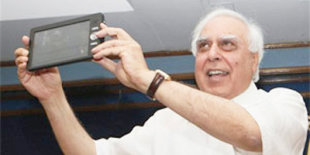
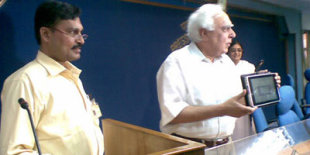
Kapil Sibal Reappears with Mythical Sakshat Tablet for October Launch

alt

The Indian wonder tablet was suppose to be launched on June 2011, to initial testing by shipping it to IIT students.

Then, it disappeared, along with Kapil Sibal, HRD Minister, possibly succumbing to Team Anna's protest.

Now, both of them have reappeared.

At a function in Delhi, Sibal said: "The computer will be launched next month…This is not just a dream, it is a reality," he added. Officials announced that the device will be launched on October 5, 2011. However, Sibal has not spoken about the device's specifications. 

alt

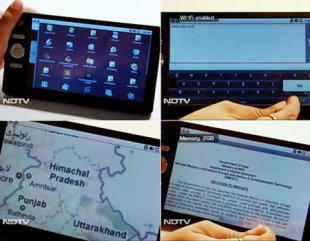
The device's prototype is likely to be a 5/7/9 inch touchscreen gadget, featuring a webb browser, PDF reader, video conferencing, open office, sci-lab, media player, remote device management capability, multimedia input-output interface option, and a content viewer.

alt

Sibal also mentioned how "corruption…in the recent past will be dealt with through initiative of IT…"… the device.

Sibal hasn't announced any program to institute the tablet for government work, Besides, And, the tablet won't actually be used for any of this - Indian government has issued a directive granting Rs. 50,000 to MPs to buy iPads and Samsung Tabs for parliamentary work, along with training to use the tablet interface.

alt

The Rs. 1750 price-tag (quoted in dollars by the government) has also been questioned. Even though the tablet is considered, by experts, to be a copy of the Chinese Hivepad tablet, such a low-price tablet has never been invented by the Chinese.

According to PCWorld: "The basic components like a processor, motherboard, memory, display, etc, however obsolete they might be, that go into a computer, would cost more than $35 even if you buy in millions of pieces, which the major manufacturers anyways do…"

After Long Wait, Northeast Jews Going to Israel

By Sanjib Kr Baruah

jews_northeast_indiaNew Delhi, Oct 3 : This Rosh Hashanah or the Jewish New Year celebrations that started last week is perhaps the best that David Yokhanan Vaite of Churachandpur, a township in Manipur, has ever had cherished in his living memory.

"Our preparation for decades is finally coming to bear fruit. I got the historic news that the Israeli government is finally going to approve the immigration of the remaining Jews from Manipur and Mizoram," he said, in vain trying to conceal the excitement in his voice.

Israeli media on Tuesday had reported that within the next few weeks the Israel government is expected to finally approve the bringing to Israel the remaining members from certain clans among the Mizo, Hmar, Kuki and Paite tribes in Manipur and Mizoram who claim descent from one of the 10 lost tribes of Israel.

Tradition has it that the forefathers of these clans, called Bnei Menashe (sons of Menashe), who were exiled by the Assyrian king more than 2700 years ago, roamed around in Central Asia and South-East Asia before settling down in areas in Manipur and Mizoram.

"Do you think I'm too old to migrate to Israel?" joked 86-year-old, T Hangshing, a retired IAS officer, who plans to move lock, stock and barrel.

And why not?

"There is a better life there than the insurgency and drugs here. Jobs, furnished houses, cars, modern amenities of life. For villagers who lead a subsistence level life here, it is like going to heaven," he said.