04 October 2011

Northeast May Face Major Law And Order Problem

illegal firearms in northeast IndiaGuwahati, Oct 4 : Illegal firearms being channeled into the North East are going to emerge as a major concern in maintaining law and order in a region already infested by dozens of insurgent and subversive groups.

The problem is aggravating with some weapons being sold off to criminal gangs, which are operating well below the radar of the police and the Army.

Apart from pistols and revolvers, semi-automatic weapons with considerable fire power are being brought into the region. At times American and European weapons have also been recovered from insurgents, which reveals the demand for high-quality firearms.

Well placed sources in intelligence are of the view that the police of the NE States must join hands to monitor the flow of firearms, and draw up a viable strategy to stop the inflow if they are serious about curbing crimes.

“Firearms are being brought in by several insurgent outfits on their own, or by middlemen who have contacts in Myanmar and China. Some of these are sophisticated pieces commanding good prices. These already pose a grave risk to innocent people of the region,” a senior intelligence operative said.

While acknowledging the reach of local insurgent groups to arms dealers, he emphasized that there might be a bigger game plan of foreign forces to arm the groups with lethal weaponry. Destabilizing the region by creating a fear psychosis becomes much easier if insurgents can be heavily armed, he added.

The PLA of China is in the midst of a modernization program, and some of its weaponry is likely to be disposed of, which has added another dimension to the problem.

The threat from illegal firearms is not confined to the region, as some of those can be ferried to other parts of the country. Although, it is yet to be fully corroborated, there are reports that some consignments of illegal firearms brought from across the border into the North East have found their way to the neighboring States.
03 October 2011

India Launches $30 Tablet: Sakshat

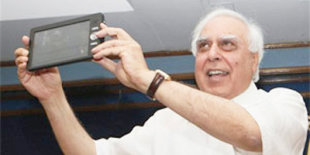
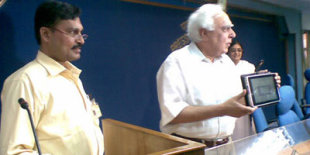
Kapil Sibal Reappears with Mythical Sakshat Tablet for October Launch

alt

The Indian wonder tablet was suppose to be launched on June 2011, to initial testing by shipping it to IIT students.

Then, it disappeared, along with Kapil Sibal, HRD Minister, possibly succumbing to Team Anna's protest.

Now, both of them have reappeared.

At a function in Delhi, Sibal said: "The computer will be launched next month…This is not just a dream, it is a reality," he added. Officials announced that the device will be launched on October 5, 2011. However, Sibal has not spoken about the device's specifications. 

alt

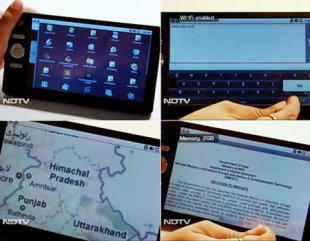
The device's prototype is likely to be a 5/7/9 inch touchscreen gadget, featuring a webb browser, PDF reader, video conferencing, open office, sci-lab, media player, remote device management capability, multimedia input-output interface option, and a content viewer.

alt

Sibal also mentioned how "corruption…in the recent past will be dealt with through initiative of IT…"… the device.

Sibal hasn't announced any program to institute the tablet for government work, Besides, And, the tablet won't actually be used for any of this - Indian government has issued a directive granting Rs. 50,000 to MPs to buy iPads and Samsung Tabs for parliamentary work, along with training to use the tablet interface.

alt

The Rs. 1750 price-tag (quoted in dollars by the government) has also been questioned. Even though the tablet is considered, by experts, to be a copy of the Chinese Hivepad tablet, such a low-price tablet has never been invented by the Chinese.

According to PCWorld: "The basic components like a processor, motherboard, memory, display, etc, however obsolete they might be, that go into a computer, would cost more than $35 even if you buy in millions of pieces, which the major manufacturers anyways do…"

After Long Wait, Northeast Jews Going to Israel

By Sanjib Kr Baruah

jews_northeast_indiaNew Delhi, Oct 3 : This Rosh Hashanah or the Jewish New Year celebrations that started last week is perhaps the best that David Yokhanan Vaite of Churachandpur, a township in Manipur, has ever had cherished in his living memory.

"Our preparation for decades is finally coming to bear fruit. I got the historic news that the Israeli government is finally going to approve the immigration of the remaining Jews from Manipur and Mizoram," he said, in vain trying to conceal the excitement in his voice.

Israeli media on Tuesday had reported that within the next few weeks the Israel government is expected to finally approve the bringing to Israel the remaining members from certain clans among the Mizo, Hmar, Kuki and Paite tribes in Manipur and Mizoram who claim descent from one of the 10 lost tribes of Israel.

Tradition has it that the forefathers of these clans, called Bnei Menashe (sons of Menashe), who were exiled by the Assyrian king more than 2700 years ago, roamed around in Central Asia and South-East Asia before settling down in areas in Manipur and Mizoram.

"Do you think I'm too old to migrate to Israel?" joked 86-year-old, T Hangshing, a retired IAS officer, who plans to move lock, stock and barrel.

And why not?

"There is a better life there than the insurgency and drugs here. Jobs, furnished houses, cars, modern amenities of life. For villagers who lead a subsistence level life here, it is like going to heaven," he said.

02 October 2011

Nagaland Band Breaks into VH1’s Top 10 List

alobo-nagaMumbai, Oct 2 : Alobo Naga & The Band from Nagaland is the first band from the North East region to be in the Top 10 Countdown list of the international music channel VH1.

The Dimapur based band's music video 'Painted Dreams' is currently on number eight position in VH1 competing alongside international heavyweights like Lady Gaga, Maroon 5, Red Hot Chilli Pepper, Superheavy, etc, claims a release by the producer of the music video.

'Painted Dreams' was conceptualised and produced by Guwahati-based Creovaent Productions, whose founders Prithish Chakraborty and Puja Chakraborty directed the music video.

The video was made as a promotional theme song for Creovaent Productions' first Guwahati International Short Film Festival held in May, the release said.

"In the coming days, the band is hoping to make it to the number one position," the release said.

Manipur Blockade Hurts Champion Boxer: Mary Kom

By Meenakshi Upreti

New Delhi, Oct 2 : The two month old Manipur economic blockade is hurting and world boxing champion MC Mary Kom has not been spared either.

With gas cylinders costing anywhere between 1800 to 2000 rupees, India's foremost sporting hero is keeping the kitchen fire burning using firewood.

Mary Kom, who runs a box academy, says the blockade will hurt her preparations for the Olympics as well.

"We are not getting cooking gas. Hence, we are cooking on firewood. Vegetable, rice, dal everything is very scarce and expensive. My students understand our condition and are saying that they want to go back home. I don't know whether the govt has taken a note of what is happening here. In these conditions, I cannot prepare for the upcoming 2012 Olympics," she said.

The blockade that began on July 31, when the Sadar Hills Committee spearheaded by the Kuki tribe, choked National Highways 39 and 53 to press for their demand of creating a separate district.

At the Mary Kom household, the empty gas cylinders have lined up and getting a new one is either too expensive or simply impossible.

"We are suffering because of blockade. I don't know how we will survive in Manipur. It is very difficult to manage things here. I am running an Academy of 25 to 30 boxers," Mary Kom said.

For the last two months, the state government has held five meetings with no breakthrough.

Meanwhile, queues for a litre of petrol are growing longer and longer and prices of essential commodities are at least three times high. Potato costs Rs 45 per kg while Dal is touching Rs 80 per kg.

"The prices of commodities like onion, garlic are very high," Mary Kom's husband said.

Even as many are now demanding that the Centre intervene to break the crisis, Manipur is hoping Mary Kom's voice may help bridge the divide.

Source: CNN-IBN

Northeast Student Bodies Stage Stir in New Delhi

NESO Protest in DelhiGuwahati, Oct 2 : The North East Students' Organization (NESO), comprising student bodies from all the seven states of the region, on Saturday staged a dharna at Jantar Mantar in New Delhi seeking a solution to multiple issues ranging from demands for expedition of the peace processes with militant outfits to repeal of the Armed Forces (Special Powers) Act and protest against mega-dams being built in the region.

The students opposed the transfer of land as part of the India-Bangladesh land swap deal. The students' organizations also sought sealing of the international borders with the region to curb the ongoing influx across the borders.

Neso chairman and Aasu advisor Samujjal Bhattacharyya, who led the dharna in New Delhi, said the sit-in was staged to protest against the Centre's lackadaisical attitude towards the northeast in all respects.

Aasu general secretary Tapan Gogoi said the NESO delegation was seeking an appointment with Prime Minister Manmohan Singh to submit a memorandum.

"We are strongly opposing giving away of Assam's land to Bangladesh as part of the land swap deal. The agreement is yet to be ratified by the Parliament and so we will be pressing the Prime Minister to keep the deal in abeyance. We will also be asking for his intervention in stopping the construction of mega dams in the region as suggested by experts. The government has been saying that it would like to take the opinion of other experts. We welcome this, but at the same time, the construction should be stopped till the experts carry out more studies on the issue," the Aasu general secretary said.

He added that Irom Sharmila's elder brother Irom Singhajit also joined the dharna.

Apart from Aasu, the student organizations that joined in the protest were Khasi Students Union, Garo Students' Union, All Arunachal Pradesh Students' Union, Naga Students' Federation, All Manipur Students' Union, Mizo Zirlal Pawl and Twipra Students' Federation.

Fate of Sadar Hills Stir To Be Decided Soon

Sadar_20110814_1

Imphal, Oct 2
: The people of Manipur, who are reeling under a commodity crisis due to a two-month-long economic blockade along two important routes in the state, might finally get some respite. The agitating Sadar Hills Districthood Demand Committee (SDHHC), which has choked the key supply routes - NH 39 (Imphal-Dimapur) and NH 53 (Imphal-Silchar) - since August 1, will convene a meeting to decide whether or not to end the blockade. According to a recent notification, NH 39 has become NH 2 and NH 53 has become NH 37.

The decision to hold this meeting was taken in a public meet held at the Kuki-dominated Kangpokpi area in Sadar Hills on Saturday, a key leader of the SHDDC informed this reporter. "We will continue the agitation till the next meeting, the date and venue for which are yet to be fixed," he said.

The United Naga Council (UNC) has also called similar stir on the same routes to denounce the state government's alleged attempt to create new districts after bifurcating 'Naga areas'.

SHDDC's Saturday meeting, which also reviewed the 61-day-old agitation, was attended by committee representatives, former and sitting legislatures, members of the Sadar Hills autonomous district council, chairman and chiefs of various villages and church leaders.

"As resolved in today's public meeting, we (SHDDC) will decide whether the stir will continue or not. Though the date is yet to be decided, we may hold the meeting either at Motbung or at Sapermeina," the SHDDC leader said.

Meanwhile, the UNC said in a statement that the Nagas wish for peace and harmony with the neighboring communities, based on mutual respect for each other's right over land and its traditional ownership.

"We respect the genuine aspirations and rights of all communities just as we wish that our aspirations and rights are also respected by others," said the statement, sent by the Naga apex body's publicity wing on Saturday evening.

It said the Nagas have their traditional boundaries, but the state government, despite being fully aware of this fact, has made a deliberate attempt to bifurcate and carve out 'Naga areas' by constituting a committee for Reorganization of Administrative and Police District boundaries to fulfill its design of creating a new district without consulting the Nagas.

"The Nagas are one and will stand together as a people and the economic blockade along the national highways is the collective decision of the Naga people. We are not against any individuals, groups or community but against the state government and its nefarious divide-and-rule policy of pitting one community against the other," the statement added.

Hundreds Go Missing in India's Northeast

By Stella Paul 

missingFor records, law and order situation has improved a lot in India's North East region of late. There are fewer killings, fewer attacks and fewer people wounded. Now, just when you are all tempted to say ‘how wonderful!’, comes the news: there are people vanishing, in thousands, every year, all over the region.

Topping the list is Manipur where over 300 people disappear every year. Every morning, as you open a newspaper, you will come across 7-10 faces of the “missing persons”, listed on the last page of the newspaper.

Some will be found eventually; their bodies, often decomposed beyond recognition, are retrieved from remote and isolated locations. Visit the morgue of state capital Imphal and you can see uncovered bodies, lying on the ground, unattended. You can tell that they are victims of extrajudicial killings. Majority of these bodies will never be identified nor claimed by families. They will be hastily examined, and then disposed off by the municipality. They will not be given any names, their stories will not be written, and miniscule records of their passage in the morgue will be kept. In an ultimate denial of their humanity, no religious rituals will be performed.

But, what about those who are not dead? Where do they end up, if not in the morgue?

The answer isn’t difficult to guess: trafficked, to other parts of the country. Yes, human trafficking is growing at an alarming rate all across India and North east is emerging as the greatest source of this trafficked human goods, mostly women and children.

Official data is hardly ever there, but there are indicators to validate such comments. A look at Assam Police’s annual list of missing persons shows up hundreds of images and two third of them belong to young women, between 18-35 of age. And this is just the list of 1 year (2009). How many women have since then gone missing? You can only guess.

Nagaland is no better.  In Nagaland, one person goes missing every 3 ½ days. According to a study conducted by a local NGO called Prodigal Home, 68% of them are children, 35% of whom will never be found again.

There is another scary fact about Nagaland: the state has become the main transit point for human trafficking and this is officially validated fact, provided by state police. According to a senior police officer SP Tuensang Roopa, girls from border areas are brought to Nagaland through ‘agents,’ trafficked to other parts of the country. There, they are forced into prostitution. Some are employed as domestic help in individual households.

(There are 3 lakh brothels in India today with 2.5 million prostitutes in about 1100 red light areas, who are also mostly trafficked and forced into prostitution.)

The biggest hurdle in curbing or even tracking this trafficking menace is that half the times missing cases are not registered. Data collection, therefore, is a mission nearly impossible for those wanting to research the issue. Sometimes, one gets suspected and threatened, simply for asking ‘too many questions.’  Community members, including the relatives of the missing persons too go into a shell the moment they see you taking notes.

Is implementation of laws such as Child Labor (Prevention and Regulation) Act, alone the answer to this menace? Or, is this a larger issue of poverty elimination and creation of livelihood opportunities? It’s time to start asking those questions, aloud.