27 September 2011

Mizo Villagers Flee As Dam 'Poses Threat'

Serlui-B Dam under contruction in MizoramAizawl, Sep 27 : Villagers of North Chawnpui in northern Mizoram have fled their homes every night as they fear that the dam of Serlui B could collapse anytime.

As we can no longer get a sound sleep in our homes, which could be inundated by waters anytime, we sleep in two large halls at a place called Tlangveng which lies at higher altitude, about two kilometers from our village, said Lalngheta, a resident of North Chawnpui said.

According to Lalngheta, there are 77 families in the village, who packed up before the sunset and left the village for each night since the last few weeks. We venture out of our village during the daytime to do our daily works. Those family members who remain at home prepare dinner which we have usually before sunset. Then we leave the village for the night. That is our daily routine since the last few weeks, Mr Lalngheta said.

The halls where they sleep have been constructed with fund from the MGNREGS. This fear has been caused by the water leakage at the surge shaft gate which also prevented the much-awaited 12 MW Serlui B hydel project from being commissioned.

The villagers fear that the possibility of inundation is high as their village is situated only two kilometers away from the dam and the route of Serlui B river passes through the village. Officials may not share our fear because they don t see the ground reality. Let them come here and spend the night with their wives and children and only would they understand the situation, the villager said.

We are well aware of the water leakage in the dam, and that even engineers from the company have not been able to fix it, he said. According to officials, water is leaking from the surge shaft gate when sealed at the rate higher than permissible amount.

According to the agreement, the leakage of water from the sealed surge shaft gate should not be higher than 1.2 liters per second. In that case, the Serlui B hydel project cannot be commissioned even though the project has been completed, power and electricity engineer-in-chief C L Thangliana has said. The official informed that the contractors have been trying to fix the defect.

The surge shaft gate had a test run during last year s monsoon when the reservoir was filled to the brim.

The works at the biggest state-owned hydel project were divided into five major phases--earthen dam, diversion tunnel, powerhouse, spillway tunnel and hydro-mechanical works. The first four phases were completed on May 30, 2009 and completion certificates have been submitted.

Even though the hydro-mechanicals works have also been completed, completion certificate is yet to be submitted as it has not been formally on test-run, the officials said.

Facts About Serlui-B Dam
Operator: Mizoram Power & Electricity Dept
Configuration: 3 X 4 MW Kaplan
Operation: 2008
T/G supplier: BHEL
EPC: Patel Engineering, Aarti Infra-Projects, Mecon

Quick facts: This is the largest hydro plant in Mizoram. The site is near Bilkhawthlir Village in Kolasib dstrict. The DPR was approved in Feb 1999 and a turnkey contract was awarded to BHEL and Mecon in Dec 2003. Serlui-B has a 293m long, 51m high earthfill dam a 415m headrace tunnel, a 135m pressure tunnel, and a semi-underground powerhouse. The project cost Rs 191cr.

Photograph courtesy of Mizoram Power & Electricity Dept

Mizoram Govt To Check Human Trafficking

human_trafficking mizoramAizawl, Sep 27 :  Mizoram Home minister R Lalzirliana has assured the people of Mizoram that the state government will take all necessary measures to check human trafficking and take actions against any person involved. The minister was saying this while delivering a speech at an “Anti-Human Trafficking Sunday” organized by Community Health Action Network (CHAN) Sept 25 in Aizawl.

“Human trafficking has become one of the most lucrative and biggest trades in the present world”, said Zirliana. The Mizoram police department will take every extra necessary measure to check the menace.

The state government in close collaboration with police department has already set up Anti-Human Trafficking Unit in Aizawl and Lunglei district and there has been a plan to set up the same in Kolasib and Champhai districts for which the Central government had already given assurance to the Mizoram government, said the state Home minister.

Highlighting awareness initiated by the government, he said that State Level Training of Trainers had also been organized while AIR and Doordarshan had telecasted 'talk shows' on the subject, sensitization program was also organised for the govt officials and NGOs, course on anti-human trafficking for the police officers. Lalzirliana while expressing happiness towards CHAN for their efforts to check human trafficking urged the NGO to work judiciously in line with the government.

As per United Nations report, about 2 million girls were being trafficked. Expert said about Rs. 185 million has been garnered only through sex trade daily, said Lalzirliana.

Mizoram has recorded 18 cases of human trafficking during the last 11 years, according to Mizoram police chief Lalrokhuma Pachuau. He said this earlier this month during a state level training of trainers on anti-human trafficking in Aizawl. The top cop said the 18 cases were official records and the actual number of human trafficking incidents could be much higher as many cases went unreported due to fear of stigmatization.

Joseph Lalchhuana, SSP CID Crime, Mizoram while speaking to NNN regarding the emerging trend of human trafficking in Mizoram said Myanmarese infiltrated and work as domestic servants, work as commercial sex workers, drugs peddlers etc.

They come through the porous international border with Bangladesh and Myanmar, said the police officer. Joseph then suggested some points for better anti-human trafficking tools. They are use of Mobile Technology and Internet as a tool to locate and connect victims, spreading awareness by using Mobile Technology, better coordinated action against traffickers through sharing of information via Internet and Mobile Phones.
  

Newmai News Network

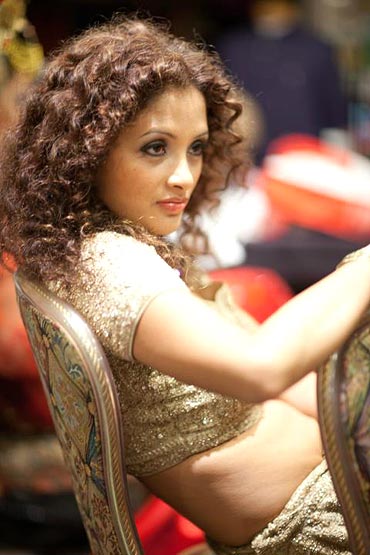
Meet Kavita Sachdev, Mrs Globe Runner-Up From Assam

Kavita Sachdev

By Divya Nair

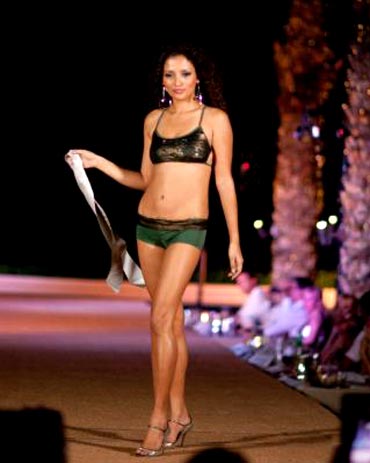
She learnt to be independent at the age of 18, was married at 24, a mother at 25 and today, at the age of 29, she is a reigning international model, all set to bag a Bollywood project.

In a candid chat with rediff.com, Mrs Globe 2011's first runner-up Kavita Sachdev tells us of her remarkable journey from chirpy smalltown girl to a successful woman.

In a country where women are expected to take care of kids and family post marriage (despite their educational/professional background), to even think of wearing a body-hugging dress that ends above the knee for an evening is considered disgraceful. To add to that, if the woman comes from a small town in Assam, you will agree that it means going against the grain -- opting for glam takes guts, a lot more effort and when it boils down to it, hard work.

But Kavita Sachdev -- who was crowned Mrs Gladrags 2010 and first runner-up of the Mrs Globe 2011 pageant on August 27 in California, beating 39 other international contestants -- considers herself lucky, not only to have parents who stood by her decisions, but also a mother-in-law who coaxed her to participate in the contest and a doting husband who helped her fulfill the dream.

In the following pages, she recounts her remarkable experiences and discusses beauty, modelling, motherhood and more.

'It was my mother-in-law who suggested I participate in the Mrs India contest'
Kavita Sachdev

Who suggested you participate in the Mrs Gladrags 2010 and Mrs Globe 2011 pageants?

It was my mother-in-law who suggested I participate in the Mrs India contest. When my husband Nicholai heard about it, he jumped at the idea. I was not sure if I should, but he egged me on.

You won't believe it, but I haven't ever gotten my portfolio shot professionally. My husband chose from among my best pictures, filled up the form himself and mailed it. I was lucky I got a call from them saying they liked my pictures and that I should contest in the pageant. I had no clue what was in store for me.

What were you doing before the pageant happened? Were you always a model?

I was working as an airhostess with an airline company for three years, till I found my Prince Charming and decided to quit. I was never really a model, but I have done a few modelling assignments when I was studying in Sophia's College in Mumbai.

Tell us a little about your college days.

I used to stay in a hostel, so I had a lot of free time and I don't like sitting idle. I would either explore the city or attend an acting class, or get involved in some social activity. So one day a friend said, 'Hey, you got a great figure, you are tall; why don't you try modelling?'

That was how it all started. Plus, my pocket money was taken care of. So I was always on my toes. I loved the feeling of being independent.

'All my friends went to Delhi, but my dad didn't think it a safe city'

Kavita Sachdev

What brought you to Mumbai?

I belong to a small town in Assam. I did my schooling and studied there till Class 12. But my dad wanted me to move out of Assam to pursue graduation. All my friends were going to Delhi, but he wasn't sure of how safe it would be for me.

So a friend and I proposed that we come to Mumbai. Until then, I had no clue about what Mumbai was, I had never been here before. So, I came along with my dad; he took a trip around the city and said he liked the place. Within five days, he enrolled me at Sophia's College, arranged for my hostel stay and left for Assam. I was just 18 then. I had no experience of living in a city before.

To add to it, the only relatives I knew stayed in Andheri, which demanded that I travel quite far after college. So it was difficult for me to depend upon them for my basic needs. I was worried how I would manage by myself. But I must say that Mumbai has been an awesome place to live in.

I came to the city in 1999. It's been 12 years today and I still feel so warm and welcome, like I felt 12 years ago. I think most of what I am today comes from what I learned from this city in my struggling days.

How did your parents react when you first told them about your modelling assignments?

Fortunately for me, my parents have been super-supportive in everything I do. I would talk to them over the phone and keep them informed about everything.

According to me, modelling was not a full time thing or a conscious career decision. It was one of the many things I did during my college days that kept me happy. They never questioned my decisions or advised me otherwise. They trusted me and believed in my decisions. I think that motivated me so far.

'Back home in Assam, people do not value the modelling profession'

Kavita Sachdev

What was growing up in Assam like?

It was very calm and de-stressing, devoid of competition like we have today. We used to stay in a joint family for 5-6 years, so, we were used to living together. The fact that my father was a research scientist put a lot of pressure on me as everyone expected us to score well. But I was pretty average at academics. I was more interested in playing games, extra-curricular activities etc. My brother was more studious, so were my two younger sisters.

People there are a little reserved and value academics over extra-curricular activities. I am glad I had a different exposure and could pursue my interests. Some time back when I visited my parents in Assam, I realised that things have not changed much today. They still do not value the modelling profession; neither did they value me being an airhostess. According to me, it's not a healthy thing.

People need to understand and look beyond their conventions. Just because a woman gives up her job to look after her kids doesn't make her any less beautiful.

I think each profession has its hardships and struggle so it is not right to judge a person based on looks, perception or convention alone. But I have realised that no matter how intelligent and dedicated you are, unless you are a 'someone', people do not value what you say.

Why did you choose to be an air hostess then?

After completing my graduation, I was confused like every other 21-year-old. I wasn't sure if I should consider higher studies nor did I have a definite subject in mind to do my masters.

One day, I went to my friend's place and I saw her dressing up in a sari. I asked her where she was going and she told me it was for an interview. I asked her if I could also come along. I went there and got selected. Since I had no plan B, I grabbed the offer.

So did you like the job?

Of course. It was so much fun. I love to travel and this job was exactly what I wanted. The fact that I could be in a new city every day/week made it all the more enjoyable for me.

I could meet so many different people, understand different cultures, learn new languages, all while I was working and getting paid for it. I was always attracted to the service industry. 

'I did not want to be labelled a mere homemaker'

Kavita Sachdev

When and where did you meet your 'Prince Charming'?

This is a really interesting story. It may seem very ordinary to you, but I met him on a flight. His family runs an art gallery, so he used to fly so often that I would bump into him every other flight. It was quite unusual to bump into the same person on almost every second or third journey. Frankly, I wasn't attracted to him then.

But once, during the deluge of July 26, we were caught up in the same flight that was stuck at Hyderabad. He was concerned about my safety and so we exchanged numbers. I repeatedly told him that my airline would take care of me and that he need not worry. But the gentleman that he was, he repeatedly sent me text messages to enquire about my safety. As usual, I ignored him and did not bother to reply.

However, it so happened that when I was at a restaurant having dinner with a friend's family, I saw him walk into the restaurant. I realised that I felt so guilty about facing him, since I had not replied to his text messages.

So, I politely walked up to him and said, 'Hello Mr err...Sam...' and he corrected me, saying 'No, I am not Sam, I am Nicholai and you are Kavita, I know you'. I realised that he remembered my name and I felt even more awkward. I told him how sorry I felt about my behaviour and he told me not to worry about it. Since that day, we started talking more often and we realised that we loved each other's company.

Why did you quit your job after marriage?

I was in love, rather we were in love and I realised that after marriage, I could not afford to stay away from him for my work. So, I decided to quit and stay with him and help him in his family business.

Soon, I got pregnant, we had a baby -- a very beautiful one. She kept me busy all the while. But there were times when I thought to myself, 'Is this all I am going to do in my life? Look after my kid and have no life of my own?' I was blank.

I considered going back to work. But I had already put on a lot of weight after marriage, so I had to first lose those extra kilos I had gained, before I could even think of anything. It was not easy. It's a natural way of life.

Most women tend to ignore their likes and dislikes for the sake of their families. Most importantly, they don't take care of their bodies. I am sure every woman wants to dress well, look beautiful, be appreciated. I felt the same.

I did not want to be labelled a mere homemaker. I knew I deserved more than that. And I was determined to take the effort. I was just 25.

'While I am away, it is my husband's duty to take care of our daughter'
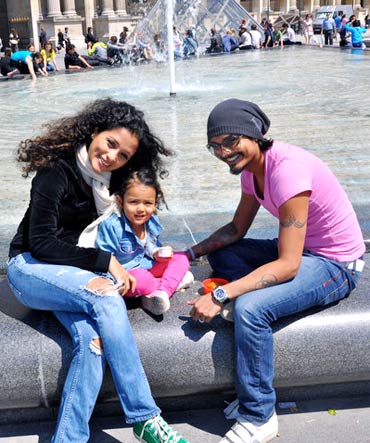
Kavita with her husband Nicholai and daughter Kasha

How long did it take for you to be back in shape?

It wasn't easy at all. It took me close to a year and a half to come back to my normal shape.

What diet did you follow? What exercises did you do?

Ever since I became an adult, I was conscious about eating healthy food. I do not believe in dieting or cutting down on food intake to achieve a certain size; I believe in eating proportionate, eating healthy and having a balanced diet. I say that to my daughter also. She is barely four, but she attends a yoga class.

Post pregnancy, a lot of people suggested that I try the so-called-famous General Motors Diet and similar-sounding popular diet regimes. I refused, for I fail to understand how people expect you to be fit when they are surviving on food that they don't like or enjoy eating.

So I chose to eat healthy and eat less, do exercises regularly. I would go to the gym and work out. In the end, it all paid off. Now, I am back in shape. (smiles confidently)

Who takes care of your daughter when you are away at work?

Initially, I thought it was difficult. But between my husband and me, we have a mutual pact. While we are together, we will jointly take responsibility of our daughter. While I am away it is his duty to take care of her.

Although we have a 24-hour nanny, a driver and cook at home, plus my in-laws stay in the same building as ours, before I leave, I write down a whole list of things to do throughout the day.

When I am at home, I ensure that I spend the whole day with her, from the minute she wakes up, to dropping her to school, to picking her up, helping her in studies, reading her a book, playing with her in the park and feeding her. She is so used to being with me that when I am around, she needs no one else. I try to spend as much time as I can with her.

Image: Kavita with her husband Nicholai and daughter Kasha

'As a mother, I am very principled and believe in discipline'

Kavita Sachdev (centre) with fellow pageant participants at Mrs Globe 2011

How does your daughter react when she sees your picture in a magazine or on TV?

Oh, she absolutely loves it. She calls me Mrs India at home. She's just four and she has a fetish for dresses. She says she will only wear frocks to school. She tells me how wearing pants is boyish and that girls should only wear frocks. So I have to tell her that she cannot wear them all the time, especially when they have their activity classes.

How do you react to her tantrums?

Sometimes their demands are unreasonable, so we have to explain and reason why so that they understand. Similarly, I believe that my daughter should have the best of resources but at the same time, she should be grounded and should know what her values are. So, when it comes to being a mother, I am very principled and believe in discipline.

Also, I believe it is important to give them freedom to think and make decisions. Just like my parents did. If we go to a restaurant, I always ask her first what she wants before ordering. It is important to consider their choices and value them for once.

Coming back to your modelling career, have you ever faced any embarrassing situation on the ramp -- a wardrobe malfunction, or a technical error? How do you deal with such situations?

(Thinks) Well, not really a wardrobe malfunction, but this happened to me at the finale of Mrs Globe. I was wearing this pretty green dress for the finale and just minutes prior to the show, one of my earrings fell off.

I was selected among the top 15 and I did not have a earring to match. I obviously could not go on stage without earrings, so I was upset about it. I wanted to cry.

Suddenly one of the contestants who got eliminated for the last round walked up to me and gave me her earrings. I wondered to myself, 'Why did she do that?' In the end we are competitors, she had nothing to gain out of it, but she chose to help me. I was so full of gratitude; I hugged her, and thanked her for helping me. I think I was just plain lucky. I was the first runner-up.

Image: Kavita Sachdev (centre) with fellow pageant participants at Mrs Globe 2011

'People thought I was snobbish and arrogant'
Kavita Sachdev

How has life changed after winning the pageant?

I don't think life has changed much. I am very much the same. It's just that I believe that a lot of people in the industry, especially some model friends thought that I was very snobbish or arrogant. Well, that's just because of who I am. I do not enjoy gossip.

So, during the Mrs India pageant, after the shoot was over, while everyone else was at the pool or indulged in some gossip, I would walk out politely. They really thought that I was arrogant and was way too confident that I would win the contest.

When I read it in the papers, I called one of them and asked her why she felt so. Some of them also thought that I was buttering up the organisers and had no talent whatsoever to win the contest. Others even commented about the fact that I was an airhostess and not a model. So I did not deserve to be there.

I was hurt when I heard that; but when I won Mrs Globe, I think all those who said these things against me got their answers.

What was it like working with Maureen Wadia?

Oh my God, I call her a superwoman. She can do so many things at the same time. Multitasker is an understatement. She is omnipresent.

You will see her at the shoot, at the makeup room, backstage, fervently giving away instructions to models, organisers, designers. She never looks tired or stressed and handles everything so perfectly. She is a powerhouse of energy. With her around, you will never have a dull moment.

In fact to give you an example, on the day of my shoot, my daughter fell and broke her arm. She fell in my presence and that made me feel even more responsible for it. So, I was sitting in a corner worrying about it, how bad a mother I was. Maureen, who saw me worried, came and sat next to me.

She held my hand in hers and told me how it was not my fault and that I should not worry so much. 'You did not do it intentionally,' she said. After all, every mother thinks and does the best for her child.' She told me how I must deal with things better in such situations. Her words meant a lot to me.

That day I saw another side to her. I felt relieved and I look up to her as an inspiration. She can teach you a lot about confidence and management.

Now that you have won the pageant, what are your plans for the next few years?

Well, now that I have a title, I shall consider it my responsibility to dedicate time to a social cause. I believe that there are a lot of women who are housewives who are not privileged to work and be independent. I would like to approach these women and provide them with basic education so that I can help provide them with some employment.

I would certainly like to get involved in social causes that are aimed at women and children empowerment. Meanwhile, I would like to continue my interest in acting. I have been approached by a director, but I haven't finalised the project. If I really like the project, I may sign on the dotted line. 

'When I see a man who respects women, I am impressed'

Kavita Sachdev

After all that serious talk, we quizzed the international beauty queen on her likes and dislikes. She goes on to share her dating experiences and more:

Your favourite cuisine: Japanese and Italian

Your favourite drink: Coconut water

Food that you avoid: Processed food, white bread, burgers etc

Your favourite hangout: Ideally, I prefer to chill out at a friend's home or terrace; but occasionally, I don't mind indulging at China House, or Trilogy in Mumbai.

Music you enjoy: I love listening to country music, Nusrat Fateh Ali Khan, Sufi music, jazz. But when it comes to dance, I love hip-hop.

Favourite movie of all time: Life is Beautiful

Your favourite book: To Kill A Mocking Bird

Preferred travel destination: Paris. I just loved the architecture of the place. Everything about the place is so beautiful. Beautiful people, beautiful buildings...everyone looks so beautiful. I would love to go there again.

Make up you can't live without: Sun block and Kaajal.

Your biggest indulgence: Spas

Your idea of a perfect date: Somewhere by the beach or an island -- a champagne is a must!

Things that turn you on in a man: How a man smells is definitely a turn-on. Besides, when I see a man who has respect for women, I am definitely impressed.

Things that turn you off in a man: Bad body odour; If a man talks too much without letting the other speak or if he displays arrogance and appears boastful, I am turned off.

Cheesiest pick-up line you've ever encountered: Well, there are loads, but the most common one would be: 'I am new to the city. Will you show me around?' What do I look like, a tour guide? I wonder! (giggles)

'You have every right to look beautiful and be appreciated for it'

Kavita Sachdev

What would you do if a date went wrong?

Well, as girls, we have this instinctive feeling that the guy we are going out with may not be as interesting as he seems. So, I would either keep my friends informed or drop in a message in between the conversation asking one of my friends to call me. Then, I quickly make an excuse and cut short the date. While doing so, I 'd also ensure that I politely refuse his offer the next time.

Would you like to share any dating tips for young girls?

In this age of the Internet revolution, where you make quick friends and exchange numbers and e-mails at the click of a button, I think it is very important to know all about the person you are going out with.

Even though it's a blind date, you must do a check and find out who your mutual friends are and what his friends have to say about him.

Similarly, when you go out on a blind date, do take special care of the drinks that you order. Do not leave your drinks unattended and ideally avoid getting drunk on your first date.

One important fitness tip that you would like to share with our readers would be...

Take up a physical activity; but let it be a part of your life, rather than an enforced activity. Only then will you be able to enjoy and stick to it regularly.

One fashion tip that you would like to share with our readers?

Be simple, be classy. Do not follow trends for the heck of it. Being fit is more fashionable. Try it.

One suggestion you would like to make to married women?

Do not ignore yourself. You have every right to look beautiful and be appreciated for it. Do not sacrifice your personal interests and happiness for the sake of your kids and husband Try to find time to follow your hobbies and passion as well.

One suggestion that you would make to husbands?

Love your wife and respect her, the way she is. After all, she is the one who has left the world to live with you. You mean a lot to her. So, find time to make her feel special in your own way.

Migrants Not Safe in Insurgent-Hit Manipur

migrants killed in manipurImphal, Sep 27 : Laborers and workers who come to Manipur from other Indian states often find themselves at the mercy of insurgents. Recently, two workers from Bihar were killed.

People coming in to Manipur also face the power of the law, and find themselves removed to areas bordering state capital Imphal.

As law enforcement want to avoid further casualties, migrants are moved to areas such as Marwari Dharamsala and Kalibari Puja Devalaya.

Imphal police sub-inspector Basanta Singh said: "We have picked 119 locals here. They are all men and no children and women. The number is likely to increase in the near future."

Bihari Gupta, a migrant, said: "It becomes extremely difficult for us to work over here. We are very tense and we do not know what the future holds for us."

The district administration has taken care of their food, lodging and security. Medical officers are being deployed at the venue so that these people can undertake regular health check ups. Most of the workers were daily wage laborers.

Ranjit Singh, another migrant, said: "I want to tell those people that this is India and we have the right to move freely and this implies to Manipur also. They are killing us because we are poor and they believe that they can terrify us."

People living in Manipur have denounced such acts of violence. They clearly believe that a divide on communal lines will not be in the interest of the people.

Khumukcham Somorjit, a Manipur student, said: "It is not a good thing. Our brothers and sisters are staying and studying outside. I am concerned about them. Instead of creating problems for each other, we should understand each other."

Militants view the migrants as a burden on the state and consider them a hindrance to development in the region.

The banned Revolutionary People's Front had issued a notice to migrants last year to leave Manipur.

26 September 2011

APSPA: To repeal or amend. What Should We Do With This Act?

Civilians in Kashmir and the Northeast want the 'draconian' AFSPA repealed, but the army says it can't operate without it. Avalok Langer reports on the dichotomy

Manipuri women protest against the army’s high-handedness

Naked rage Manipuri women protest against the army's high-handedness

In the Rann of Kutch, the sighting of a military jonga brings kids on the road, waving, laughing, chasing the vehicle. Others salute the jeep as it passes. The same is likely to happen in Jammu.

But in Kashmir and most parts of the Northeast, young boys and girls take aim with imaginary guns, shooting as a convoy passes.

In Kashmir, the army can arrest anyone without a warrant

In the dock In Kashmir, the army can arrest anyone without a warrant

Photo: AP

It is the same army, the same soldiers, but the stark difference in their role creates the duality. Along the western border, the Indian Army stands guard against an external enemy. But in Kashmir and the Northeast, the army, performing a policing role, has fallen from grace.

A 'special' role requires 'special powers' and in 1958, the Armed Forces Special Powers Acts (AFSPA) was enacted to aid antiinsurgency operations. Currently, Jammu & Kashmir, Nagaland and parts of Manipur, Assam, Meghalaya, Tripura and Arunachal Pradesh are under AFSPA - a single-page law that allows shooting to kill on mere suspicion; arrest, search and detention without warrant; and protection from prosecution. These clauses, many feel, violate fundamental rights.

Responding to mounting public pressure, Union Home Minster P Chidambaram recently suggested that AFSPA may be amended. He said he is in talks with Omar Abdullah to rethink J&K's 'disturbed area' status, giving hope to those who have been campaigning against it. But a brigadier serving there says, "If AFSPA is removed from certain areas of the state, they will not only become safe havens for militants, but highways that pass through these areas will become soft targets."

But, why is the army deployed within our own borders when law and order is a state subject? The security mechanism dictates that each state government should have its own security machinery - the police, armed police and in some cases special groups like the Anti-Terrorism Squad to manage law and order. If they are unable to tackle a problem, Central forces such as the CRPF, RAF, ITBP and BSF are deployed under the operational control of the state. It is only when the Governor feels that the state's efforts have failed and armed forces are needed, the region is declared a 'disturbed area' and the army is brought in.

"The army is called in when a section of Indian territory is ungovernable and the situation may lead to secession," says a senior army officer. "Our Constitution does not allow for areas to declare themselves sovereign. It is considered a direct challenge to the State and the army's job is to facilitate the return to normalcy." He claims that insurgencies in areas where AFSPA is operational are not home-grown. "If you look at the area in which AFSPA has been applied, there is direct foreign support in term of training, arms and ideology. This complicates the issue further," he says.

However, Kashmiri lawyer Fasiha Qabri, 31, feels that the creation of 'disturbed areas' is arbitrary and forced upon a region. "The governor or the Central government, not the state government, have the power to declare a state or part of its area as disturbed," she says.

Inshah Malik, 26, a PhD student from Kashmir, says, "AFSPA, which is meant to be an emergency law, violates human rights. The law is vague and has no standards. Lethal force can be exercised if it is deemed necessary. Who decides if it is necessary? Life and death cannot be left subject to an individual's rationale."

An army officer agrees the Act provides impunity from a civil trial, but not from justice. "It may seem that there exists impunity as military personnel are not tried in civilian courts, but justice comes in the form of the Army Act, which comes under the statutes of the Constitution," he says. "The proof is the numerous court martials of personnel serving in CI-Ops (counterinsurgency operations) areas. Other countries that have suffered from insurgencies have created teams like the 'gendarmerie', a military force charged with police duties among civilian population. They have the backing of the Constitution and don't need laws like AFSPA. But we have opted to send the army, so we need such a law."

Armed with Special Powers

Security forces may enjoy legal sanction, but at a certain level AFSPA violates fundamental rights

AFSPA Section 4 (A)
Right to use force (shoot) after giving due warning, even resulting in death

Constitution Article 21
No person shall be deprived of his life

AFSPA Section 4 (C)
Arrest and detain without warrant

Constitution Article 22
Prevention against arbitrary arrest and detention, the accused has to be produced in front of a magistrate within 24 hours

AFSPA Section 6
Protection from legal proceedings for a person acting under law

Constitution Article 14
Equality before the law or equal protection of law

AFSPA has been in effect in these areas
Since 1958
Assam, Manipur

Since 1972
Arunachal Pradesh, Nagaland, Tripura, Mizoram and Meghalaya

Since 1990
Jammu & Kashmir

On the point of the law's 'vagueness', the officer says, "The law is not vague to us. Due warning is specified in the army's rule of patrolling. In an operational situation everything is detailed out - how many times to shout a warning before shooting, who will take on what role in a cordon-and-search situation, etc. The operational rules are set out for us, but there are thousands of us in active duty. Some may not adhere to the rule completely.''

HOWEVER, A grieving mother in Srinagar would not understand this. Parveena Ahanger has spent 21 years searching for her son Javed, 16, who was picked up by security forces on 18 August 1990. He seemed to disappear into thin air. Parveena has found no respite as the inquiry into her son's case awaits the sanction of the home ministry. "There are laws against militants who pick up guns but there are no laws against the army. They picked up my son in the middle of the night in front of the whole family, but now they don't have him. Where is he? Where are the hundreds of other sons, husbands and fathers that have disappeared?'' she asks. "There is no measure of a mother's pain, I have lost everything. They have offered me money, a government job, property, but all I want is my son. This law must go.''

Having taken part in CIOps, an officer gives an example of the grey areas in which they have to operate: "A foreign terrorist, an explosives expert, crossed into India with the help of a local shepherd. Food, women and supplies were brought to his hideout by an overground worker. The worker took him to his target spot, showed the routes and informed about the local security set-up. The worker, shepherd and the women were all aware of the terrorist's presence. Indirectly or directly, they are all involved in an illegal act. After the blast, we got a tip that on the night of the blast a group of 10 men threw a party in a village close to the blast site. We cordoned the house and arrested the men. Nine of them turned out to be innocent, but the 10th spilled the beans on the hideout. We work based on local intelligence in a time-sensitive environment. We need special powers to operate effectively.''

The implication is that operations cannot be held captive to administrative delays. If the local police cannot be trusted, search warrants are useless. Logistically it is not possible to have women officers at every post, argues the officer. "If at a national level a decision has been taken to declare a certain area as 'special', certain fundamental rights may be curtailed,'' he adds. "It is not a normal situation, but these are our operational realities.''

After conducting studies in J&K and Manipur, the Human Rights Watch believes AFSPA has resulted in a situation where it is easier for the security forces to kill a 'criminal' rather than collect evidence against him. "There is a generation of Nagas in Mokokchung who are so terrified of the armed forces that they wet themselves at the sight of a green uniform,'' reveals Akum Longchari, a researcher based in Dimapur, Nagaland.

'There is a generation of Nagas who are so terrified of the army that they wet themselves at the sight of a green uniform,' says Akum

Recounting the horrors of 'Operation Blue Bird' in 1987, the then 13-year-old Joyson Mazamo from Khondei Shimphung in Manipur says, "We were asked to gather in the church where we were kept from July to October. Turn by turn, the men were taken out to be 'questioned', but returned bruised, beaten and tortured. I remember my father returning with a broken arm, my uncle's dead body, charred beyond recognition. The soldiers felt they could do anything and get away with it.''

Interestingly, many feel that the army's attitude, AFSPA and the sense of impunity have played into the hands of the rebels. "It creates a sense of anger and alienation among the common man that aggravates the problem by creating potential recruits for the underground groups,'' explains Longchari. "It is a question of training. (The army) is trained to be aggressive, to deal with the enemy, but can you behave the same way with civilians?''

To this, officers argue that compared to South America, Africa or Chechnya, where tanks and helicopter gunships were used to deal with a challenge to their sovereignty, the Indian Army has kept force application to a minimum. "For this reason we continue to suffer heavy casualties,'' says an officer. "We are fighting with our hands tied behind our backs.''

Many senior officers feel that though a special law is needed, AFSPA can be modified. The question is: to what degree? In the case of Manipur, the prime minister had said that a more humane law will soon replace AFSPA. It is believed the law will relook the 'shoot to kill' and 'search without a warrant' clauses. To which, a senior army officer retorts, "Then remove the army and deal with the problem with police forces.''

After more than 50 years of operating in an environment where local politicians provide patronage to militants and the local police may or may not pass on information to them, army officers often admit that "the problem is political not military''. A senior officer argues, "We are not here by choice. We are here to perform a duty.''

But political indecision has lead to protracted military deployment, worsening the situation. This is one of the reasons why the army is averse to being deployed in the Naxal belt. This may be the crux of the solution. "Political issues need political solutions,'' says Longchari. "Only a strong India can negotiate and find peaceful solutions for many of its problems.''

Avalok Langer is a Correspondent with Tehelka. avalok@tehelka.com

Vehicle Torched by Supporters of Blockade in Manipur

sadar hill blockadeImphal, Sep 26 : A mini truck was set ablaze and more than 40 other vehicles were damaged by supporters of the economic blockade at Bongyang area in Manipur's Chandel district, official reports said today.

Reports said the supporters of the blockade stopped the vehicles at interior Bongyang area on NH-39 yesterday and set fire to a mini-truck and damaged 40 others.

The vehicles loaded with essential items were coming from border town of Moreh, about 120 km southeast of here.

Sadar Hills District Demand Committee (SHDDC) launched economic blockade on the portions of national highway 39 and 53 in Manipur since August 1 demanding conversion of Kuki-majority Sadar Hills area in Naga-majority Senapati district as a full-fledged district.

Whereas, United Naga Council opposing SHDDC demand also launched the economic blockade on the same national highways from August 21.

So far over 20 vehicles have been set ablaze by supporters of the economic blockades, official sources said, adding that four persons including a driver were killed till today in the economic blockade-related incidents.

Manipur cabinet has met more than four times in the past one-and-half-months to discuss the issue of new district but no decision could be taken, sources said.

Many civil organisations have appealed to both SHDDC and UNC to call off the blockades on the national highways and adopt another democratic agitation to press their demands, reports said adding that both the organisations have not so far called off the blockades.

Reports from the markets said prices of essential items have gone up steeply due to the scarcity of the items because of the economic blockades.

New DND Guidelines: Things To Know

New DND guidelines: 7 things to know

From 27 September, 850 million phone subscribers across the country may finally get some relief from unsolicited commercial calls and messages.

The last attempt, in 2007, to curb telemarketers by setting up a Do Not Call (DNC) Registry failed miserably. But the National Consumer Preference Registry, the latest effort that has missed many launch deadlines, raises hope for putting an end to pesky calls and messages.

TRAI has strengthened the DNC guidelines and revamped registration norms for the telemarketers. Here's how the new set of guidelines will work.

New number for telemarketers

New number for telemarketers

Telemarketers to be assigned a distinct series beginning with 140.

Penalty imposed

Penalty imposed

The minimum penalty for violations has been set at Rs 25,000 against Rs 500 at present. As the penalties will progressively increase, the sixth violation will attract Rs 2.5 lakh fine.

Blacklisting

Blacklisting

Telemarketers can also be blacklisted for two years after the sixth violation. Service providers will be barred from providing any telecom resource to blacklisted telemarketers.

Restriction on number of SMSes

Restriction on number of SMSes

The number of text messages or SMSes that can be sent will be restricted to 100 a day for prepaid and 3,000 a month for post-paid telephone numbers.

Barred timings

Barred timings

No calls and messages are permitted between 9 pm and 9 am.

How to register for DND

How to register for DND

Dial or send an SMS to 1909 to register with NCPR or register at www.nccptrai.gov.in
Choose categories of commercial messages/ calls to be blocked. Those already registered with National Do Not Call Registry (NDNC), need not re-register.

Blocked categories

Blocked categories

* Banking & financial products
* Communication & entertainment
* Tourism or leisure
* Consumer goods
* Automobiles
* Real estate
* Education
* Health

Northeast India’s Burden Of History

Carte Blanche - Arup Dutta

‘....the creation of East Pakistan during Partition has indubitably been the heaviest of these burdens’

Northeast India is burdened by the weight of recent history which those unaware of or untouched by it can hardly appreciate — precisely why only the politically naïve had expected Manmohan Singh’s visit to Bangladesh to bring about some positive gains for this region.

Ushering in an era of isolation for the Northeast, and consequent alienation from the rest of the nation, the creation of East Pakistan (later reincarnated as Bangladesh) during Partition has indubitably been the heaviest of these burdens.

The political barriers which operate today have imparted an element of insularity to the Northeast’s geographical location.

With Bangladesh being driven like a wedge between it and the Indian mainland, and the Northeast tenuously strung to the latter by a narrow “chicken’s neck”, this insularity is pronounced when we look at the current map of South Asia. But the isolating shift had not occurred even till India’s Independence from British rule.

On the contrary, the ethnologic, social and cultural evolution of the region bears clear testimony to the centricity of its geo-anthropological location in the past, vis-à-vis China, Burma (Myanmar), South-east Asian nations, Tibet, Bhutan and mainland India.

The seemingly impassable mountain ranges hemming it in from three sides had been porous since time immemorial.

The hills on the north, east and south had routes linking the Northeast to Myanmar, Indo-China, China, Tibet and Himalayan kingdoms. China, Myanmar and Indo-China could also be reached via Cachar and Manipur in the southeast and Patkai ranges from the east. Tibet was approachable through passes from the eastern extreme of the Northeast, while passes called Dooars existed to Bhutan and Nepal. The Ganges-Brahmaputra link as well as land-routes across the wide Bengal plains could be used to enter the Northeast from the western flank.

Given this centricity, it is no wonder that a unique, amorphous conglomeration of communities evolved in the Northeast. On one side lay western China, which anthropologists call the great repository of Mongoloid races, from where people fanned out in prehistoric eras to settle on the Himalayan plateaus and slopes as also Southeast Asia.

On the other side lay the Indian sub-continent, with its own pattern of ethnic conflict and assimilation. The Northeast, being strategically placed, witnessed waves of migration from all directions through existing inlets, taking in people and cultural traits. Broadly speaking, the Caucasic elements entered from the west and Mongoloid from the east, north and to some extent from the south. These complemented the Austric and Dravidian elements already present, brewing up a cultural identity and ethos not to be encountered elsewhere in the sub-continent.

As Suniti Kumar Chatterjee writes in his The Place of Assam in the History and Civilisation of India (1970): “Assam (viz. undivided Assam) has thus to meet all tribal movements from the east, involving the advent into India of Tibeto-Chinese speaking Mongoloids; and it was in Assam primarily that this great element in the formation of the Indian people became largely Indianised.…This can be looked as Assam’s great contribution to the synthesis of cultures and fusion of races that took place in India ….The Indian man as the result of the fusion of the Aryan and Dravidian, Mongoloid and Austric came into being at the end of the Vedic period (by 1,000 BC).”

Accompanying the ethnological evolution was cultural and religious transference from the age-old civilisations of China and India, resulting in an involute cultural scenario. The centricity of the region contributed to the richness of the cultural mosaic which also incorporated elements from Myanmar, Indo-China and Tibet. In the kingdom of Bhaskarvarman, for example, Hiuen Tsang in 638 AD had heard a particular song and recognised it to be a Tibeto-Burman version of a Chinese song celebrating the triumph in 619AD of a Chinese prince over some rebels, a telling illustration of the cultural closeness of the two regions.

If the Northeast in the past had been economically self-sufficient and commercially vibrant, it was primarily due to the openness of communication between neighbouring areas. Salt, for instance, was brought on horses by Bhutanese or Tibetans, or transported upon boats from Bengal over the Brahmaputra. The westward Brahmaputra-Ganges route to the Indian heartland was a natural outlet, while the sea was accessible to the south through the Meghna. John M. Cosh in 1837 speaks of three traditional land routes used by traders, all passing through present Bangladesh. William Robinson in 1841 wrote that “Tibet is open to travellers on foot from the extreme east of Assam — from Sadiya to Bhaloo, first town met within Tibet, takes 16 days”.

The most romantic of all these outlets from the valley, an extension of the Ganges-Brahmaputra link, was the ancient “silk-route” to China.

“There is an open road from Upper Assam into Burma, and thence into China, by which a considerable trade in Chinese and Burmese manufactures was at one time carried on,” wrote Robinson.

The line of trade, after leaving Sadiya, passes by Bisa, across the Patkoye range of mountains, and through the valley of Hukung to the town of Munkung, situated on a navigable branch of the Irawatti, called Namyang.

Merchants proceeding from Munkung to Ava at once descend via the Irawatti to the capital, while those to China ascend the Irawatti for many miles to a place called Katemow, where they disembark their goods, and thence convey them on mules over a range of mountainous country into the Chinese province of Yunan.

In fact, a section of archaeologists opine that trade between Rome and China over this silk-route had been carried on since as far back as the 1AD. Today, primarily because of political changes, most outlets from the Northeast to its neighbours have been closed. A region which had been a meeting-ground for ancient cultures and strategically positioned for economic prosperity and cultural development has been reduced to an eastern outpost boxed in from all sides, at the periphery of India.

The unkindest cut of all has been the creation of East Pakistan/Bangladesh, which has severed a vast swath of communication routes with mainland India, thereby exacerbating the feeling of being cut off from the mainstream and consequent alienation.

There had been two major railway lines, the Assam Bengal Railways and the Eastern Bengal Railways, connecting the Northeast to the rest of India as well as Chittagong and Calcutta ports. The Partition overnight amputated these as well as the numerous land routes so that, ironically, travellers from say Tripura, Mizoram or Cachar, who had earlier been able to travel directly across Bengal to other parts of India, have now to take a far longer and circuitous route.

The river passage had remained clear till 1965, when the war with Pakistan saw the closure of this historic outlet. The commercial setback this caused can be gauged from the fact that till the Indo-Pakistan war almost 90 per cent of Assam tea had been transported through the river route. There has been no tangible effort to revive this outlet or introduce speedier water transport system in keeping with modern times.

It is astonishing how a few strokes made by erstwhile colonialist masters can alter the destiny of an entire region. Bangladesh, indeed, has been the heaviest historical burden that the Northeast carries.

Yet, far from undertaking negotiations so as to try and lighten this burden, our politicians, diplomats and bureaucrats are busy carrying baskets of goodies to curry favour with that country. Of course, that Manmohan Singh and his entourage kept absolutely mum on the issue of illegal influx is another story altogether!