11 August 2011

10,927 HIV Positive Cases Detected in Nagaland

HIV Aids Program Nagaland

Dimapur, Aug 11
: A total of 3,74,847 persons have been screened for HIV in Nagaland during the period 1999-2011, out of which 10,927 tested positive.

According to HIV/AIDS statistics of Nagaland revealed during the Adolescent Education Programme (AEP) End Line Training in Kohima, reported AIDS cases are 3,764 including 2,051 males and 1,713 females.

During the period, the State has recorded a total of 521 AIDS related deaths – 265 adult males, 206 adult females and 50 children. While the prevalence rate of HIV officially stands at 0.78 per cent, it has been feared that the actual figure could be much higher than that.

Nagaland currently stands fourth among the six high prevalence States in the country alongside Maharashtra, Karnataka and Manipur.

Speaking to the teacher-participants, Alipoker, Consultant, Voluntary Blood Donation, Nagaland State AIDS Control Society, stressed the need to equip oneself with the simple but correct information about HIV. Stating that the existence of MSM is a reality in the State, he expressed concern that infection of HIV in MSM is very high.

Pointing out that transmission of HIV through sexual route continues to remain a disturbing factor at 84 per cent, he said this was the highest contributing factor of HIV transmission.

Meanwhile, he said the training organized by master trainers of AEP has been going on in other districts of Nagaland as well to make the fight against HIV a collective effort from all the schools and teachers especially. He hoped that the basic facts of HIV learnt from the training would be correctly disseminated to students to further the cause of HIV prevention.

Central Govt Rules Out Division of Assam

By R Dutta Choudhury
 
bodoland_illus_20081208Guwahati, Aug 11 : The Government of India has made it clear to all the militant groups talking to it that there would be no further division of Assam. Several of the militant groups, which are now talking to the Government, are demanding creation of separate states and the Government of India is persuading them to give up the demand.

Highly-placed sources in the Ministry of Home Affairs (MHA) told The Assam Tribune that though several militant groups including the National Democratic Front of Boroland (P) have been demanding creation of separate states, the Government is against further division of Assam.

On the progress of the peace talks with different militant groups of Assam, sources said that the Government has not yet been able to decide what it could offer the NDFB(P). The Bodoland Territorial Council (BTC) was formed in 2003 by amending the Sixth Schedule of the Constitution of India and now the Government has not been able to decide what can be offered to the NDFB(P), sources admitted.

MHA sources said that though the Ranjan Daimary faction of the NDFB has declared a unilateral ceasefire, the Government of India has decided to keep a close watch on the activities of the members of the group before taking any decision on suspending operations against the outfit.

Sources said that in the past also, the outfit declared unilateral ceasefire but members of the outfit indulged in unlawful activities. Moreover, hardcore members of the outfit including the commander in chief IK Sanbijit are in Myanmar, while, another hardcore member B Bidai sometimes visit Bhutan. Under the circumstances, the Government would closely monitor the activities of the NDFB members before taking any decision.

Sources said that talks with United People’s Democratic Solidarity (UPDS) are in the final stage and only the date for signing of an accord is to be decided. The outfit was also demanding creation of a separate state but sources refused to divulge the details of the agreement reached in the talks between Government and the outfit. “The details will be made public only after the formal agreement is signed,” sources added.

However, the Government of India is trying to persuade the KLNLF to sign the same agreement as both the UPDS and the KLNLF represent the same area. The KLNLF is also demanding creation of a separate state and the outfit has not yet agreed to sign the agreement reached between the Government and the UPDS, sources added.

Sources said that talks with the Dima Halam Daogah is also progressing satisfactorily and a formal agreement can be expected within months.

Asian School of Business Announces Scholarships For Rural Northeast Students

Thiruvanthapuram, Aug 11 : The Asian School of Business (ASB), a leading B-school in India, is proactively encouraging admission of North East students with rural background for its flagship post-graduate programme. Accordingly, in collaboration with the charitable George M Thomas Foundation, ASB will be offering scholarships of up to 50 per cent on the full-term fee for one student from each of the Seven Sisters.

The new programme will groom MBA students who can meet the rising requirement of specially-trained managers for the burgeoning rural market, which is expected to triple in the next 15 years.
ASB Director Prof. S Rajeev, a 25-year IT veteran who had mentored Indian and Silicon Valley start-ups, is driving the thrust to develop Management Graduates who can drive the marketing thrust of Indian and multinational companies eyeing  the booming rural market. The next wave of growth in India is likely to be driven by rural India.

"Every year, thousands of graduate students travel from the North Eastern states to different parts of the country --- Delhi, Mumbai, Chennai, Bangalore, Pune, Kolkata etc. --- to pursue post graduate courses. This unique offer provided by ASB gives the students of these seven states to pursue their business administration course in the beautiful state of Kerala," said Prof. Rajeev.

He also added that students from the North East will find Kerala to be their second home taking into consideration that the weather and greenery which these students feel at their native states will be quite similar in a place like Kerala.

According to Mckinsey, the rural consumption market is likely to triple by 2020 to reach $600 billion from the current level of $190 billion. This is driven both by the increasing income levels and the shifting consumption patterns, hence providing a plethora of opportunities.

He said ASB is proactively encouraging admission of North Eastern students with rural background along with others for their flagship post-graduate programme.

"Students with such rural upbringing in the North Eastern states are better positioned to feel the pulse of the rural consumer. Our training will make them effective marketers who can relate to the rural ambience and this emerging economic segment more effectively," he said.

For students who are determined to make it big in rural marketing, ASB is offering scholarships and is facilitating bank loans to achieve their career goals, he added.

A unique programme that ASB is promoting, besides offer of free laptops, is a 50 per cent scholarship to one student each from North East Indian states who has completed his/her schooling in rural schools. Two students will be offered 25 per cent scholarship and ten students 10 per cent in a bid to discover and nurture rural talent.

These scholarships are being offered by George M Thomas Foundation. Mr. George M Thomas is the President of Trivandrum International School, Kerala's first international school incorporating Indian and British curriculum and courses. Mr. George M Thomas, an Oman based businessman is the Patron of ASB.

ASB, whose full-fledged eco-friendly residential campus designed by a well-known Singapore architectural firm, has state-of-the-art class-rooms, seminar halls and Wi-Fi facilities is located near the IT hub of Techno Park in Thiruvananthapuram.

The new courses that Prof. Rajeev is developing at the ASB cover areas such as rural marketing, innovation and entrepreneurship, which are considered pioneering initiatives in MBA programmes that are revamped to meet actual industry requirements.

Prof Rajeev is bringing to ASB his considerable teaching and industry consulting experience from IIMs in   Bangalore, Ahmedabad and Kozhikode, where he has taught strategy and innovation.

He holds a BTech in Electrical Engineering from the Indian Institute of Technology (IIT) Madras, an MS in Computer Science from Syracuse University and MBA from Stanford Business School.

His technology and marketing background with Sun Microsystems, Siemens and Bell Labs has been leveraged to promote several entrepreneurial start-ups firms, both in Silicon Valley and in India.

He has been active in venture capital (VC) industry, advising several VC firms on their investments.

Mizoram: Recognizing Female Injecting Drug Users

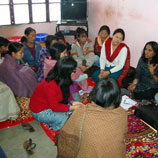
Photo: Group discussion at a drop-in centre in North East India for female injecting drug usersAizawl, Aug 11 : Twenty-two year old Chawngmawii from Mizoram state, north east India left home when she was sixteen. Having suffered abuse while growing up, she started living on the streets and became addicted to injecting drugs. Chawngmawii turned to sex work to support her drug habit and was diagnosed with HIV in 2008.

With the help of a local organization, Chawngmawii started visiting a center that catered for injecting drug users, one of a number set up under the Targeted Intervention projects in the state and supported by the National AIDS Control Programme. However, Chawngmawii felt unwelcome because the center catered mostly to male clients.

Chawngmawii's story is similar to that of many other women like her in north east India. Several states in the region are facing an HIV epidemic, driven by both injecting drug use and high-risk sexual behavior.

Despite the availability of free services for injecting drug users through both government hospitals and NGOs, a significant proportion of female users are unable to access treatment services for drug-driven HIV/AIDS. The lack of trained female service providers often deters women from seeking services, and the existing drop-in centers are primarily occupied by men.

UNODC is working with the Government of India to improve the quality and coverage of services for drug treatment. Under a joint United Nations programme in the north east, UNODC works in the four states of Manipur, Nagaland, Mizoram and Meghalaya, focusing particularly on establishing HIV prevention services for women. Under this initiative, interventions to address the special needs of women have been set up at four sites in the region.

The majority of the staff involved in the initiative are women, providing a comfortable environment for female drug users seeking help. In addition to existing drug use therapy, the project also addresses gender-specific requirements such as pre- and post-natal care, parenting support, anti-retroviral therapy, treatment for sexually transmitted infections and drug treatment services including opioid substitution therapy.

Chawngmawii enrolled at the female drop-in centre in Aizawl, Mizoram, and has been visiting the drop-in centre every day since October 2010. "I go and rest, have a bath and eat, something which I could never do in the other centres as there were too many men. It is a safe haven and I really feel at home". With a female doctor at the centre, Chawngmawii can get regular health checks and free medication.

The most striking outcome of the initiative has been its easy acceptance amongst female drug users and female partners of male drug users. Within six months, the programme has demonstrated encouraging results, as with similar UNODC initiatives in Bangladesh and Nepal.

This UNODC initiative has been possible thanks to support from AusAID for the Joint UN HIV/AIDS project in  the four north eastern states of India.

Source: unodc.org

10 August 2011

Mizos Harassing Non-Mizos in Mizoram?

Discrimination-and-Harassment mizoramSilchar, Aug 10 : North East Minority Students’ Association (NEMSA) at a press meet today has condemned the harassment, physical and mental agonies caused by different Mizo organizations like YMA, MBO and MZP to Bengali speaking people engaged in various works and business in different parts of Mizoram.

In their memorandum to the Chief Minister of Assam, the Association leaders have alleged that besides causing harassment, their property are looted and even they are forced to leave Mizoram.

This kind of illegal activities, according to them, have been going on for the last several days.

Considering the seriousness of the matter, the Association has demanded immediate measures to stop all kinds of harassment of non-Mizo businessmen who have been living in Mizoram, ensuring their safety and security, ban the organizations like YMA, MBO and MZP who have taken law in their own hands.

The Association hopes that the Government of Assam would raise the issue with Mizoram Government for initiating necessary measures to stop the illegal activities indulged in by the organizations identified.

Failure to do so, the Association  cautions, it might be compelled to launch mass movement in the interest of the community.

Mizos harass Bengali, AMSA warns action
 
Silchar, Aug 10 : Tension gripped the non-Mizos, particularly Bengali speaking as the Mizos had allegedly asked them to quit Mizoram.

A few organizations of Barak Valley had already sought the intervention of Mizoram Chief Minister Lal Thanhwala and handed over a memorandum to the Liaison Officer of the Mizoram Government stationed at Silchar.

They alleged that a number of Mizo organizations and student body has once again started anti-Mizo movement. Sources said, these Mizo organizations would reportedly meet on Wednesday at Aizawl to chalk out a plan to execute the quit non-Mizo drive. All Madrassa Students’ Association (AMSA) has threatened that if the Bengalis were harassed they would block vehicular movement to Mizoram.

Source: The Sentinel Assam

Gall Stone Cases On The Rise in Northeast India

gallbladder stones northeast IndiaGuwahati, Aug 10 : There has been an alarming rise in the number of gall bladder stone cases in the Northeast in the past few years and doctors attribute this to the fast changing lifestyle and food habits.

Ilias Ali, professor of surgery and head of emergency medicine at the Gauhati Medical College and Hospital, told The Telegraph that there had been a sudden rush of patients to the GMCH and to his private hospital at Hatigaon in the city, with complaints of acute pain in the upper abdomen. Most of these patients were later diagnosed to be suffering from gallstones.

He said most of the hospitals in Assam have reported a sudden increase in gallstones cases though no official study has been conducted on the causes behind this rise so far.

“I perform 40 to 50 gallstone surgeries every month and about 500 surgeries a year. A few years ago, I used to perform 100 to 150 gallstone surgeries in one year. Some patients having gallstones do not suffer any pain in the upper abdomen. Such cases are called silent gall bladder stones. These patients normally do not come for treatment, as they are unaware of their condition. This itself speaks of the intensity of gallstone scenario in the state,” Ali added.

In small towns like Dhubri, 50 to 60 patients are detected with gallstones every month. Dr Debamoy Sanyal, a renowned physician in the district, said gallstones were now being detected in all age groups and were more prevalent among women.

Chandra Bora, a surgeon at Sanjiwani Nursing Home in Jorhat, said women suffered more from gallstones because hormonal changes after pregnancy led to acidic deposit and other digestive problems, resulting in stone formation. “Chances of digestive disorders are also more in fat people and women in Assam particularly grow fatter as they grow older,” he added.

Some doctors said there was an increasing tendency among women to eat junk food, a major cause for the formation of gallstones.

The alarming rise in the number of gallstone cases is not confined to Assam. The illness has made its presence felt in neighbouring Nagaland and Manipur as well.

Deitho Koza, who works with the National Rural Health Mission in Nagaland, said a primary reason for the increase in gallstones cases in the state was excessive consumption of fast food in the Naga society that led to high concentration of cholesterol in bile.

“In Naga society, most gallstone cases are reported among women because of high concentration of cholesterol in their bodies as they are fond of eating fast food and hardly exercise. Cholesterol is very important for the body but its excessive concentration causes gallstones. On an average, two out of 10 Nagas suffer from gallstones because of lack of exercise,” Koza said.

Manipur, too, has witnessed a high rate of gallstone cases. “Gallstone cases are endemic in Manipur and on the rise,” S. Jugindra, surgeon and medical superintendent of Shija Hospitals and Research Institute, the largest private hospital in the state, said.

The government-run Jawaharlal Nehru Hospital and the centrally-owned Regional Institute of Medical Sciences (RIMS) have also recorded an increase in such cases.

“We are carrying out three to four open surgeries and one to two keyhole surgeries daily. It is alarming,” Ninthoujam Somorjit, a surgeon at Jawaharlal Nehru Hospital, said.

RIMS medical superintendent in-charge H. Shanti Singh said the hospital performs about 20 operations every week.

Doctors cited various causes for gallstones. Infections also lead to stones inside the gall bladder, they said.

“Gall bladder stone is a tomb of death bacteria,” Kh. Palin, managing director of Shija hospitals, said.

Jugindra said use of mustard oil could be one of the reasons for increase in the prevalence of gallstones in the region. “We can try to use coconut oil since it has been found that the number of gallstone cases are lesser in south India because of the use of coconut oil,” he said.

Doctors said many who suffered from typhoid and high fever during childhood were found to suffer from gallstones later in their lives in Manipur.

Sources said the scenario was similar in Meghalaya, Mizoram, Tripura and Arunachal Pradesh.

Ali said gallstone cases were as old as man and scientists had discovered it even in an Egyptian mummy, dating back to 1000 B.C. “Hence, there is an urgent need to study the sudden rise in gallstones cases in the region,” he said.

Umesh Chandra Sarma, vice-chancellor of Srimanta Sankaradeva University of Health Sciences, said going by the increase in gallstone cases, it would be relevant to go for research to find out its causes and remedies. He said the health university would make an effort to conduct a proper study about the illness.


Source: Telegraph India

Top Budget Android Smartphones

10 budget Android smartphones

Android has been flooding the smartphone market in various categories, from low range to super phones, to dozens of manufacturers, from Spice to Samsung. We're bringing you the best phones available, in a limited budget. Check them out!

HTC Google Nexus One

 

HTC Google Nexus One

Before we get into any other phone, I'd like to talk about the Google Nexus One. Even though the device hasn't been officially been launched in India, many stores are selling at around Rs 15,000. The Nexus One is probably the best deal in the budget.
Powered by a 1Ghz processor, running on Android 2.3 Gingerbread (an update is available), the Nexus One has lots of potential.

Spice Mi-410

Spice Mi-410

Spice's latest smartphone, the Mi-410, runs on Android 2.2 Froyo, powered by a 1Ghz processor. The Mi410 boasts a 4.1-inch capacitive touchscreen, and has a 5mp rear camera with 720p HD video recording, flash, and also has a front facing VGA camera for video calling.
The device would cost you Rs 14,000, and is an amazing deal at such a low price.

Samsung Galaxy Ace

Samsung Galaxy Ace

Samsung Galaxy Ace is a stylish looking Android 2.2 Froyo smartphone, powered by an 800Mhz processor. With a screen of size 3.5-inches, and a 5mp camera with a flash, the device seems promising, and worth the money. The Galaxy Ace would cost you Rs 14,000.
Samsung has also promised Android 2.3 Gingerbread update for the Galaxy Ace soon, making it a powerful competitor in the mid-range segment.

HTC Wildfire S

HTC Wildfire S

The HTC Wildfire S, a successor to the hugely popular Wildfire is a decent phone, with some great looks, and amazing build quality. The device is running on Android 2.3 Gingerbread, and is powered by a 600Mhz processor. With a 3.2" screen, the device really stands out of the rest, as the screen is of very high resolution.
At the back, the Wildfire S has a 5mp camera with an LED Flash. The HTC Wildfire S will cost you Rs 13,500.

Sony Ericsson Xperia Mini Pro SK17i

Sony Ericsson Xperia Mini Pro SK17i

The Sony Ericsson Mini Pro runs on Android 2.3 Gingerbread, and is powered by a 1Ghz processor. With a 3.0" screen, you wight not get the best browsing experience, but it still is pretty decent. The Mini Pro has a slide out QWERTY keyboard, for heavy texters and the social soul in you.
With a 5mp rear camera with LED Flash, and 720p HD recording capabilities, the Sony Ericsson Mini Pro is a great deal at Rs 15,399.

Motorola Defy

Motorola Defy

The Motorola Defy, know for it's tough build, is a dust, sand, and water proof device. Running Android 2.2 FroYo, the Defy is powered by an 800Mhz processor. It has a 3.7" capacitive screen, which is of a great resolution (480x854), and has a 5mp Auto-Focus camera with an LED flash.
The Motorola Defy is a pretty thick device, provided it has a solid build. The Defy would cost you Rs 15,000.

LG Optimus One P500

LG Optimus One P500

The LG Optimus One P500, is a great phone for its price. Running on Android 2.2 Froyo, and a Gingerbread update promised by LG, the phone is powered by a 600Mhz processor. Boasting a 600Mhz processor, the Optimus One has a 3.2mp camera without LED Flash. The LG Optimus One P500 should cost you about Rs 10,000.
I have used and tested the Optimus One P500 earlier, and believe me, it's pretty fast, and doesn't lag at all.

Dell XCD35

Dell XCD35

The Dell XCD35, running on Android 2.2 Froyo, is powered by a 600Mhz processor. There are some ROMS for the Dell XCD35 to upgrade it unofficially to Android 2.3 Gingerbread. Boasting a 3.5" capacitive touchscreen, with a better resolution (480x800) than that of the Optimus One, it has a 3.15mp camera without LED Flash.
The Dell XCD35 should cost you around Rs 10,000 in the market.

Samsung Galaxy Pop

Samsung Galaxy Pop

The Samsung Galaxy Pop, believed to be one of the best options in the sub 10k range, is powered by Android 2.2 Froyo, and Samsung has promised the 2.3 Gingerbread update soon. It is powered by a 600Mhz processor, and boasts a 3.14" capacitive touchscreen.
The screen though, is a 256K colours one, which pixelates some graphics, and doesn't allow you to play HD games on it. The phone also has a 3mp camera without LED flash and is priced at Rs 8,250.

Micromax A70

Micromax A70

The Micromax A70, a successor to the Andro A60, is a decent budget phone. It looks very similar to the HTC Google Nexus One, runs on Android 2.2 FroYo, and is powered by a 600Mhz processor. It has a 3.2" capacitive touchscreen, with 256K colours. More interestingly, it has a 5mp rear camera, and a VGA secondary camera for video calling, a first in this range.
The A70 is priced at Rs 7,600.

Grow Your Own Naughty Looking Chillies

Grow-Your-Own-Naughty-Looking-Chillies-Header

Looking for the perfect gift for your loved one? Give the gift that keeps on giving; a chilli willy growing kit. Not only will your partner in crime have the opportunity to grow themselves a chilli pepper that looks like an uncut penis, but they will also be able to spice up their cuisine while having a good laugh.

Who doesn’t like a good spicy dish and vegetables that look like penises? Nobody, I tell you. Even your 80 year old grandma will get a kick out of these. You don’t even have to tell her she’s growing willy chillies. Make it a surprise and see if she figures it out. If she does you’ll know your granny is familiar with uncut dick. Make sure to ask your grandpa if she got the information from him.

Even if you don’t have any interest in growing your own chilly willies you should check out the video. It has to be the most bizarre thing I’ve seen all year. It will leave you doubled over in laughter. Scouts honor. From this day forth every time you’ll get a hankering for something spicy you’ll ask yourself if you’re really craving some uncut penis.

Check out the hilarious video: