18 April 2011

Binayak Sen Walks Out of Raipur Jail

By Supriya Sharma

Binayak Sen

Sen was sentenced to life imprisonment on charges of sedition by a Raipur court on December 24. The apex court granted him bail on Friday, saying the evidence on record proved there is no sedition case against Sen.

Raipur, Apr 18 : Human rights activist Binayak Sen, undergoing life imprisonment on charges of sedition and links with outlawed Maoists, on Monday walked out of a jail here, three days after the Supreme Court granted him bail.

Earlier in the day, setting conditions for his release on bail, the Raipur sessions court has asked civil rights activist Dr Binayak Sen to surrender his passport and furnish bail and personal bonds amounting to one lakh rupees.

Judge B P Varma said Binayak Sen should appear in the court whenever asked and he should not leave the country.

Sen was sentenced to life imprisonment on charges of sedition by a Raipur court on December 24. The apex court granted him bail on Friday, saying the evidence on record proved there is no sedition case against Sen.

The apex court also observed that the mere possession of Naxal literature does not make a person a Naxalite, guilty of sedition, as one who possesses Mahatma Gandhi's autobiography cannot call himself a Gandhian.

Sen, 61, had challenged a Chhattisgarh high court order that rejected his bail plea on February 10. He sought bail contending that the trial court had erred in convicting him without substantial evidence.

A Raipur sessions court had on December 24 last year held Sen and three other people guilty of treason and for waging war against the state. He was also found guilty of sedition.

How Nokia is Preparing For A Bitter Battle

By Priyanka Joshi

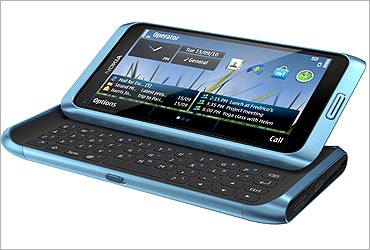
Nokia E7.

Mumbai, Apr 18 : At the launch of the company's latest communicator device E7, D Shivakumar, managing director and vice-president for Nokia India, was inundated with questions from the media on Nokia's steady decline in market share and gradual increase of Android's - Google's open source mobile operating systems - share in India.

But Shivakumar displayed no signs of irritation while he patiently addressed journalists' queries.

A calm-looking Shivakumar refused to fidget even when a video call demonstrated on the E7 device failed to run during the press event.
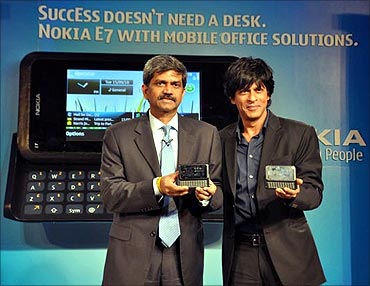
Shivakumar with Shah Rukh Khan.

He instead got company's brand ambassador Shah Rukh Khan to address the media about the newest device and his experiences with the E7.

In simple words, managing the media and its queries now comes easily to Shivakumar: after all, he has been managing the India business for the Finnish company for about five years.But behind a facade of calm Nokia is preparing for a bitter battle for market shares.
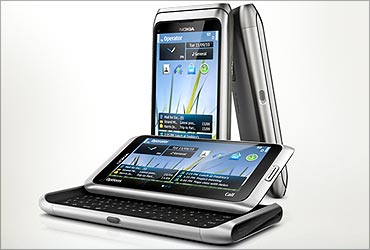
Nokia E7.

While at the lower end of the market, smaller local manufacturers are giving the world's top cell phone maker a run for its money, at the upper end - in the critical smartphone segment - Nokia is struggling against stiff competition from innovative software makers Apple and Google.

It is the availability and success of Google's free open source Android platform that has made entry and expansion in the smartphone market easier for a number of hardware manufacturers in India which have chosen to join Android's ecosystem, especially at the mid-to-low range of the smartphone market. This is where Nokia has been hit the hardest.
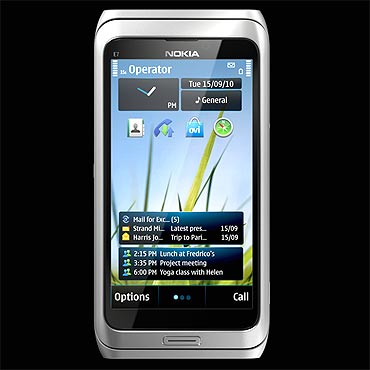
Nokia E7.

A comeback is being planned at Nokia. In India, Shivakumar and his team are busy pushing out services and utility tools on mobile devices that will improve the user interaction with the internet.

"We have added 5 million songs on our music service, introduced accurate real time crop data for farmers at Rs 30 per month, bundled data plans with handsets to encourage free surfing on mobile, and even introduced social networking phones at the mid level," lists Shivakumar.

The company is now eyeing the replacement market that is expected to get people to switch to bigger "trustworthy" brands like Nokia.
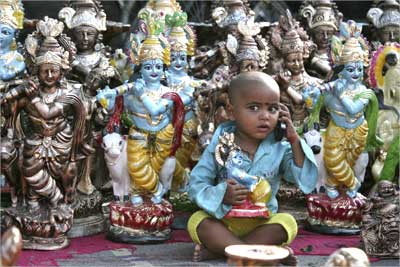
Prem (3), the son of an idol vendor, plays with a mobile phone.

"It's time we leverage our market position and brand in emerging markets to increase sales here," says Shivakumar.

Nokia India, which is second biggest market for the company after China, contributed 2,809 million Euros (Rs 18,000 crore) to the company's worldwide sales in 2009.

To put things in perspective, the Indian mobile handset market has grown by 30.17 per cent from 116 million handsets as on December 31, 2008, to 151 million handsets as on December 31, 2009, as per Analysys Mason data.
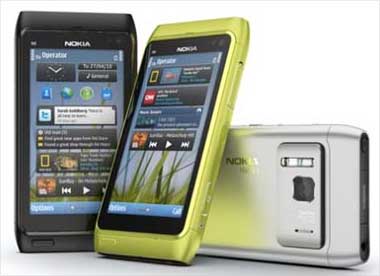
Smartphones.

The growth has been driven by the growth in mid-priced devices - in the range of Rs 2,000 to Rs 5,000.

Market research firm CyberMedia Research recently released a report that predicted the Indian mobile handset market to grow 25 per cent by volume in 2011 to 210 million units with smartphones contributing sales of nearly 12 million units in 2011.

"Smartphones are mobile devices with evolved operating systems, that include Symbian Series 60, Android OS, iPhone OS, Blackberry OS, Linux among others," says Siddharth Neri, analyst, mobile devices research, India telecoms practice at CyberMedia Research.
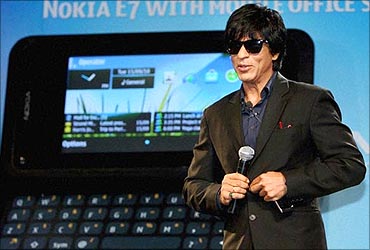
Shah Rukh Khan promotes E7.

Nokia's India act

Having seen a market share erosion of more than 40 per cent in the last three years in India, Nokia is keen to uphold itself as a brand that can be trusted - a direct answer to naysayers who suppose the local handset brands have eaten into Nokia's share at the entry level.

This also explains why the Finnish giant is wooing popular Bollywood stars like Shah Rukh Khan and Priyanka Chopra as the brand ambassadors for its devices who can communicate the "trust" factor to the consumers.

Shah Rukh Khan, who reportedly tested the E7 before it was launched, is seen promoting the device on ad breaks during the Indian Premier League telecast on television.
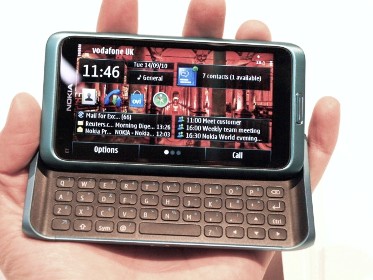
Nokia E7.

But smart marketing will not alone save Nokia and the company knows that. That's why Shivakumar says, "Nokia excels at providing low-cost handsets in high volumes - affordable, simple user interfaces and handsets with software that one can consume and not just fancy."

Nokia claims that it has fine-tuned its approach for the entry level. "We will launch several low-cost dual SIM handsets with features like camera and radio that are much in demand," says Shivakumar.Nokia can take comfort in the fact the brand still rules over the mobile handsets market in India with a 56 per cent top-of-mind recall followed by Samsung and then LG.
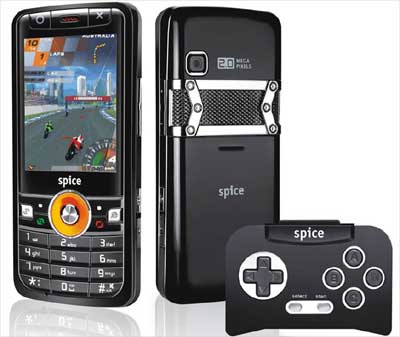
Spice Handset.

As per the Mobile Handsets Usage And Satisfaction Study 2011 of over 4,425 respondents conducted by CyberMedia Research, Nokia remains the most well recognised brand in terms of 'total awareness', but emerging Indian brands like Micromax and Spice too have managed to attract a large following.

But competition is breathing down Nokia's neck.

At last count, well over 200 mobile handset brands were available at retail outlets across the country, according to CyberMedia Research (CMR).

G Five handset.

According to Anirban Banerjee, associate vice-president, research and consulting, CMR India, "Indian handset buyers are increasingly more feature conscious, applications aware and value conscious, rather than being plain 'brand loyal' in the traditional sense of the term."

He adds, "Emerging mobile handset players with their highly innovative features have been able to influence the first time buyers, especially the youth and blue collar executives."
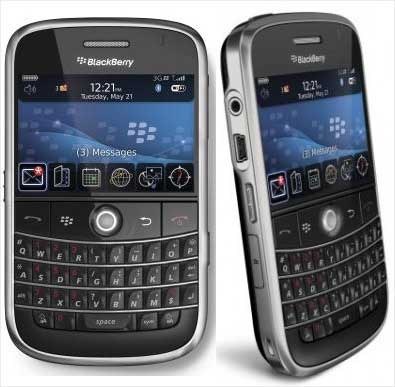
BlackBerry.

It is not only competing with established brands like Research in Motion, the maker of BlackBerry, Apple and Samsung, but Nokia has to also beat the threat from smaller local players, who have unleashed a virtual tsunami of copycat models with almost similar features that match those of high-end branded models, but at much lower prices.

Result: Brands like Micromax, GFive, Spice, among others have already grabbed a sizeable chunk of the domestic handset market.

Korean electronics giants LG and Samsung have already upped their R&D focus to make value additions for Indian mobile users.
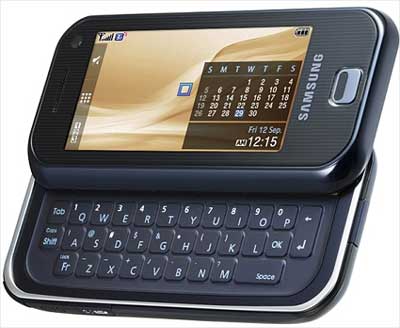
Samsung smartphone.

Samsung says it has made significant investments in its software R&D centre in Noida and has a team of 20 engineers working on customising smartphone platforms for Indian users. Samsung India Software Operations Vice-president Dipesh Shah says, "We are sure to capture a market share of at least 40 per cent in 2011."

Shah is hopeful that the company's Andriod-based smartphones as well those running on Bada, its own mobile operating system, will provide the brand enough differentiation to give it a big market push in 2011.

The confidence stems from the fact that Samsung puts over 8 per cent of its global spends into R&D every year and India is amongst the only four markets to have a dedicated product innovation team outside the US, UK and China.
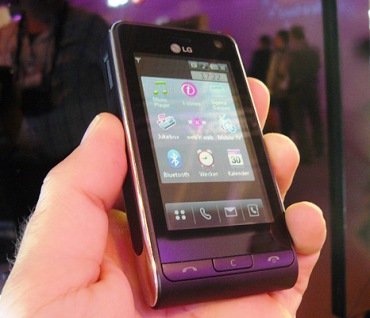
LG phone.

LG, too, is betting big on smartphones. It plans to launch 10 handsets under its Optimus smartphone brand this year, which will include a 3D phone as well as a dual-core processor (faster processing power) phone.

"With Optimus models we will have smartphones in the high end as well as for the first-time smartphone users. Since the demand for smartphones is accelerating with 3G in India, LG expects to generate 20-25 per cent revenue from new smartphones," says Vishal Chopra, business head, mobile communications, LG India.
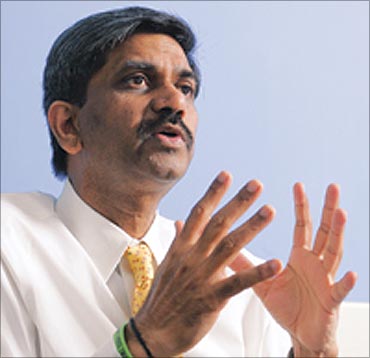
Shivakumar.

Nokia had announced its new strategy, leadership team and operational structure for devices and services business on February 11, 2011, designed to focus on speed, results and accountability.

Effective April 1, 2011, there will be two business units: Smart Devices, focused on smartphones, and mobile phones, focused on mass-market mobile phones.

"The new strategy also involves changing our mode of working and culture to facilitate speed and agility in our innovation, product development and execution and accountability for results," lists Shivakumar.
Nokia, Microsoft tie up.

The Micro (soft) bite

Last month, a broad strategic partnership was announced between Microsoft and Nokia. Microsoft's Windows Phone would serve as Nokia's primary smartphone platform, announced Nokia's new CEO Stephen Elop, himself an ex-Microsoft employee.

"A renewed approach to capture volume and value growth to connect 'the next billion' to the internet in developing growth markets," underlined Elop.

What he didn't say was that other smartphone platforms with their related ecosystems have continued to gather momentum and market share, specifically Apple's iOS proprietary platform and Google's open source Android platform.
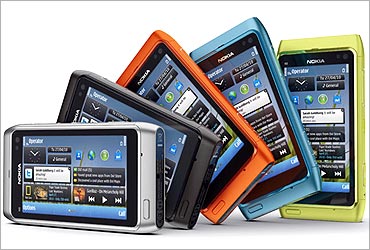
Nokia N8.

Until very recently, Nokia believed its competitive position in smartphones could be improved with Symbian - that's when it launched the Nokia N8 device that supported Symbian 3 OS.

Shivakumar too concurs that for the long term the Symbian platform will not be sufficient in pocketing the smartphone users.

Last month, Nokia even outlined the risks of its decision to partner with Microsoft, in a regulatory filing highlighting many of the issues raised by critics, primarily the hiatus period before it can launch devices running Windows Phone 7 (WP7) - a period that condemns the company to another year in the smartphone wilderness.
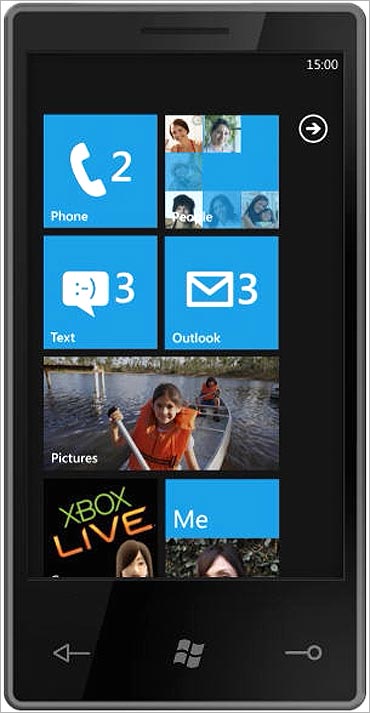
Windows Phone 7.

Nokia says it is aiming to expand the Microsoft operating system into mass markets, and even wrote in the regulatory filing that, "This strategy recognises the opportunity to retain and transition the installed base of approximately 200 million Symbian owners to Nokia Windows Phone smartphones over time. We expect to sell approximately 150 million more Symbian devices in the years to come, supported by our plan to deliver additional user interface and hardware enhancements."

Other risk factors highlighted by Nokia include the relative immaturity of the Windows Phone 7, a mobile operating system developed by Microsoft as the successor to its Windows Mobile platform.
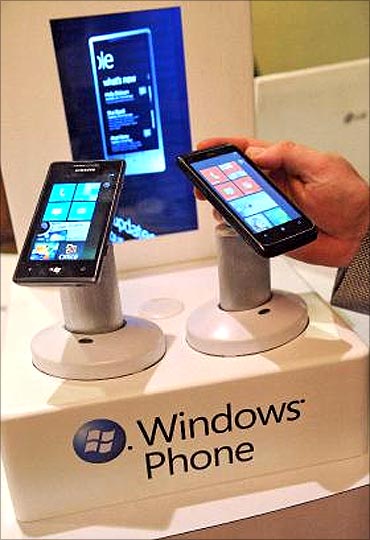
Windows Phone.

"The Windows Phone platform is a very recent, largely unproven addition to the market focused solely on high-end smartphones with currently very low adoption and consumer awareness relative to the Android and Apple platforms, and the proposed Microsoft partnership may not succeed in developing it into a sufficiently broad competitive smartphone platform," says the document, which acknowledges that other "more competitive alternatives" might have delivered market share more rapidly.
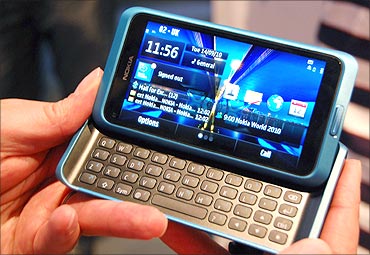
Nokia E7.

Back in India, Shivakumar does not even bat his eyelids as he replies to a query on effect of the partnership in India. "It's a win-win deal," he quips.

"India is set to become a 4 million unit smartphone market by 2014 and the Windows 7-Nokia platform is intended for the smartphone devices."

And while Shivakumar admits that older mobile operating systems like Symbian didn't stand a chance against new mobile OSes like Android and Apple iOS, Nokia is certain the new Windows 7 platform will be the key to

In Mizoram, VIPs Grab Wheat Meant For Poor

wheat bags mizoram

Aizawl, Apr 18
: The Comptroller and Auditor General of India (CAG) has taken a strong exception to the diversion of wheat products to very important persons (VIPs) in Mizoram, which had been done as per the decision of the state government.

The CAG, in its report for the year ended March 31, 2010, revealed that even though no separate allocation of wheat products to the VIPs in the state was made by the government of India, under the PDS, the DCSO Aizawl East during 2006-2010 had diverted wheat products (allocated to the district) to 239 VIPs by appointing two separate VIP fair price shops.

According to the report, the diversion of wheat products meant for the general public to VIPs accounted for 13 to 68 per cent of the total distribution of wheat products, depriving the general consumers to that extent.

Despite the state governments statement that the decision (to divert the wheat products) was made by the state government, the CAG insisted that the wheat products allocated by the GoI for BPL families were ''irregularly diverted'' for distribution to the VIPs.

The CAG report further revealed that six villages under Champhai district never received wheat products during 2005-2010 despite the fact that the district civil supplied officer (DCSO) lifted 4160 metric tons of wheat products for distribution to the public during the said period.

It was also noticed by the CAG that these same villages who did not receive wheat products, had food grain sold to them by retailers (fair price shops) at higher rates than that approved by the government.

According to the CAG report, the Champhai DCSO also disproportionately issued sugar to rural and urban residents at the scale of 300 grams per head per month and 400 grams per head per month respectively.

The CAG also voiced concern over the pilferage of kerosene oil into Myanmar under Champhai DCSO.

The seven special dealers under Champhai town appointed by the food, civil supplies consumer affair department, reported that out of allocated quota of kerosene oil, they used to sell two kilolitre of kerosene to the consumers of the neighbouring Myanmar every month at higher prices.

The dealers said they did this because the monthly allotment was more than the requirement of the local consumers.

Manipur Man In Tihar On Murder Charge, Gets a Job Offer, Then Acquittal

By Utkarsh Anand

tihar jail

New Delhi, Apr 18
: George Kemei is good at table tennis , loves to help others with studies, spends hours in the library with books and wants to make it to the civil services.

Kemei’s (23) qualifications landed him job offers from companies that carried out the first campus placement drive — at Tihar Jail.

Charged with the murder of his girlfriend in 2009, Kemei’s placement was perhaps the first sign of his luck finally taking a turn for the better.

Last week, Central Jail No 3 in Tihar lost its librarian as its formidable iron gates were opened for Kemei. This came after a city court acquitted him of the accusations.

Puncturing holes in the prosecution’s version, Additional Sessions Judge Madhu Jain noted that Kemei’s criminality could not be proved beyond doubt and ordered his immediate release.

The judge, convinced by Kemei’s innocence, further did away with the requirement of his furnishing a surety bond and directed for his release upon submitting a personal bond of Rs 10,000.

The court doled out this reprieve after Kemei submitted that he was from Manipur and had nobody in the city to provide his surety.

Kemei also assured the court that he would present himself before the Delhi High Court if the prosecution decided to challenge his acquittal in future.

A relieved Kemei also thanked his counsel, amicus curiae Vikram Singh Saini.

“This is nothing short of a rebirth for me. I can finally pick up the pieces of my life and move on,” Kemei, who had been studying for UPSC exams even inside the prison, said in the courtroom after the judgment.

On February 25, Kemei earned the distinction of being the first inmate to be given an appointment letter — as a research assistant for JRA & Associates, in addition to an offer of marketing associate for ASP Svealing Products.

He was released on Thursday afternoon.

Tihar’s law officer Sunil Gupta confirmed his release.

Gupta remembered Kemei as a person who held on to the belief that he would achieve his goals one day. “He was a very good table tennis player and participated in all sporting events inside the prison.

He also took English-speaking classes for other inmates and taught computers.”

Gupta said Kemei maintained the library as he was very fond of reading books. Kemei, a native of Nagaland, was brought up in Manipur.

“Whenever asked him about his dream, he said he wanted to do something for the development of the Northeastern states of the country. He said these states had been neglected for long and he wanted to serve there and do his bit,” Gupta said.

Kemei was arrested in May 2009 after his girlfriend’s body was found in the Ridge area of North Delhi.

Police had claimed that Kemei, with the help of his nephew, had murdered Lili as she was putting pressure on him to marry her. Police had also claimed to have recorded the confessional statement of Kemei.

Northeast India Residents in Delhi Facing Bias: Report

By Hakeem Irfan

Mizo students protest against the gangrape of a BPO employee from the North-East

New Delhi, April 18 : People from the north-eastern states who come to the Capital in search of better opportunities face racial discrimination even at the hands of the police.

A report has revealed that 78 per cent of the North-East population in Delhi is subject to several kinds of humiliation because of their appearance.

The project report on 'North East Migration and Challenges in National Capital: City's silent Racial attack on its own countrymen' released by the North East Support Centre and Helpline (NESCH) sketches the ugly canvas of problems faced by the natives of the North- East in Delhi.

"Official apathy" and "bias amongst the law enforcing agencies" are the major reasons triggering and amplifying the problem, the study claims.

The report laments the "official apathy" of the Delhi Police blaming its "inactiveness and bias" towards the community for major crimes perpetrated against the community.

The population of the north-eastern community in the Capital who do not face discrimination are either new to Capital or have lived here for less than a year.

More than two lakh people, of which around 50 per cent are females, from the north- eastern states of India live in the Capital.

"The north- eastern people in Delhi and NCR continue to face racial discrimination, racial attack, abuse, rape, molestation and killing. Since 2005, around 96 cases of crime against the north- eastern residents in the Capital have been reported," the report reveals.

The Delhi Police have, however, registered only 36 cases and are following up on only five cases, NESCH surveyors said.

"The inactiveness of the police officers on duty, who are biased in providing service to vulnerable men and women to racial attack and sexual violence and failing to book the perpetrators have fuelled more crimes against the North- East Indian communities in Delhi and the NCR," the report reads.

In 2011, statistics inform that more than 20 cases of crime have taken place against individuals of the community.

The figure of crime against north- eastern women according to the report is around 60 per cent including molestation, human trafficking, beating, rape and attempt to rape.

Taking a dig at the politicians in the Capital, the report says the system lacks the political will to act against the criminal elements in Delhi.

"They ( politicians) raise a hue and cry only after some huge untoward incident happens," the report adds.

The report urges the ministry of development of north- eastern region ( DoNER) to issue a directive to implement existing laws, policies and plan of actions to end racial discrimination faced by the north- eastern communities in Delhi.

"The North- East MP ( NE- MP) Forum must take note of the plights faced by their communities," the report says adding, " It should take up the matter with the law enforcing agencies and governments concerned." Earlier, the north- eastern community delegation visited DoNER and the NE- MP Forum to raise the issues of the community in the winter session of the Parliament. However, the Parliament boycott made this impossible for the representatives.

"We are going to meet the representatives before the monsoon session this year and ask them to raise the issues in the Parliament," NESCH spokesperson, Madhu Chandra, said.

The report says social profiling is the root cause of racial discrimination, attack and sexual violence against men and women from the North- East.

"The majority of North- East India residents come from scheduled caste and tribes.

They are ethnically from the Mongoloid race and fall out of the caste hierarchy. This is the reason they are discriminated against," Chandra added.

According to the report, over 414,850 people from North- East India migrated to other big cities in India during 2005- 2010.

The annual average increase in the number of migration is 13.62 per cent. Delhi is one of the most preferred destinations for North- East migrants with almost 48.21 per cent of the migrants moving to the Capital.

MAJOR CASES SINCE 2005

  • A 19- year- old Mizo girl gangraped in Dhaula Kuan in 2005
  • Seven- year- old girl from Nagaland gangraped, murdered and dumped in a water tank in Mahipalpur in 2009
  • A 19- year- old Manipuri girl murdered after attempted rape by an IIT student at Munirka in 2009
  • A 30- year- old Mizo woman who worked in BPO gangraped in Dhaula Kuan in 2010.

Mizoram Has Potential To Produce 4,500 MW

hydro powerAizawl, Apr 18 : Mizoram generates only 13.5 MW though the State has a potential to generate 4,500 MW.

According to Mizoram Power and Electricity department’s latest report, the State has a potential of generating 4,500 MW but produces only 13.5 MW currently which is only 0.60 per cent of the total potential of the State.

On the revenue front, Mizoram received Rs 66.02 crores by selling electricity during 2009-2010.

This is possible due to ABT (Availability Based Tariff) used across the country. Accordingly, the State has sold power to other States from its share through unscheduled interchange or bilateral sale, said the sources today.

Currently, Mizoram needs 107 MW power while the State receives 65.31MW only that too from Mizoram’s Central share.

The State has several small Hydel Projects and the power generated through these Hydel projects is only 17.05 MW. Bairabi Thermal Plant at the Mizoram-Assam border, with a generating capacity of 22.92 MW, currently generates only 4.01 MW.

Mizoram Power & Electricity department spent Rs 78.81 crores for procuring power from other States while the State also received Rs 66.02 crores from power sales.

Till March 31, 2010, there were 1,53,999 electric connections across the State while till January 2011, 603 villages have been electrified.
There is a plan to give electric connection to 104 villages through Rajiv Gandhi Grameen Vidyutikaran Yojana (RGGVY). Through this programme, 27,417 BPL families got connections till November 30, 2010. Mizoram has a total of 707 villages.

Newmai News Network

Adventurers Risk Limbs To Drive Rickshaws in India

Adventurers risk limbs to drive rickshaws in India

By Anna Mathews

Kochi, India - Traditional drums rolled as hundreds of spectators bid farewell and good luck Sunday to scores of flimsy autorickshaws starting the ride of a lifetime: from India's southern tip to its northeastern edge.

Keeping limbs intact will likely be a very real challenge for the 180 people from 19 countries who began the more than 3,000-mile (5,000-kilometre) ride as part of the Rickshaw Run, a five-year-old charity event.

Riding in a 150CC, four-gear, three-wheeled autorickshaw through any crowded Indian city for just a few miles (kilometres) can be quite a thrill. A two-week journey tackling the country's highways, back lanes, mountains and valleys in what the organizers describe as a "glorified lawnmower" qualifies as a bona fide adventure sport.

The run kicked off in Cochin in the southernmost state of Kerala and will end in Shillong, the capital of Meghalaya in the northeast.

"We are risking life, or at least a limb, for charity," said Jenny Lucas, part of a three-woman team from the United States. "And for adventure, of course."

The Rickshaw Run, which started in 2006, equips teams with an autorickshaw, permits, a starting point and a destination, after which participants are pretty much on their own. They are expected to drive their vehicles, a skill they learn a couple of days before the event, to the destination in the stipulated time.

Each team must raise at least $1,600 toward charities working in India; this year, Social Change and Development, a rural development charity, and International Rescue Corps are the main beneficiaries.

"Online registration starts a year in advance and we sell out in a minute," said Matt Dickens of The Adventurists, the British-company that organizes the event.

"With the heat, this year is going to be a tough run."

For Lucas, the idea of "Indian traffic and going uphill in the rickshaw" was far more nerve-wrecking than the heat.

"Our friends think we are a bit nuts," said her teammate Ellen McLean, as they waited around to have their rickshaw painted like an Indian truck.

The rickshaws take on many avatars. There are tigers and elephants painted on; there is a huge plywood dove mounted on one, but Indian truck art is the most popular.

Irish couple Tracy Purcell and Gordon O'Neill have painted theirs like an Irish police car, with a "Garda" on it.

"We are hoping that it will help Indian traffic to part before us," says O'Neill, who signed on for the Run "to see the little visited parts that are not frequented by tourists."

That was Thomas Morgan's intention when he started The Adventurists, which also organizes a 7,500-mile (16,000-kilometre) Africa Rally where cars with under 1000cc engines drive from London to Uganda in four weeks.

"My own favourite experiences have been when things have gone wrong on a trip," said the 31-year-old. "We've had broken arms and legs, and some participants run into areas of political unrest in this event, but largely the local people are hospitable and helpful, and participants come away with memories for life."

The shaky nature of the vehicle becomes obvious when Morgan shows how it works to one of the teams.

"This lever works the wiper," he explains to South African Ross Macbean and New Zealander David Harrow. "But it is absolutely useless when it rains."

ASSOCIATED PRESS

2,578 Manipur Children Living With HIV/AIDS

aids-affected-kids manipurImphal, Apr 18 : The number of children living with HIV/AIDS (CLHA) in Manipur has reached 2,578 as of January this year.

Among these, 1378 are male while 1200 are females, according to the State epidemiological analysis report of the Manipur State AIDS Control Society (MACS).

According to Dr Ng Hemanta, joint director (CST), MACS, among these , 743 children have started ART medications. He was speaking on the sidelines of an ongoing three-day long training programme for medical officers and counsellors on HIV exposed infant care here .

The training which began here on Friday has been organised by MACS in collaboration with Regional Pediatriac Centre, JNIMS and supported by UNICEF, Assam with the objective of providing the latest care and support treatment to HIV exposed mothers and children.

Altogether 98 counsellors and 69 medical officers of the State will be trained during the three-day programme .

Pointing out the present trend of the HIV/AIDS epidemic which is shifting from high risk groups such as IDUs to the general populace especially women and children, Dr Hemanta stressed the need for more proactive intervention programmes such as Prevention of Parent To Child Transmission (PPTCT) of HIV/AIDS.

He further said that the need of the hour is not just to register positive cases but to also detect those mothers and infants exposed to HIV/AIDS.

Stating that it is a myth that nevirapine can save all children, he said that rather it lessens the risk. Therefore, what is crucial is close monitoring and care of both mother and children, he added.

Abhiram Mongjam, Joint Director of MACS (TI) pointed out that the rights of children exposed to HIV/AIDS still remains an unheard voice globally as well as in Manipur. Stating that there is still high risk of exposure of infants to HIV/AIDS from pregnant mothers in the State, he further stressed on the need for close monitoring and follow-up by counsellors as well as medical officers.

Consultant of the Infrastructure, Liason And Financial Services (IFSL) Manipur and Mizoram, Maibam Premjit said that the PPTCT of HIV/AIDS which started in 2002 in Manipur has been rapidly expanding to cover all corners of the State.

While nevirapine coverage in Manipur is good, high rate of home delivery of children, despite all efforts towards institutional deliveries, is posing a major obstacle in the fight against the HIV/AIDS epidemic, he said.

The training programme is being facilitated by Dr Hemanta, Dr Hijam Apabi, In-Charge of Regional Paediatric Centre (RPC), Jawaharlal Nehru Institute of Medical Sciences (JNIMS), Prof Dr L Ranbir, Head of Department of Paediatric Department, RIMS, Radharani, Senior Nurse of Regional Paediatric ART Centre, JNIMS, Dr N Kameshore, Assistant Professor of Paediatric Department, JNIMS and Dr Ng Bembem, Nutritionist at Regional Paediatric ART Centre, JNIMS.