17 April 2011

Blame Vodka For Russian Mortality

Media_httpwwwfuturity_ejftj

The end of an effective anti-alcohol campaign, not capitalism, can be blamed for a 40 percent surge in deaths in Russia between 1990 and 1994.

With the collapse of the Soviet Union, working-age Russian men began dying in droves. Economists and political scientists blamed democracy and capitalism for leaving many people unskilled and unemployable, ushering in a sense of listlessness and depression that mixed too easily with cheap vodka.

“Most things that kill people disproportionately kill babies and the elderly,” says Grant Miller, assistant professor of medicine at Stanford University. “But working-age men accounted for the largest spike in deaths in the early 1990s."

Full story at Futurity.

Billionaire Is The New Millionaire

Not too long ago, earning a title millionaire was an incredible feat, but today there are an estimated 8.4 million Americans alone who have investible assets worth at least $1 million.

But achieving billionaire status is seldom accomplished today – only 413 Americans can currently claim the title.

Of course, inflation is certainly a culprit in the rise of the number of millionaires and billionaires alike; but the facts are plain – billionaire is the new millionaire!

Check out the infographic below to see the history of billionaires and find out how long it would take you to become a billionaire with just $10,000 in hand.

Billionaires-v4

15 April 2011

Why Shillong Flips For WWII Jeeps

The Second World War years linger in this hill town in strange ways, and none more unusual than in its abiding fondness for Willys jeeps

By Janice Pariat

WAR VETERAN A restored General Purpose Willys jeep in Shillong, one of four such originals in the city today (Photo: WANPHRANG DIENGDOH)

WAR VETERAN A restored General Purpose Willys jeep in Shillong, one of four such originals in the city today (Photo: WANPHRANG DIENGDOH)

She’s sixty-nine years old, and recently covered 329 km from Shillong in Meghalaya to Dimapur in Nagaland without a hitch. In fact, she was even part of the rally’s winning team. Meet Ashok Lyngdoh’s pristine 1942-model Willys jeep, which he lovingly refers to as part of the family. “Even her siren works,” he tells me, joyfully cranking it up. His enthusiasm for World War II antiques spills over into other things. His house is a veritable museum. On the table lies an American Army plate and meat skewer, on my lap is the helmet of an unknown British soldier, in the porch is parked a 1941-model BSA motorbike in mid-restoration. These items were scattered in and around Shillong during its ‘war years’.

After the spring of 1942, when Japan attacked Burma and ousted the British, this sleepy little town was transformed into a bustling convalescence base for Allied soldiers on the Burma front. The then capital of Assam (which included Meghalaya, Mizoram and Nagaland), Shillong was chosen for its mild weather, general prettiness and its relative accessibility from Guwahati. It was also not without any military standing, being the headquarters of some Gurkha units as well as the Assam Regiment (famous for stalling the Japanese army at Kharasom and Jessami in March 1944). Soldiers headed there for much-needed rest and relaxation, to recover from months at the front or bouts of malaria and black water fever. The British set up makeshift camps near Nongrim Hills, while Americans (far  better paid than their allies) hired bungalows all over town. There was plenty to keep them busy—dances at Shillong Club, Kelsalls, and Pine Wood, movies at Kelvin and Garrison cinema halls, swimming at Crinoline Falls, among other things. Singer Dame Vera Lynn, fondly known as the ‘Forces’ Sweetheart’ visited in 1944, while English football and cricketing legend Dennis Compton played with the troops at Polo Ground. Also special was the interaction between the troops and the locals. Bah Harvey Diengdoh, an 88-year-old writer and musician, speaks to me of his elder brother, Osborne, a member of the Royal Army Medical Corp. “He had two Scottish soldier friends. They’d all get merry in the evening and sing Bonny Banks of Loch Lomond.”

Despite this taking place over 60 years ago, the legacy of the war lingers on in Shillong in the most unusual ways. In the nar aeroplane (metal used to create landing strips in the Northeast jungles) that lines the footpaths of houses, the helmets used as flower pots, the ghost stories that haunt the corridors of Loreto Convent and St Edmund’s (schools used as military hospitals), the children who carry traces of ‘foreign’ genes in their blue eyes and freckled faces, in faded photographs that hang above fireplaces, and stories that people cradle and pass on. The war years still resound in Shillong. And none louder than in the drone of a Willys engine.

In 1942, after the Japanese attack on Pearl Harbour and America’s subsequent entry into the War, the US Army’s Quarter Master Corp sanctioned the order for a ‘field’ car, a light, 4-wheel-drive, multi-purpose, all-terrain vehicle that could traverse rough, unpaved territory. Combining elements of various pre-war prototypes, a standard vehicle was designed by Willys Overland, which only Ford was capable of manufacturing in the thousands. General Purpose Willys (GPWs) vehicles were shipped across the world to all arenas of war—Africa, Europe, the Pacific and Burma. My quest to understand the appeal of these jeeps first takes me to Kolkata, fitting perhaps as this was the place from where they were sent to the Northeast. Uday Bhan Singh is co-founder of Jeep Thrills, a group that brings together jeep-lovers from across the country and world. He lives in a rambling old place in Howrah, which has half a jeep lodged in the first floor wall of his house. It hangs over his porch like a surreal yet proud trophy. He has designed his life, he tells me, around doing what he loves—restoring World War II jeeps.

“I was brought up amid cars. We had a bus transport company. My father and uncle owned 1945-model GPWs. But of all the cars we had—Rolls-Royce, Cadillac, Chevrolet, Chrysler—I always fancied the jeeps. Of course,” he adds with a smile, “there was a ban on the others. We weren’t allowed to touch them, but jeeps were rough, tough. You could jump and play in them.” He uses the word “freedom” and I think we may have uncovered the core of why these vehicles are loved.

If Singh’s house is surrounded by ‘a graveyard of rusted automobiles’ (to quote Arlo Guthrie), then Shillong is an actual burial ground. After the War ended in 1945, jeeps, along with other military equipment (often even livestock), were buried in various places in the outskirts of town. The DC gave permission for locals to ‘cannibalise’ this buried treasure and reuse the metal; yet whole vehicles survived, some given away by the troops as gratuity or payment for debts owed. Although there are plenty of post-War and Mahindra jeeps in Shillong, some four restored GPWs originals survive in town today. Yes, this love of jeeps is about “freedom”, says Ashok, but not only in the easy rider, open road kind of way. It wasn’t even, as I’d believed, so much about masculinity. “What the horse was to the Wild West, the jeep was to the Northeast,” he says. “If you look at connectivity throughout this region up to the War and early 50s, you had no roads. You had one road from Shillong to Guwahati, one up to Mawphlang, and it was jeeps that paved new dirt tracks that eventually became roads.” Apart from providing geographical links, the jeep also served to bring people together in other ways. “It was used as a bus, an ambulance, a taxi. It was used to carry plane sheets, farm produce and livestock,” explains Ashok. “It’s ironic how an instrument of war actually became an instrument of peace. It became something that brought about the development of this entire area. And this is perhaps the reason why people here have this strong emotional attachment to the jeep.” There’s a lady, he continues, who, a few days after she was born, was taken in a jeep from Shillong to Nongkrem (where there were no roads). In honour of the vehicle, she was named Jeepsy.

Bah Wendell Passah, who Ashok calls his mentor, elaborates, “The jeeps would travel to and from various marketplaces in the Khasi and Jaintia Hills. Bazaars were held every week. Shillong was the centre from where these vehicles would go to Jowai, Dowki, Umroi, Laitlyngkot, Thadlaskein.” It was also fortunate, he says, that there was a dedicated group of civilians who’d trained as mechanics during the war years—“The people of the hills were quick to learn and good with their hands. They later turned drivers and also tended to the jeeps. We have workshops in Shillong with families of mechanics for two-three generations. Not only were jeeps used by our grandparents to travel, they provided us with a livelihood; naturally we feel strongly about them.” And this fondness still runs in their veins, no matter how far away they are from home. Sujan Deb, for example, who lives and works in Aberdeen, Scotland, shops for vehicle parts from junkyards in Shrewsbury, Shropshire and Derbyshire and mails them to Shillong, so he can restore the jeep he owns when he makes his annual two-week visit home. He has a long way to go, considering it has taken Ashok, Wendell and others almost a decade to restore their GPWs.

It’s easy to see why it would take that long and require this kind of dedication. GPWs are beautiful, intricate machines that infuse the term ‘multi-purpose’ with new meaning—the tyre rims are specially built to be towed on railway tracks; a shovel and axe fit neatly beside the driver’s seat; the headlights can be inverted to illuminate the engine; in case of a flat, the tyre tubes could be stuffed with skum (straw) and run for another 48 km; the dashboard lights are carefully diffused so snipers wouldn’t spot them; the brake wires are carefully enclosed to save them from wear and tear; the Jerrycans can carry not just petrol but soup and stew; the tyres could be lifted and hooked to a rubber belt that would help saw wood or churn laundry. “More than all that,” says Ashok, “they became extensions of the soldiers who slept, shaved, drank, ate and died in these vehicles. My jeep is a memorial to all of them.”

As a special treat, I’m taken on a jeep ride to Jowai, a town two hours away from Shillong. As we hit a traffic-free road winding down the hillside, warm winter sunshine on my back, I realise that sometimes there’s nothing like the wind in your face to lift the weight of history.

Source: OPEN Magazine

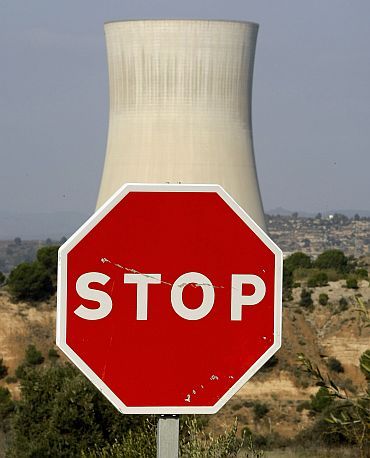
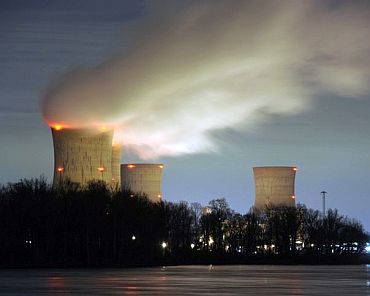
Indian Nuke Reactors Will Soon Shut On Slightest Tremor

New Delhi, Apr 15 : Not taking any chance of India facing Fukushima-type nuclear disaster, the government is gearing up India's nuclear power plants and other reactors for automatic shutdown, requiring no human intervention, if any earthquakes of the least intensity strikes.

The government-run Nuclear Power Corporation of India Limited, which operates all 20 nuclear power plants in the country, is taking steps for this extra safety, which also includes storage of water and the diesel-operated pumps that start automatically in such eventualities for cooling the reactors.

The NPCIL drew up the additional safety measures, taking lessons from the failure of the back-up power at the Fukushima Daiichi nuclear power station in Japan, leading to overheating of the reactor cores and cascading into hydrogen explosions and radiation leaks into the environment.

While not disclosing at what stage the automatic shutdown mechanism will be triggered, sources said it has been brought down to quite a low level, requiring the operators to kick up the shutdown procedure as soon as they sense seismic waves.

Sources added that all reactors in India were already designed to handle the seismic events, which could occur in their seismic zones, to automatically shut down when ground accelerations exceed specific values. But the new plan requires the automatic shutdown even if the site experiences ground acceleration that is slightly lower than the current safe operating limits.

For instance, a plant may be designed to shut down safely at earthquake-triggered ground acceleration of 0.2g may be geared to automatically shut down at 0.15g. 

The NPCIL has not specified at what limits of acceleration will this shutdown begin. The actual figures will vary from site to site, sources said.

The plan, which emerged from an internal task force carrying out the safety audits, also envisages an increase in the duration for which the cores of nuclear reactors that have shut down may be cooled with passive systems that require no electric power.

"We already have good safety systems in place at our nuclear plants. With the new steps we are being super-conservative," a corporation executive was quoted as stating.

He said there would be also a "hook-up" arrangement to supply water through external tankers if the adequate inventory of water in the plant is found wanting.

The NPCIL said the current water inventory at its nuclear reactors is enough to be sufficient for 10 days, and at some places for up to 30 days. Water is crucial in attempts to cool reactors that have shut down but continue to heat because of radioactive decay.

The audits have asked the NPCIL to establish "hook-up" points to make available water to the spent fuel ponds at the nuclear power stations in Tarapur, Kalpakkam, and Rajasthan.

The water reservoirs at NPCIL's reactors in Kalpakkam are three metres above flood level and located at a considerable distance from the coast, while additional shore protection measures have been ordered to reduce the energy of tsunami waves will be at both Tarapur and Kalpakkam.

India's Atomic Energy Regulatory Board is also independently reviewing safety issues of nuclear plants. The NPCIL said it will await the results of that review, but will seek to implement the task force's recommendations immediately.

Rihanna Uber Sexy for FHM Australia May 2011

Rihanna-FHM-1
Here are some pictures of Rihanna in the Australian issue of FHM magazine.
Rihanna-FHM-2
Rihanna-FHM-3-466x800

Lily Aldridge – Sexy Little Bride Photoshoot

280928595_lily_aldridge_03_123_543lo
Lily Aldridge is “Sexy Little Bride” – photoshoot for Victoria’s Secret
280932842_lily_aldridge_06_123_191lo
809263915_lily_aldridge_01_123_165lo
809272829_lily_aldridge_02_123_181lo
809303741_lily_aldridge_04_123_401lo
809317193_lily_aldridge_05_123_579lo
809337642_lily_aldridge_07_123_406lo
809348259_lily_aldridge_08_123_92lo
809356127_lily_aldridge_09_123_586lo
809365953_lily_aldridge_10_123_19lo
809375394_lily_aldridge_11_123_106lo
809386152_lily_aldridge_12_123_437lo
809397138_lily_aldridge_13_123_188lo
809409163_lily_aldridge_14_123_213lo
809415235_lily_aldridge_15_123_256lo
809425251_lily_aldridge_16_123_403lo
809431667_lily_aldridge_17_123_358lo
809440837_lily_aldridge_18_123_385lo
lily_aldridge_00

Sara Jean Underwood in Lingerie (NSFW)

sara_jean_underwood
Sara Jean Underwood – unknown photoshoot

272568234_sara_jean_underwood_01_123_982lo
272571385_sara_jean_underwood_02_123_494lo
272574565_sara_jean_underwood_04_123_416lo
725731123_sara_jean_underwood_03_123_184lo
725757193_sara_jean_underwood_05_123_348lo

‘Luxury’ Ice Cream Latest Hot Fad in Indonesia

Jakarta: Jakartans love new things, and the rapidly growing middle classes of Indonesia's capital always fight to be first -- whether watching the latest Hollywood blockbuster, owning the newest gadget, or being seen in a trendy bar.

But even the most avid trendspotters have been surprised by the craze for Magnum ice cream that has swept the city since the February opening in central Jakarta of the Magnum Cafe, months after the brand was relaunched in Indonesia by parent company and consumer goods giant Unilever.

The success of the cafe, which features the iconic chocolate-coated ice cream on a stick, is a tribute to the rising power of the middle-class, empowered by robust demand and growing investment in the far-flung archipelago.

Luxury ice cream latest hot fad in Indonesia

The queues snake longer each day as ice cream lovers come in droves, waiting for several hours at peak times. "It's the Belgian chocolate that makes it different to other ice creams," said Githa, a teacher in Jakarta.

"The chocolate is amazing." The cafe offers different ways of enjoying Magnums, from dipping into sauces to Magnum appetizers, main courses, desserts and mocktails. The menu, created by an Italian chef, includes Waffle de Aristocrat, Goblet of Chocolate, Crown Jewel and Truffle Royale. "Since its opening day, the café has received great enthusiasm from ice cream lovers in Jakarta," said Meila Putri Handayani, a senior brand manager at Unilever Indonesia. "During peak time, it takes approximately 2.5 to 3 hours." Handayani declined to give the exact number of Magnums sold but said the cafe sells hundreds each day, with numbers ramping up at the weekend.

ECONOMY COOLER? Magnum is not your average ice cream. With a slick advertising campaign aimed at adult ice cream lovers, endorsements for the "luxury" ice cream have come from television stars such as Eva Longoria of Desperate Housewives and Hollywood's Benicio del Toro. Last year, fashion guru Karl Lagerfeld was recruited to help launch Magnum products in the United States. At the Magnum Cafe in Jakarta, a Magnum will cost each punter 12,000 rupiah ($1.38) each, in a nation where the average person lives on less than $6 per day, according to World Bank data from 2009. Magnum's popularity is seen by some economists as further proof that Indonesia's surging economy, the largest in Southeast Asia, is benefiting many, with growth of over 6 percent predicted this year. "The World Bank is always going to make a big point about the income gap, which is always going to be present," said Wellian Wiranto, an economist with HSBC in Singapore.

"Consumption for a long time has been the story for Indonesia, and this is just one way it has been manifesting -- both in terms of the lines ... and the purchasing power," he added, referring to the domestic demand for consumer goods that helps keep the economy armoured against global shocks. Ensuring that the economy of 17,000-island Indonesia does not overheat is still a concern for many investors. Helping allay these fears, in February the central bank surprised markets by raising its policy rate by 25 basis points to 6.75 percent from a record low of 6.5 percent. But questions remain about whether this has been successful. "Bank Indonesia has been very reluctantly hawkish -- although the stance it has about currency position, may indeed help cut the price of imported ice-cream," added Wiranto, referring to the bank's policy of allowing the rupiah to appreciate and cut the cost of imported goods. "It takes more than just Magnum to cool down the economy."($1 = 8,699 Indonesian Rupiah)