19 October 2010

Headscarf Keeps Obama Away From Golden Temple

Obama No Head Scarf New Delhi, Oct 19 : US President Barack Obama’s visit to the Golden Temple in Amritsar is likely to be called off after a ticklish question on what he should use to cover his head put his aides in a tight spot.

Moreover, a packed schedule in Mumbai and Prime Minister Manmohan Singh’s plan to host a dinner for Obama on November 7 left a very narrow window for Amritsar.

But it was the first question which created more doubt -- what should Obama use to cover his head when he visits the Golden Temple?No headscarf, no visit to Golden Temple

The White House team which visited India last month ruled out Obama wearing the traditional scarf on his head.

Indian officials were informally told that Obama wearing a headscarf to visit the Golden Temple may convey an image of him appearing to be a Muslim.

This is one misinterpretation Obama's advisors did not want at any cost, given the political sensitivities over this issue in the US.

No headscarf, no visit to Golden Temple

As a result, a final decision on whether Obama would visit the Golden Temple was always kept pending.

An American official is said to have explained at one of the pre-visit meetings that each day Obama has to remind the US that he should not be mistaken for a Muslim just because his middle name is Hussain.

For this reason, considerable thought was being given to what Obama could wear without offending Sikh sentiments.

No headscarf, no visit to Golden Temple

Obama's aides finally came up with the idea of a "modified" baseball cap. It would have to be modified because the Golden Temple does not permit a baseball cap instead of a headscarf. In fact, the temple authorities have no problems with skull caps.

As Giani Gurbachan Singh, head priest of the Golden Temple, puts it: "We have no problems if he wears a skull cap, the kind that Muslims wear to the mosque -- or any other cap that is modified to something similar. But we don't allow baseball caps or Army hats."

No headscarf, no visit to Golden Temple

It is within these red lines that Obama's aides had to find the appropriate headgear which would serve his domestic political purpose while taking care not to hurt Sikh sentiments.

The Indian government, on its part, studiously stayed away from this issue, maintaining that it was for US authorities to resolve.

Obama, who arrives here on November 6, will first touch down in Mumbai, where he plans to visit a 26/11 memorial and Mani Bhawan, where Mahatma Gandhi used to stay. He was then scheduled to go to Amritsar for this brief and only religious engagement in the itinerary.

Source: The Indian Express

Why Does Airplane Food Taste so Bland?

Why does airplane food taste so bland?Ever wondered why food in airplanes always tastes so bland?

Now, a new study at the University of Manchester tells you why.

The level of background noise affects both the intensity of flavour and the perceived crunchiness of foods, researchers have found. While louder noise reduced the reported sweetness or saltiness, it increased the measure of crunch.

Maybe that's the reason airplane food tastes so bland - a phenomenon that drives airline catering companies to heavily season their foods.

"NASA gives their space explorers very strong-tasting foods, because for some reason they can't taste food that strongly - again, perhaps it's the background noise," BBC quoted Andy Woods as saying.

Why does airplane food taste so bland?

In a comparatively small study of 48 participants, who were fed sweet foods such as biscuits or salty ones such as crisps, while listening to silence or noise through headphones, the researchers found that in noisier settings, foods were rated less salty or sweet than they were in the absence of background noise, but were rated to be more crunchy.

"The evidence points to this effect being down to where your attention lies - if the background noise is loud it might draw your attention to that, away from the food," Woods said.

The research is reported in the journal Food Quality and Preference.

Source: ANI

Ace Pilot Who Stole Panties

Ace Canadian pilot is sex fiend: Killed, stole pantiesAce Canadian pilot is sex fiend: Killed, stole panties
A top Canadian pilot, obssessed with lingerie has been exposed as a sex fiend, serial killer. In another case, the Mumbai doctor who has been held for rape apparently watch porn before raping the patient. Police arrested a businessman who faked the abduction of his own son and later killed him. Read on

In this Sept. 20, 2009 file photo provided by the Dept. of National Defense via The Canadian Press, Col. Russell Williams salutes as he arrives at the Battle of Britain parade in Trenton, Ontario.

Colonel charged with murder, sexual assaults, breaking and entering

Belleville: A commander who was a rising star in Canada's military pleaded guilty on Monday to the murders of two women, the sexual assaults of two others and dozens of breaking and entering charges in which he stole panties from the bedrooms of girls as young as 11.

Col Russell Williams, who once flew prime ministers and served as a pilot to Queen Elizabeth II during a visit, was the commander of Canada's largest Air Force base until he was charged earlier this year.

He pleaded guilty to two first-degree murder charges, two sexual assaults and 82 breaking and entering charges in a Belleville, Ontario court. The 47-year-old faces a sentence of life in prison with no possibility for parole for at least 25 years.

Williams was expressionless and dressed in a dark suit, and he kept his head down as the charges were read. The list of charges was so long that it took nearly 40 minutes to read it into the record.

"Guilty, your honour," he said after the charges were entered.

Prosecutors said Williams targeted girls and women in their teens and 20s and often photographed himself in their underwear.

Ace Canadian pilot is sex fiend: Killed, stole panties

Col. Russell Williams, who was the commander of Canadian Forces Base Trenton, Canada's largest military airbase, leaves court in Belleville, Ont., on Monday, Oct. 18, 2010

At the sentencing hearing following his guilty plea, prosecutors showed photographs of Williams wearing a 12-year-old girl's cartoon-decorated underwear, with his genitalia protruding from them, while he was lying on her bed. Other photos showed him wearing underwear belonging to 11-year-old twins. In some of the pictures he was masturbating.

Authorities said he carefully catalogued the photos of himself in the victims' underwear with time and date stamps on hard drives in his Ottawa home. Some of the photos were panoramic shots of the victims' bedrooms. He would take the lingerie with him, keeping them in bags and boxes in his home and would sometimes burn them if he ran out of space. Prosecutors also said Williams videotaped the assaults and murders.

Williams, who was born in England and raised in Canada, was pictured with Queen Elizabeth II and Prince Philip, on the front page of the newspaper of Canadian Forces Base Trenton during their 2005 visit. He was photographed in January with Defence Minister Peter MacKay during an inspection of a Canadian aircraft on its way to support relief efforts in Haiti. He is alleged to have killed his second victim just over a week after this.

He pleaded guilty to the murder of Jessica Lloyd, 27, whose body was found in February, and Marie Comeau, a 38-year-old corporal under his command who was found dead in her home last November.

Williams also pleaded guilty to forcible confinement, breaking and entering and sexual assault after two women were attacked during home invasions in the Tweed, Ontario area in September 2009.

Korean Wave or ‘Hallyu’ Reaches Remote Northeast India

Hallyu, or the Korean wave, is reaching global audiences even in aremote Northeast India.

The BBC news program “Close-up” has recently featured a series on Indians who are influenced by Korea’s pop culture. “Close-up” is a program by BBC which features stories on aspects of life in countries and cities around the world.

In Manipur, a small state in the northeast India, Bollywood has been banned by separatists.

Bollywood being a prevalent and popular film industry in India, locals in Manipur had to search elsewhere for entertainment.

Without Bollywood, locals in Manipur discovered Korean entertainment and its pop culture.

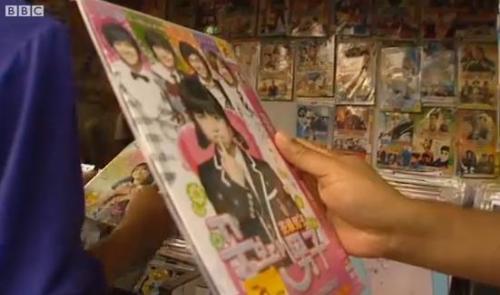
The series portrays popularity of Korea’s pop culture in Manipur by showing street venders selling films such as “Boys over Flowers” and other TV programs.

alt

'Boys over Flowers' DVDs are sold at street venders in Manipur, India. (Captured from BBC)

According to the BBC, it is not only Korea’s films that are becoming increasingly popular but locals are deeply influenced by its fashion, culture and hairstyles.

To watch the clip and read full article: bbc.co.uk.

Via Herald Online

Citizens in Arunachal-Assam Border Caught in Catch 22 Situation

arunachal-pradesh-map Itanagar, Oct 19 : People living in the 'disputed' areas on the Arunachal Pradesh-Assam border have been caught in a catch 22 situation, often becoming the targets of threats and harassment from anti-social elements of both the states. Government employees, particularly teachers, posted in these areas are the worst sufferers who are denied facilities of a normal life.

Teachers, working in the Government Middle School at New Serene under Nari-Koyu constituency in East Siang district of Arunachal Pradesh, a disputed area, say they are neither provided with any facility by Arunachal government nor given protection from harassment by people from across the border.

''We get threats and are told to close the school and vacate the area on one hand and on the other, the government wants us to stay put and run the school,'' said the school's headmaster, Bomgi Doke.

Threats and verbal abuses are a common occurrence for them, but still they are not leaving the school only out of love for the students whose future will otherwise be doomed, Doke says.

''Poor students of adjoining villages depend on this school for a better future. As teachers we can't forsake them,'' Doke's colleagues said.

On February 12, this year, unknown miscreants burnt down the teachers' barrack of the school and ever since the teachers are putting up in a makeshift accomodation, they said.

Home Minister Tako Dabi, who represents Nari-Koyu constituency, said that the state government was trying its best to provide facilities to the school to instill confidence among teachers and students.

''We are in constant touch with the Assam government for bringing a permanent solution to the decades-old boundary problem and hope with Congress governments in both states as well as in the Centre, soon the problem would be resolved.''

Indian PM's Meeting on Northeast India Hydro Dams Called Off

manmohan-singh india New Delhi, Oct 19 : An Indian inter-ministerial meeting on hydropower projects in the northeastern states, including the Tipaimukh dam in Manipur, was called off yesterday because of non-availability of some senior ministers.

The meeting was to be chaired by Indian Prime Minister Manmohan Singh. Alongside, home, environment, water resources, power and external affairs ministers were to attend the meeting.

Official sources said the meeting was cancelled since Indian Home Minister Palaniappan Chidambaram and two other cabinet ministers were out of Delhi due to "pressing engagements".

No fresh date has been fixed for the meeting, said the sources.

The meeting was to discuss the proposed hydropower projects in northeastern states in the light of a debate raised by the region's civil society groups that such projects would be ecologically harmful for lower riparian states.

The civil society's concern was expressed through a letter written by Indian Environment Minister Jairam Ramesh to the Prime Minister.

However, Ramesh was opposed by Power Minister Sushil Kumar Shinde and Arunachal Pradesh Chief Minister Dorjee Khandu and lawmakers from that state.

NEHU Students, VC Head For Showdown

North Eastern Hill University (NEHU) Shillong Shillong, Oct 18 : North Eastern Hill University (NEHU) Vice-Chancellor A.N. Rai Monday said he will not bow down to the pressure of the agitating students, who are demanding his removal.

"Stepping down is not an option. I am here as the vice chancellor on the appointment of the President of India and I am honouring it. If the students are against me, they should approach concerned authorities," Rai told IANS. "I am ready to sort any grievances relating to the university," he added.

However, the North Eastern Hill University Students Union (NEHUSU) and Meghalaya Tribal Students Coordination Committee (MTSCC) vowed to intensify their stir.

The unions accuse Rai of favouring non-locals in the hiring of lecturers in Mizoram University during his tenure as vice-chancellor.

The students had earlier rejected NEHUs rector and Meghalaya Governor R.S Mooshaharys invitation for talks.

"We will not accept Rai as our vice chancellor for his tainted credentials in Mizoram University and we announce our non-cooperation movement against him beginning tomorrow," Kynpham Kharlyngdoh, chairman of the Coordination Committee, told IANS Monday.

The Mizoram University had signed a memorandum of understanding (MoU) with the MSU Sep 15, 2009, which specified that six qualified local candidates would be called for interview for recruitment to various posts. However, Rai appointed non-local as lecturers, thus violating the MoU.

The unions also accuse Rai of misinterpreting University Grant Commissions eligibility criteria for the appointment of lecturers.

Earlier, Human Resource Development Minister Kapil Sibal had asked Mooshahary to send a central team to Meghalaya to sort out the stand-off between the students and NEHU. The Governor had also apprised President Pratibha Patil about the issue.

Meghalaya Chief Minister Mukul Sangma demanded a central team visit the state to sort out the imbroglio.

Earlier, two powerful organisations in Meghalaya - Khasi Students Union (KSU) and Federation of Khasi Jaintia and Garo People (FKJGP) - demanded that a tribal candidate be appointed as the vice chancellor.

Rai was appointed as the vice chancellor of NEHU after Pramod Tandon completed his tenure Sep 12 this year.

Senapati District in Manipur – Insurgent Sanctuary

By Sandipani Dash

senapati district manipur Manipur remains the most violent State in India’s troubled Northeast, with all its nine Districts (four in the Valley and five in the Hills ) marred by varying degrees of extremist activities. The Senapati District, located in the Hills region, has been a focus of continuous subversion and violence in the multiple insurgencies that have engulfed the whole of Manipur for the past 46 years.

The South Asia Terrorism Portal (SATP) database records that at least 128 persons have been killed in 110 militancy-related incidents in Senapati over the period 2001-2010 (till October 17). This includes 88 insurgents, 31 civilians and nine Security Force (SF) personnel. The past five years have seen a substantial spurt in fatalities, particularly among insurgents, and significantly as a result of fratricidal turf wars.

Located in the northern part of Manipur, the Senapati District is surrounded on the east by Ukhrul, on the west by Tamenglong, on the north by the Phek District of Nagaland, and on the south by Imphal East and Imphal West Districts. 80 percent of its 3,271 square kilometer area is covered by forests. The District’s landscape consists of blue hills, green valleys, serpentine streams and rivers flowing through mountains, and deep gorges.

The District is inhabited by Kuki, Tangkhul Naga, Mao, Maram, Poumai, Thangal, Zemai, Liangmai, Roungmei, Metei, Nepalese, Vaiphei, Chothe, Chiru and Maring communities. Its population of 379,214 is administered under six Sub-Divisions, five Police Stations and two Police Outposts.

With its substantial Kuki population, the Kuki insurgency constitutes the principal facet of the conflict dynamic in Senapati. 19 Kuki outfits under two umbrella organizations – the Kuki National Organisation (KNO) and the United People’s Front (UPF) – have signed a Suspension of Operations (SoO) agreement with the Union Government since August 2005.

However, there has been little progress in containing the Kuki militancy in the Manipur Hills, and Senapati is no exception. ‘Area domination’ exercise carried out by warring Kuki groups have resulted in relentless internecine clashes. At least 42 cadres of the Kuki armed groups were killed and 14 others injured in as many as 16 internecine clashes in Senapati District in 2005-2010 (till October 14).

Some of the major (resulting in three or more than three killings) fratricidal clashes among Kuki armed group in Senapati District include:

February 22, 2008: Five Kuki Revolutionary Army (KRA) militants were abducted and subsequently killed by suspected militants of the Kuki Liberation Army (KLA) at an unspecified place along the road leading to Thangal Surung from Ekou Bazar under Saikul Police Station.

May 25, 2008: Four KLA militants and one KRA cadre were killed during an internecine clash at New Saikhul under Saikhul Police Station.

June 9, 2008: Two Kuki National Army (KNA) cadres and one KRA cadre were killed during a factional clash between the two outfits at Molkon village under Saikul Police Station.

June 12, 2008: Three KNA cadres were killed during a factional clash with the KRA at Molkon village under Saikul Police Station. An India Reserve Battalion (IRB) trooper was also killed in the crossfire.

December 18, 2007: Three suspected Kuki National Front (KNF) cadres belonging to the Prithvi faction were killed and five others wounded by KLA militants during a factional clash at Zoulen village under Saikul Police Station.

March 13, 2007: Six militants belonging to the KNA were killed while one sustained injuries in a factional fight with the KNF at Phaijang village.

October 21, 2006: Three suspected KNA cadres were killed in an attack by militants belonging to the KRA at Ekou under Saikul Police Station.

December 15, 2005: Four militants were killed in a clash between the KNA and the Prithvi faction of the KNF at the Koubru Hill Range under Gamnom Sapermeina Police Station.

Since Senapati is abutted by the two Valley Districts, Imphal West and Imphal East, on the south, there has, at times, been an overflow of its intra-Kuki fights beyond the District border. On July 21, 2010, for instance, at least 18 militants were killed and four were injured in a gun battle between combined cadres of the KLA and KRA, on the one side, and the Prithvi faction of the KNF, on the other, in the Seijang Hill area in Imphal East, bordering the Senapati District.

Senapati figures in the projected territory of Nagalim conceived of by the National Socialist Council of Nagaland–Isak-Muivah (NSCN-IM), the principal militant formation that purports to champion the Naga cause. Since the District has a sizable Tangkhul Naga population and hosts several Naga community groups, including the All Naga Students' Association Manipur (ANSAM) and the United Naga People’s Council (UNPC), sympathetic to the NSCN-IM’s agenda, the area has become a major operational area for Naga insurgents.

The NSCN-IM’s activities in Senapati are easier since the Naga-inhabited areas are located in the Hills, and the region that has remained largely immune to the direct control of the Valley-centric Manipur Government. An unauthorised camp of the NSCN-IM – established prior to the 1997 cease-fire between the Naga group and the Union Government in Nagaland – continues to exist at Bonning in Senapati District.

The NSCN-IM, in fact, engages in a variety of insurgency-related offences, including exortion, abduction, killing and the transfer of men and material, across the District.

Some important NSCN-IM related incidents in Senapati include:

May 18, 2010: A suspected NSCN-IM cadre was killed while the bomb he was planting under a bridge along the stretch of the Imphal-Mao section of the National Highway (NH)-39 in Senapati District blew up.

February 17, 2009: The dead bodies of an Ukhrul District official and two of his subordinates, who were killed by the NSCN-IM cadres due to their failure to pay ransom, were recovered in Senapati District.

January 2, 2009: 15 empty gas tankers on the way to Assam to collect cooking gas were turned back by some self-proclaimed NSCN-IM cadres at Maram in Senapati District, in connection with extraction of ‘tax’.

July 17, 2008: The NSCN-IM in the Shepoumaramth region ‘decreed’ that no contractors or agencies from the Valley area would be allowed to take up any work order in the Hill areas of Senapati District, while contractors or agencies in the hill areas should not seek any work order in the Valley area.

May 8, 2008: Many Manipur Government offices under the Deputy Commissioner of Senapati District closed down and some staff of other offices stopped attending office following a NSCN-IM diktat.

December 14, 2006: Two school children were abducted and subsequently killed by the NSCN-IM militants in Senapati District.

September 14, 2005: A NSCN-IM 'deputy secretary' was arrested along with three other persons following the recovery of 15,000 kilograms of narcotics, estimated at INR 150 million in the international market, which were procured from Senapati District and ferried to Dimapur in Nagaland.

March 27, 2002: Five SFs and a civilian were injured in an NSCN-IM attack at a place between Lairou and Karong villages in Senapati District on the NH-39.

The NSCN-IM has managed to keep its supremacy intact in Senapati by taking advantage of its demographic susceptibilities. On May 6, 2010, two students belonging to the Naga community were killed and 80 were injured during clashes between protestors and the Manipur Police at the Mao Gate area in Senapati.

The protestors were trying to break the Police barricade to demand safe passage for the NSCN-IM ‘general secretary’ Thuingaleng Muivah, who planned to visit his native Somdal village in the neighbouring Ukhrul District, passing through Mao Gate along the Manipur-Nagaland provincial border.

The Manipur Government constituted a magisterial inquiry into the death of the two youth, but violent protests and counter-protests had virtually paralysed normal life across the State. NH-39 (92 kilometers of which pass through Senapati, from the south end to the north end) and NH-53 were completely choked during a 68-day long economic blockade orchestrated by ANSAM and UNPC at the instigation of the NSCN-IM in April-June 2010, inflicting a loss of about INR two billion per day.

Senapati remains an easy space for mobilization by armed groups operating in the Manipur Hills and beyond. Given the tricky terrain, vulnerable demography and strategic location, as well as the patchy presence of the administration and SFs in the region, there is little scope of choking off the operations of violent sub-national movements in the District.

**(The writer is Research Associate, Institute for Conflict Management )